TL;DR: A YouTube creator successfully streamed video by bonding 12 phone lines together to showcase the raw potential of obsolete technology. The resulting connection delivered just under one megabit per second – woefully inadequate by 2025 standards, but an impressive reminder of how far dial-up could be stretched in the era defined by the screech of modems dialing in.
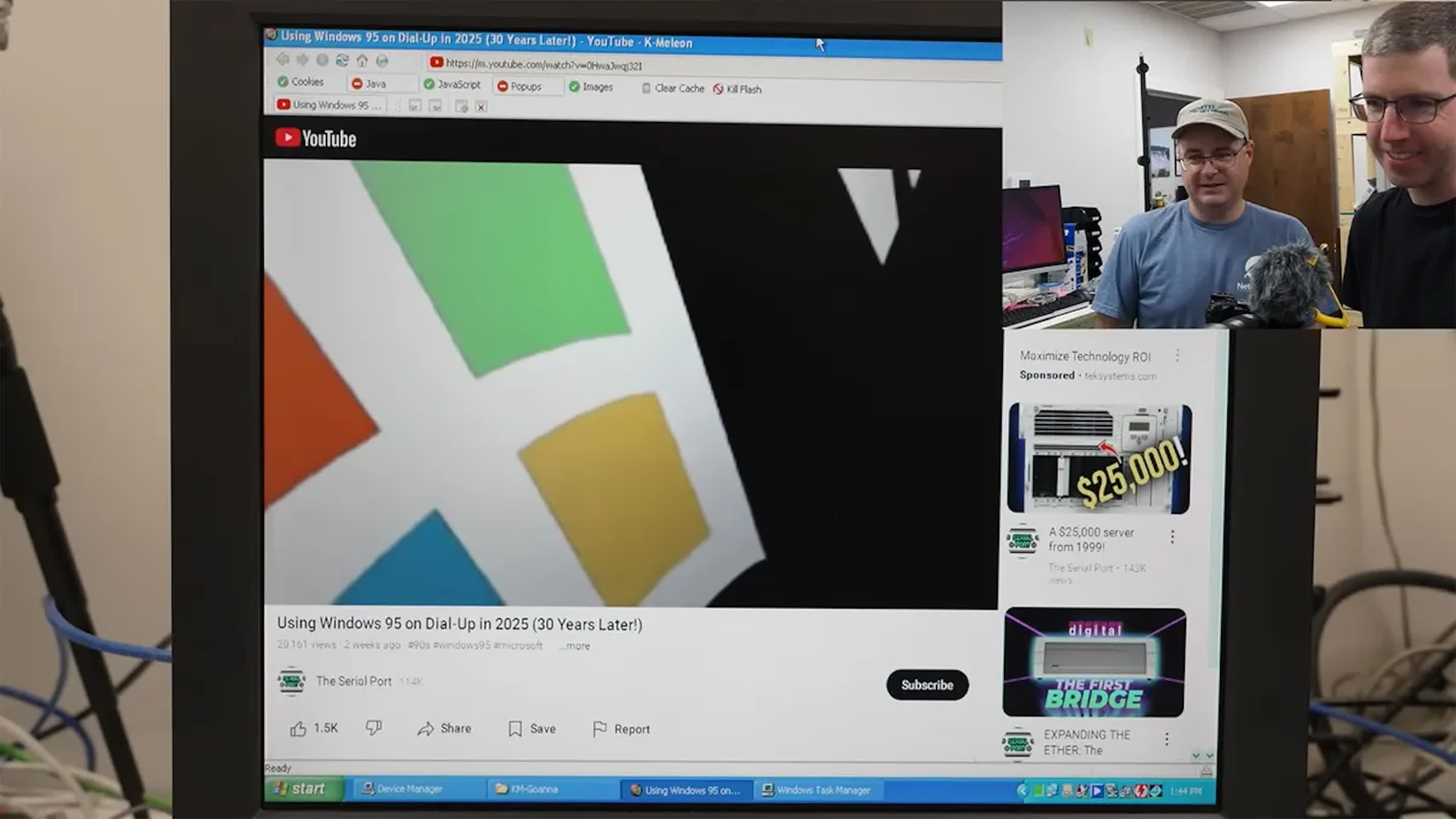
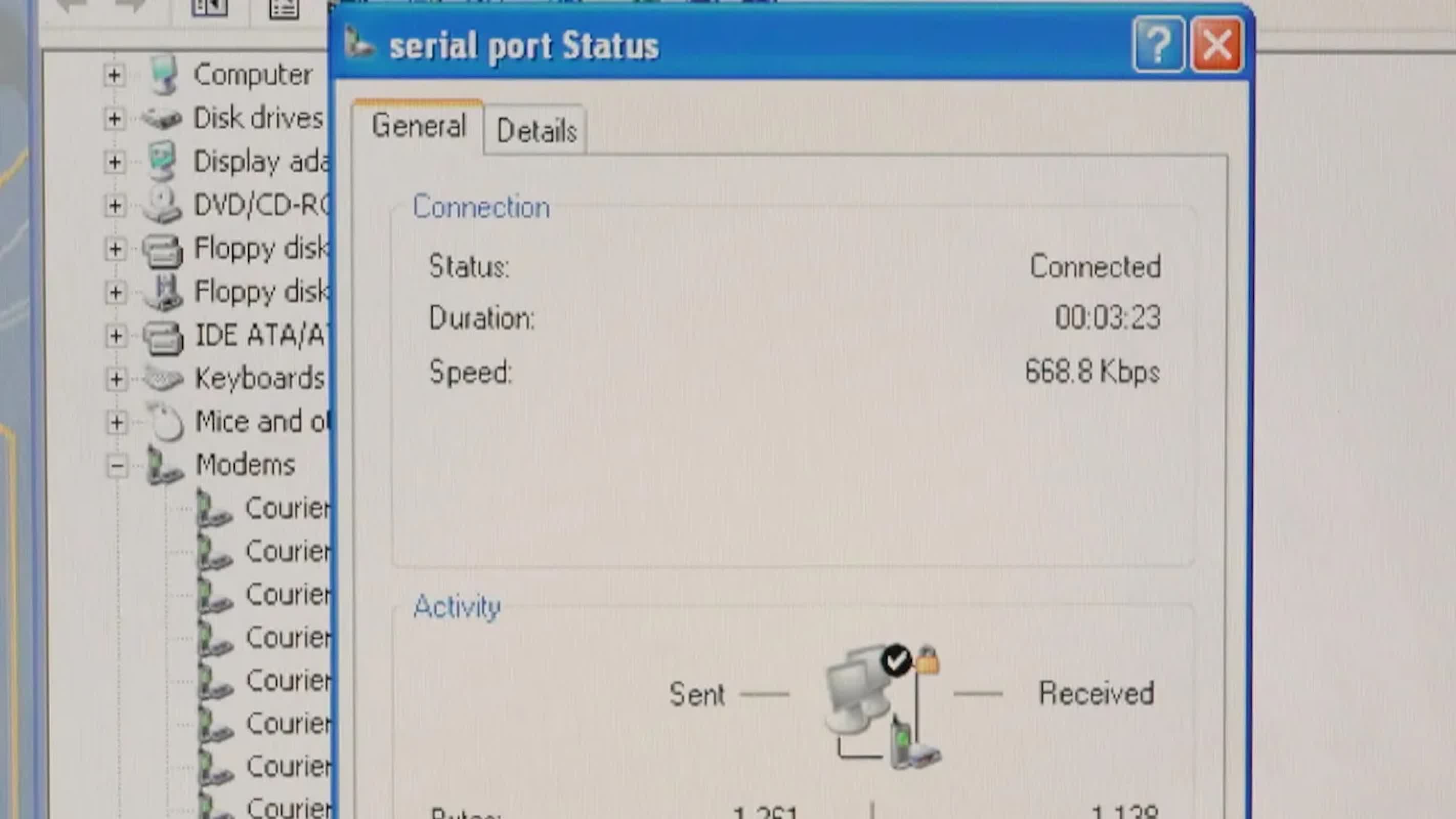
The YouTube channel The Serial Port has pulled off something few imagined possible in the broadband era: streaming YouTube over a dial-up connection. In their latest experiment, the team bonded 12 modems together using Multilink PPP, reaching a combined download speed of 668 kbps on a Windows XP desktop – just enough to stream video without buffering.
According to the creators, this may be the first documented case of more than four bonded modems being used in practice.
At the peak of dial-up usage in the late 1990s, the fastest widely available connections topped out at 56 kbps. By 2000, the Federal Communications Commission defined broadband as 200 kbps or faster, already pushing dial-up to its limits. Websites of the era were mostly text and compressed images, but downloading music, video, or other large files could tie up a phone line for hours. Growing demand for speed eventually drove DSL and cable internet into the mainstream.
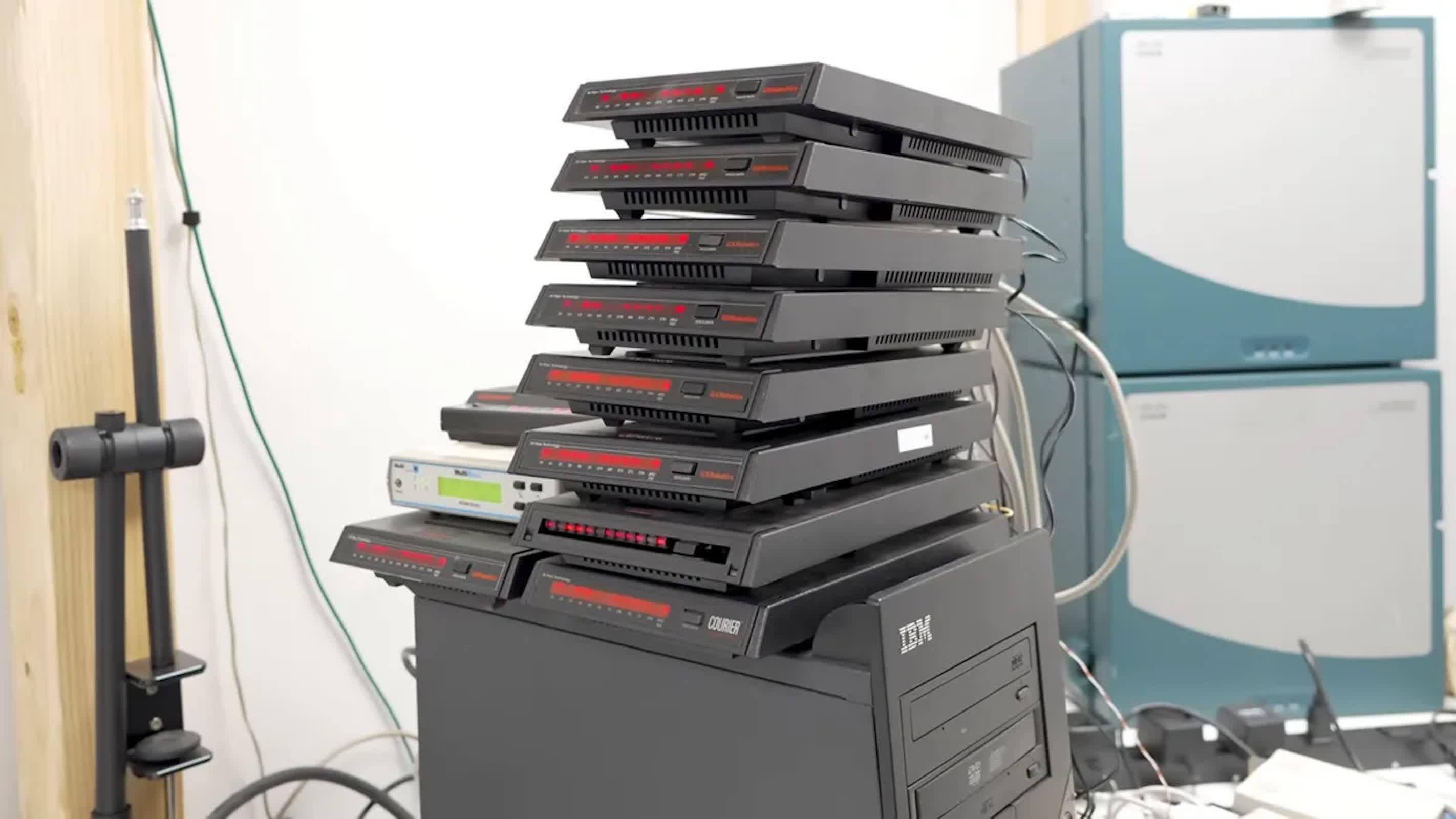
One interim solution was Multilink PPP, a protocol standardized in 1994 that allowed multiple phone lines to be bonded into a single, higher-capacity data channel. Commercial attempts included products like Diamond Multimedia's "Shotgun" PCI card, which combined two 56K modems, but the need for multiple phone lines and ISP support kept adoption limited.
Three decades later, The Serial Port revisited the idea using VoIP line simulators and surplus enterprise networking gear to test how far MPPP could scale.
The experiment demanded both period-appropriate client hardware and a robust backend. The first test machine was a 2001 IBM NetVista running Windows ME. While it successfully bonded two modems, scaling further quickly ran into limits – specifically a shortage of serial ports and driver support.
The project then moved to a 2004 IBM ThinkCentre running Windows XP, which offered broader compatibility. Outfitted with an Equinox serial expansion card and a four-port Digi card, the system expanded to 13 available COM ports. With XP's built-in support for simultaneous dialing, multiple external US Robotics Courier modems were connected, powered, and configured with synchronized DIP switch settings to avoid conflicts.
On the ISP side, the team used Cisco VoIP infrastructure to generate multiple phone lines, which the modems dialed into. Connections terminated at a Total Control dial-up access concentrator, equipment once common in small ISPs during the 90s. Unlike the client setup, which required extensive trial and error, the ISP hardware handled multiple sessions with ease.
Scaling incrementally from two to four and eventually 12 bonded modems, the experiment achieved an aggregate connection speed of 668.8 kbps. That throughput exceeded the FCC's original broadband definition from 2000 and, more importantly, allowed for smooth YouTube playback at 144p and 240p.
The Serial Port team noted they could find no evidence of more than four modems ever being bonded with MPPP, whether in practice or in references like the Guinness Book of World Records.
While the setup is wildly impractical compared with even the slowest modern broadband connections, the project serves as both a technical proof-of-concept and a reminder of the ingenuity – and limitations – that defined the internet's dial-up era.
"The ISP side simply just worked with no apparent limit in sight," the hosts observed.
Streaming YouTube over dial-up: how one creator hit 668 kbps with 12 modems


