First look: The iPhone 18 Pro lineup will use a new chip built to handle more demanding AI, graphics, and sustained-performance workloads without running into the same heat constraints that limit mobile processors. Apple's A20 Pro will power the iPhone 18 Pro, iPhone 18 Pro Max, and iPhone Duo. It is Apple's first iPhone chip built using a 2nm process, marking a manufacturing shift that the company says supports faster CPU and GPU performance, more memory bandwidth, and improved efficiency.
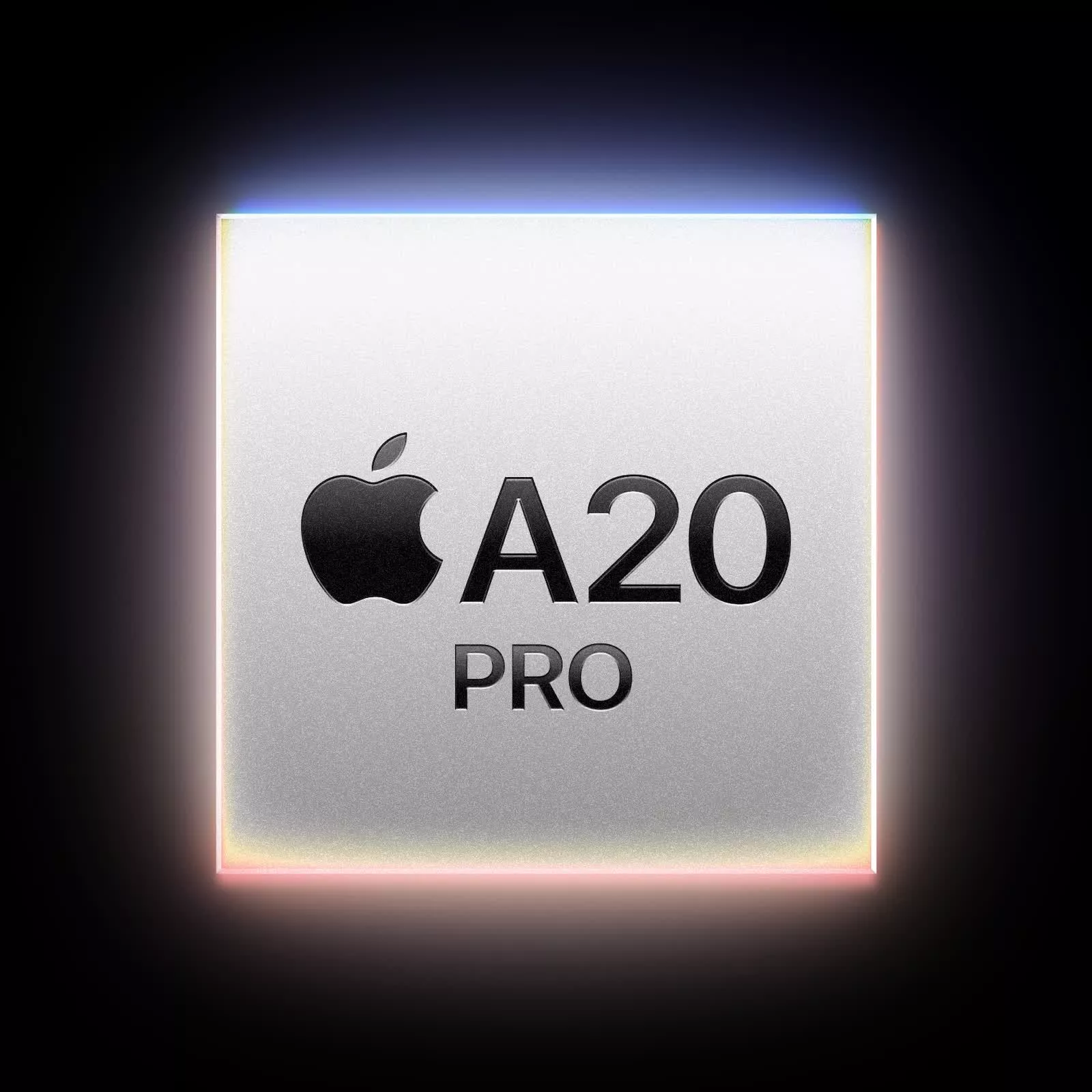
The chip has a six-core CPU: two new high-performance "super cores" and four efficiency cores. Apple said the super cores are up to 20% faster than the performance cores in the A19 Pro. The company called the processor "desktop class" and said it is the fastest CPU in a smartphone.
Apple also added neural accelerators to all six CPU cores. That change gives the processor more hardware dedicated to AI tasks, rather than leaving those workloads solely to the Neural Engine or GPU.
The seven-core GPU has been redesigned and delivers up to 40% faster graphics performance than the previous generation, according to Apple. Its neural accelerators provide twice the FP8 performance of the prior design. FP8, or 8-bit floating point, is useful for AI inference because it can reduce the memory and compute requirements of models without relying on full-precision calculations.
The A20 Pro includes two Neural Engine units with 32 cores combined. Apple said the new Neural Engine design offers twice the compute of its predecessor, improved efficiency, and support for 8-bit floating-point math. The company is pitching the chip as hardware capable of handling advanced AI models directly on the phone.
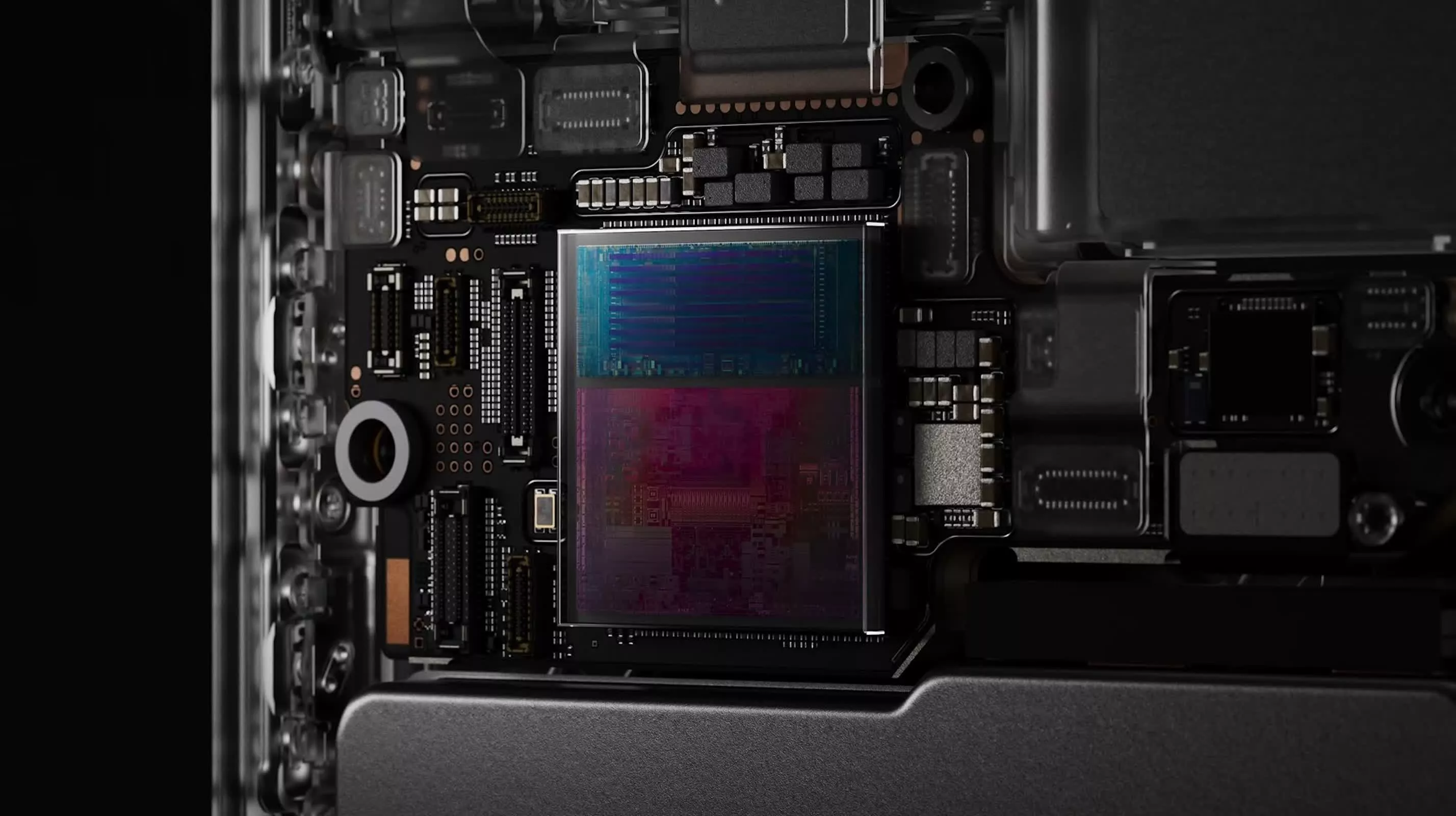
Memory bandwidth is also up 50%, Apple said. The company described the A20 Pro as having its widest iPhone memory interface yet. More bandwidth should help feed data to the CPU, GPU, and AI engines, particularly in workloads that mix graphics rendering, image processing, and local model inference.
Apple made a more fundamental change to the chip's physical design, too. Previous iPhone chips used InFO_PoP packaging, which stacks DRAM on top of the system-on-a-chip. The A20 Pro moves to wafer-level multi-chip module, or WMCM, packaging, placing the memory beside the processor instead.
That arrangement takes DRAM out of the chip's thermal path and allows the processor to connect directly to the phone's vapor chamber. Apple said the design was inspired by its M-series chips. The goal is to prevent heat from reducing performance during longer gaming sessions, video work, AI processing, or other intensive use.
The thermal hardware in the iPhone 18 Pro has changed along with the chip packaging. Apple said its vapor chamber has three times the surface area of the iPhone 17 Pro version. The cooling system also uses more graphite and copper, and its stainless-steel component is made with 80% recycled material.
Apple said the iPhone 18 Pro can deliver up to 40% more sustained performance than the iPhone 17 Pro and twice the sustained performance of the iPhone 16 Pro.
The company did not disclose detailed clock speeds, cache specifications or other low-level A20 Pro data at the launch. Apple said the combination of the 2nm process, new chip architecture, and revised packaging also improves power efficiency.
Apple estimates up to 36 hours of video playback for the iPhone 18 Pro and up to 45 hours for the iPhone 18 Pro Max. Based on a proprietary usage test, it said the Pro can run for up to 24 hours on a charge, while the Pro Max can reach up to 30 hours.