Apple unveils $599 MacBook Neo powered by A18 Pro iPhone chip

Daniel Sims

Posts: 2,460   +74
Staff
Highly anticipated: Apple has finally unveiled its entry into the budget laptop segment, starting at $599 and delving deep into cheap Windows PC territory. For a roughly 45% price reduction compared to the latest MacBook Air, customers sacrifice a moderate amount of horsepower and are limited to just 8GB of RAM. On the other hand, the MacBook Neo features an aluminum chassis, Apple's typically excellent displays, long battery life, and weighs just 2.7 pounds.

Following months of speculation and leaks, the Cupertino giant has officially introduced the MacBook Neo. Representing perhaps the most ambitious display of synergy within Apple's hardware stack yet, the laptop aims to prove that a processor originally designed for a flagship iPhone can handle macOS's basic functionality.

The company claims that the budget laptop's 6-core A18 Pro SoC performs basic web browsing and on-device AI tasks faster than the top-selling Intel Core Ultra 5 chip (without specifying further). Limitations include the lack of Thunderbolt support, no option to expand beyond 8GB of RAM, and a maximum of 512GB of storage.

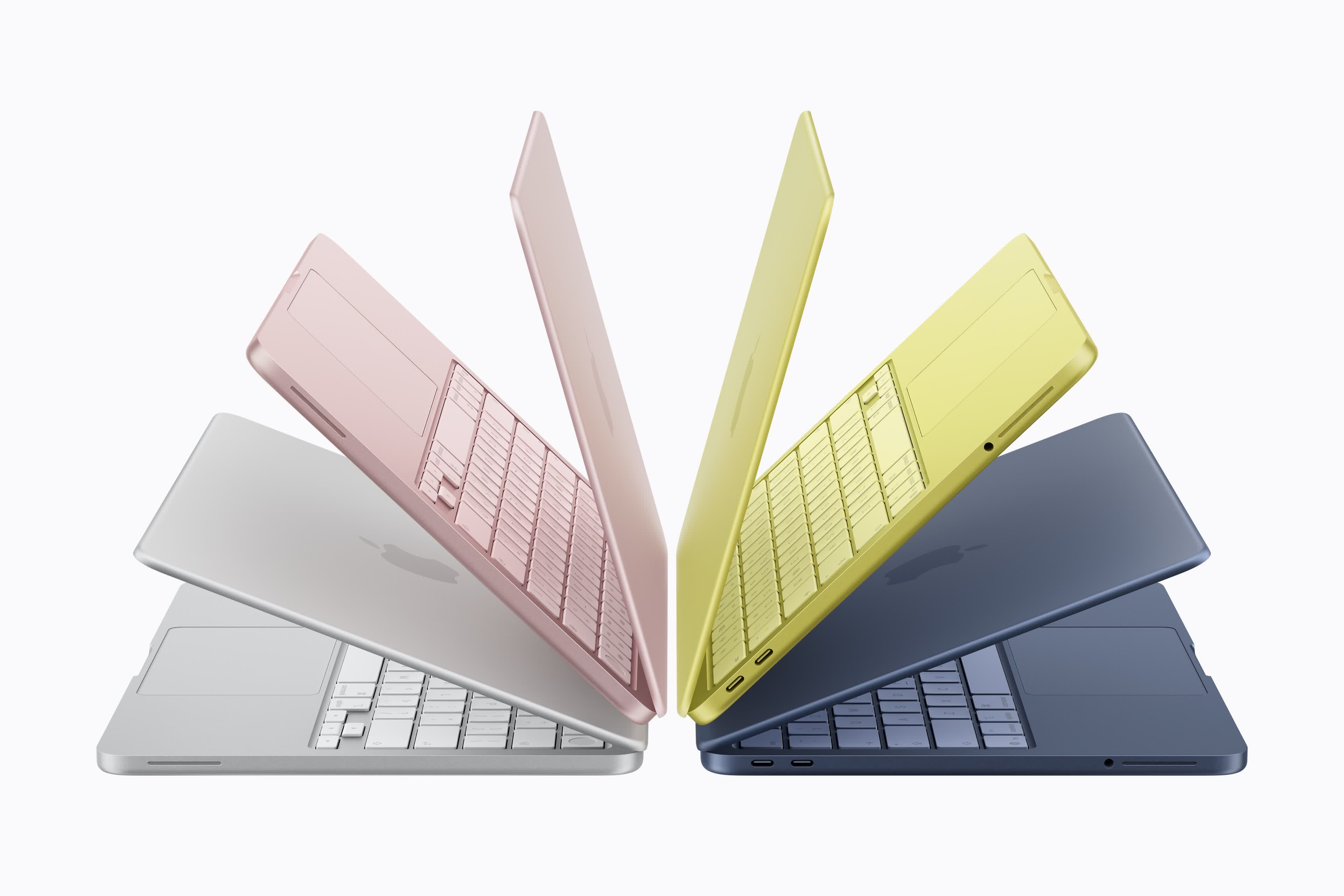
The Neo is designed for students, according to Apple. The aluminum notebook weighs just 2.7 pounds (1.23 kg) and comes in four colors: silver, blush, indigo, and the all-new citrus. Apple says the battery can deliver up to 16 hours of video streaming or 11 hours of wireless web browsing.
The MacBook Neo's 13-inch 60Hz IPS screen retains the MacBook Air's Liquid Retina branding and 500-nit brightness but slightly reduces the resolution to 2,408 x 1,506 pixels. It also lacks the P3 wide color gamut and True Tone technology. Furthermore, the camera is limited to 1080p and does not support Desk View.

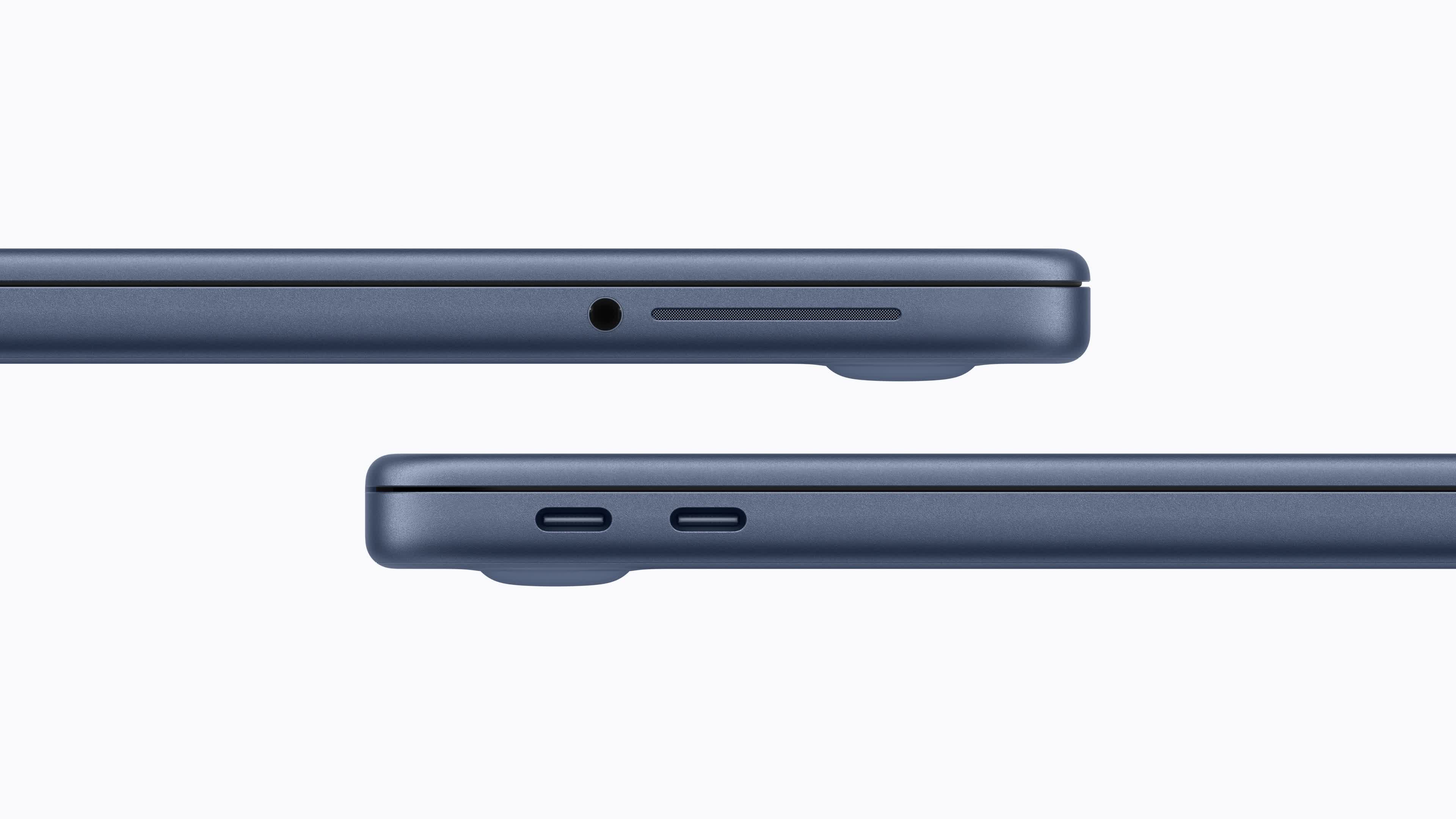
Connectivity is also limited, as expected. The budget MacBook includes one USB-C 2.0 port and one USB-C 3.0 port. The latter supports a single 4K 60Hz external display at DisplayPort 1.4-equivalent specifications.

Memory and storage will likely become the MacBook Neo's biggest constraints over time. Apple offers only one RAM option – 8GB – and either a 256GB or 512GB SSD. Touch ID through a dedicated key is exclusive to the 512GB model, which costs $100 more.

MacBook Neo vs MacBook Air M5

Feature MacBook Neo MacBook Air M5
Starting price $599 $1,099
Chip / SoC Apple A18 Pro Apple M5
CPU 6-core CPU 10-core CPU
GPU 5-core GPU 10-core GPU
Neural engine 16-core 16-core
Memory (RAM) 8GB unified memory (fixed) 16GB unified memory (up to 32GB)
Memory bandwidth 60GB/s 153GB/s
Storage 256GB or 512GB SSD 512GB - 4TB SSD
Display size 13-inch 13.6-inch or 15.3-inch
Display resolution 2,408 × 1,506 2,560 × 1,664 (13-inch)
Brightness 500 nits 500 nits
Color support 1 billion colors (sRGB) P3 wide color
Camera 1080p FaceTime HD 12MP Center Stage
Keyboard Magic Keyboard (no backlight) Backlit Magic Keyboard
Trackpad Mechanical trackpad Force Touch trackpad
Ports 1x USB-C 2.0, 1x USB-C 3.0, headphone jack 2x Thunderbolt 4, MagSafe 3, headphone jack
External display support 1x 4K 60Hz display Multiple displays depending on config
Wireless Wi-Fi 6E, Bluetooth Wi-Fi 7, Bluetooth
Battery life Up to 16 hours video / 11 hours web Up to 18 hours video
Weight 2.7 lb 2.7 lb (13-inch)
Touch ID Only on 512GB model Standard
Colors Silver, blush, indigo, citrus Silver, starlight, midnight, sky blue

Pre-orders for the MacBook Neo are available now, starting at $599 for the 256GB model and $499 for students. Availability begins March 11. Apple also recently upgraded the MacBook Air to its M5 processor and introduced MacBook Pro models powered by M5 Pro and M5 Max. Reports indicate that a touchscreen MacBook is on the horizon, but users should not anticipate a 2-in-1.

Apple's new entry-level laptop could become a competitive item as the traditional budget laptop market faces threats from ongoing memory shortages.

As the construction of AI data centers consumes significant amounts of DRAM and NAND capacity, some low-cost notebook resellers are substituting SSDs with eMMC storage, SD cards, and even OneDrive trials (facepalm). Analysts at Gartner warn that sub-$500 laptops could become extinct by 2028, but Apple's bet on this segment runs counter to that forecast.

Permalink to story:

 
I expected way better battery life from a phone chip, but I guess they either cheaped out on battery or prioritized weight, or both. Underwhelming, but still a decent offering. I might consider it once my current laptop dies on me.

Also, I hate the colors.

Edit: apparently touch ID is only available on the 512GB version, so the actual price is $700.
 
Last edited:
$599 for a MacBook is an interesting proposition... ($499 for students...) for the last couple of years Apple dipped their toes semi-officially with old M1 Airs on Walmart but this is something else.

If this performs decently, it could put real pressure on the $500-$700 Windows laptop market, where build quality and battery life are often the first things manufacturers cut.
 
The Gartner stat buried at the end is the real story. Sub-$500 laptops potentially going extinct by 2028 because AI data centers are eating all the memory supply means the people who most need affordable computers are about to get priced out entirely. Apple entering this segment right now, whatever their margins look like, is at least applying some pressure in the right direction.
 
Only 8gb unified RAM is a bit of a disappointment, Apple could have used 12 or 16gb with this phone SoC.

According to Gartner, the low end market is dead, so maybe 8gb will be the norm again for the entry level. Thanks to AI companies we're regressing in tech as they hoard all the RAM.
 
8GB of RAM is disappointing and may not be enough for the target audience of this (students and low-end users) with RAM usage being as bad as it is in 2026. Maybe a limitation from the phone SoC, I don't think an iPhone has had more than 8GB until last year's models and the A18 Pro is from the year before's models.

The price is right though, with the current prices of RAM and Storage (and the Apple tax) I was expecting it to start $100 higher. It'll be interesting to see how it performs in real world scenarios.
 
512GB is fine for home office and schoolwork but 8GB is a deal killer though DDR5 prices would probably make it like $200 more.
 
512GB is fine for home office and schoolwork but 8GB is a deal killer though DDR5 prices would probably make it like $200 more.
What office programs need more then 8gb?
The Gartner stat buried at the end is the real story. Sub-$500 laptops potentially going extinct by 2028 because AI data centers are eating all the memory supply means the people who most need affordable computers are about to get priced out entirely. Apple entering this segment right now, whatever their margins look like, is at least applying some pressure in the right direction.
The Garter article is pure fear mongering rubbish that belongs on mainstream media.
 
People run more than an office program, even lowest end laptops nowadays can multi-task. An office program, Teams, Chrome, a music app like Spotify and 8GB of RAM is easily gone.

However I find it amusing some refuse to come to terms with reality, it isn't just Gartner warning of the PC market imploding thanks to the AI tech bros hoarding RAM. The entry level market is essentially dead when cost of RAM and SSD in a system can exceed the whole cost of an entry level or mid range PC. 8GB of RAM and a 128GB SSD is probably going to be the new entry level unfortunately, meanwhile companies are also selling hardware as a subscription service.
 
People run more than an office program, even lowest end laptops nowadays can multi-task. An office program, Teams, Chrome, a music app like Spotify and 8GB of RAM is easily gone.

However I find it amusing some refuse to come to terms with reality, it isn't just Gartner warning of the PC market imploding thanks to the AI tech bros hoarding RAM. The entry level market is essentially dead when cost of RAM and SSD in a system can exceed the whole cost of an entry level or mid range PC. 8GB of RAM and a 128GB SSD is probably going to be the new entry level unfortunately, meanwhile companies are also selling hardware as a subscription service.
Nobody is impressed by the doom and gloom strawman you keep rolling out.

Maybe, and here is a wild idea, you shouldn't try to use teams, chrome, office, and a music app all the time on a budget browsing device? Or get a different device that better suits your needs, like the Mac mini?
 
Nobody is impressed by the doom and gloom strawman you keep rolling out.

Maybe, and here is a wild idea, you shouldn't try to use teams, chrome, office, and a music app all the time on a budget browsing device? Or get a different device that better suits your needs, like the Mac mini?
"Nobody" meaning you, but you're welcome to keep your head in the sand where it's still 2024.
The reality is things are f#$%ed and are only going to get worse, the only ones I see laugh at this like it's "doom and gloom" are either AI corp shills or are shareholders of any company involved in the AI bubble.
I don't why I shouldn't be able to run applications simultaneously with a modern day laptop, the only thing holding back a laptop like this would be RAM. A 3-4 old used office laptop for $200-300 with 16GB RAM could do all of the same things this laptop gimped by 8GB of RAM could.
The Mac mini is a completely different market, someone is either going to buy a laptop or a desktop, most average consumers don't buy both.
 
Last edited:
"Nobody" meaning you, but you're welcome to keep your head in the sand where it's still 2024.
The reality is things are f#$%ed and are only going to get worse, the only ones I see laugh at this like it's "doom and gloom" are either AI corp shills or are shareholders of any company involved in the AI bubble.
Or people who point out you don't understand how inflation works, constantly conflate inflation with surge pricing, or are actively delusional on the price of hardware.

Claiming everything is broken forever and it will never get better, despite that never being true historically, is histronic doom and gloom.
I don't why I shouldn't be able to run applications simultaneously with a modern day laptop, the only thing holding back a laptop like this would be RAM. A 3-4 old used office laptop for $200-300 with 16GB RAM could do all of the same things this laptop gimped by 8GB of RAM could.
Budget hardware has always been about making sacrifices. $500 laptops 15 years ago could barely open Google mail without choking on fumes. This MacBook is far better today then those old ones were.

Even now, most cheapo windows laptops in this category are borderline unusable. If you are comfortable buying used hardware, that is great, but most people this is marketing towards are not tech savvy. If they don't have someone to prep this stuff for them, they won't know what to buy, hence why this hardware has a reason to exist.
The Mac mini is a completely different market, someone is either going to buy a laptop or a desktop, most average consumers don't buy both.
The market we are discussing here is " people that need a cheap PC". If you need a really cheap new PC that can run multiple memory heavy programs at once, the Mac mini is a more viable option. If you desire portability, then the MacBook exists. If you want both, you'll have to splurge a little more to have both. Mobility has always come at a premium.
 
Remember, MacOS does do memory compression with compression ratios close to 50% so…

One person said on YouTube that having 8 GBs is almost like having 12 GBs. And then there’s how MacOS isn’t a RAM pig like Windows is.
 
This is a Mac Chromebook to compete in the education market because the iPad has been losing ground for years.

They will also sell one to the public if you want a Chromebook Mac rather than a laptop.

For those people it’s great. For those complaining about specs, buy something else, this isn’t for you.
 
The processor I am sure will be absolutely fine for normal office use. 8GB is pretty tight but MacOS is a lot more memory efficient than Windows so will be ok for light multitasking.

What is just pure enshittification for the purpose of an upsell though is having one of your two ports stuck at USB 2.0 in 2026 (the other is only 10Gbps as well). That is just pure stinginess.

I didn't expect Thunderbolt, but offering two USB 3.1 ports would have cost Apple nothing extra, and would have meant you didn't need to worry about which port you plugged a USB stick or basic hub into to avoid throttling.
 
So it's subsidized to get them hooked into the Apple ecosystem... Sad that people sell themselves out to save a few bucks
 
Ordered, arrives next week, I'm away for work so won't get to play with it until the weekend.

I've been wanting to play with MacOS for years, I've been in the market for something I can have next to the sofa that's good enough for my needs, I was planning on getting another iPad (my current iPad is from 2012 and totally useless these days), but this is £1 more expensive over an entry level iPad and has an A18 pro instead of an A16, and runs actual MacOS.
 
I will wait for their “next year upgrade” where they obviously will be forced to add ram and touch ID to the base model. Otherwise it’s another flop just like iPhone Air.

Make it overpriced slop people won’t buy it. Make it underspecced slop people will bypass it. No *****s left in this economy.
 
People run more than an office program, even lowest end laptops nowadays can multi-task. An office program, Teams, Chrome, a music app like Spotify and 8GB of RAM is easily gone.

However I find it amusing some refuse to come to terms with reality, it isn't just Gartner warning of the PC market imploding thanks to the AI tech bros hoarding RAM. The entry level market is essentially dead when cost of RAM and SSD in a system can exceed the whole cost of an entry level or mid range PC. 8GB of RAM and a 128GB SSD is probably going to be the new entry level unfortunately, meanwhile companies are also selling hardware as a subscription service.
You're mixing a few different issues together and drawing a pretty dramatic conclusion from it.

First, 8 GB of RAM isn't "easily gone" just because you open Teams, Chrome, Spotify, and an Office app. Modern operating systems aggressively cache and compress memory, and when necessary they page inactive data to fast SSD storage. On current machines, especially ones with fast unified memory architectures, this workload is still perfectly workable for the majority of users.

Second, the idea that the entry level PC market is “dead” because RAM and SSD costs exceed the cost of a system doesn’t really match reality. OEMs buy components at massive scale and price systems accordingly. If RAM and SSD prices spike, vendors simply adjust configurations or margins. That’s been happening for decades without killing the entry level segment.

Third, AI workloads hoarding RAM isn’t a factor for the average consumer machine. Local AI models that actually need large amounts of RAM are mostly used by enthusiasts and developers. Mainstream systems are still designed around everyday workloads like browsing, video calls, media, and office software.

The market still clearly supports entry level machines. They continue to sell in huge volumes in education, corporate fleets, and consumer retail. If anything, efficiency improvements in modern chips mean those systems are more usable than they were years ago.

It's ok to argue that vendors should offer higher base specs, but saying the entire entry level market is collapsing because of RAM prices or AI is a bit of a stretch.
 
First, 8 GB of RAM isn't "easily gone" just because you open Teams, Chrome, Spotify, and an Office app. Modern operating systems aggressively cache and compress memory, and when necessary they page inactive data to fast SSD storage. On current machines, especially ones with fast unified memory architectures, this workload is still perfectly workable for the majority of users.
SSD's in Macs are soldered down, swapping to the SSD too often will degrade the NAND, IMO that's not great for a new laptop in 2026 to be constantly caching applications. Apple wouldn't lose out much here from upping RAM to 12GB and adding a memory controller for an extra USB 3.0 port.
Second, the idea that the entry level PC market is “dead” because RAM and SSD costs exceed the cost of a system doesn’t really match reality. OEMs buy components at massive scale and price systems accordingly. If RAM and SSD prices spike, vendors simply adjust configurations or margins. That’s been happening for decades without killing the entry level segment.
Which means prices adjusted well out of the range of the average consumer, $1,000 is quite high when wages haven't kept up with inflation, let alone shrinkflation seen in everything else.
Third, AI workloads hoarding RAM isn’t a factor for the average consumer machine. Local AI models that actually need large amounts of RAM are mostly used by enthusiasts and developers. Mainstream systems are still designed around everyday workloads like browsing, video calls, media, and office software.
The great AI RAM hoard is an issue for the average consumer, especially when W10 extended support is EOL after 2026. The average consumer isn't going to the trouble of workarounds to put W11 on an unsupported system.
The market still clearly supports entry level machines. They continue to sell in huge volumes in education, corporate fleets, and consumer retail. If anything, efficiency improvements in modern chips mean those systems are more usable than they were years ago.

It's ok to argue that vendors should offer higher base specs, but saying the entire entry level market is collapsing because of RAM prices or AI is a bit of a stretch.
Education and corporate environments can't not buy new systems, however entry level won't be entry level anymore when it's in midrange price territory which will affect the consumer market the most. Apple making a "budget" laptop is clearly in response to the market wanting more affordable laptops.
I never said anything about CPU efficiency, usability doesn't mean a whole lot when 8GB is going to be the limiting factor, 8GB is very much planned obsolescence so Apple can sell customers a better Mac laptop later on.

There are plenty of sources saying the entire tech market is going to face rough times, it isn't much of a stretch to estimate that the entry level market could collapse or become irrelevant to the consumer market.
 
SSD's in Macs are soldered down, swapping to the SSD too often will degrade the NAND, IMO that's not great for a new laptop in 2026 to be constantly caching applications.
Again, you are SEVERELY overestimating what the people buying these kinds of computers would be doing with their systems. They aren't compiling code, editing videos, composing music, or anything close to what you and I would consider computationally stressful. Hell, the most stressful thing that someone buying a system like this would be doing is playing a damn YouTube video!

At most, they would be using Facetime, editing a spreadsheet or other document, browsing the damn Internet. None of which would be anywhere close to requiring the use of the swap file.

And as for browsing the web, most users on the Mac use Safari which is extremely memory optimized—it's nothing at all like the absolute RAM pig that is Google Chrome.

And as I mentioned before, there's Memory Compression that compresses unused pages in memory with compression ratios nearing 50%. What does that mean? It means that 8 GBs of RAM may very well be like having 12 GBs of RAM.
8GB is very much planned obsolescence so Apple
You do realize that MacOS is nothing at all like the absolute RAM pig that is Windows. Right?

Run along now...
 
$599 for a MacBook is an interesting proposition... ($499 for students...) for the last couple of years Apple dipped their toes semi-officially with old M1 Airs on Walmart but this is something else.

If this performs decently, it could put real pressure on the $500-$700 Windows laptop market, where build quality and battery life are often the first things manufacturers cut.
Google's upcoming AluminiumOS devices (ALOS) may feel the heat from this. If they are on par with their Plus-branded devices, they'll be in the same price bracket as the Neo.
Google should still be able to carry the K-12 education market with their strong admin software, but if the $250 devices they buy today end up in the $500 region, schools will just hang on to the current ones as long as they can.
 
SSD's in Macs are soldered down, swapping to the SSD too often will degrade the NAND, IMO that's not great for a new laptop in 2026 to be constantly caching applications. Apple wouldn't lose out much here from upping RAM to 12GB and adding a memory controller for an extra USB 3.0 port.

Which means prices adjusted well out of the range of the average consumer, $1,000 is quite high when wages haven't kept up with inflation, let alone shrinkflation seen in everything else.

The great AI RAM hoard is an issue for the average consumer, especially when W10 extended support is EOL after 2026. The average consumer isn't going to the trouble of workarounds to put W11 on an unsupported system.

Education and corporate environments can't not buy new systems, however entry level won't be entry level anymore when it's in midrange price territory which will affect the consumer market the most. Apple making a "budget" laptop is clearly in response to the market wanting more affordable laptops.
I never said anything about CPU efficiency, usability doesn't mean a whole lot when 8GB is going to be the limiting factor, 8GB is very much planned obsolescence so Apple can sell customers a better Mac laptop later on.

There are plenty of sources saying the entire tech market is going to face rough times, it isn't much of a stretch to estimate that the entry level market could collapse or become irrelevant to the consumer market.
Education and corporate buyers aren’t some artificial life support keeping the entry level market alive. They buy in huge numbers specifically because entry level systems are affordable and adequate for the job. If “entry level” laptops were suddenly midrange priced across the industry, those organizations would be the first ones pushing back or switching vendors. That clearly isn’t happening.

Calling 8 GB “planned obsolescence” is also a stretch. Planned obsolescence would mean the machine becomes unusable quickly by design. Meanwhile there are tons of 8 GB systems from years ago still doing email, Office, browsing, and video calls without issue. Entry level hardware being entry level isn’t a conspiracy, it just means it’s designed for basic workloads.

Apple releasing a cheaper model also isn’t some signal that the entry level market is collapsing. Companies introduce lower priced products all the time to reach more buyers. Apple has done it with the iPhone SE, base iPads, and Mac mini for years. Expanding your market isn’t the same thing as responding to an industry apocalypse.

And citing vague “sources” that say the tech market might have rough periods doesn’t really prove anything. The PC market has always been cyclical. Shipments go up, shipments go down, refresh cycles happen, and the sky somehow never falls.

Predicting the collapse of the entry level market because some laptops ship with 8 GB of RAM sounds dramatic, but it doesn’t really match how the industry or the hardware actually works.

I’d go into your other nonsensical comments too, but @trparky already covered most of that. You should probably read up on how Apple systems actually manage memory before jumping to conclusions, rather than just defaulting to hating Apple because… it’s Apple.
 
Back