Apple's quiet satellite strategy is starting to look like a long-term play for global coverage

Skye Jacobs

Posts: 1,913   +58
Staff
The big picture: Apple's expansion into orbital communications reflects steady pragmatism rather than grand ambition. What began as a bid to replace carriers has evolved into a deliberate, incremental march toward universal coverage. A decade into the experiment, the iPhone is not yet fully connected to space, but with each software update, it moves closer to that horizon.
Nearly a decade after hiring two senior satellite engineers from Alphabet to explore off-world communications, Apple's once-secret project has become a core part of its connectivity roadmap. What began as a radical plan to bypass wireless carriers entirely has evolved into a cautious, technically complex expansion of mobile services via orbiting satellites.

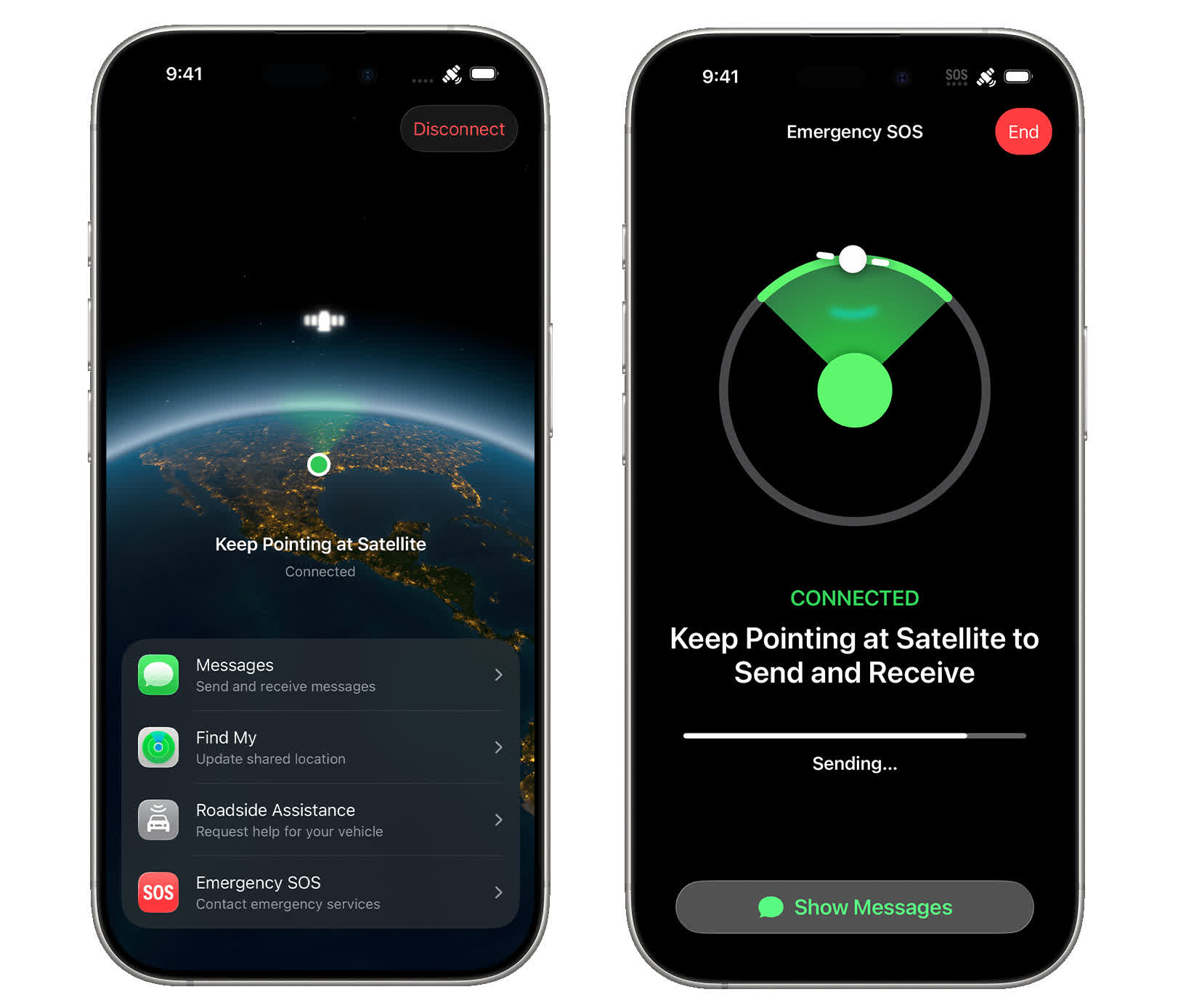
When Apple introduced Emergency SOS via Satellite with the iPhone 14 lineup in 2022, it was less a novelty than a strategic foothold. The system enabled users to reach emergency responders without cellular or Wi-Fi service, routing messages through low-Earth-orbit satellites. Two years later, Apple extended the capability to roadside assistance via AAA, and most recently, to standard text messaging for off-grid users.

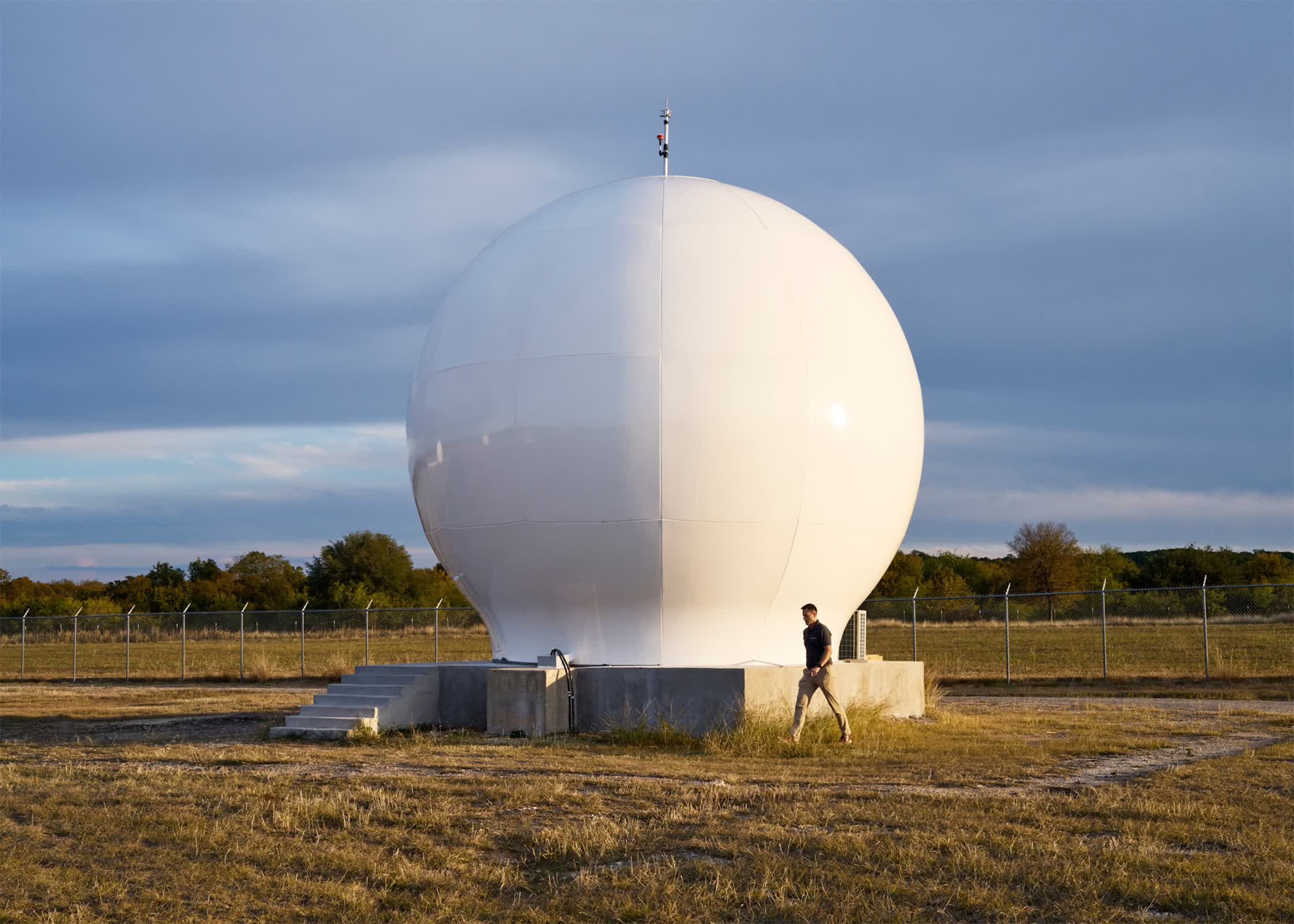
The technology is coordinated by Apple's Satellite Connectivity Group, led by senior hardware engineering director Mike Trela. The system currently relies on Globalstar, a Louisiana-based satellite operator whose constellation forms the backbone of Apple's service.
Globalstar's network – while aging and relatively small – has proven stable enough for Apple's initial offerings. The company has co-financed upgrades to the fleet, aiming to enable broader functionality. However, the partnership exists in an uncertain environment as Globalstar has been exploring a sale, and SpaceX is reportedly among the potential buyers.

Internally, Apple's involvement in the satellite business has long been debated. Early in the initiative, executives argued over whether Apple should act as a network operator at all. Some insisted that the company's core strength lies in hardware and software integration, not in competing with carriers.
Still, Apple's leadership views space connectivity as a long-term play. As non-terrestrial networks mature, they could serve as an extension – or even a replacement – of traditional cellular systems. By building internal expertise now, Apple aims to shape that future rather than rely on third-party networks.

Technical constraints add another layer of complexity. Apple's current protocols are optimized for Globalstar's spectrum and channels, making interoperability with other constellations challenging. Transitioning to a new partner would require a full rewrite of software and potentially new modem architectures, creating a strong incentive for Apple to continue refining its in-house satellite systems.

Apple is developing a range of new satellite features that reflect its long-term commitment, according to Bloomberg's Mark Gurman. Engineers are building an API framework to allow third-party developers to integrate satellite messaging and data transfer directly into their apps. The company is also working on satellite-based Apple Maps navigation for use without cellular coverage, along with next-generation messaging capabilities that include image transmission.
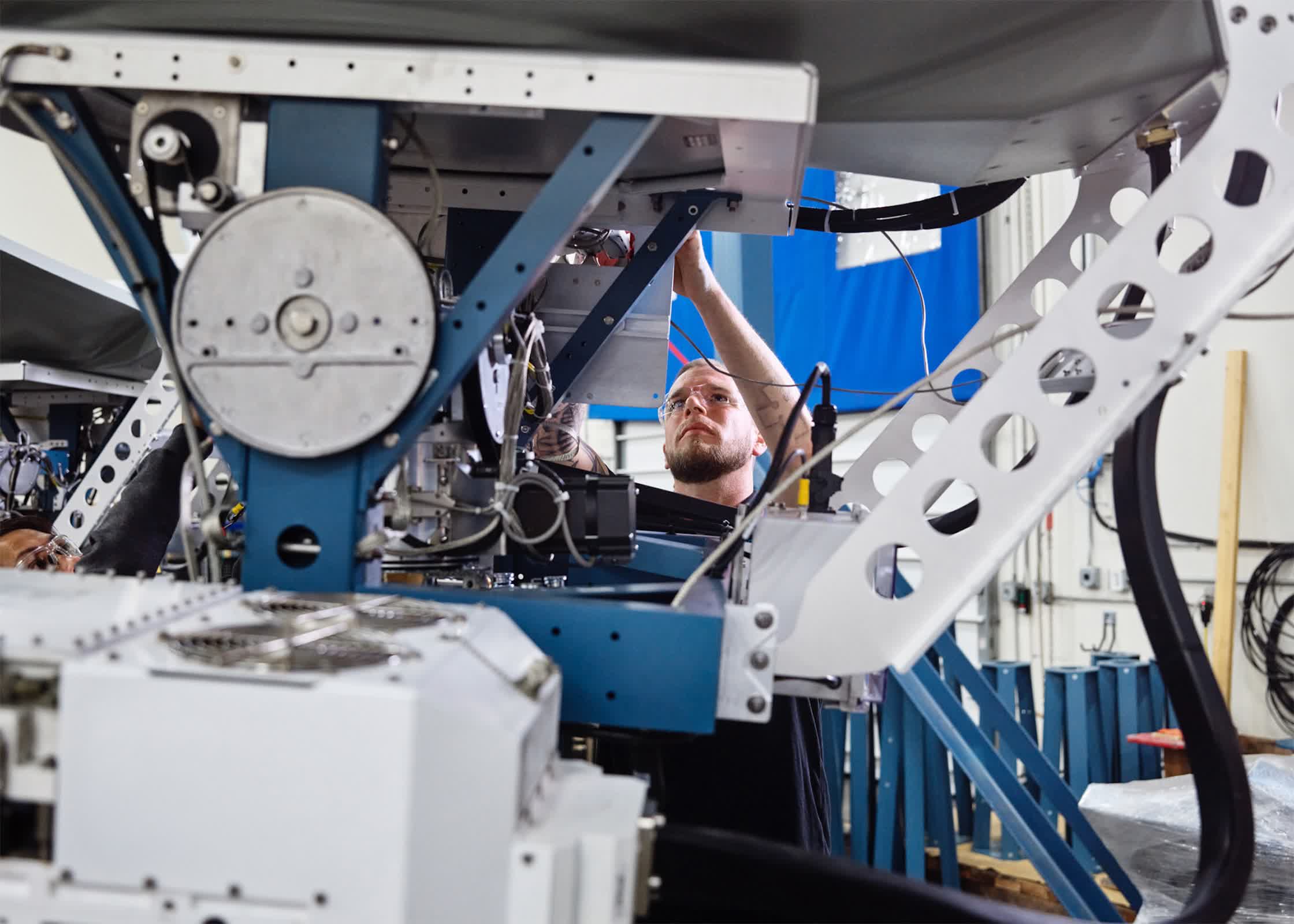
One of the most significant technical challenges is what Apple engineers call "natural usage" – maintaining a satellite link while the iPhone is in a pocket, vehicle, or building, rather than requiring users to aim the device at the sky. Overcoming this will require more advanced antennas and adaptive beam-forming to maintain alignment with fast-moving satellites, a capability Apple plans to incorporate into future modem chips, Gurman reports.

The next iPhone generation, expected in 2026, is slated to support 5G NTN, enabling ground-based cellular towers to use satellites for backhaul and continuity of coverage.

Apple's current satellite features have been offered for free, primarily to strengthen the iPhone's value proposition and foster ecosystem loyalty. Future enhancements could create a two-tier model: essential emergency services remaining free, with premium connectivity – potentially through partnerships with carriers or providers like SpaceX – offered via subscription.

If SpaceX acquires Globalstar, collaboration with Starlink could enable richer data transmission, potentially including limited voice or video capabilities, which Apple has so far avoided. Whether Apple remains solely an infrastructure partner or evolves into a full satellite operator will shape the scope of its future satellite ambitions.

Permalink to story:

 
Imagine if we lived in a society that was organized enough to just have one giant satellite constellation system for online/communication connectivity instead of a bunch of competing ones.
 
Imagine if we lived in a society that was organized enough to just have one giant satellite constellation system for online/communication connectivity instead of a bunch of competing ones.

Believe me I think of a time without capitalism, but 1984, Animal Farm, Eden, all point to greed and corruption constantly ruining it.
 
Imagine if we lived in a society that was organized enough to just have one giant satellite constellation system for online/communication connectivity instead of a bunch of competing ones.
Sure, let’s imagine that:

That kind of world isn’t just organized—it’s radically centralized. To have one global network, you’d need either a unified world government or a monopoly powerful enough to override national interests. Historically, neither forms without major conflict or coercion.

Technically, it would be efficient—no orbital crowding, seamless coverage, universal access. But politically, it’s one of two things:

A) A global utility, run like a UN-managed power grid (bureaucratic, slow, but fair-ish)

B) A global monopoly, where one entity controls all data flow (fast, but prone to abuse).

I put all my bets on B, because, well, people are people and not robots.

Sociologically, we’d lose all sense of diversity and redundancy. Competing networks create resilience—when one fails or censors, others fill the gap. One system means one point of failure, both technically and politically.

So, if this ever happens, it wouldn’t come from some utopian global harmony—it’d come from consolidation after crisis: too much debris, cost, or fragmentation forcing mergers. A “one constellation” world would be stable and efficient, but also tightly surveilled and vulnerable to whoever runs it.

There’s value in balance. Adversity, competition, and the friction of winners and losers builds the adaptability that keeps systems alive and thriving. There is no such thing as harmony without it. The dream of a perfectly unified, conflict-free world sounds humane until you play it out. That kind of world is more likely a polished kind of hell, where comfort replaces strength and control replaces freedom.

The world we have now—messy, competitive, imperfect—is still the best humanity has ever managed. Adversity grows stronger animals. Competition is what drives us forward, not what holds us back.
 
Sure, let’s imagine that:

That kind of world isn’t just organized—it’s radically centralized. To have one global network, you’d need either a unified world government or a monopoly powerful enough to override national interests. Historically, neither forms without major conflict or coercion.

Technically, it would be efficient—no orbital crowding, seamless coverage, universal access. But politically, it’s one of two things:

A) A global utility, run like a UN-managed power grid (bureaucratic, slow, but fair-ish)

B) A global monopoly, where one entity controls all data flow (fast, but prone to abuse).

I put all my bets on B, because, well, people are people and not robots.

Sociologically, we’d lose all sense of diversity and redundancy. Competing networks create resilience—when one fails or censors, others fill the gap. One system means one point of failure, both technically and politically.

So, if this ever happens, it wouldn’t come from some utopian global harmony—it’d come from consolidation after crisis: too much debris, cost, or fragmentation forcing mergers. A “one constellation” world would be stable and efficient, but also tightly surveilled and vulnerable to whoever runs it.

There’s value in balance. Adversity, competition, and the friction of winners and losers builds the adaptability that keeps systems alive and thriving. There is no such thing as harmony without it. The dream of a perfectly unified, conflict-free world sounds humane until you play it out. That kind of world is more likely a polished kind of hell, where comfort replaces strength and control replaces freedom.

The world we have now—messy, competitive, imperfect—is still the best humanity has ever managed. Adversity grows stronger animals. Competition is what drives us forward, not what holds us back.
Not everything in life needs to max out on competitiveness. Sometimes the downside is bigger than the upside.

Would be nice if at it were at least governments competing vs business from the same nation. How many constellations are we at now? 5 or so from the US alone?
 
Not everything in life needs to max out on competitiveness. Sometimes the downside is bigger than the upside.

Would be nice if at it were at least governments competing vs business from the same nation. How many constellations are we at now? 5 or so from the US alone?
Study after study shows that humans thrive with competition and "greed". When you know that the "fruits of your labour" are going to YOU, as opposed to the State, you tend to work harder. The main reason the US won the Cold War was that their productivity vs the USSR was vastly superior - they basically spent the USSR into bankruptcy.

Capitalism might not be a great system - but it's still the best one we have.

 
Not everything in life needs to max out on competitiveness. Sometimes the downside is bigger than the upside.

Would be nice if at it were at least governments competing vs business from the same nation. How many constellations are we at now? 5 or so from the US alone?
I agree that it’s nice when there is a lull in competition—it’s natural to not want any! It’s also where laziness thrives.

I’d argue that competition isn’t a cultural preference—it’s the mechanism all life runs on. Full stop. From bacteria to economies, survival and progress come from pressure and adaptation. Remove that, and systems decay.

Every human attempt to escape this rule fails spectacularly. The Soviet Union tried to replace competition with central planing and collapsed under its own inefficiency. Mao’s Great Leap Forward tried to out-plan human nature and ended in famine. Venezuela’s state control led to shortages and collapse. Even monopolies like Kodak eventually die once protectionism replaces rivalry.

The only time competition should pause is in childhood—when the weak need shelter until they can stand on their own. Beyond that, protectionism just breeds fragility.

So yes, we absolutely do have too many satellite constellations—and more will absolutely be made and we’ll continue to put more and more junk in orbit. But that’s evolution at work. Some will fail, some will merge, and some will lead. That cycle of struggle and selection is exactly why we advance. Without it, systems don’t become harmonious—they just eventually wither and die, one way or another.
 
Last edited:
Oh goodie! More "junk" in space! Just what we need...NOT!
But on the plus side, "aliens" that fly past our planet, ignore us because it looks like a "space shield" ;) 🤣

Debris-GEO1280.jpg
 
As long as Apple relies on Globalstar, they will not have a competitive offering that does not rely on cellular carriers. If moving to another platform requires new software and new modem, they better get cracking! Their current offering is less than useful.
 
Imagine if we lived in a society that was organized enough to just have one giant satellite constellation system for online/communication connectivity instead of a bunch of competing ones.
He he there were some such societies throughout history - e.g. the late USSR. They had one or two giant pieces of everything, none of them working, and zero competition. A Soviet car had to visit a repair shop immediately after buying it. Oh, and buying required waiting for about 15 years first :)


Without competition, we'd still be communicating with smoke signals and pigeons.
 
He he there were some such societies throughout history - e.g. the late USSR. They had one or two giant pieces of everything, none of them working, and zero competition. A Soviet car had to visit a repair shop immediately after buying it. Oh, and buying required waiting for about 15 years first :)


Without competition, we'd still be communicating with smoke signals and pigeons.
Your reply has so many things wrong with it that it would be too much work to try to address it.

Please use common sense if you're going to reply to me.
 
Your reply has so many things wrong with it that it would be too much work to try to address it.

Please use common sense if you're going to reply to me.
Typical Kirby rebuttal… saying something is wrong and providing no proof… maybe address at least a couple of things you think are wrong with the argument?

By the way, YOUR argument was flawed in numerous ways - and I (and other posters) have shown you how and why :)
 
Your reply has so many things wrong with it that it would be too much work to try to address it.

Please use common sense if you're going to reply to me.
Don't address everything, just list the top 3 mostest wrongest things.
Oops ... looks like there aren't any.

Without competition, you wouldn't be able to share your so valuable thoughts with us. A source of wisdom would be lost.
 
Don't address everything, just list the top 3 mostest wrongest things.
Oops ... looks like there aren't any.

Without competition, you wouldn't be able to share your so valuable thoughts with us. A source of wisdom would be lost.
I'm sorry you don't understand.
 
I'm sorry you don't understand.
Oh, you feel misunderstood .. that's good, there's still hope for you.
Now try to figure out why you're misunderstood. It will be very hard, but give it a try. Come back in 6 months to report progress.
 
Back