Asteroid 2024 YR4 has a 1-in-48 chance of hitting Earth - Webb is on the case

Alfonso Maruccia

Posts: 2,586   +973
Staff
In brief: The James Webb Space Telescope has been "recruited" to take a closer look at asteroid 2024 YR4. The giant space object, composed of rock, dust, and possibly other materials, now has a 1-in-48 chance of impacting Earth by December 2032, but we still have time to get ready and brace for impact.
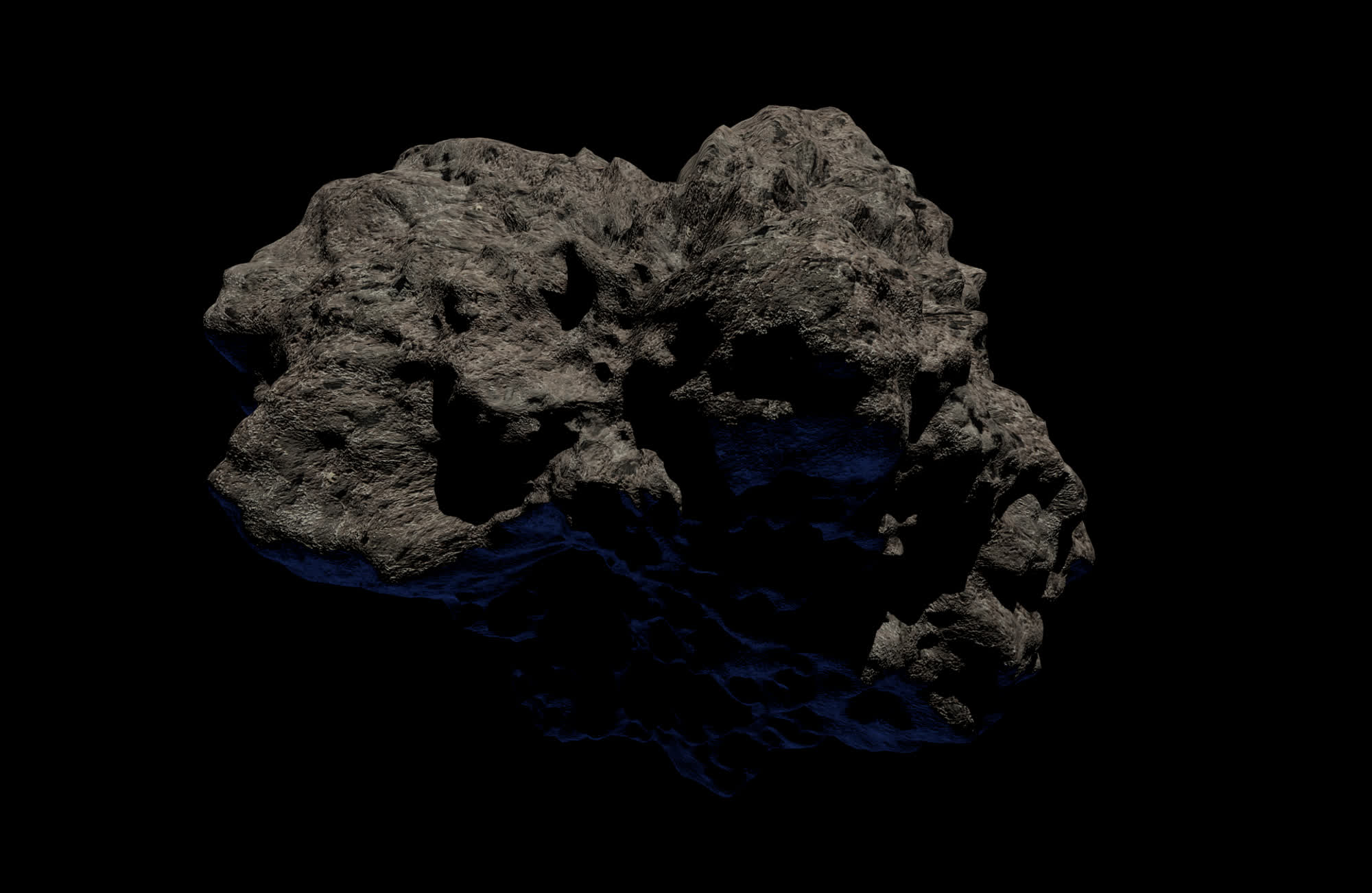
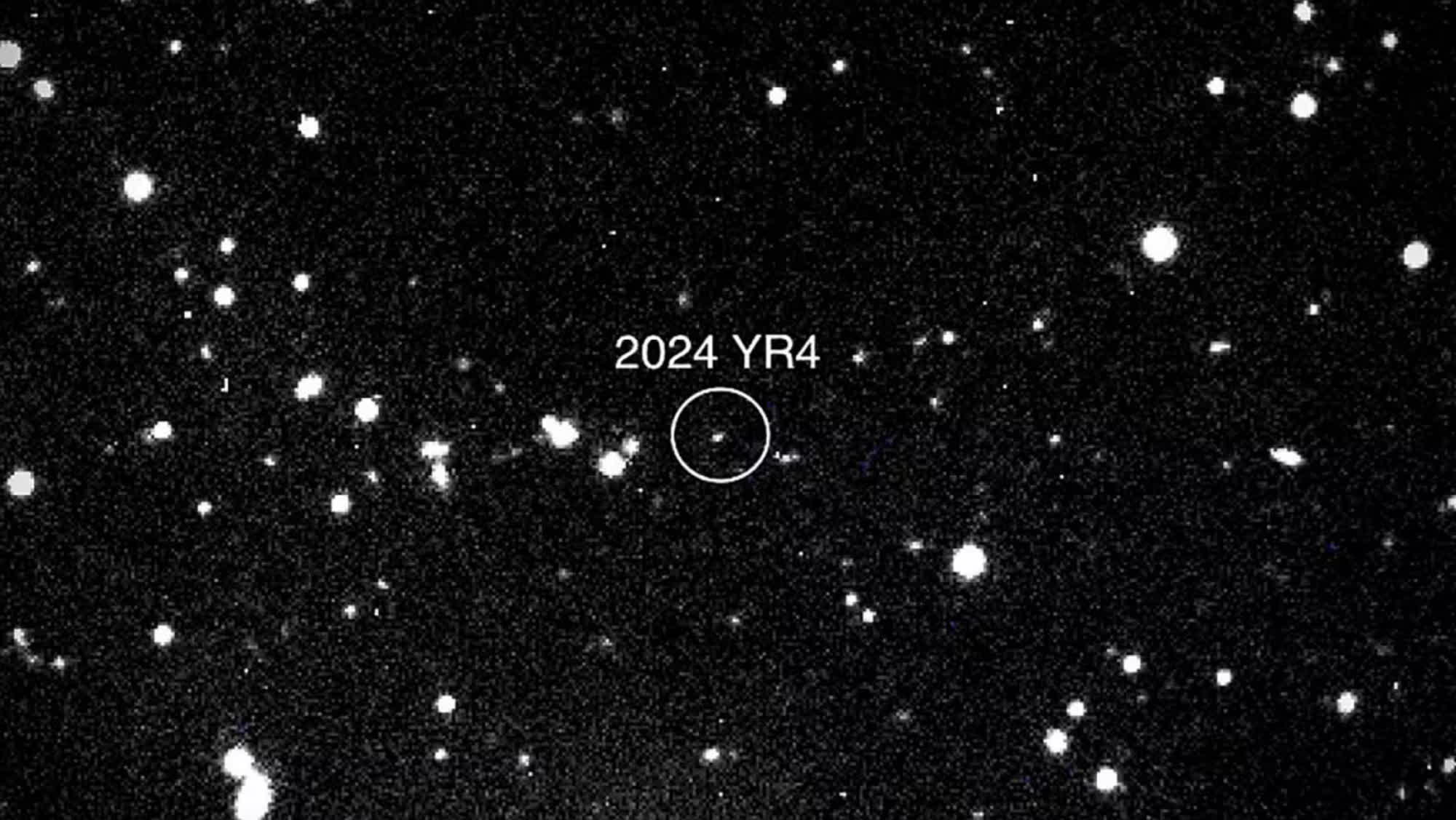
Discovered on December 27, 2024, asteroid 2024 YR4 is currently rated as a three on the Torino scale. Space agencies around the world are closely monitoring the situation, with the European Space Agency set to use the James Webb Space Telescope to provide a more precise risk assessment.

Researchers at the ESA are updating the most relevant data about asteroid 2024 YR4 on a daily basis. Today's assessment confirms that the asteroid has a diameter between 40 and 90 meters, and a two percent probability of impacting Earth on December 22, 2032. Currently, astronomers studying asteroid 2024 YR4 are limited to using instruments that detect visible light reflected from the Sun.

As a general rule, the brighter the asteroid, the larger it is. However, things can get complicated if the asteroid has a highly reflective surface. It could either be 40 meters across and very reflective, or 90 meters across and much less reflective.
A precise estimation of the asteroid's size will be crucial for properly assessing the threat, as a 90-meter, high-speed body could cause significantly more damage than a 40-meter one.

Webb will be particularly useful for studying asteroid 2024 YR4. The orbiting observatory operates in the infrared portion of the electromagnetic spectrum, which allows for more accurate estimates of the asteroid's size based on the heat it emits.

ESA scientists recently published a paper highlighting the telescope's ability to detect very small bodies (less than 10 meters across) within the asteroid belt, which lies between the orbits of Jupiter and Mars.

Astronomers will rely on two specific JWST instruments: the Mid-InfraRed Instrument (MIRI) and the Near-Infrared Camera (NIRCam). By combining data from MIRI and NIRCam, ESA scientists hope to obtain more precise measurements of the asteroid's size and position. The NIRCam will be particularly useful for tracking the asteroid's position when it is out of reach of Earth-based telescopes.

The European Space Agency plans to conduct three separate observation campaigns using the JWST. The first will take place in March, when asteroid 2024 YR4 will be at its brightest and within the telescope's range. The second round is scheduled for May, to track changes in the asteroid's temperature. The final round of observations will occur in 2028, aimed at studying the asteroid's orbit around the Sun.

Permalink to story:

 
2% probability of impacting earth then I'd say that's a low probability. We have now until 2032 to develop interplanetary defense systems just encase we get very unlucky.
 
There's no cause for concern.

We have 2025 technology, albeit with 1980s ethics. If we already know it's coming then we can move it, capture it, whatever. If anything we may get to see something cool happen when we capture our first asteroid.

The ones to worry about are the planet busting comets loitering beyond the outer rim of our solar system. If one of those comes in to make a pass at the sun and we are in the way, the insane velocity it will have will be extremely problematic.
 
What the news about this doesn't like to mention is that the YR4 asteroid is a lot smaller than the one NASA smashed a probe into in order to see if they could move it. That mission is called the DART mission and the asteroid they struck was about 160 meters, and it moved a lot more than they expected.

So even if it were going to hit earth, NASA could change its course so that it doesn't hit earth fairly easily. All they have to do is hit it with something.
 
Please let it hit me. Would love to be written up for a no-call no-show only for them to find out I was killed by an Asteroid.
 
2% probability of impacting earth then I'd say that's a low probability. We have now until 2032 to develop interplanetary defense systems just encase we get very unlucky.

Except it's already too late. To passively move an asteroid enough where it makes a difference is something that takes a few decades of lead time.
 
What the news about this doesn't like to mention is that the YR4 asteroid is a lot smaller than the one NASA smashed a probe into in order to see if they could move it. That mission is called the DART mission and the asteroid they struck was about 160 meters, and it moved a lot more than they expected.

So even if it were going to hit earth, NASA could change its course so that it doesn't hit earth fairly easily. All they have to do is hit it with something.

Except you'd need to hit it *multiple* times in just the right way, over a period of years to have enough of an impact for it to miss the planet. A few meters isn't going to be enough when you consider once it gets close enough the earth's gravity will do the rest; we'd need to push it a few hundred (thousand?) miles, and we just don't have the capacity to do that.
 
As a note: When this was first detected the odds of impact were about 1 in 90. This is really the first case where the odds of impact went *up* after initial observation.
 
Except you'd need to hit it *multiple* times in just the right way, over a period of years to have enough of an impact for it to miss the planet. A few meters isn't going to be enough when you consider once it gets close enough the earth's gravity will do the rest; we'd need to push it a few hundred (thousand?) miles, and we just don't have the capacity to do that.
This is completely wrong and I'm pretty sure you just made this all up off the top of your head.
 
Back