Scientists find all five genetic building blocks for life in asteroid Ryugu

Alfonso Maruccia

Posts: 2,583   +972
Staff
Bottom line: The Hayabusa2 spacecraft returned its samples of asteroid 162173 Ryugu in 2020, and scientists have been studying the material ever since. A newly published paper confirms that the space rock carried the most fundamental elements of life as we know it – all of them.
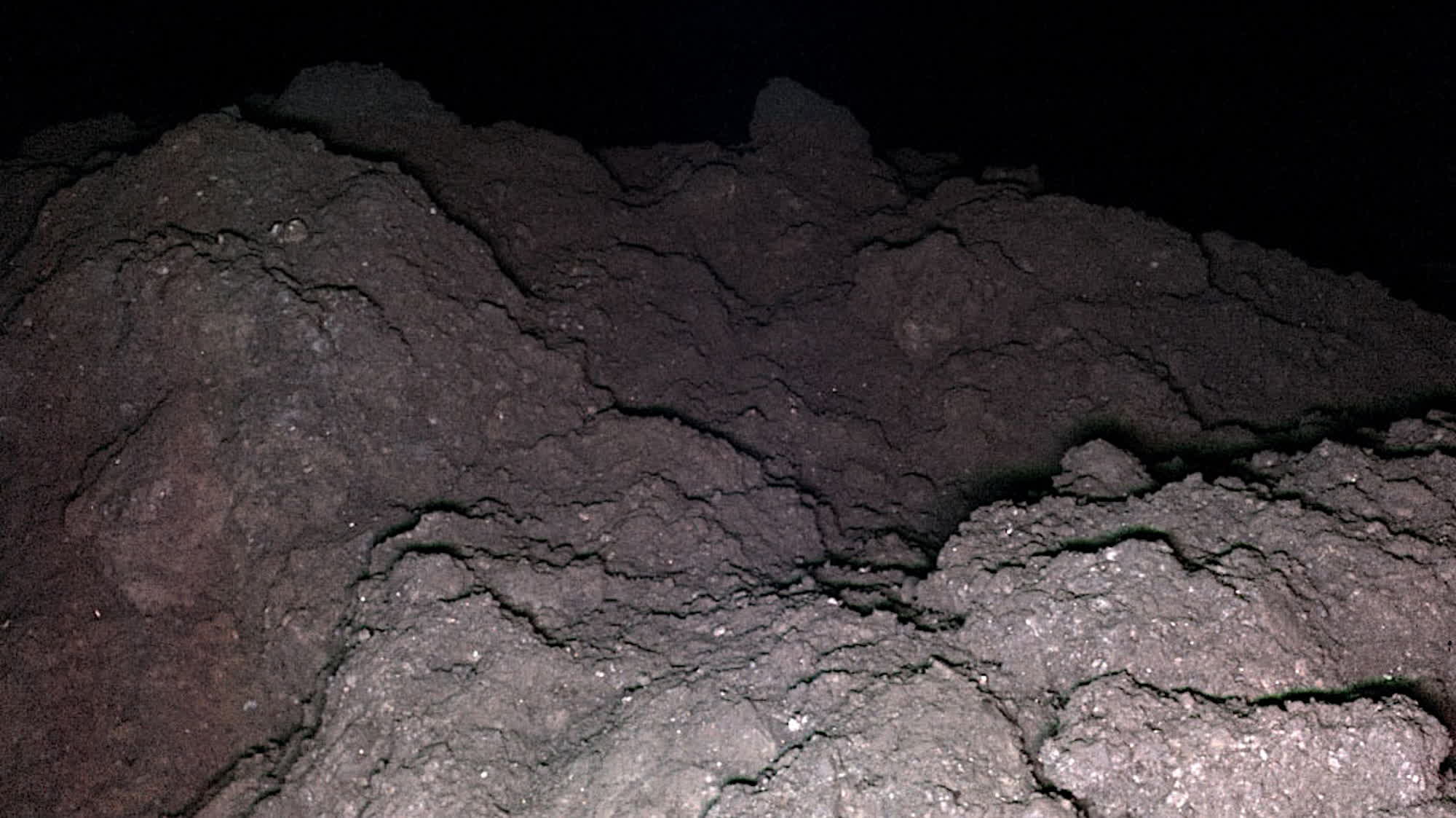
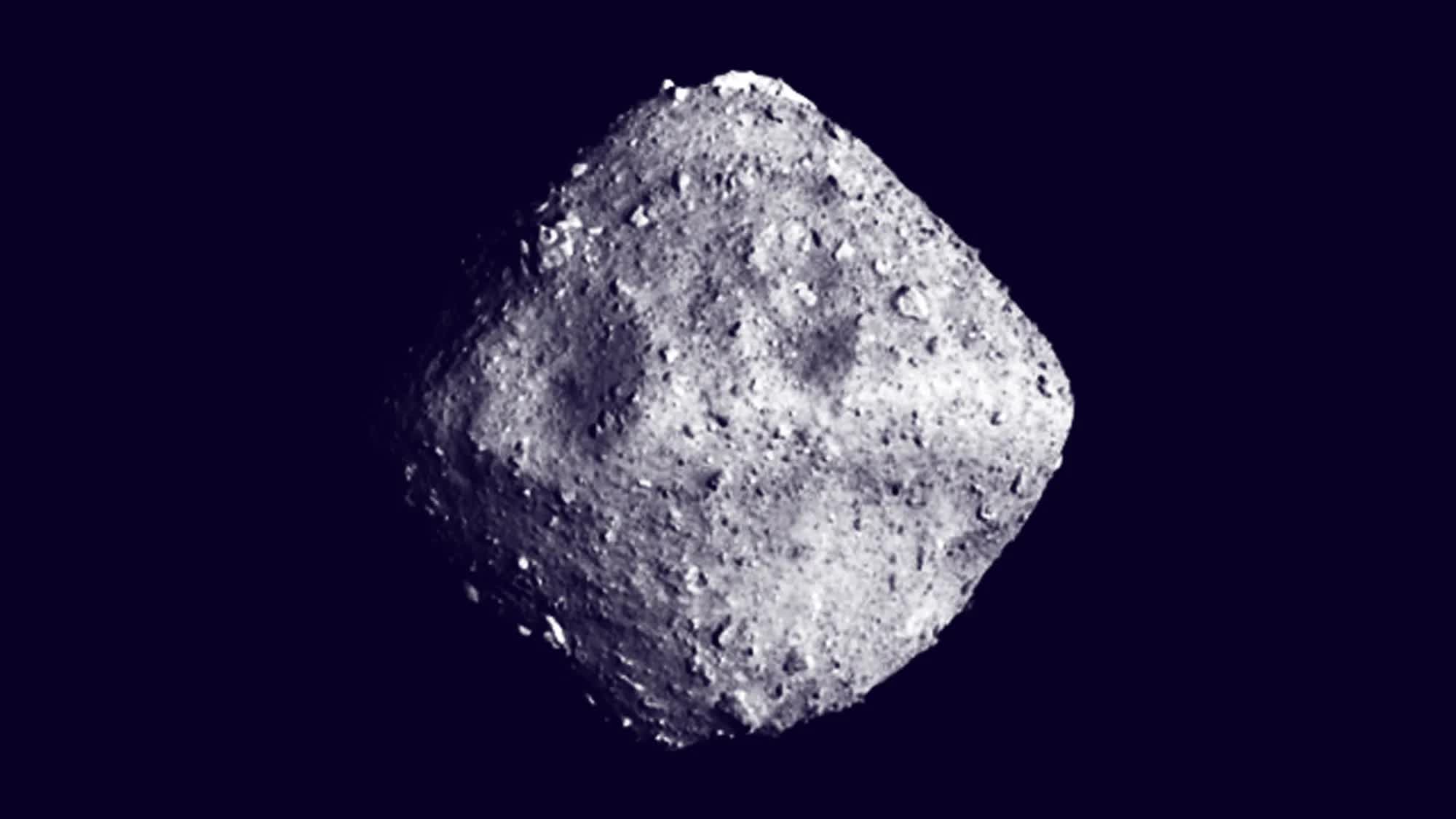
Researchers are still studying samples of Ryugu collected by the Japanese Aerospace Exploration Agency from its Hayabusa2 mission. After the first papers focused on the composition of the recovered material, a Japanese team has now found a "complete" set of genetic bases belonging to both DNA and RNA.

The recently published study explains that asteroids are already known for their "seeding" role in the emergence of life throughout the universe. Organic molecules delivered by these extraterrestrial bodies have played a key role in bringing the building blocks of life to Earth, and Ryugu is once again suggesting that the so-called panspermia hypothesis may be true.
The researchers have discovered all five "canonical" nucleotides in Ryugu samples: adenine, guanine, cytosine, and thymine for DNA, uracil for RNA. Traces of RNA bases were already discovered in 2023.

Both DNA and RNA play crucial roles in Earth's lifeforms, storing the instructions for their development while functioning and acting as messengers for turning these instructions into actual protein production inside cells.
The Japanese team compared their results to other asteroid samples collected by different organizations. In 2025, NASA discovered that asteroid Bennu contained all five nucleobases required for life to function. The same is true for Orgueil and Murchison, two historically significant meteorites that fell on Earth in 1864 (France) and in 1969 (Australia), respectively.

The new study confirms that carbonaceous (C-Type) asteroids played an important part in changing Earth's prebiotic chemical soup that gave rise to life on Earth. C-type asteroids are the most common type (75%) of flying rocks scattered throughout the Solar System, with most of them lying at the outer edge of the asteroid belt.

However, as Spanish astrobiologist Cesar Menor Salvan highlighted after reading the study, the new Ryugu analysis does not prove that life actually originated in space before coming to Earth. The Japanese team confirmed that these organic materials can form under prebiotic conditions anywhere in the universe.

The researchers also made an interesting discovery about ammonia, another important chemical compound involved in the development of life. The correlation between ammonia and the nucleobases detected in Ryugu samples could provide important clues about how the genetic molecules actually came to be in this primordial environment.

Permalink to story:

 
I saw this earlier somewhere else and the headline said "the 5 building blocks of DNA" and I thought it was written by AI.

Just to clarify, when they say 5 building blocks of life they are referring to the 4 compounds in DNA and one for RNA, which this article did specify but not up front.
 
I saw this earlier somewhere else and the headline said "the 5 building blocks of DNA" and I thought it was written by AI.

Just to clarify, when they say 5 building blocks of life they are referring to the 4 compounds in DNA and one for RNA, which this article did specify but not up front.

I can assure you: I will NEVER write anything with AI. The mere concept disgusts me. The errors and bullshit you'll eventually find here are all mine :-D
 
The recently published study explains that asteroids are already known for their "seeding" role in the emergence of life throughout the universe. ... The new study confirms that carbonaceous (C-Type) asteroids played an important part in changing Earth's prebiotic chemical soup that gave rise to life on Earth.
The study is being misrepresented. It states only that asteroids "may have" played a role in seeding life on earth, and that this study, rather than "confirming" this, merely 'reinforces the hypothesis'. We've known since the Urey-Miller experiment 70 years ago that primordial conditions on Earth (and even Jupiter) can spontaneously create all five of these nucleotides, without the necessity of pre-existing life.

As for seeding "throughout the universe" at large, Ryugu formed within our own solar nebula, and this study doesn't purport to claim it applies to conditions elsewhere.
 
The evidence, built up over the years, does point to the widespread existence of life's building blocks. Other solar systems may already have life, due to the widespread distribution of the seeds needed. The question is how many actual planets have the right environment to let life germinate and grow?
 
This is equivalent to finding metal on an asteroid and concluding that spaceship building blocks were discovered.

When science funding is based on having the most exciting discoveries, this is the result.

(Media extending inferences drawn for clicks then takes it even further)
Tell me you are scientifically illiterate without saying it.

Your analogy is completely wrong. Raw material like metal and copper are no where near organic compounds on the scale of things you are likely to find in space, and finding all of the compounds required for DNA on an asteroid gives credence to the theory of panspermia.


It's a shame how confidently people blurt things out, arrogantly, whilst being completely wrong and clearly making things up off the top of their head. I could go deeper into how flawed your analogy is if needed.
 
Your analogy is completely wrong. Raw material like metal and copper are no where near organic compounds on the scale of things you are likely to find in space, and finding all of the compounds required for DNA on an asteroid gives credence to the theory of panspermia.
He's actually correct. Given the ease at which these molecules form naturally, calling them building blocks of life is like calling a pure shard of silicon sand the building block of a computer chip.

There are several issues with the idea of panspermia ... or at least nucleotide-driven panspermia. These compounds can form in just a few hours under the conditions in most any solar system, so the idea that their arrival here gave life some enormous head start is fallacious. Worse, once they arrive on some planetary environment, they either need to find amenable conditions for their continued evolution (in which case they would have likely already long since formed), or they'd simply break down quickly. Either way, it doesn't seem to be terribly helpful to kickstarting life.

Remember, these are incredibly simple organic chemicals. Adenosine, for instance, is just C5N5H5 -- not much more complex than the HCN, ethane (C2H6), benzene (C6H6), acetonitrile (CH3CN) and other organics that fill the atmosphere and surface of places like Titan. The real stumbling block to the formation of life isn't these incredibly simple molecules, but the formation of the first protocells ... a process requiring many millions of years.
 
"C-type asteroids are the most common type (75%) of flying rocks scattered throughout the Solar System, with most of them lying at the outer edge of the asteroid belt."

This is not what C-type Horseshoe asteroids are, or do, at all. C-type asteroids follow the planets' orbits, and there are zero in the asteroid belt. Earth has hundreds or thousands in its orbit - because to HOLD an orbit requires a certain velocity. If Earth had Jupiter's velocity relative to the sun, it would be in Jupiter's orbit as a C-orbit asteroid, itself. Or captured as a moon, should the orbit transverse Jupiter's. Every planet has many, many C-orbit asteroids including Mercury.

Orbital velocity determines the distance from the body being orbited. All asteroids in Earth's orbit have the same velocity as the Earth - asteroids don't have engines, cannot turn or maneuver, and have no impetus to motion. Asteroids don't change orbits unless an external collision causes them to lose or gain velocity. Asteroids don't strike planets often, due to this fact.


Diagram:
https://scx2.b-cdn.net/gfx/news/hires/2011/horseshoeorb.jpg

Article:
 

Attachments

  • C-Orbit Horseshoe Asteroids.jpg
    C-Orbit Horseshoe Asteroids.jpg
    103.3 KB · Views: 1
Tell me you are scientifically illiterate without saying it.

Your analogy is completely wrong. Raw material like metal and copper are no where near organic compounds on the scale of things you are likely to find in space, and finding all of the compounds required for DNA on an asteroid gives credence to the theory of panspermia.

It's a shame how confidently people blurt things out, arrogantly, whilst being completely wrong and clearly making things up off the top of their head. I could go deeper into how flawed your analogy is if needed.
My position as a research scientist at an elite university suggests otherwise.

Now let me explain how an analogy works. My statement is comparing the distance between what they found on the asteroid and their claims of building blocks. A to B is like X to Y.

It says nothing about metal being an organic compound (A to X) or spaceships being alive (B to Y) or any other random connection to cope with the mean man attacking science.

And I'm not attacking science, I pointing out the misaligned incentives about how much of science is funded.
 
Last edited:
The evidence, built up over the years, does point to the widespread existence of life's building blocks. Other solar systems may already have life, due to the widespread distribution of the seeds needed. The question is how many actual planets have the right environment to let life germinate and grow?

DNA is a freaking encoded data set... bfd they found letters... so there must be a self-assembling book around here somewhere... gmafb
 
Back