Connecting the dots: Intel recently unveiled Core Series 3 "Wildcat Lake" mobile processors at an event in China. Following the announcement, multiple laptops powered by the new chips appeared on JD.com, one of China's largest online retailers. The first wave of Wildcat Lake laptops includes models from Asus, HP, and Honor, with prices starting at around $600, positioning them to compete with Apple's MacBook Neo.

The most affordable Wildcat Lake notebook currently listed online is the Chuwi UniBook, priced at $449 before tax. It runs Windows 11 and is powered by the Core 3 304 processor, which features five CPU cores clocked at up to 4.3GHz, a single Xe GPU core running at up to 2.3GHz, and a 15 TOPS NPU for on-device AI workloads.
Other hardware features include a 14-inch 1,920 × 1,200 display, 8GB of LPDDR5X memory running at up to 7,467 MT/s, a 256GB PCIe 3.0 SSD, and a 53.38Wh battery. Connectivity options include Wi-Fi 6, Bluetooth 5.2, Gigabit Ethernet, a TF card slot, a 3.5mm audio jack, two USB-C ports, two USB 3.2 Gen 1 ports, one USB 2.0 port, and HDMI 2.0.
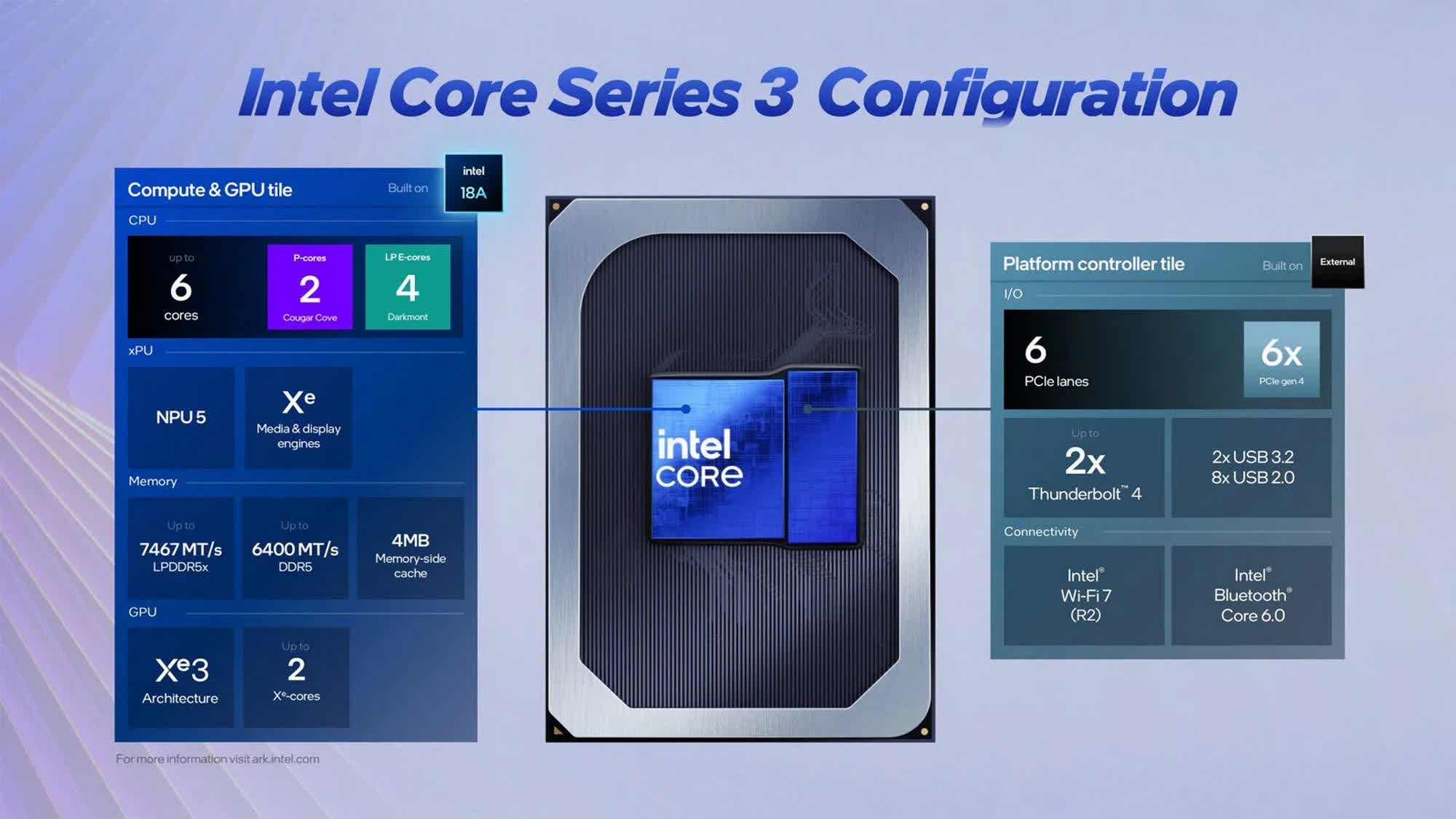
Asus, HP, and Honor have also introduced new Wildcat Lake laptops. While they are priced higher than the Chuwi model, they feature more premium hardware. The Honor Notebook X14 2026 Combat Edition, Asus Vivobook 14SE and 16SE, and HP OmniBook 3 are all powered by Intel's Core 5 320 processor, which features a six-core CPU in a 2P + 4LP configuration. Each model also includes 16GB of memory and a 512GB SSD.
The pricing reflects the more premium positioning of these devices. The Asus Vivobook starts at around $675, while the HP OmniBook is listed at approximately $750. The Honor X14 is the most affordable of the group, with pricing starting at roughly $650. All prices include China's 13% value-added tax.

Wildcat Lake laptops are part of Intel's new Project Firefly initiative, which aims to standardize laptop hardware and design in a way similar to the smartphone industry. The move is expected to help manufacturers increase production volumes while reducing research and development costs. Project Firefly is specifically targeting Apple's MacBook Neo, which we previously described as a wake-up call for the broader PC industry.
The Neo is already reshaping the entry-level laptop market and raising expectations for what consumers can expect from affordable notebooks. According to a report published last month, Apple is struggling to keep up with demand for the device and is reportedly reevaluating its original production target of around five to six million units this year.
Asus and HP unveil Intel Wildcat Lake laptops starting at $449 to rival Apple's MacBook Neo


