Intel showcases Wildcat Lake reference laptop with aluminum chassis and fanless design

DragonSlayer101

Posts: 956   +13
Staff
First look: Intel has showcased a reference laptop design featuring an unidentified chip from its new Core Series 3 "Wildcat Lake" lineup. The notebook sports a sleek aluminum chassis with an unmistakable MacBook-style keyboard and comes in a variegated aquamarine and cream colorway.
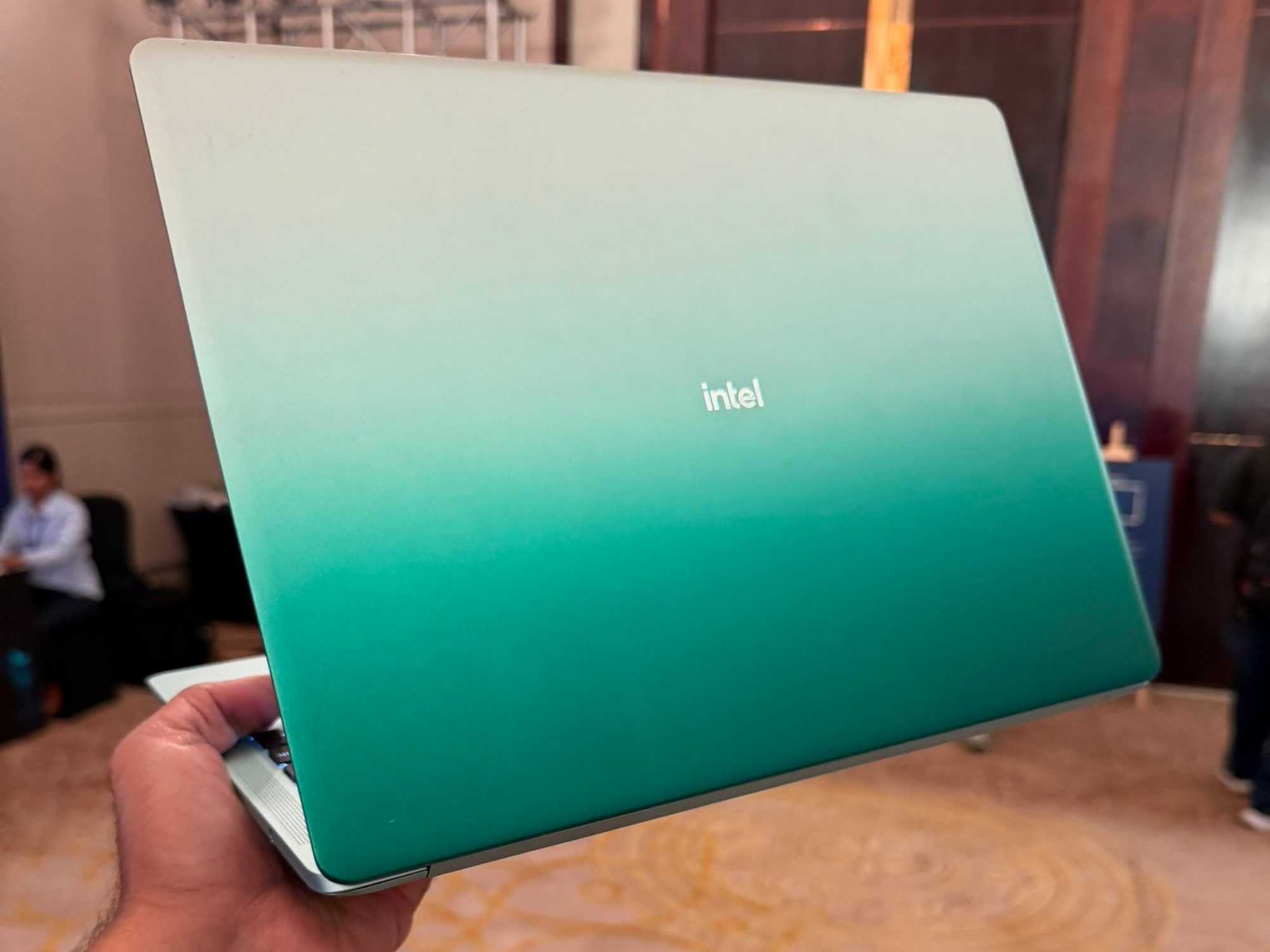
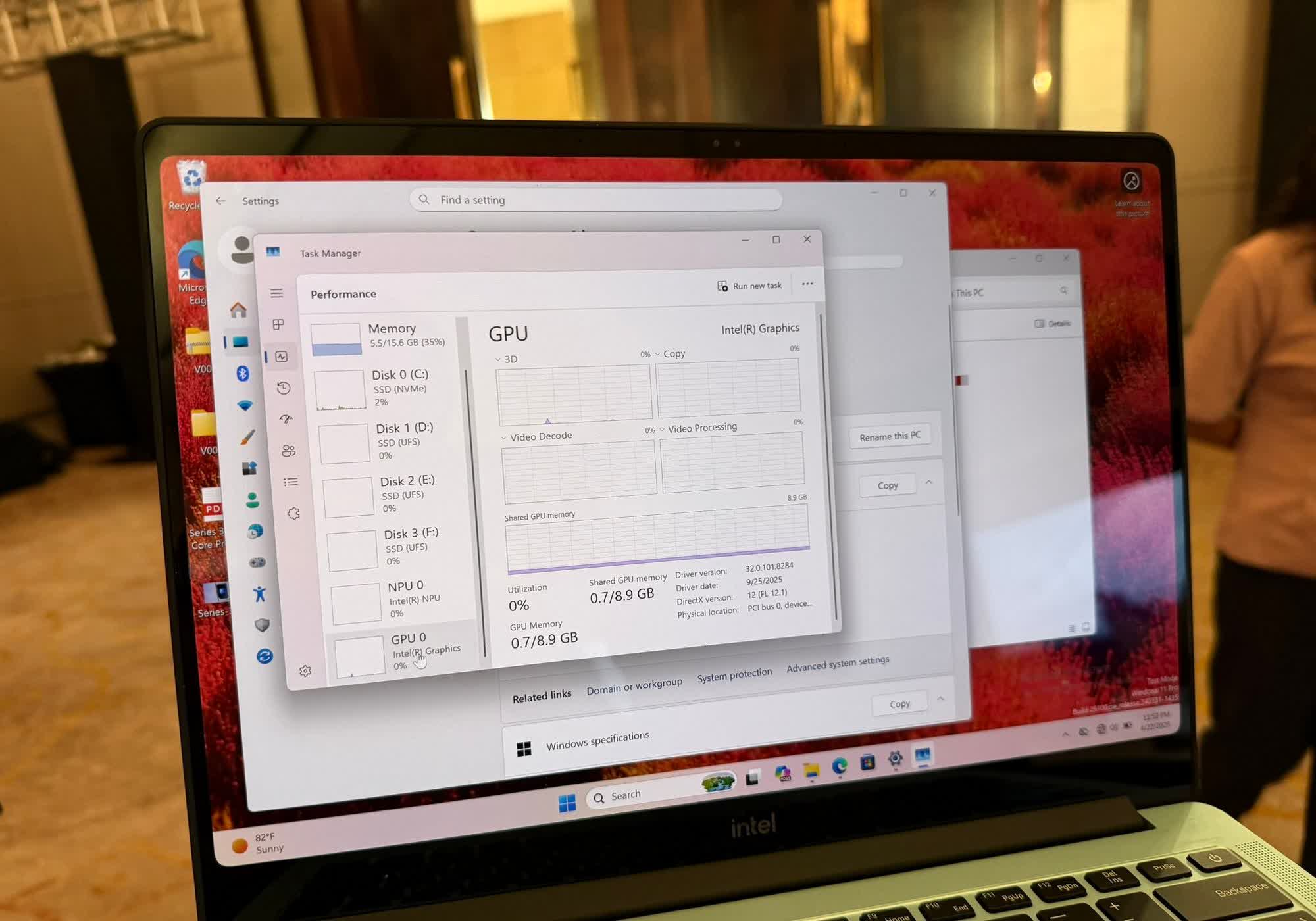
The laptop is powered by a six-core CPU in a 2P+4LPE configuration, featuring two Cougar Cove P-cores and four Darkmont LPE cores. The SoC also includes two Xe graphics cores and a dedicated 17 TOPS NPU. Intel did not specify the exact CPU model, but it is believed to be either the Core 7 360 or Core 7 350, as these are the only two Wildcat Lake SKUs with a 17 TOPS NPU.

The reference laptop also features 16GB of soldered memory, a notable inclusion in the current market where DRAM prices have reached record highs and are expected to rise further in the coming months. Intel did not specify the RAM frequency, but NotebookCheck suggests it could run at 7,467 MT/s.

Designed to compete with the MacBook Neo, the small, lightweight laptop emphasizes power efficiency, featuring a 17W PL1 (22W maximum boost) and a 35W PL2. It is also available in fanless configurations where the TDP is limited to 11W to maintain thermal stability. Intel claims that these fanless models will remain fully functional without thermal throttling, even in the absence of active cooling.
Intel's reference laptop takes direct aim at Apple's MacBook Neo, which we previously described as a "wake-up call" for the entire PC industry. Priced at just $599, it is Apple's most affordable laptop yet, offering an unprecedented value proposition for mainstream consumers. Thanks in part to positive reviews, demand for the device is reportedly so strong that it is creating supply constraints for Apple.

PC manufacturers are already responding to the new device, with MSI launching a range of well-designed, high-performance budget laptops powered by Panther Lake and Wildcat Lake chips. Asus has yet to announce a direct competitor, but the company's co-CEO, S.Y. Hsu, described the Neo as a "shock" to the entire Windows ecosystem.

Intel unveiled its Wildcat Lake CPUs last week, bringing its 18A process technology to value-oriented notebooks. According to the company, the new chips deliver up to 47% better single-thread performance, 41% better multi-thread performance, and 2.8× higher GPU AI performance compared to five-year-old PCs and previous-generation low-power processors such as the Core 7 150U.

Image credit: NotebookCheck

Permalink to story:

 
So one one end of things, I absolutely love aluminium chassis on laptops. The problem is that Aluminium gets metal fatigue and breaks overtime, a problem I'm currently having with my laptop. I do a lot of traveling and my laptop has to exist on jobsites so my next one is definitely going to be a plastic chassis. The chassis is bent, the hinges don't line up anymore. It's actually a shame because there is nothing wrong with the hardware. I'm not saying that plastic is more durable than aluminium, but I am saying in my specific use case, plastic is going to be the better option. And whenever I do that, since the harware in here is fine I just just remove it, 3d print a mount and I will have a 16core(intel 11th gen), 64GB laptop that only runs on 25 watts. the charger it came with says 85watts but Dells website says 25watts and it barely gets warm so I have no reason to doubt those numbers.
 
"DRAM prices have reached record highs and are expected to rise further in the coming months." <------------- And this is where people should refuse to buy.
 
So one one end of things, I absolutely love aluminium chassis on laptops. The problem is that Aluminium gets metal fatigue and breaks overtime, a problem I'm currently having with my laptop. I do a lot of traveling and my laptop has to exist on jobsites so my next one is definitely going to be a plastic chassis. The chassis is bent, the hinges don't line up anymore. It's actually a shame because there is nothing wrong with the hardware. I'm not saying that plastic is more durable than aluminium, but I am saying in my specific use case, plastic is going to be the better option. And whenever I do that, since the harware in here is fine I just just remove it, 3d print a mount and I will have a 16core(intel 11th gen), 64GB laptop that only runs on 25 watts. the charger it came with says 85watts but Dells website says 25watts and it barely gets warm so I have no reason to doubt those numbers.
Plastic fatigues far faster then aluminum does. Look how well apple laptops hold up.

My Razer Stealth has a bent chassis, but that's because it got knocked on the ground. Had it been plastic, the chassis would have been ruined.
 
Last edited:
Plastic fatigues far faster then aluminum does. Look how well apple laptops hold up.

My Razer Stealth has a bent chassis, but that's because it got knocked on the ground. Had it been plastic, the chassis would have been ruined.
Plastic has higher impact resistance, it's why it's used in so many tools. I love my aluminum chassis laptop, but like I said it gets chucked around on jobsites constantly and thrown into tool bags and it is the impact damage that is going to total my laptop. It was knocked off a work bench with a mouse plugged in and bent the chassis around the USB port. I tried to bend it back and broke the aluminum off. There are chunks taken out of it.

Look at any laptop advertised as rugged, they're all plastic. I won't argue tht aluminum is nicer, but there is a reason that brands like Hilti and Sthil use plastic bodies, they're more durable in these work conditions. There are tool brands where money is no object and reliability is the main concern because downtime is more expensive than the tools. The preference is plastic chassis. Fatigue rates are higher in plastics, but so is impact resistance and considering that impact damage is the number on cause of damage on jobsites, it basically and deficiency plastic has. And then there is fiberglass and carbon fiber reinforced plastics that are both cheaper and more durable than aluminum.
 
Last edited:
Soldered 16GB RAM on a budget laptop during a DRAM price spike. Bold strategy. At least when it fails in three years you get to buy a whole new laptop instead of just a stick of RAM. Very consumer friendly.
 
Plastic has higher impact resistance, it's why it's used in so many tools. I love my aluminum chassis laptop, but like I said it gets chucked around on jobsites constantly and thrown into tool bags and it is the impact damage that is going to total my laptop. It was knocked off a work bench with a mouse plugged in and bent the chassis around the USB port. I tried to bend it back and broke the aluminum off. There are chunks taken out of it.

Look at any laptop advertised as rugged, they're all plastic. I won't argue tht aluminum is nicer, but there is a reason that brands like Hilti and Sthil use plastic bodies, they're more durable in these work conditions. There are tool brands where money is no object and reliability is the main concern because downtime is more expensive than the tools. The preference is plastic chassis. Fatigue rates are higher in plastics, but so is impact resistance and considering that impact damage is the number on cause of damage on jobsites, it basically and deficiency plastic has. And then there is fiberglass and carbon fiber reinforced plastics that are both cheaper and more durable than aluminum.
There are many different kinds of plastic. The plastic used in tools is FAR thicker and tougher then the thin, brittle plastic used in laptops. And no, "all rugged laptops" are not plastic. The GOOD ones, IE the ones you see in cop cars or in industry, use magnesium frames with rubber casings. Not plastic.

Plastic is trash for laptop frames, thats why nice expensive business laptops use METAL, not plastic.
 
There are many different kinds of plastic. The plastic used in tools is FAR thicker and tougher then the thin, brittle plastic used in laptops. And no, "all rugged laptops" are not plastic. The GOOD ones, IE the ones you see in cop cars or in industry, use magnesium frames with rubber casings. Not plastic.

Plastic is trash for laptop frames, thats why nice expensive business laptops use METAL, not plastic.

I 100% agree with you. I’m a computer repair tech, and I see every type of laptop daily. These plastic ones nowadays are so fragile—you sneeze and the hinge breaks from the LCD assembly, and it can even crack the screen. The only laptops I consistently see with less damage over time or from drops are the ones with magnesium frames and metal lids.
 
I absolutely love aluminium chassis on laptops. The problem is that Aluminium gets metal fatigue and breaks overtime, a problem I'm currently having with my laptop. I do a lot of traveling and my laptop has to exist on jobsites so my next one is definitely going to be a plastic chassis.
I have an aluminium chassis on my laptop which I bought it in 2017. I use it all the time and It still looks brand new. Maybe you just have to accept that your usage is what's killing the laptop and not what it's made from? There are "tough" laptops out there but whether they're worth the money is another question.
 
I have an aluminium chassis on my laptop which I bought it in 2017. I use it all the time and It still looks brand new. Maybe you just have to accept that your usage is what's killing the laptop and not what it's made from? There are "tough" laptops out there but whether they're worth the money is another question.
It's like I've been saying that the whole thread. What an eye opener, thank you. Aluminum laptops are not meant to live on commercial construction jobsites
 
Back