
The big picture: Microsoft has finally set a release date for its first Xbox handheld gaming PC, built in partnership with Asus. But while the devices aim to bring Steam Deck – style simplicity to the somewhat messy world of portable Windows gaming – streamlining optimization, shader compilation, and even layering in AI – their future still hinges on a volatile factor outside Microsoft's control: shifting US tariffs that make final pricing a moving target.
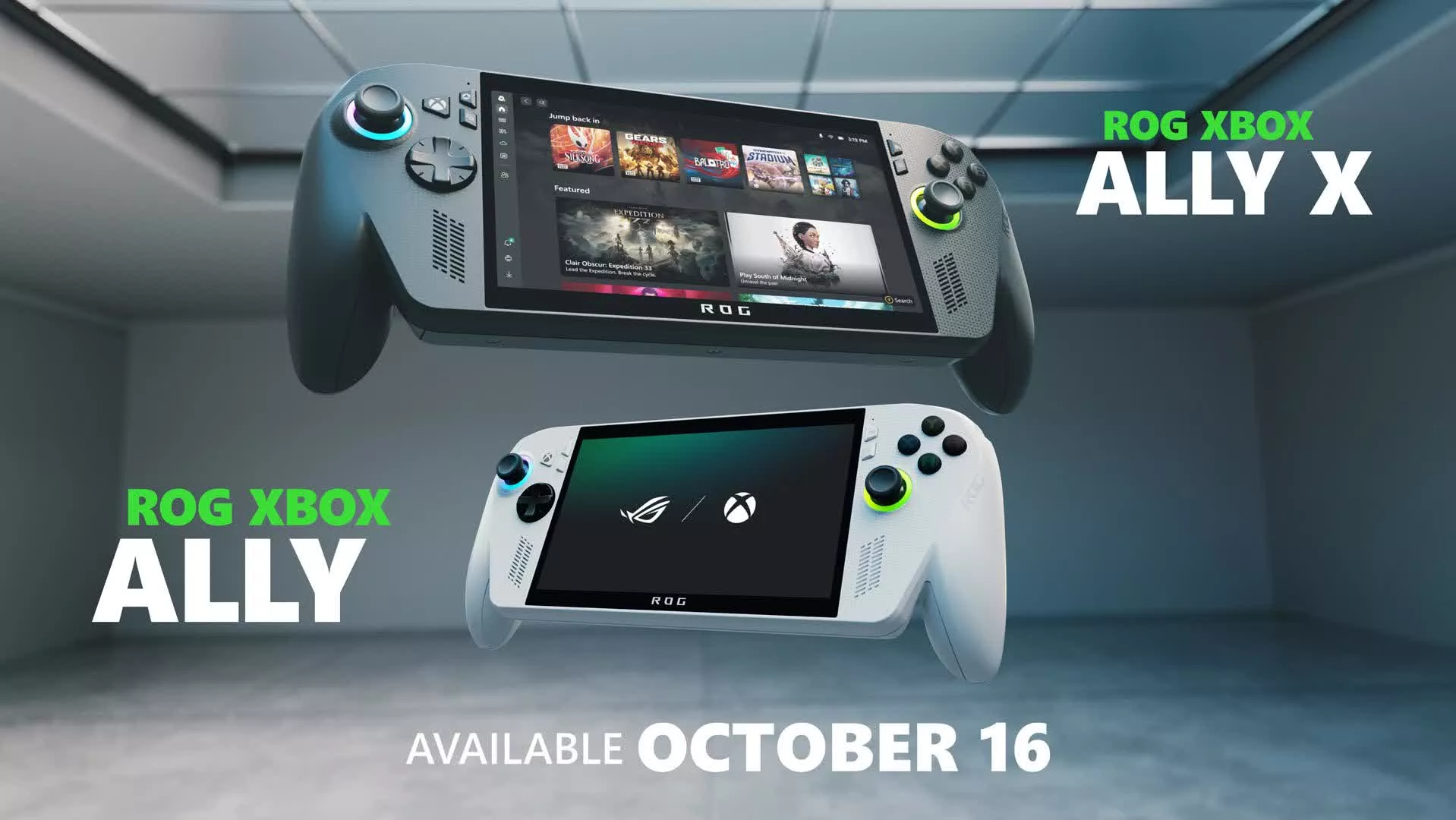
Microsoft and Asus revealed most of the key details for the ROG Xbox Ally and ROG Xbox Ally X at Gamescom. While pricing remains unclear, Microsoft outlined several features designed to address common frustrations with PC gaming.
For example, the Handheld Compatibility Program will show players which games automatically use proper handheld input and resolution settings, echoing the Steam Deck's verification system. Games labeled 'Handheld Optimized' require no adjustments, while those marked 'Mostly Compatible' might need minor tweaks.
However, Microsoft's version of the system doesn't display performance estimates, since the Xbox app already includes the Windows Performance Fit indicator on all PCs. ROG Xbox Ally owners should look for both handheld optimization and performance fit badges when installing games to ensure full compatibility. Reports from Gamescom suggest that Gears of War: Reloaded could be the first game to carry Microsoft's verification badge.
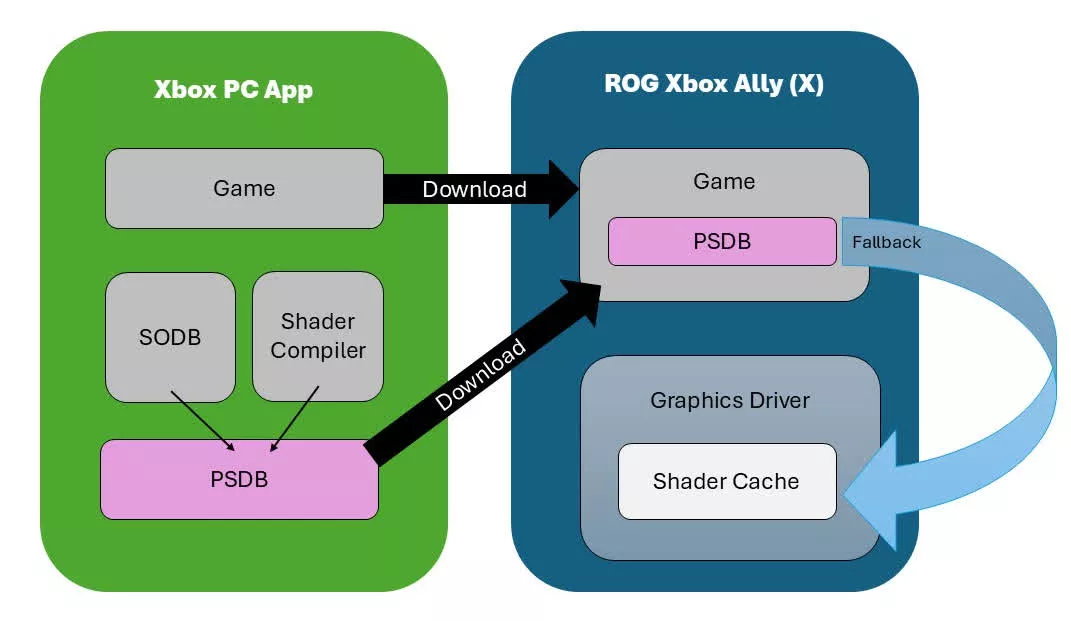
Microsoft will also debut Advanced Shader Delivery on the handhelds, aiming to eliminate shader compilation stutter.
Traditionally, modern PC games compile shaders after booting up, since they must be tailored to specific hardware and drivers. Doing so during gameplay causes stuttering, while compiling at startup leads to lengthy load times. The process often repeats whenever users update drivers or swap graphics cards.
Advanced Shader Delivery shifts this step to the cloud. Shader data is packaged with driver information into a new format and downloaded during installation. The Xbox PC app will also automatically fetch new shaders after driver updates, requiring no additional work from developers.
The Steam Deck similarly downloads pre-compiled shaders, made possible by its fixed hardware specifications – unlike the near-infinite variety of PC configurations.
Advanced Shader Delivery will launch exclusively on the Xbox PC app and ROG Xbox Ally devices, but Microsoft plans to expand support to other hardware and storefronts. More details are expected in September, alongside the release of an AgilitySDK that will open the feature to third-party developers.
The Handheld Compatibility Program and Advanced Shader Delivery build on the biggest Windows change introduced by the ROG Xbox Ally: the Xbox full-screen experience. Revealed in June, this new interface replaces the traditional desktop and background tasks with a gamepad-friendly menu optimized for smaller screens. It also unifies installed games from the Xbox app, Game Pass, Battle.net, Epic Games, and Steam.
Microsoft is obviously attempting to answer Valve's SteamOS, which has made installing and playing games through a Linux compatibility layer often simpler than on Windows. SteamOS debuted on the Steam Deck, but is now also available on the Lenovo Legion Go, with a general release planned for the future.
The higher-end ROG Xbox Ally X will also push into generative AI. Its Ryzen AI Z2 Extreme APU includes an NPU, which Microsoft plans to use for features like the Copilot chatbot companion, upscaling, and automatic highlight reels.
Asus and Microsoft have yet to reveal pricing for the ROG Xbox handhelds, in part because they are still assessing the impact of shifting macroeconomic conditions – most likely US tariffs, which recently forced Sony to raise the PlayStation 5's price.
The rumor mill suggests that the ROG Xbox Ally could cost $550, while the ROG Xbox Ally X may reach $900. Best Buy briefly listed those same prices before removing them.
Asus ROG Xbox handheld launches October 16 with Steam Deck-like optimizations


