Audiophile myth challenged as $4,000 boutique audio cable fails to beat $7 Amazon Basics in lab test

midian182

Posts: 11,722   +177
Staff member
Facepalm: There's long been an argument among certain audiophiles that they can hear the difference between expensive and cheap audio cables even when others can't. But a YouTube video that tests $4,000 RCA cables against $7 Amazon Basics alternatives shows why some people are throwing away money.
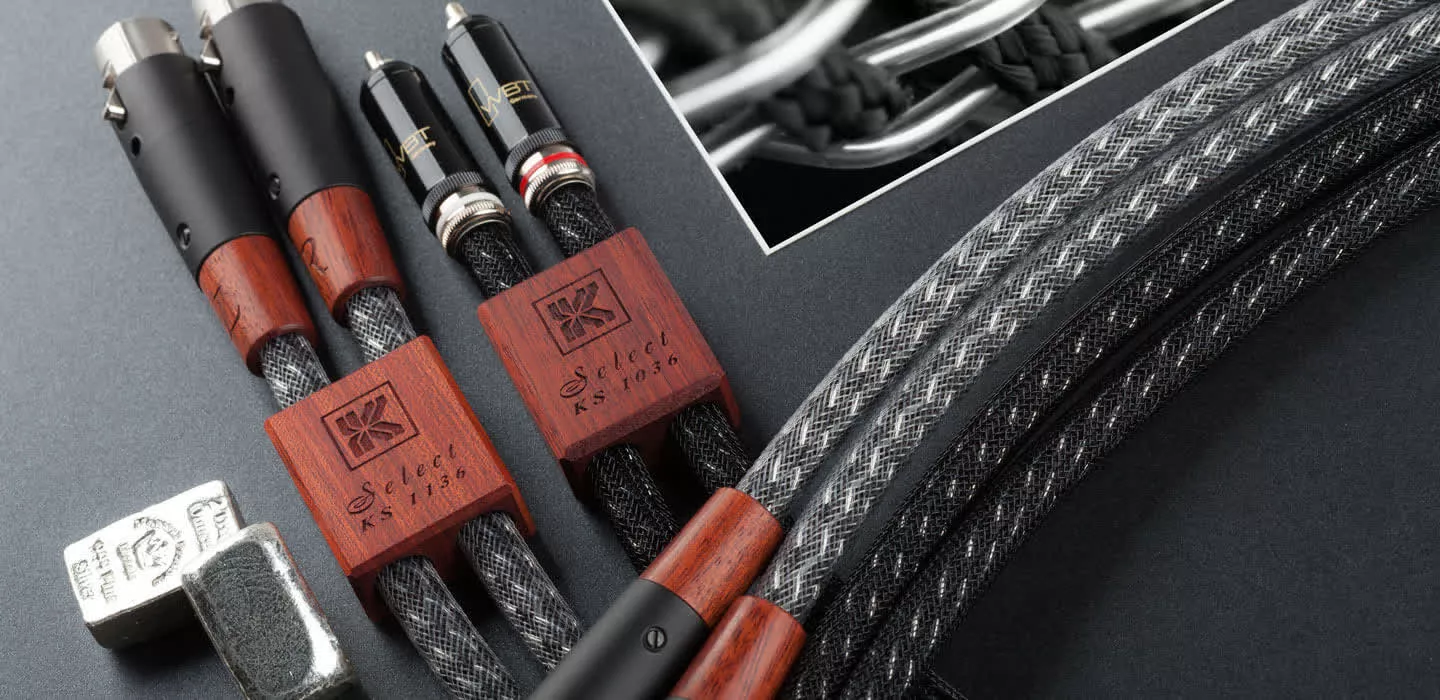
YouTube channel Audio Science Review compares Kimber's boutique KS 1036 interconnects with a battered Amazon Basics cable that host Amir says he's used for years without issue.

Right away, the expensive option starts losing points. Amir mocks the unnecessary Pelican-style case, questions the value of its locking RCA connectors, and notes that one removable part can be lost altogether, potentially making the cable useless. He also notes that the Kimber connection proved less stable when wiggled than the dirt-cheap Amazon cable.

Using an Audio Precision analyzer, Amir ran a series of measurements designed to expose any real-world advantage the Kimber cable might have. There were none.

With a 1kHz sine wave at 4 volts RMS, both cables showed the same vanishingly low distortion. Frequency response from 10Hz to 200kHz was effectively identical, phase response matched, and even square-wave rise-time tests overlapped.

Amir also tried a more punishing digital-style stress test by using both RCA cables as coaxial S/PDIF links. The Amazon cable showed a tiny increase in jitter, but only in the picosecond, despite being longer than the Kimber sample.

Also read: This SSD for audiophiles sounds suspicious

The host's conclusion was that for practical purposes, both behaved the same as the analyzer's own internal loopback wiring.

That result makes the Kimber cable's marketing even harder to swallow. It boasts of six "Black Pearl" silver conductors drawn through diamond-coated dies, plus claims of "silent backdrops," "vivid tonal color," and the "soul of the performance." Impressive claims, but the measurements don't back any of it up.

The video's most useful point wasn't really about cables – it was about listeners. Amir admits that when swapping gear normally, he often thinks he hears tighter bass, more detail, or a quieter background. But he argues that expectation bias and sighted listening are the big factors. Blind testing, repeated enough times to rule out lucky guesses, is where those differences disappear.

Cheap junk cables do exist, of course, and some poorly designed high-end cables can even introduce more noise. But as this comparison shows, once you clear the very low bar of basic competence, spending thousands on analog interconnects is less about achieving audio perfection and more like financing fancy packaging. If there's a sure-fire way that a company can justify selling everyday hardware for a high price, it's by marketing it at audiophiles.

Permalink to story:

 
I think I remember reading some posts of Amir's on ASR. A lot in the audiophile field is no doubt placebo, and companies make money out of that. High-resolution audio also comes to mind.
 
Audiophile equipment has been debunked a ulq##2#lwllaseveral times over. I have a pair of JBL 4311's. Back in the 60s and 70s, there was real engineering that made good speakers, but that engineering has gotten down to a science and most modern Bluetooth speakers can often sound better than audiophile equipment. My JBLs are more art in my living room than "audiophile equipment" at this point
 
Back in the 60s and 70s, there was real engineering that made good speakers, but that engineering has gotten down to a science…

There’s a lot of truth in that one statement. Over the years I was able to procure a lot medical equipment from the 70s-90s, and all those things still work to this day, and outperform anything of today in terms of resolution, accuracy, and even technology to some extent. Today’s products just LOOK nicer by comparison.

Over the years, my conclusion on this discrepancy was such that people in the 70s-90s were genuinely interested in solving real-world problems using engineering, physics, and electrochemistry. As large corporations took over research funding and “ingenuity,” the quality of products was inversely proportional to the size of the company. Products turned into maximum profits and advertising revenue streams, endless subscriptions, etc. It was a simpler but better time.
 
I remember years ago I went and purchased 50ft of Monster cable for the Bose 10.2 Direct Reflecting tower speakers my step-dad gave to me because a buddy said you get better audio out of the Monster cable over just basic speaker wire.

Then my dog, a few years later, chewed through a good portion of the speaker cable and I just picked up some generic replacement and I couldn't hear the difference. I think it's all malarkey.
 
Audiophile equipment has been debunked a ulq##2#lwllaseveral times over. I have a pair of JBL 4311's. Back in the 60s and 70s, there was real engineering that made good speakers, but that engineering has gotten down to a science and most modern Bluetooth speakers can often sound better than audiophile equipment. My JBLs are more art in my living room than "audiophile equipment" at this point

I'm sorry, but like the person said about medical equipment, a great deal of "high end" audio does sound noticeably worse since the 90's. High end audio started to crash around the 90's with the advent of MP3. I remember putting a CD of MP3s in my car with a JBL sound system and they sounded awful. My brother bought a home theater receiver with "100 watts per channel). The speaker were cheap, the output wasn't near that, and it sounded hideous.

Starting that generation, a great deal of people didn't care what it sounds like, they could get a 100 songs on a player or cd. Sales fell off a cliff, not because the inexpensive systems sounded better, but because the new standard for them of "good enough" was pretty low.

As for speakers, they too are about tailoring the sound to what the audience wants to here far more than reproducing sound. I have two sony bluetooth speakers that are fairly high end, they sound nice and fill a room, but are noticeably different from my stereo/home theater system.

The best part is listening to some of the high school kids I know think my main power amplifier, rated at "only" 150w per channel, is junk because they have car stereo rated at 1800 watts.

While there is a reason for spending more than $1000 on a sound system, there is a point where just one component costs $2000 to $5000 or more, that, like the silly cables, gets you nowhere.

As far as digital, anything above the Nyquist theorem is suspect at best.
 
Last edited:
High end audio started to crash around the 90's with the advent of MP3. I remember putting a CD of MP3s in my car with a JBL sound system and they sounded awful. My brother bought a home theater receiver with "100 watts per channel). The speaker were cheap, the output wasn't near that, and it sounded hideous.

The first MP3 encoders were awful, but post LAME 3.8x, MP3s began sounding respectable, especially those encoded at 192 kbps and above or with VBR. Today's encoders easily reach transparency, though lamentably, there is widespread encoding of bad quality from FFmpeg's AAC-LC encoder.
 
Lol this reminds me of a friend that got suckered into buying $350 HDMI cables by a sales rep at best buy a few years ago. Once he told us we berated him so hard he had to do the walk to shame and to return them.
 
It's been a well known fact among (actual) audiophiles for decades, yes.

Makes as much sense as 8K TVs and lossless headphones. You are biologically incapable of hearing the difference, period.
 
Any audio cable is mostly a single thing: a long piece of wire. Do a good job of attaching connectors on the end and make it minimally thick enough and 99.9%+ of people will not hear a difference. Same goes for pretty much any electrical interconnect (USB, HDMI, SATA cables etc).

The rest is snake oil.

Once you have a component that changes the signal (DAC, speaker, amp, etc.) then the engineering and cost becomes more important but it's still the case that a few hundred dollars or less gets you 99%+ of the sound quality and what's left over is people's personal tastes. Opinions. Those opinions are valid but for the rest of us, that 99% covers everything we need in audio especially with modern DSP to help (this is what makes those little JBL speakers sound decent).

But hey if there are enthusiasts willing to pay, then there's money to be made upselling them on that last 0.1 to 1%!
 
A roll of lamp cord from the hardware store is every bit as good as "Monster" speaker cables. This has been true forever.

But it doesn't matter anymore because they stopped making good music after 1996.
 
A roll of lamp cord from the hardware store is every bit as good as "Monster" speaker cables. This has been true forever.

But it doesn't matter anymore because they stopped making good music after 1996.
Bowie and other have made load of good music after 1996.

As for cables then I suggest anyone in doubt doing some testing using their ears, preferably with a friend helping so blind testing can be done ie. tests where you do not know what you're listening to.
 
The first MP3 encoders were awful, but post LAME 3.8x, MP3s began sounding respectable, especially those encoded at 192 kbps and above or with VBR. Today's encoders easily reach transparency, though lamentably, there is widespread encoding of bad quality from FFmpeg's AAC-LC encoder.

There are much better encoders these days anyway, but the point being that the public at large didn't seem to mind the seriously flawed compression.
 
Any audio cable is mostly a single thing: a long piece of wire. Do a good job of attaching connectors on the end and make it minimally thick enough and 99.9%+ of people will not hear a difference. Same goes for pretty much any electrical interconnect (USB, HDMI, SATA cables etc).

The rest is snake oil.

Once you have a component that changes the signal (DAC, speaker, amp, etc.) then the engineering and cost becomes more important but it's still the case that a few hundred dollars or less gets you 99%+ of the sound quality and what's left over is people's personal tastes. Opinions. Those opinions are valid but for the rest of us, that 99% covers everything we need in audio especially with modern DSP to help (this is what makes those little JBL speakers sound decent).

But hey if there are enthusiasts willing to pay, then there's money to be made upselling them on that last 0.1 to 1%!

It does matter what spec your talking about and how much. There is no real audible difference between and amp with 0.01 THD, and 0.05 THD. 0.1 THD will be audible, and annoying, but again, it won't bother everyone. Most people rarely complained about tape hiss with cassettes, while it drove me up a wall.
 
Not surprised. Cram a bunch of sensors & electronics into a flipping VEHICLE, charge 90K for it and people buy it. But, they don't last, hard/expensive to repair and if you bump into anything it's a multi-thousand dollar repair.
But the vehicles of the 50's to 70's had STYLE and were built like tanks. ;)
Heck, slap the word "Pro" on something and people fork over money hand over fist.
 
A roll of lamp cord from the hardware store is every bit as good as "Monster" speaker cables. This has been true forever.

But it doesn't matter anymore because they stopped making good music after 1996.
Yeah, and some of the "music" you hear today, you can hear coming at you from another vehicle 3 blocks away and as it rolls by you, the dust bounces off the dash board and you can hear/see the license plate rattle. 🤣
 
This has always been stupid. Unless you have a noise problem to solve, then cable upgrade doesn't do much. For example, I recently found out my analog signal transport cables between my DAC, AMP and headset were poorly shielded. Why? Because they started picking up a neighbors HAM radio signals. It was funny at first, but hearing beeps and indecipherable noisy muttering through my audio hardware got old fast.

These $4000 crystal super high pure ultra whatever copper cables make no difference in noise. And even if they did, the difference would be so microscopic you would probably need lab equipment worth millions+ to even pick it up and measure it beyond margin of error. I don't care if you're the second cousin to Superman, YOU CAN'T HEAR THAT.
 
One of the things about these super-expensive cables I remember commenting when we were using turntables. They said, these super-thick pure copper silver plated cables are the best, offer no resistance. I said, the cartridge contains super-fine copper wire. And the preamp, if you look at it, goes from quite fine wires on the RCA sockets to the PCB, where it goes through on very fine printed copper tracks. I can't see that cable making very much difference if narrow wires are so bad, there's so many of them in the total electronic path.
 
Back in the 70s, when I was a bit of an audiophile chasing that extra .01% less distortion setup, read an article that explained that your ears can introduce 3% distortion by themselves! I then learned to be happy with what I had and just enjoy the music!
 
Ah audio, the most controversial market of them all when it comes to 'quality'.
You'll have people who can't hear the difference between a 96kbps and 320kbps mp3 rip.
You'll have people listening to LPs claiming they have the better quality sound (you can like it better, but it's not better quality compared to a CD.. it's just degraded in a specific way that you like).
And you'll have *****s spending a fortune on a cable.

Don't be an *****, spend the money on the source (up to a point)/speakers, not on what's in between. Wonder how many people buy those types of things and then leave the low hanging fruit (like speaker placement in the room) hanging.
 
Back