Australia plans sweeping social media ban for children under 16

Skye Jacobs

Posts: 2,004   +58
Staff
In brief: Australia has been aggressive in its attempts to regulate tech giants and protect young social media users. However, a blanket ban on under-16s without exemptions is a first in the West, and if it is enacted, the world will be watching to see how it impacts the digital landscape and more fundamentally, whether it can work at all.
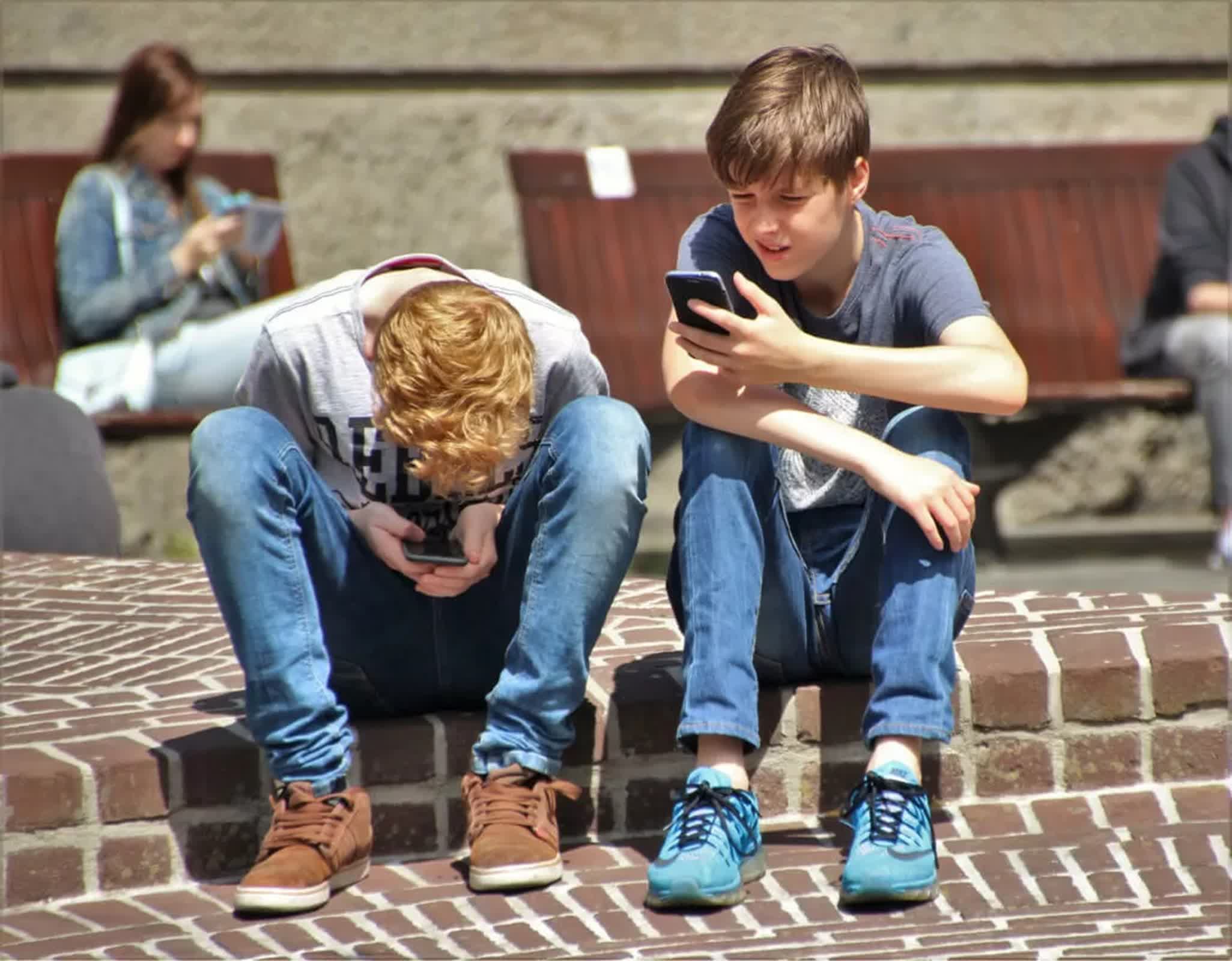
The Australian government has announced plans to introduce legislation banning children under 16 from using social media platforms. Prime Minister Anthony Albanese unveiled the proposal on Thursday, describing it as a world-leading initiative aimed at mitigating the harm social media inflicts on children.

"Social media is doing harm to our kids and I'm calling time on it," Albanese said during a press conference in Canberra. "This one is for the mums and dads... They, like me, are worried sick about the safety of our kids online. I want Australian families to know that the government has your back."

The proposed legislation, set to be tabled in parliament next week, would require social media companies to take responsibility for enforcing the age restriction. Prime Minister Albanese said that the onus would be on platforms to demonstrate that they are taking reasonable steps to prevent access by underage users. "There'll be no penalties for users," he said.

Communications Minister Michelle Rowland clarified that the ban would apply to major social media platforms such as Meta's Instagram and Facebook, ByteDance's TikTok, X, and possibly Alphabet's YouTube. The legislation is expected to come into effect 12 months after passing through parliament.

Most significantly, the ban will apply uniformly, with no exemptions for parental consent. The government has indicated that children already using social media will not be grandfathered in, meaning existing underage accounts must be closed.

The new rules will be enforced by Australia's eSafety Commissioner, the country's online regulator. While specific penalties for non-compliance have not yet been detailed, the government has suggested there will be "stronger penalties" for companies that fail to cooperate.

Reactions from social media companies have ranged from cautious to non-existent. Meta's head of safety, Antigone Davis, told Bloomberg that the company respects "any age limitations the government wants to introduce for social media use." However, she cautioned against hasty implementation, saying, "What's missing is a deeper discussion on how we implement protections, otherwise we risk making ourselves feel better, like we have taken action, but teens and parents will not find themselves in a better place."

Other major platforms, including TikTok, Google, and X, have not officially commented on the proposed legislation.

The Australian government's move comes amid growing global concern about social media's impact on young people's mental health and well-being. While several countries have introduced or proposed restrictions on children's social media use, Australia's approach is particularly stringent.

Prime Minister Albanese acknowledged that the ban might not be entirely effective, noting that alcohol restrictions have not wholly prevented underage drinking. However, he argued that the measure was necessary given the power imbalance between young users and tech companies. "These tech companies are incredibly powerful. These apps have algorithms that drive people towards certain behavior," he said.

The proposal has sparked debate among experts and advocacy groups. Some argue that outright bans may simply delay young people's exposure to social media rather than equipping them to navigate online spaces safely. The Australian Child Rights Taskforce, in an open letter signed by over 100 academics and 20 civil society organizations, called for "safety standards" rather than blanket bans.

Conversely, grassroots campaigns like the 36Months initiative, which has garnered over 125,000 signatures, support the ban. They argue that "excessive social media use is rewiring young brains within a critical window of psychological development, causing an epidemic of mental illness."

As this debate rages on, there are questions about the legislation's practical implementation, particularly regarding age verification methods and potential workarounds. The government has said it is trialing age-verification systems to block underage access.

Permalink to story:

 
Good.

Sounds very sensible to me. Even as a tech-savvy user I grew up in the late 90s/early 00's, I can see the harm that it can do to adults, let alone children.

My kids school that teaches kids 5-11 is bringing in a ban on smart phones (they will be allowed dumb phones), which I think is eminently sensible at that age.
 
On one end I see this as a free speech issue, on the other end I don't think the negative impact of social media on developing brains is in question anymore. I'll be following this closely
 
There is an aspect where parents should parent better, but getting lids off of social media is probably worth it, especially when kids get full smartphones the moment they are 11 these days
 
Between the social pressure of peers, dark patterns from social media companies and kids being easier to manipulate and control as they're still learning and growing, this is good. Few families are in a position where they can afford to properly manage a child's device, educate the child on the dangers of online life, etc, let alone making the choice of barring a child from an online world that all their friends are a part of and is they only way plans get made, just for their safety and well being. Oof. Ban it until they're out of high school (17-18 year olds). The children will be better off. Schools will be better off. Families will be better off. They only "people" losing are the mega corporations, which is a good thing.
 
Answer these questions: How is internet-addiction any different from drug addiction? Don't they each promote the production of dopamine? And ... how successful has the "Say No to Drugs" campaign been? How successful have government interdiction operations been? (Answer tuuthfully, now; it does no good to lie to yourself.)

My opinion? More idiocy by government, by self-serving egotists who just have to be seen as doing something - anything - to stay in power.
 
Answer these questions: How is internet-addiction any different from drug addiction? Don't they each promote the production of dopamine? And ... how successful has the "Say No to Drugs" campaign been? How successful have government interdiction operations been? (Answer tuuthfully, now; it does no good to lie to yourself.)

My opinion? More idiocy by government, by self-serving egotists who just have to be seen as doing something - anything - to stay in power.
Why not ask yourself what good these social media apps have done for kids?

Maybe have a sort of entrance exam where you have top prove that you're capable of a balanced point of view before you're allowed to post, maybe give warnings if the user builds sentences purely out of acronyms and an immediate ban if they post a picture of a cat. I think that would fix most issues.
 
One thing that doesn't seem to be addressed in this legislation is that many games are de facto social media platforms with voice, messaging and other components of Social Media. They are incredibly addictive too.
 
It would be smarter for apple/google to develop an app that creates a dumb zone with smartphones so when your in proximity of a school environment you can only access basic features, phone, sms, etc. People can't keep affording to buy different sh*t to satisfy gov changes. This isn't preventative, it's after the fact - and it shows humans are just f**king useless and inefficient.
 
Maybe if you would explain to your child and/or teach her/him in a positive affirming manner, they wouldn’t be struggling so much? Just a thought
 
Maybe if you would explain to your child and/or teach her/him in a positive affirming manner, they wouldn’t be struggling so much? Just a thought
I'm not a parent. Parents are 1/2 the problem, oz is the other 1/2. In oz, the education sector is so full of sh*t, red tape and white wash garbage - the system just keeps getting worse. If you wanna be a teacher you need a passion for learning and teaching, and you need the skills, talent and ability to do so. Some teachers can't find their arse from their mouth. Some of em are even robot like - write **** on the board and tell the class to write everything down. Anyway this social media ban won't do sh*t. They'll just go on other sites - deeper underground 😂
 
Australian here and most of us don't like the sound of this. On paper it was to protect the kids from online "harm", but to put this to practice, literally every adult who use at least a social platform will be required to upload their IDs for age verification. What a neat way for the government to monitor everyone. We're just slowly become a surveillance state like China.
 
I can understand the importance of people's freedom and rights but talking about education , parents taking more responsibility, companies implementing safety measures all have failed for decades. and when the subject is brought up again it's the same rhetoric. Companies don't want legislation because it cut's into their profits. So I guess the Government will step in and end this cycle.
 
Answer these questions: How is internet-addiction any different from drug addiction? Don't they each promote the production of dopamine? And ... how successful has the "Say No to Drugs" campaign been? How successful have government interdiction operations been? (Answer tuuthfully, now; it does no good to lie to yourself.)

My opinion? More idiocy by government, by self-serving egotists who just have to be seen as doing something - anything - to stay in power.

I would say government intervention in terms of minimum ages for alcohol and cigarettes etc. is very effective. If we see a 12 year old drinking wine, we know its wrong. If we see them scrolling Tiktok? Not so clear. We should be lead by research and studies around the social impacts of these changes, and implement accordingly.
 
There is an aspect where parents should parent better, but getting lids off of social media is probably worth it, especially when kids get full smartphones the moment they are 11 these days
As good as parents can be, once a kid starts using social media parents won't even know. It's not hard to hide such things even on smartphones.

I for one think smartphones should not be given to children until they are at least teens, preferably over the age of 13.
 
Another Aussie here. Some parents have given their pre-schoolers smart phones with games on them to keep them quiet, they act like a baby sitter, and many pre-schoolers have access to the internet. Most schools now organise laptops for when the kids start school, plus parents give their kids phones so "they know where the kids are all the time" (really? they're at school) and so the kids can call home if there is trouble. So children film school yard fights to post online and learn how to behave exactly like their parents do before they are old enough to understand the consequences.
The legislation is too little too late as some parents need to be educated as well as pulling the social media platforms into line. As long as its trendy to own the latest smart phone and know whats going on so they can talk about it at school, a junior imitation of water cooler and coffee room conversations, our children will find a way around the legislation and keep on carrying on as normal. There will always be a way to fake a School ID or a proof of age card, thats been going on since well before the digital age, and its only the honest children that are going to obey the law. Most will think its just another challenge to beat.
 
Back