
Why it matters: There's a good chance you cut your coding teeth on BASIC if you took a computer class back in the 20th century. The Beginner's All-Purpose Symbolic Instruction Code celebrated its 60th birthday on May 1, marking over half a century since this pioneering programming language brought computer abilities to the non-technically trained masses.

It's hard to overstate how revolutionary BASIC was in the early 1960s computing landscape. At that time, computers were highly specialized black boxes confined to corporate, government, and university facilities. Programming them required deep mathematical knowledge to translate instructions into pages of numerical code on punched cards.
That was the world that Dartmouth College math professors John Kemeny and Thomas Kurtz sought to break open. The two saw the immense potential of computing, but recognized the high barrier to entry. In 1963, they created BASIC as a way for students of all disciplines to give the school's mainframe computer a whirl.
With its English-like syntax for commands like 'IF...THEN' and 'GOTO,' BASIC provided an intuitive on-ramp that didn't require a math PhD. It may seem rudimentary now, but being able to type in basic instructions and have the computer understand was a game-changer. The response at Dartmouth was overwhelmingly positive, as students unchained from STEM fields finally had a taste of the computing experience.
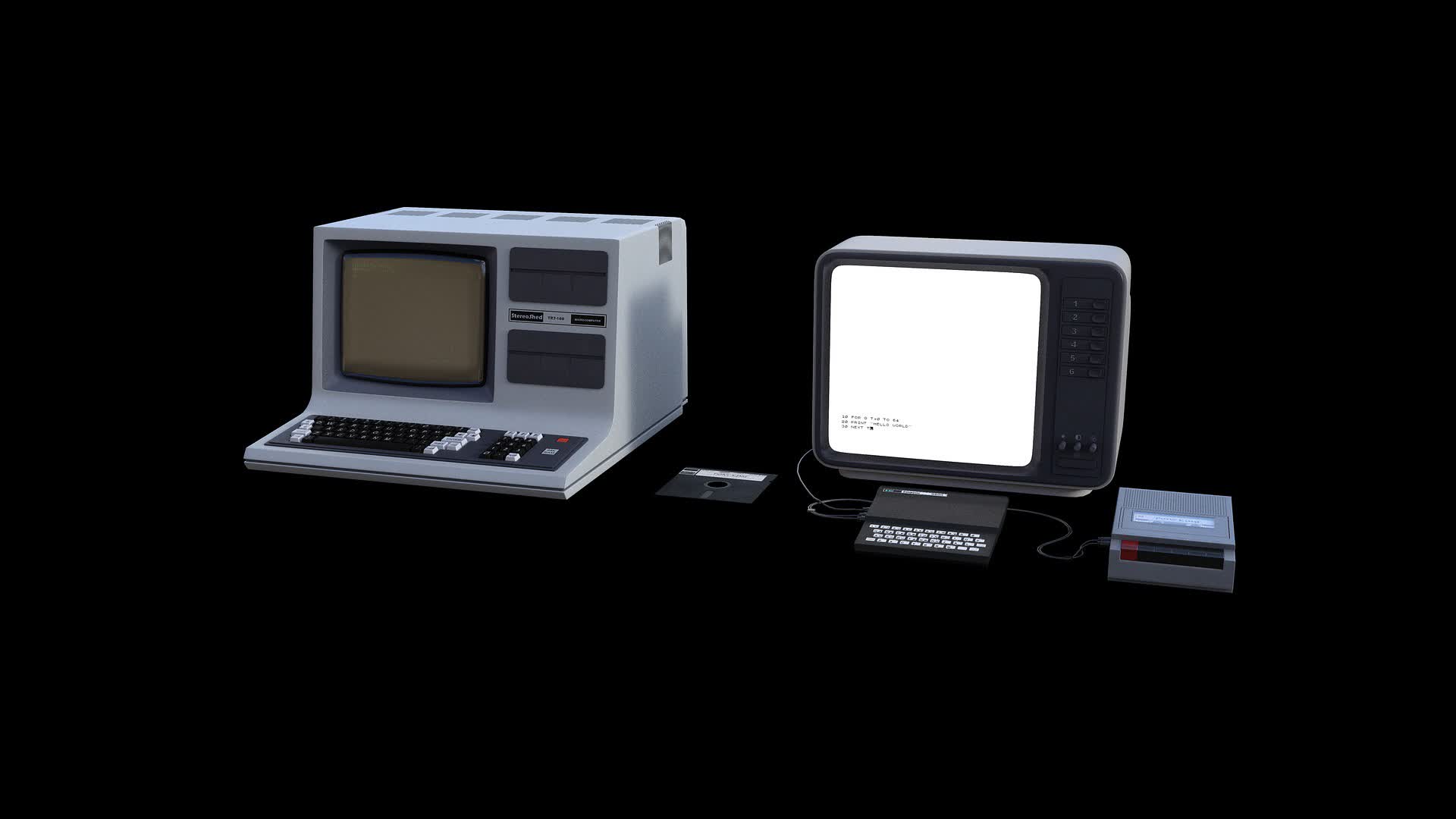
Kemeny and Kurtz had the foresight to release BASIC as free public software, allowing it to spread like wildfire. Within a few years, BASIC became a standard part of college curriculum across numerous fields of study. Its intuitive nature also fueled the rise of home computing in the 70s and 80s.
While more powerful languages like FORTRAN, C, and Java eventually overtook BASIC in the professional world, it remained a teaching tool well into the 21st century. Casual coders who started with QBASIC and Visual Basic owe their beginnings to those two professors.
Many still view its simple-yet-powerful construction as the ideal "Hello World" for budding technologists. Generations of programmers fondly recall the blinking cursor and READY prompt that started their journey into coding's endless possibilities.
Today, with fears looming about the role of generative AI in programming among developers, and tech CEOs like Nvidia's Jensen Huang announcing the eventual death of coding, the future of programming may look uncertain. AI tools like Devin claim to be autonomous software engineers, raising concerns that human programmers may be sidelined. But BASIC's legacy as the spark that ignited personal computing for the masses will endure.
Inline image by Sergei Tokmakov


