
WTF?! Has there ever been something as apocalyptically cyberpunk as a bird nest being made from battlefield drones' fiber-optic cables? That depressing sight has been discovered in the Donbas region of Ukraine, which has seen heavy fighting since 2014.
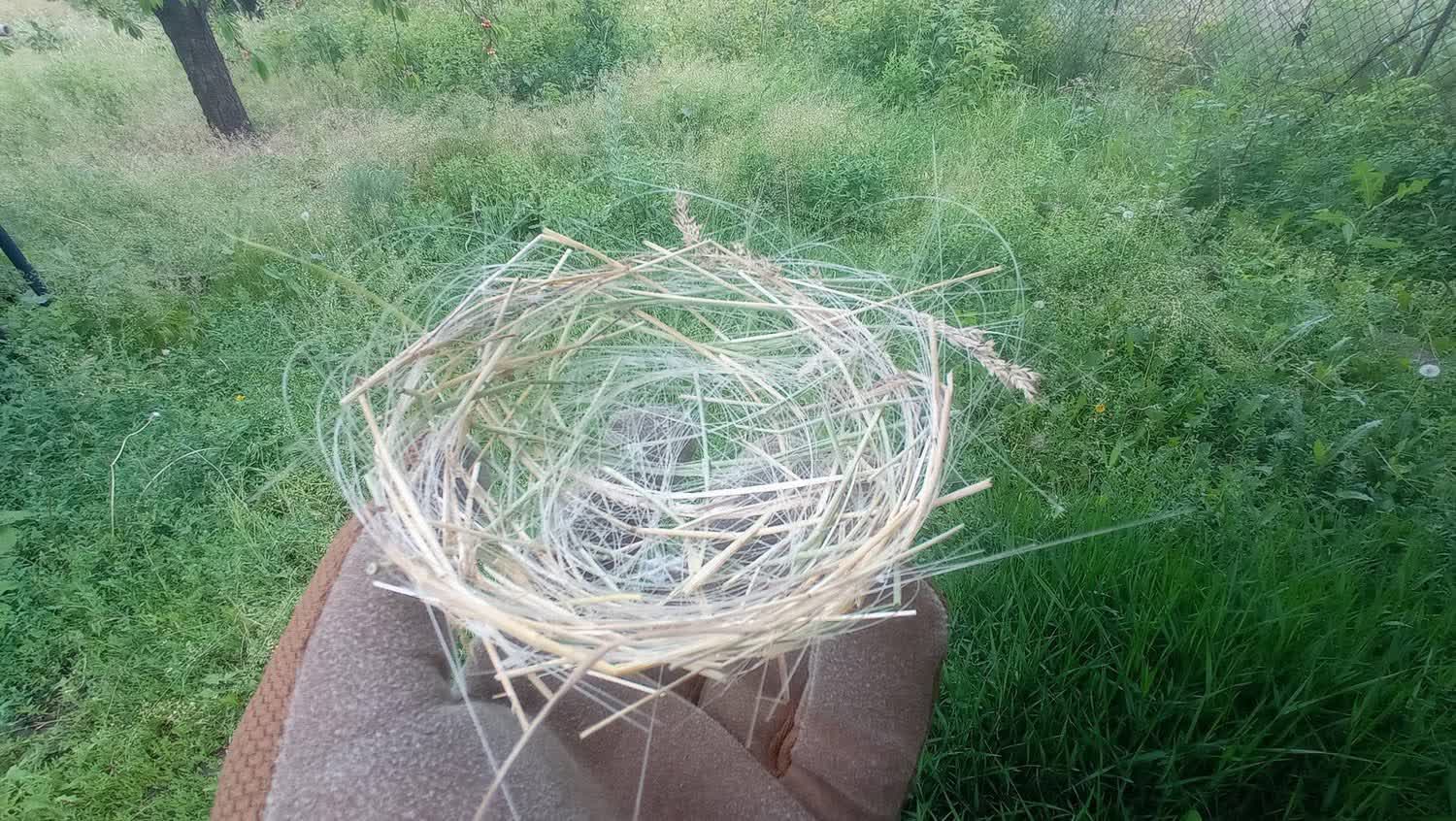
The image was posted on X by Olena Tregub, co-founder of the Independent Defense Anti-Corruption Commission, who credited researcher Oleh Malchenko for taking the photo. According to the post, a Russian glide bomb knocked down a tree in Donbas, and the nest rolled out from the shattered branches.
– Olena Tregub (@OTregub) June 6, 2026
The small structure appears to be woven from grass and thin strands of fiber-optic cable, the kind increasingly left behind by first-person-view drones on both sides in the war. It illustrates how modern battlefields are not just littered with shell fragments and burned-out vehicles, but also the disposable wiring of cheap, mass-produced weapons.
Unlike radio-controlled FPV drones, fiber-optic drones trail a physical cable behind them, giving operators a connection that cannot be jammed by traditional electronic warfare. The obvious drawback is that every flight can leave miles of nearly invisible plastic thread across fields, roads, woods, and trenches.
Some spools used by these drones can stretch up to 65 km, or around 40 miles, while previous systems have had ranges of around 42 km. Even shorter runs add up quickly when FPV drones are used on such a huge scale along the front.
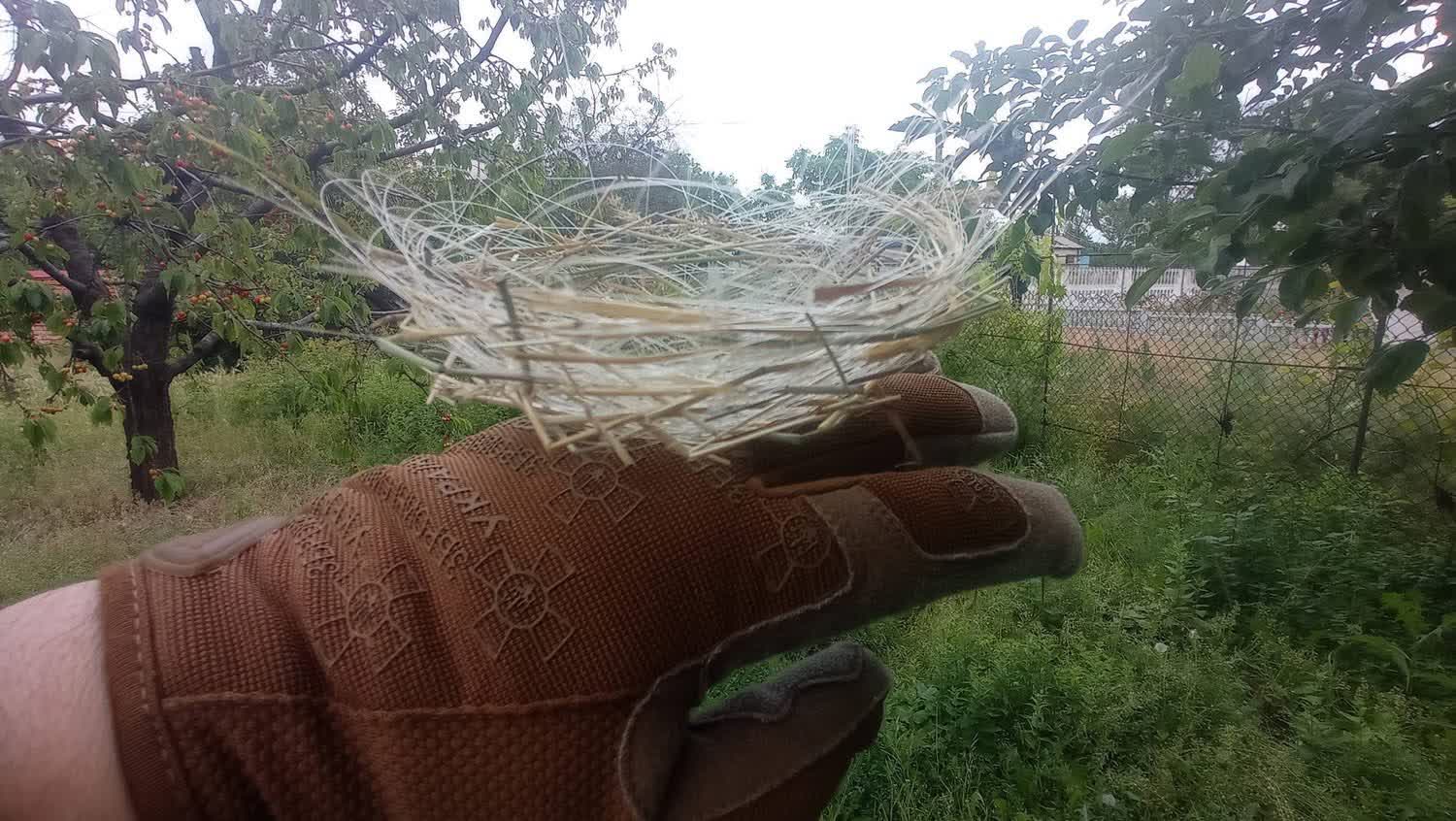
For the birds, the material is just another nesting resource. It's light, flexible, strong, and likely provides some insulation, which helps explain why it would end up woven into a nest alongside grass. There's something darkly poetic about wildlife repurposing the wastes of war, but it's hard to view the image as anything other than grim.
Researchers have already warned that discarded fiber-optic cables could become a long-term environmental problem in Ukraine. The British Ornithologists' Union has written that polymer optical fibers used in drones could pose entanglement risks to birds, bats, and ground-dwelling mammals, as well as break down into microplastics over time.
Malchenko has written about the other hazards birds face near the front, including explosions, artillery fire, disorientation, and debris.
Birds in Ukraine are building nests from discarded drone fiber-optic cables


