Canon pushes the limits of 35mm with record 410-megapixel sensor

Shawn Knight

Posts: 15,827   +202
Staff member
What just happened? Canon has announced a 410-megapixel CMOS image sensor, setting a new record for the most number of pixels on a 35mm full-frame sensor. Before getting too excited, you should know that the sensor is destined for applications like surveillance, industrial imaging, and medicine that demand extreme resolution rather can consumer-grade cameras.
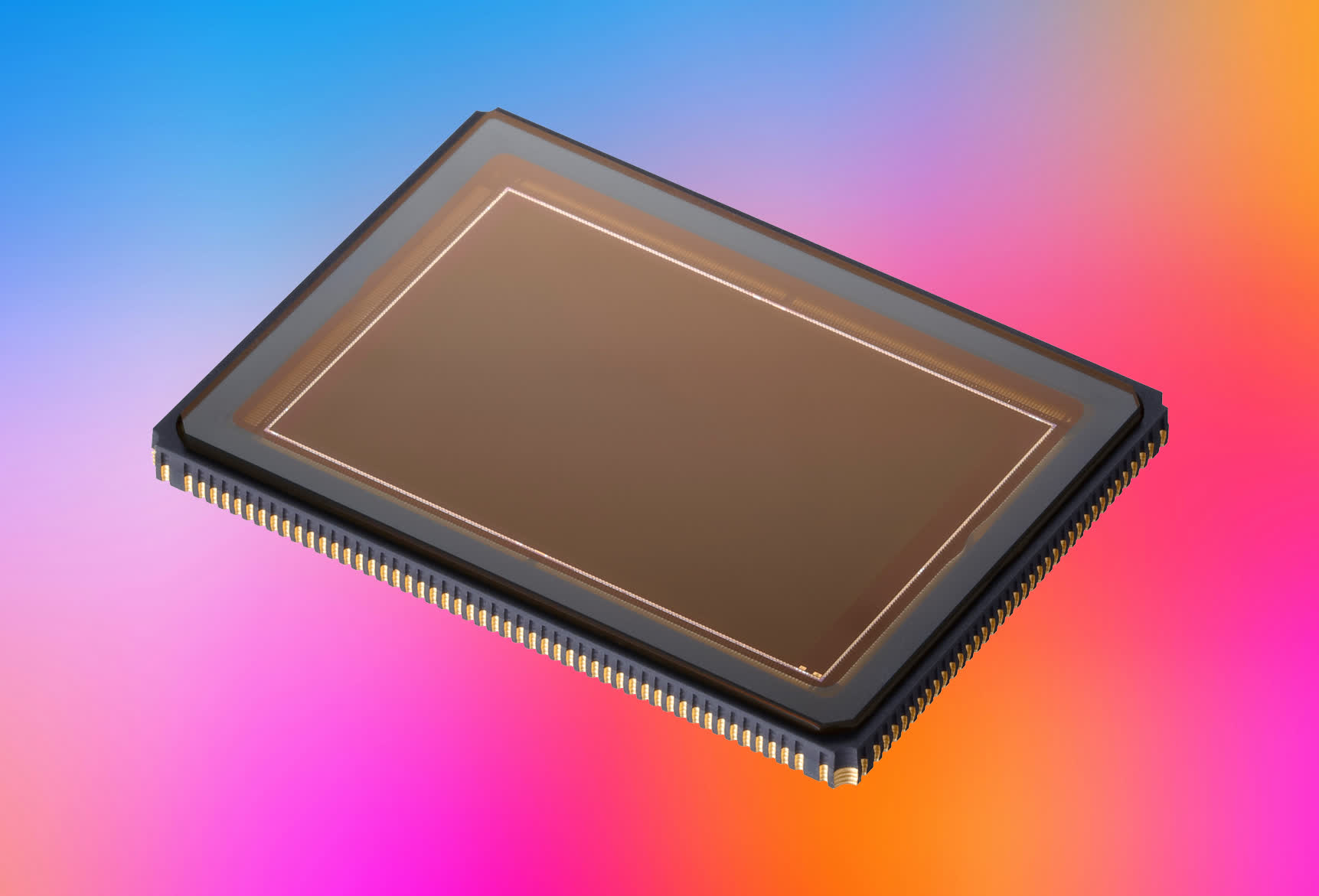
The 410-megapixel (24,592 x 16,704 pixels) sensor boasts a resolution that is 198 times greater than Full HD, and 12 times higher than 8K. With it, users should be able to crop any part of an image without a significant drop in quality.

Canon said the new sensor utilizes a back-illuminated stacked formation in which the signal processing element and pixel segment are interlayered. The imaging specialist also had to redesign the circuitry pattern, which enabled a super fast readout speed of 3,280 megapixels per second.

Super-high pixel count sensors already exist in medium- or larger formats, but fitting this level of resolution into a 35mm sensor is unprecedented and will help contribute to the miniaturization of shooting equipment, Canon said.
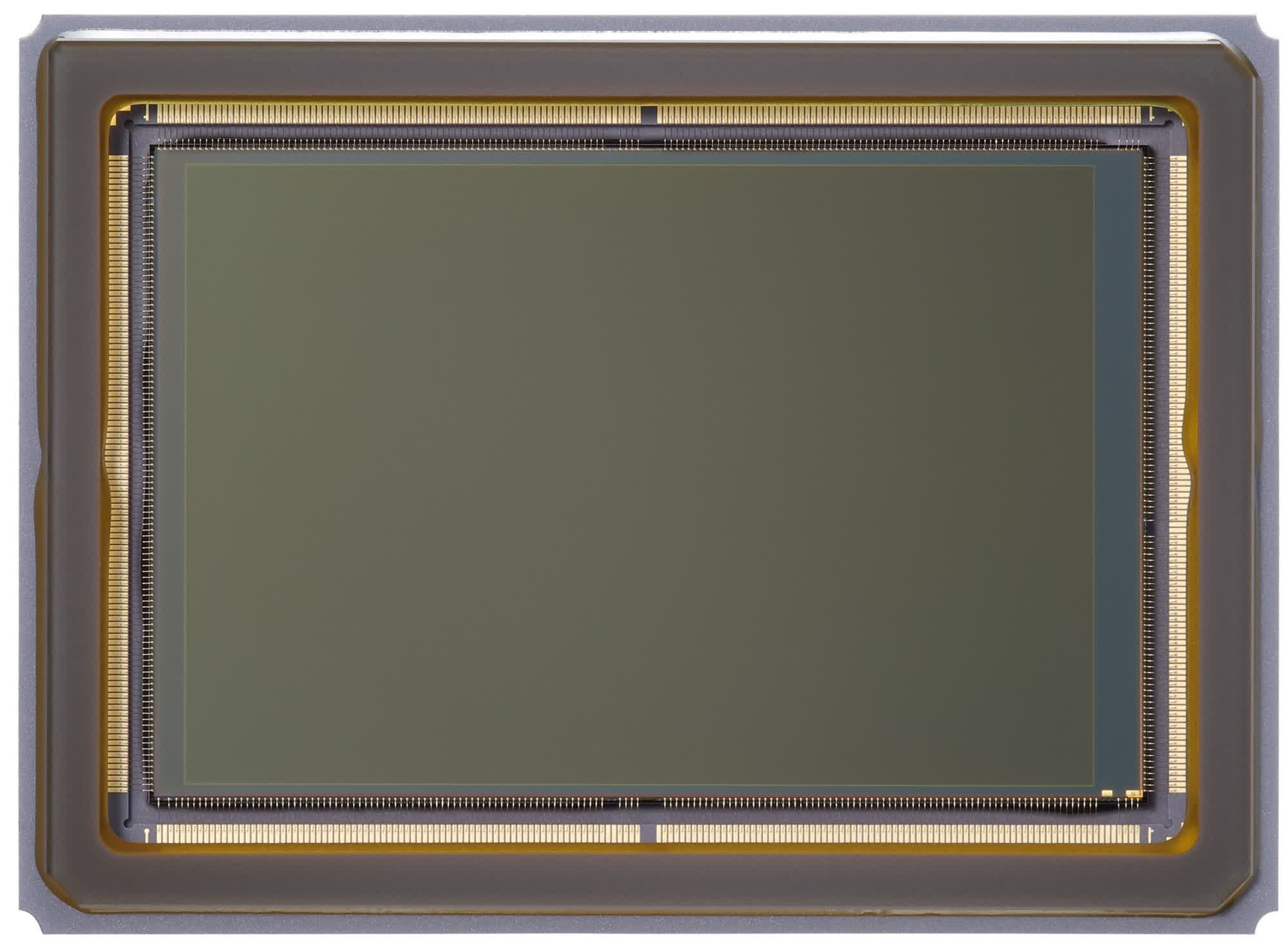
Full-color and monochrome versions of the sensor will be available. The latter will additionally feature a four-pixel binning function that effectively treats four pixels as one – a trick we've seen smartphone image sensors use to boost performance, especially in low light situations. Canon said that when this feature is in use, the sensor can capture 100-megapixel video at 24 frames per second. Otherwise, video is limited to eight frames per second.

Canon has been pushing the bounds of what's possible with imaging tech for a while now. Late last year, the company showed off a 250-megapixel APS-H CMOS sensor intended for industrial inspection applications. On the consumer side, we got a new EOS R series camera aimed at entry-level photographers wanting to step up from a smartphone.

Canon will showcase its new sensor at the SPIE Photonics West conference for optics and photonics. The show starts on January 28 and runs through the 30th in San Francisco.

Permalink to story:

 
Right, noob question, apologies if it's stupid.
My phone has a 100 mp camera and the sensor in that is tiny, so how is 410 on a 35mm sensor pushing the limits?
 
Right, noob question, apologies if it's stupid.
My phone has a 100 mp camera and the sensor in that is tiny, so how is 410 on a 35mm sensor pushing the limits?
While that may be "true", I think there's some disingenuous arithmetic involved in the count. I believe the individual pixels are "ganged", and there is certainly a crap ton of compression, (Jpeg), being applied. Otherwise, every time you snapped the shutter, if the file output was in "RAW" format, you'd get a 100 MB, or thereabouts file. Now, try uploading those to Facebook.

Assuming you are reasonably active taking pictures with the device, at some point you'd have to plug a multi TB drive into your phone, if you intended to keep your files "in camera". 'Cause the amount of native storage on the device wouldn't cut it.

Kim Kardashian would have to lug around a NAS server just to contain her selfies.

So, how big are the output files from your device? What is the upload file size limit placed on attached files on social media platforms? Let me know.
 
Can't imagine the noise level on this thing. It's gonna have to be shot at ISO 50 tops. Maybe 100.
Effective AI de-noising is at present "a thing", in commercially available programs.

Topaz AI de-noiser is likely at, or near, the top of the heap. It's available to the consumer at a "mere", $200.00 USD/
 
Right, noob question, apologies if it's stupid.
My phone has a 100 mp camera and the sensor in that is tiny, so how is 410 on a 35mm sensor pushing the limits?
A) I doubt your phone is 100 MP. Most are 48ish. Above that they are often counting subpixels to have a bigger number for marketing.

B) It's not about the number of pixels one can fit inside the sensor but being able to pull that much data out of the sensor. Note how it is binning (combining 4 to 1) pixels to get to 100 MP at 24 FPS video. That means at at 400 MP it can only pull 6 FPS from the sensor. Which is still fast enough for surveillance or industrial applications, but why "real" cameras limit MP so they can do fast burst shots or high FPS video recording.
 
While that may be "true", I think there's some disingenuous arithmetic involved in the count. I believe the individual pixels are "ganged", and there is certainly a crap ton of compression, (Jpeg), being applied. Otherwise, every time you snapped the shutter, if the file output was in "RAW" format, you'd get a 100 MB, or thereabouts file. Now, try uploading those to Facebook.

Assuming you are reasonably active taking pictures with the device, at some point you'd have to plug a multi TB drive into your phone, if you intended to keep your files "in camera". 'Cause the amount of native storage on the device wouldn't cut it.

Kim Kardashian would have to lug around a NAS server just to contain her selfies.

So, how big are the output files from your device? What is the upload file size limit placed on attached files on social media platforms? Let me know.
Thanks for the reply.
I see what you mean. I just took a full res "108mp" photo with it, and it put out a 9000x12000 9 MB file. Even the RAW file was only 18 MB. My M4/3 20mp camera is about 6.5mb.
The Samsung S23 claims to be 200mp, if it is, I guess they're counting it differently.
 
A) I doubt your phone is 100 MP. Most are 48ish. Above that they are often counting subpixels to have a bigger number for marketing.

B) It's not about the number of pixels one can fit inside the sensor but being able to pull that much data out of the sensor. Note how it is binning (combining 4 to 1) pixels to get to 100 MP at 24 FPS video. That means at at 400 MP it can only pull 6 FPS from the sensor. Which is still fast enough for surveillance or industrial applications, but why "real" cameras limit MP so they can do fast burst shots or high FPS video recording.
Thanks. My Samsung S22 claims 108 mp and the S23 claims 200. It seems disingenuous from these phone companies, but what you and captaincranky are saying makes sense.
 
Thanks for the reply.
I see what you mean. I just took a full res "108mp" photo with it, and it put out a 9000x12000 9 MB file. Even the RAW file was only 18 MB. My M4/3 20mp camera is about 6.5mb.
The Samsung S23 claims to be 200mp, if it is, I guess they're counting it differently.
Yeah, I just went on a used DSLR body buying spree. A "spare" D7200, a D3300, and a D5200, (that should have been a D5300, no AA filter), to make everything I have 24 MP. I'm hoping to get the best out of the lenses I have. I love my old D90, (12 MP), but there's no room to crop for wildlife.

Anyway, these cameras offer both 12 bit compressed and 14 bit uncompressed (color bit depth), "RAW" files. The 14 bit jobbies hit the editing software at, or near, full pixel count. 1:4 Jpegs are around 8-9 MP. (I just pulled up a photo of a red wing blackbird (RAW 14 bit) and it's 29.9 MP!) So, we're dealing with 6000 x 4000 files. "Basic Jpeg" is only about 2 MB with 1:16 compression. If we were to scale that to your phone's Jpeg files, which have 4 times the pixels of my camera, we'd get about 8 MB. Which would then be 1:16 Jpeg compression.

It's no secret that cellphone's image processors are improving as fast, or maybe faster, than those in SLR cameras. I think I read somewhere than AI (?) was being integrated into them. (Not sure about that) but denoising is.

What are we supposed to call mirrorless cameras, "DSLM" ?
 
Thanks for the reply.
I see what you mean. I just took a full res "108mp" photo with it, and it put out a 9000x12000 9 MB file. Even the RAW file was only 18 MB. My M4/3 20mp camera is about 6.5mb.
The Samsung S23 claims to be 200mp, if it is, I guess they're counting it differently.
Well 9000x12000 is 108 MP so you are correct and apparently the mexapixel race continues.

My guess is that comparing the RAW of the 108 vs the pixel binned 27 MP of the same image would have similar detail and your M4/3rds would likely have more detail (again RAW of the 20 MP). This is because the former two are working with the same amount of light for the image and the latter is getting a lot more light. (not RAW size is a combination of the initial data and compression so less comparable)

The one advantage that more MP gives is for image processing. You can do more software magic on how you are combing / averaging multiple pixels to give the output smaller res image. The M4/3rds doesn't need as much magic to create a good image because it's sensor isn't tiny. I suppose digital zoom probably works slightly better with more (smaller) pixels too.

Still 200 MP is crazy pants. Not in a it can't exist in a phone way but in a there are diminishing returns to software magic with more pixels (which is why Apple stopped at 48) so 200 is definitely about marketing.
 
Yeah, I just went on a used DSLR body buying spree. A "spare" D7200, a D3300, and a D5200, (that should have been a D5300, no AA filter), to make everything I have 24 MP. I'm hoping to get the best out of the lenses I have. I love my old D90, (12 MP), but there's no room to crop for wildlife.

Anyway, these cameras offer both 12 bit compressed and 14 bit uncompressed (color bit depth), "RAW" files. The 14 bit jobbies hit the editing software at, or near, full pixel count. 1:4 Jpegs are around 8-9 MP. (I just pulled up a photo of a red wing blackbird (RAW 14 bit) and it's 29.9 MP!) So, we're dealing with 6000 x 4000 files. "Basic Jpeg" is only about 2 MB with 1:16 compression. If we were to scale that to your phone's Jpeg files, which have 4 times the pixels of my camera, we'd get about 8 MB. Which would then be 1:16 Jpeg compression.

It's no secret that cellphone's image processors are improving as fast, or maybe faster, than those in SLR cameras. I think I read somewhere than AI (?) was being integrated into them. (Not sure about that) but denoising is.

What are we supposed to call mirrorless cameras, "DSLM" ?
While DSLM makes sense, soon we'll just call them cameras as mirrors are all going away.

I know Sony is using AI for subject recognition to help autofocus. The eye focus lock on that the alpha series can do is quite remarkable and awesome for perfectly in focus portraits (I have a7 III and a7R III).

The advantage phones have is that they already have a very fast processor so improving the processing is just software and that cost is spread across many more devices (compared to cameras). For cameras adding a powerful processor is an added expense that is harder to justify on entry level cameras. On the flip side if you limit it to high end cameras you are now splitting the software development costs across an even smaller number of customers.

Still at some point you reach the limit of what you can do with a set amount of light which is why the camera bump keeps growing and why I'll never give up my "real" camera.
 
While DSLM makes sense, soon we'll just call them cameras as mirrors are all going away.
Well, probably true, just not for me. I'm a poor person, so the more people feel compelled to move to mirrorless, the better deals I'll get on used DSLR gear.

There are a lot of great lenses in the old Nikkor collection. I just had my ancient 80 to 200 2.8D<! (2 touch screwdriver) rebuilt, $290. total). That's sort of a good news, bad news affair. As it's 120 to 300 mm on APS-C. A bit too long for portraits, too short for wildlife. It works great at the zoo though. And, since I'm an old curmudgeon, I don't do many portraits anyway.

As to the cost of mirrorless stuff, it just always give me sticker shock. Even DSLR lenses new, have the same effect**. There's a lot of good stuff out there in the entry to mid range that's very affordable, like bodies with very low shutter counts. They're from those who thought they'd enjoy photography, then didn't have the time or will to persist, The pro stuff is cheap too, but rather long in the tooth. I couldn't find a D500 will less than 100K on the shutter.

I take your point about being "just a camera". I have a body for every lens. Once they're hooked up, they stay that way, and it's "just a camera", that I take when I want to do the specific thing the lens is designed for. The controls can get a bit confusing at times. Like when you have your long tele, and the body is set for back button focus Then you stand there for a few seconds pushing the shutter button, wondering why the damned thing won't focus.

** Like the Nikkor 16 to 80 f2.8 to f4.0 VR DX. You want a grand for that toy? Whoa Nellie..! I picked up a mint used copy for $360.00 That's way more like it. But, you can still get it new. B & H has one they'll gladly sell you for a paltry $1056.00..!
 
Well, probably true, just not for me. I'm a poor person, so the more people feel compelled to move to mirrorless, the better deals I'll get on used DSLR gear.

There are a lot of great lenses in the old Nikkor collection. I just had my ancient 80 to 200 2.8D<! (2 touch screwdriver) rebuilt, $290. total). That's sort of a good news, bad news affair. As it's 120 to 300 mm on APS-C. A bit too long for portraits, too short for wildlife. It works great at the zoo though. And, since I'm an old curmudgeon, I don't do many portraits anyway.

As to the cost of mirrorless stuff, it just always give me sticker shock. Even DSLR lenses new, have the same effect**. There's a lot of good stuff out there in the entry to mid range that's very affordable, like bodies with very low shutter counts. They're from those who thought they'd enjoy photography, then didn't have the time or will to persist, The pro stuff is cheap too, but rather long in the tooth. I couldn't find a D500 will less than 100K on the shutter.

I take your point about being "just a camera". I have a body for every lens. Once they're hooked up, they stay that way, and it's "just a camera", that I take when I want to do the specific thing the lens is designed for. The controls can get a bit confusing at times. Like when you have your long tele, and the body is set for back button focus Then you stand there for a few seconds pushing the shutter button, wondering why the damned thing won't focus.

** Like the Nikkor 16 to 80 f2.8 to f4.0 VR DX. You want a grand for that toy? Whoa Nellie..! I picked up a mint used copy for $360.00 That's way more like it. But, you can still get it new. B & H has one they'll gladly sell you for a paltry $1056.00..!
How many bodies do you own if you have a body for every lens?

You can get mirrorless cameras used too. Sony keeps releasing new models (I think my IIIs are 2 gens behind the latest) and some people are driven by GAS.

If you don't mind manual focus, mirrorless cameras can use "legacy" glass with a cheap adapter. I have a whole set of cannon FD lenses that I got for $30-100 each because almost no one uses film cameras anymore. Great for my casual street photography (but I prefer reliable autofocus for important life events).
 
How many bodies do you own if you have a body for every lens?.
D-3000, D-90, D-3100, D-3300, D-3400, D-5100, D-5200, D-7200 X 2. The first 3 probably won't get much use from here on. And a mint FM-10 (film) I keep out of nostalgia.
You can get mirrorless cameras used too. Sony keeps releasing new models (I think my IIIs are 2 gens behind the latest) and some people are driven by GAS.
"According to Tony and Chelsea Northrop", the AF didn't catch up to DSLRs until recently. That's obviously not the case with today's cameras. Besides, I don't always remember, or pay attention to the "years ago" tags on the videos. Then you have to bump up the line with mirrorless to get an optical finder. (?) I'm old and set in my ways. The only vinyl I own is at least 40 years old, boxed up, and in the back bedroom. (If you see the parallel I'm trying to make).

I actually don't mind manual focus, but only for UWA lenses. In fact it's better to use it on them, as you can set hyperfocal distances quite easily. Pick a reasonable mid focal point, stop down to f11 and bang away. You front focus on purpose, as opposed to letting some lenses annoy you by doing it for you.

Three of the bodies have in body focus motors, (D-90 D-7200), so I can go back pretty much "to the beginning of time" with Nikkors and still retain AF. As I'm sure you're aware Canon changed lens mount with the advent of AF, while Nikon never did.

The D-7200's 6 FPS is plenty for me. I live in Philly, so it's not like I can walk out the back door to Yellowstone and shoot moose fighting. I satiated my GAS for wildlife gear, with a Tamron 100 to 400 f4.5 to f6.3 (035). Heintz Wildlife center is only a couple of miles away, there's no moose, nor am I quite ready to be labeled a, "birder". The only real "wildlife" around here, is usually out front capping away at each other with those "9 mils".

I have a "screwdriver" 80 - 200 f2.8 and the new Sigma 70 to 200 2.8 "Sport", which is hair splittingly sharp, once you manage to get the focus calibrated. The DSLR version weighs 4+ pounds. Which triggered a rebuild on the old Nikky. For Mirrorless Sigma smartened up, brought the filter back to 77 mm, and knocked a full pound off the weight. The D-7200s will go up to about ISO 1600 pretty cleanly, so VR or OS, at f2.8 is more of a luxury than a necessity.

If you haven't seen this yet, I hope you'll get a kick out of it. Some people call it the "green giant". I call it "Sigma;s $25K 35 lb, "white elephant". The comedy of errors continues, with the fools from MPB taking it out to Brighton beach at high noon to test it. (Where else would you test a 500 mm f2.8?) :rolleyes:

 
D-3000, D-90, D-3100, D-3300, D-3400, D-5100, D-5200, D-7200 X 2. The first 3 probably won't get much use from here on. And a mint FM-10 (film) I keep out of nostalgia.

"According to Tony and Chelsea Northrop", the AF didn't catch up to DSLRs until recently. That's obviously not the case with today's cameras. Besides, I don't always remember, or pay attention to the "years ago" tags on the videos. Then you have to bump up the line with mirrorless to get an optical finder. (?) I'm old and set in my ways. The only vinyl I own is at least 40 years old, boxed up, and in the back bedroom. (If you see the parallel I'm trying to make).

I actually don't mind manual focus, but only for UWA lenses. In fact it's better to use it on them, as you can set hyperfocal distances quite easily. Pick a reasonable mid focal point, stop down to f11 and bang away. You front focus on purpose, as opposed to letting some lenses annoy you by doing it for you.

Three of the bodies have in body focus motors, (D-90 D-7200), so I can go back pretty much "to the beginning of time" with Nikkors and still retain AF. As I'm sure you're aware Canon changed lens mount with the advent of AF, while Nikon never did.

The D-7200's 6 FPS is plenty for me. I live in Philly, so it's not like I can walk out the back door to Yellowstone and shoot moose fighting. I satiated my GAS for wildlife gear, with a Tamron 100 to 400 f4.5 to f6.3 (035). Heintz Wildlife center is only a couple of miles away, there's no moose, nor am I quite ready to be labeled a, "birder". The only real "wildlife" around here, is usually out front capping away at each other with those "9 mils".

I have a "screwdriver" 80 - 200 f2.8 and the new Sigma 70 to 200 2.8 "Sport", which is hair splittingly sharp, once you manage to get the focus calibrated. The DSLR version weighs 4+ pounds. Which triggered a rebuild on the old Nikky. For Mirrorless Sigma smartened up, brought the filter back to 77 mm, and knocked a full pound off the weight. The D-7200s will go up to about ISO 1600 pretty cleanly, so VR or OS, at f2.8 is more of a luxury than a necessity.

If you haven't seen this yet, I hope you'll get a kick out of it. Some people call it the "green giant". I call it "Sigma;s $25K 35 lb, "white elephant". The comedy of errors continues, with the fools from MPB taking it out to Brighton beach at high noon to test it. (Where else would you test a 500 mm f2.8?) :rolleyes:

That is soooo many bodies! 😯

I like the Northtrops. I would say DSLRs were caught up to and perhaps passed slightly in version III of the alpha series (2017) which was a noticeable step above v. II (which I owned and replaced once IIIs got cheaper in 2019) especially in reliability of not focusing on the wrong thing. Ver IV (2019) surpassed DSLRs but the improvement wasn't meaningful for my shooting (especially given the price). The a7R III is all the camera I need for the foreseeable future and the 42 MP is handy for cropping to "zoom" as I often walk around with a single prime on it. Typically a 45mm these day.

That beast lens is ridiculous. 😆 My longest is a 70-300 mm f4.5-6ish. That beast would probably be nice for astrophotography as it is about the size of my 8" telescope. 🤔
 
Back