
Highly anticipated: Primarily known for its GPUs and more recently AI infrastructure, Nvidia is set to enter the mainstream CPU market with its Arm-based Vera platform later this year. The company claims Vera delivers significant performance gains over its earlier Grace processors and x86 chips from AMD and Intel. While early tests from Phoronix show encouraging results, Nvidia is still withholding crucial details.
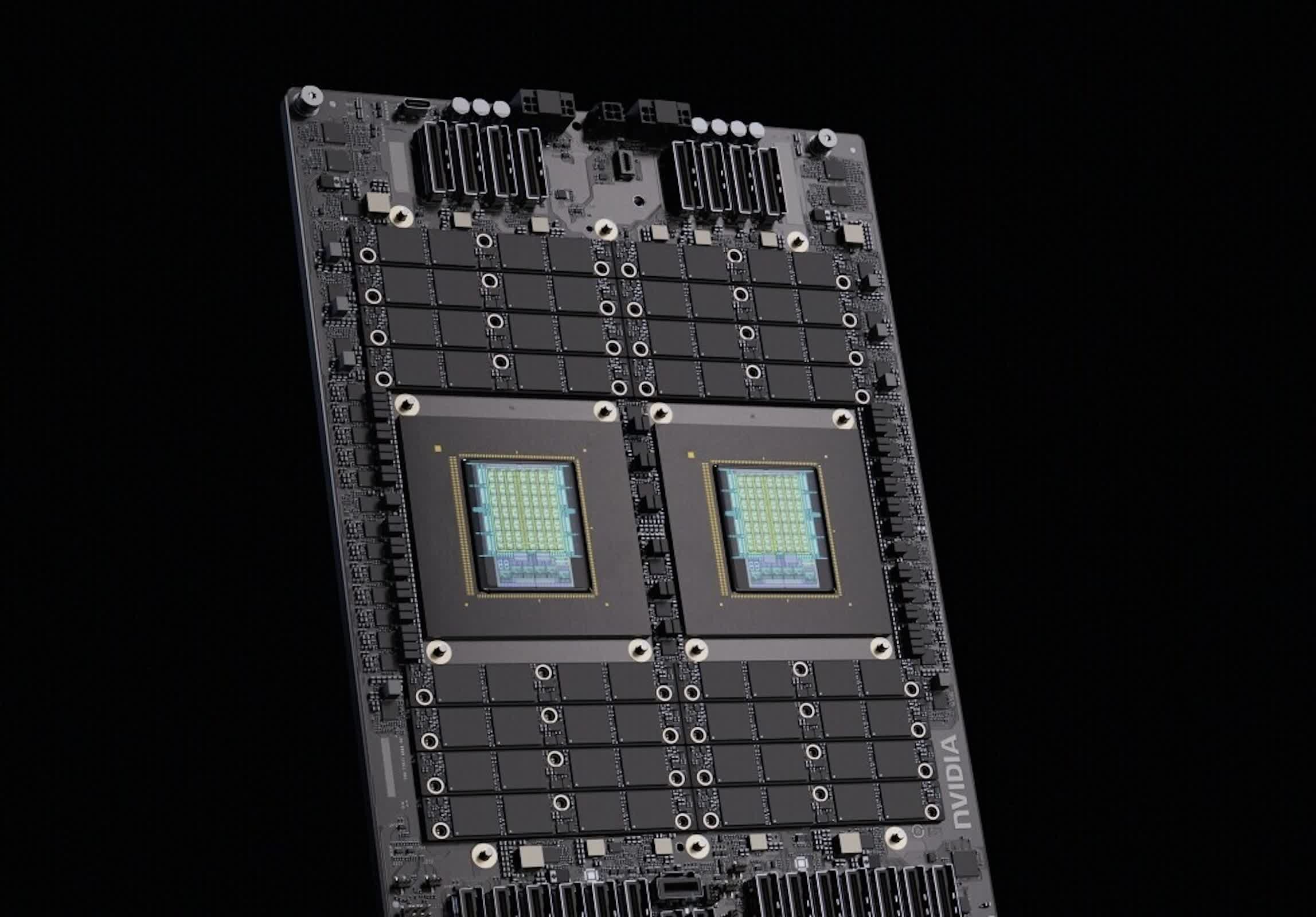
Michael Larabel from Phoronix recently called Nvidia's Vera datacenter CPU the fastest Arm Linux processor he has tested in the outlet's 22-year history. However, since he conducted the benchmarks in a controlled environment at the company's Santa Clara headquarters, the results can hardly be considered definitive.
Most synthetic tests place Vera well ahead of Nvidia's previous Grace CPU and Intel's Xeon server chips, but the competition with AMD's Epyc processors appears much tighter. While Vera clearly outperforms most of Team Red's lineup, AMD's top Epyc models, the 9755 and 975F, trade blows with it. Vera's biggest advantages appear in certain streaming and 7-Zip compression workloads.
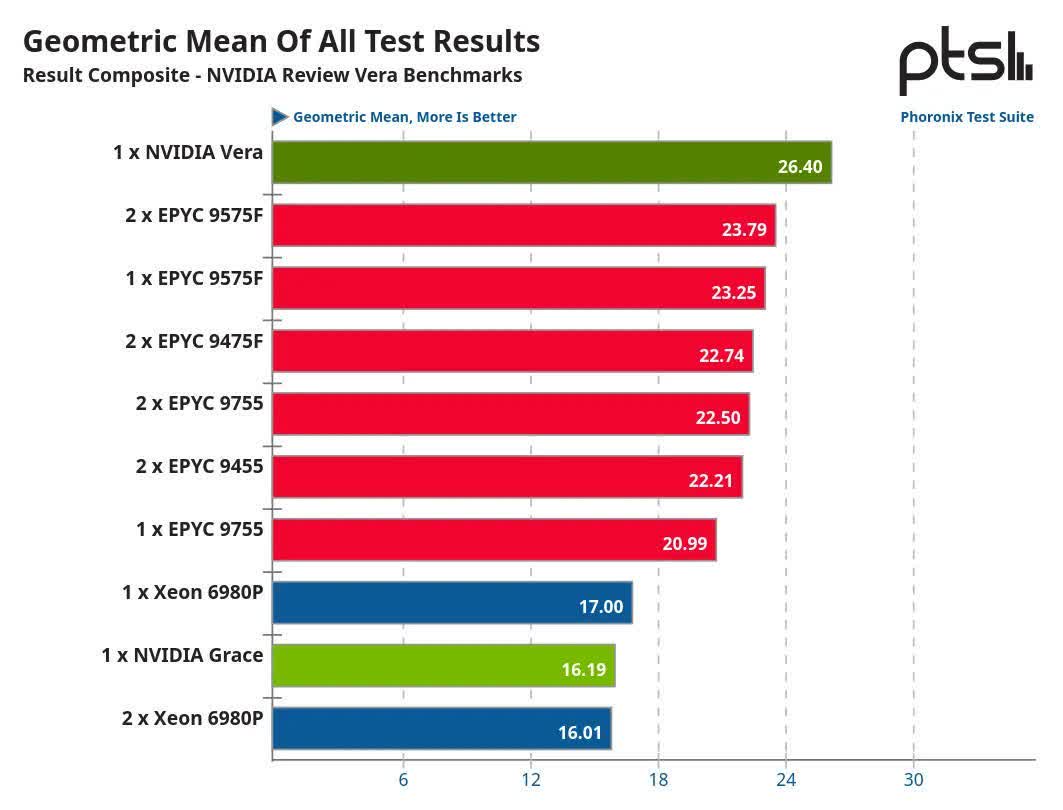
However, the one-day comparison was limited to Intel's Xeon 6980P CPUs and a handful of AMD Epyc models, with no AmpereOne review units available. Crucially, other Arm-based CPUs from Apple and Qualcomm were also absent.
Furthermore, Phoronix was unable to monitor power consumption, one of Arm's primary advantages over x86, because Nvidia is still optimizing Vera's power management. Testing was also limited to Nvidia's intended use cases on pre-production silicon. Comprehensive benchmarks will likely have to wait until the CPUs are ready for launch later this year.
Nvidia unveiled Vera at GTC 2026 in March. Designed primarily for AI and analytics workloads, the 88-core processor represents the company's most significant entry into the CPU market to date.
Team Green has largely focused on dominating the GPU market, the primary driver behind the AI boom. Even its previous datacenter CPU, Grace, was mainly sold together with GPUs. Another major shift with Vera is the move away from Arm-designed Neoverse cores in favor of Nvidia's in-house Olympus cores.
While Vera marks the latest step in Nvidia's rise into the server CPU market, another mysterious product, the Nvidia N1X, is expected to bring the company into the consumer processor space soon, starting with laptops later this year.
Little is known about the Arm SoC, but its integrated GPU performance is said to rival the latest mid-range desktop graphics cards. A full reveal is expected at Computex 2026 next week.
Nvidia Vera CPU impresses in early Nvidia-sanctioned benchmarks


