CERN researchers took a few antimatter particles for a walk in an unprecedented transportation test

Alfonso Maruccia

Posts: 2,600   +978
Staff
Forward-looking: Antimatter consists of particles with properties opposite to those of regular particles. It plays a central role in modern physics research and forms naturally through cosmic collisions or radioactive decay. However, studying it is difficult, as contact with normal matter results in instant annihilation.
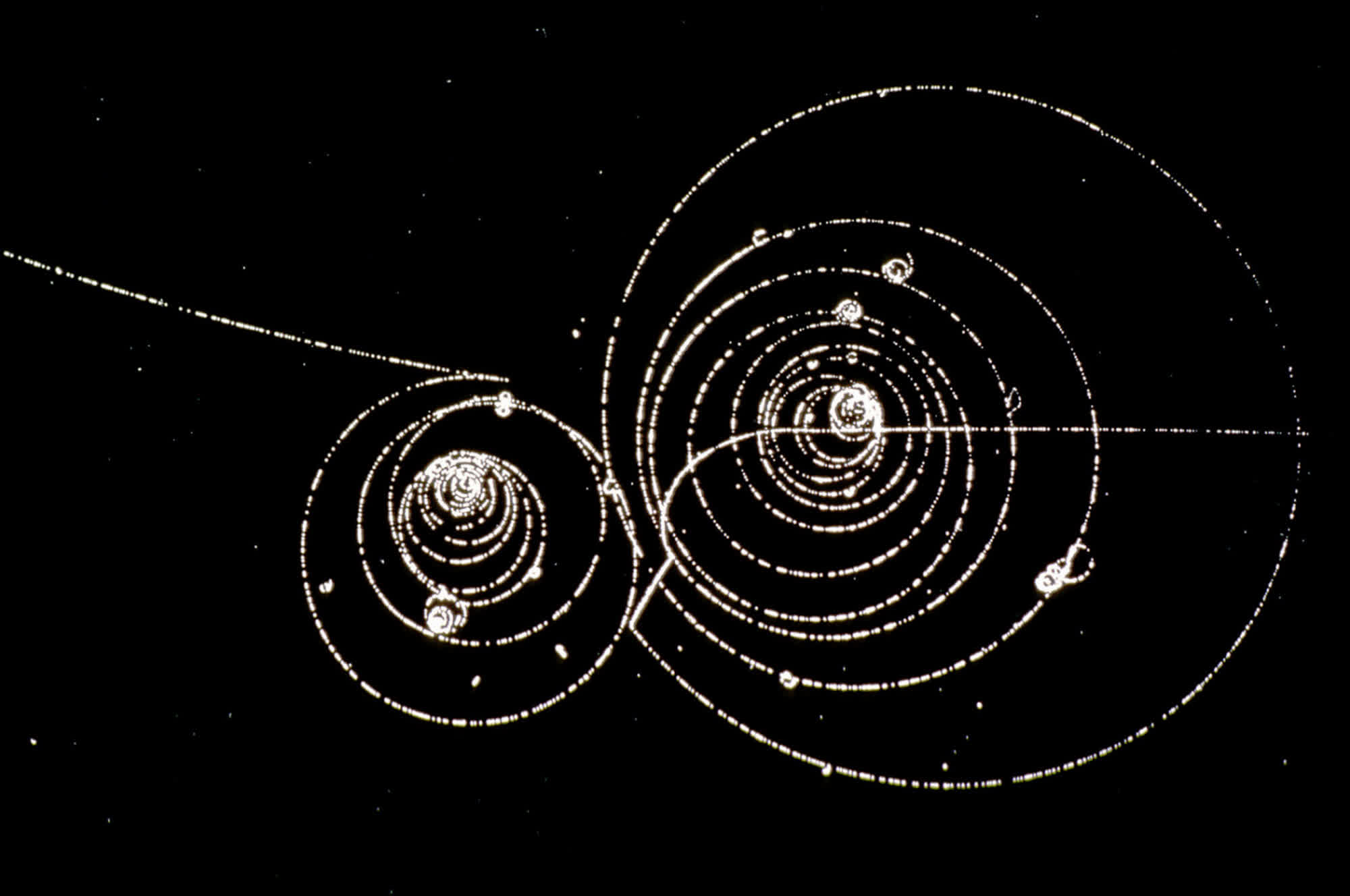
The European Organization for Nuclear Research, better known as CERN, is one of the few places on Earth capable of routinely producing antimatter from high-energy collisions with particle accelerators. Researchers there have now developed a novel method to transport small quantities of antimatter to external laboratories. This world-first achievement could enable more precise studies of the elusive antiparticles described in the Standard Model of particle physics.

CERN researchers developed a two-meter containment device capable of temporarily trapping antimatter particles. They even trucked the device around the facility for four kilometers before returning it to the lab, where they confirmed the antiparticles were still intact.

The brief trip required no external power source, proving that antiparticles can theoretically travel far beyond a few kilometers. It also demonstrated that antimatter can be safely transported to distant laboratories using nothing more than a standard vehicle and Europe's public road network.
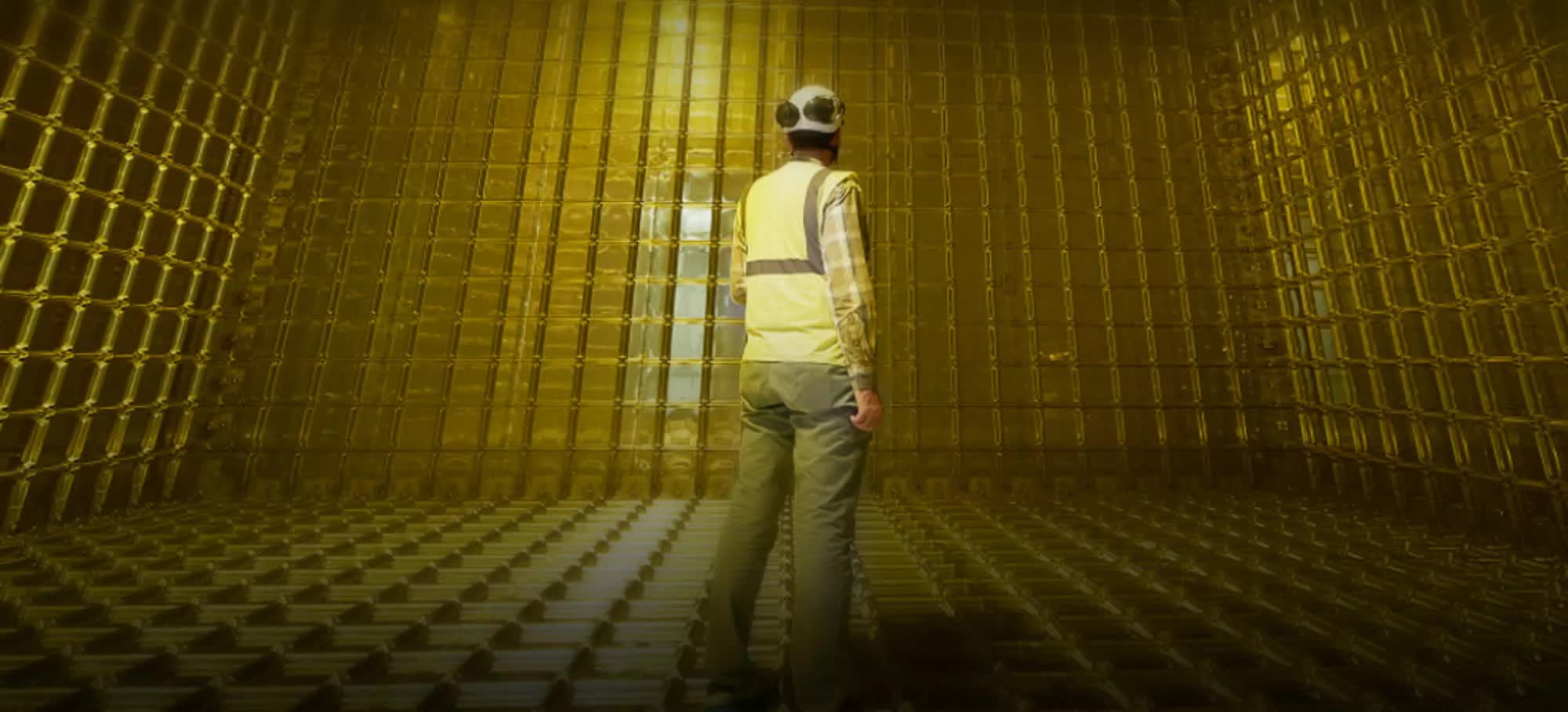
CERN facilities lie near Geneva, on the France – Switzerland border. Judging by the truck's route carrying the experimental containment device, the researchers likely crossed the border from France into Switzerland and back.

Physicists have explained the practical application of antimatter transport in a recent study, which revealed limits to precision measurements using low-energy protons produced exclusively at CERN's Antimatter Factory. Magnetic field fluctuations from the facility's decelerators interfere with experiments, while dedicated off-site laboratories could enable more accurate results.

Now that CERN has proven it can safely transport antiparticles beyond its grounds, it is preparing the next phase of its antimatter project. A new, state-of-the-art facility at Heinrich Heine University Düsseldorf in Germany will soon receive the first batch of antimatter cargo. The particles will travel nearly 800 kilometers to reach their destination.

Permalink to story:

 
Title is wrong. They took some regular matter protons for the walk as a test before attempting to carry antimatter for real.

It was a complete success with zero lost protons.
 
The Coulomb barrier is the fundamental obstacle to fusion. Matter-antimatter annihilation is the most efficient fusion process known. When matter and antimatter collide, they completely convert all their mass into energy (photons). This happens because there's no Coulomb barrier between them, as antimatter has the opposite charge and thus attracts matter. It's a perfect, instantaneous energy release. It’s like their specific properties create an abstract "superconductor" between the two "phases-states" (mass-energy).

On the other hand, two positively charged matter nuclei repel each other with immense force. To fuse, they must overcome this repulsion, requiring tremendous energy. Conventional fusion methods rely on an environment with extreme heat and pressure to achieve this. Another more delicate approach could be to enhance the quantum tunnelling effect, which enhancement will be used to overcome the Coulomb barrier, by increasing the probability of its occurrence with the use of a local synthetic field as modifier. How can we produce such a local field? By bombarding the free electrons of a metal nanoparticle with photons with frequency that it match its natural frequency, creating resonance in the swarm of free electrons. This way, the bombarding photons will be absorbed by the nanoparticle (and not scattered as usual), altering the quantum landscape around the nuclei. The synthetic electromagnetic field from the oscillated swarm of free electrons of the metal nanoparticle will acts as a barrier modifier for the quantum tunnelling effect, effectively reducing the "resistance" of the abstract "conductor" between the two "phases."

With an even better way to further reduce this "resistance" and make it a superconductor with near-zero resistance, we would achieve the “cold fusion”. For example, using a muon (which has the same charge as an electron but is 207 times heavier) in a system of hydrogen isotopes can also alter the quantum landscape, allowing for cold fusion at just 3 K. This is possible because the probability of quantum tunneling depends exponentially on both the height and width of the Coulomb barrier between the nuclei. The presence of the heavy muon reduces this barrier from 100 picometers (with an ordinary electron) to just 1 picometer.
 
Last edited:
Ah, I'm a layman but I wouldn't be classing matter-antimatter annihilation as fusion. Sure, they're both nuclear reactions but so is fission.
 
Ah, I'm a layman but I wouldn't be classing matter-antimatter annihilation as fusion. Sure, they're both nuclear reactions but so is fission.
The Coulomb barrier distorts the process in a similar way that an amp distorts a clean guitar tone. They sound very different, but they share the same root and nature.
 
Last edited:
The Coulomb barrier distorts the process in a similar way that an amp distorts a clean guitar tone. They sound very different, but they share the same root and nature.

Not. Distortion of the wave-form doesn't happen. Amplification raises the levels of the harmonics. It does not in general add information. The bandwidth of the hardware gets exceeded and acts as a flat pass filter, reducing information and normalizing the overall level, hence an over-driven sound sounds dull and at least somewhat removed (outputting to a 'voiced' speaker and using a voiced microphone furthers this). An artifact of over-driving an electric circuit is noise, which gets added to the signal and hence sound, making it non-musical. I have long enjoyed rock and Metal and electric guitar, but since first hearing as a child have found over-driven/distorted anything as low-fi and less musical.

Somewhat on topic: what in jehosphat's name do you intend in writing physics theses here? I dig it, but I doubt others do, and apparently they don't and or it don't register.
 
Last edited:
Somewhat on topic: what in jehosphat's name do you intend in writing physics theses here? I dig it, but I doubt others do, and apparently they don't and or it don't register.
Sharks and crocodiles, as species, have survived for millions of years. So, we can assume that humans will survive for millions of years too, especially if avoid major incidents like the impact of an asteroid or drastic climate change from other factors.

The concept of easy energy production directly affects the future and evolution of the human race through the time (and the well-being of trillions of unborn humans). Given that those stakes are based and on my understanding and mental grasp of physics, I feel an obligation to write about this.
 
Back