China's new resistive magnet is 800,000 times stronger than Earth's field

zohaibahd

Posts: 978   +19
Staff
In a nutshell: Scientists in China have created a mind-bogglingly powerful resistive magnet that has officially broken the world record by sustaining an incredible 42.02 tesla. That is over 800,000 times stronger than the magnetic field produced by Earth itself, which has a flux density of about 50 microtesla.
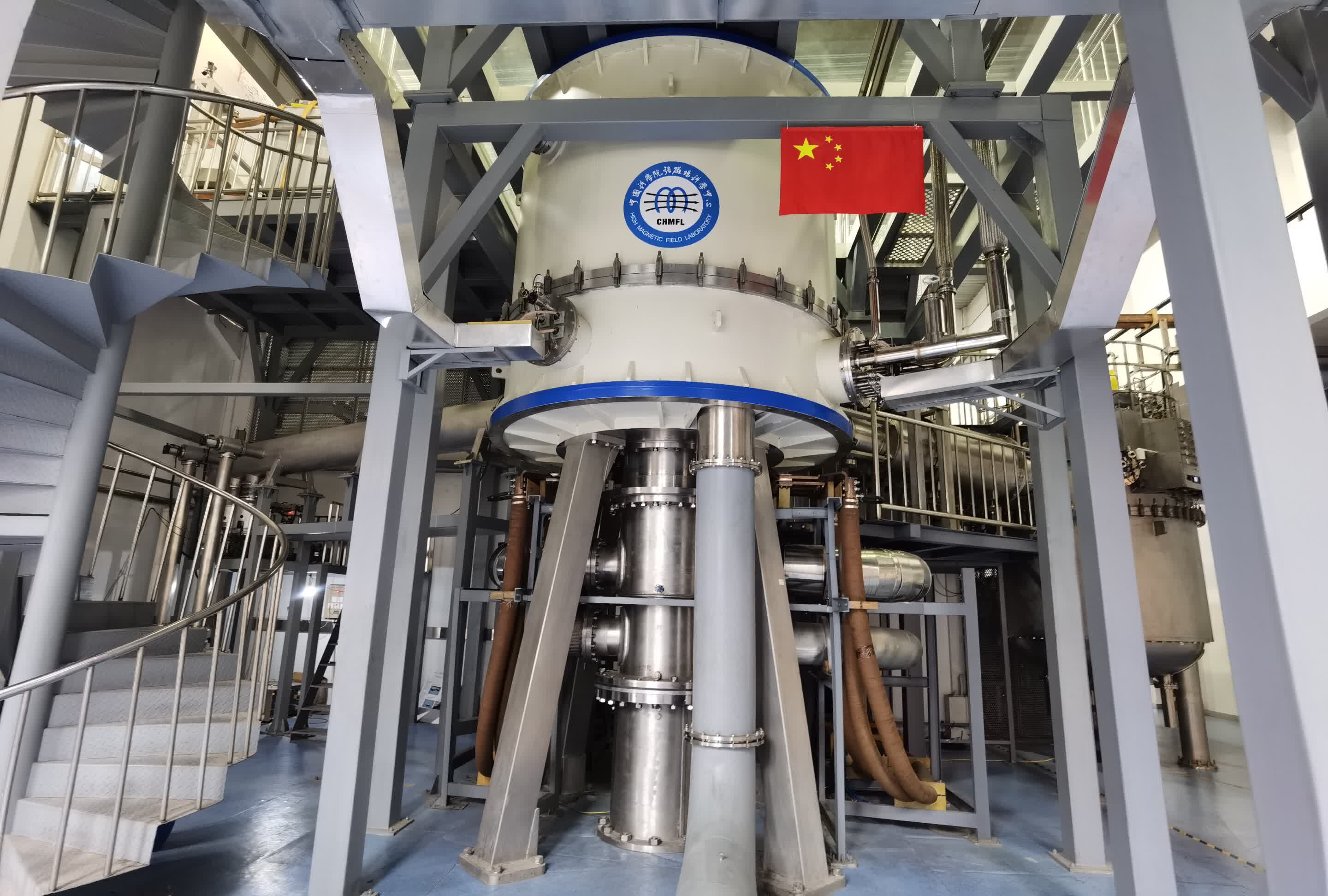
The new record was set on September 22 at the Steady High Magnetic Field Facility (SHMFF) in Hefei, narrowly edging out the previous record of 41.4 tesla held by another resistive magnet at the National High Magnetic Field Lab in Florida since 2017.

As for why scientists are so determined to push the limits of magnetism, physicist Joachim Wosnitza from Germany's Dresden lab explained that it opens up all kinds of bizarre new realms of physics to explore. Essentially, the stronger the magnetism, the greater the chances of discovering new states of matter.

Another physicist noted that high magnetism allows scientists to engineer and manipulate entirely new phases of matter that simply don't exist under normal conditions. Each additional tesla achieved also makes instruments exponentially more sensitive for detecting faint phenomena.
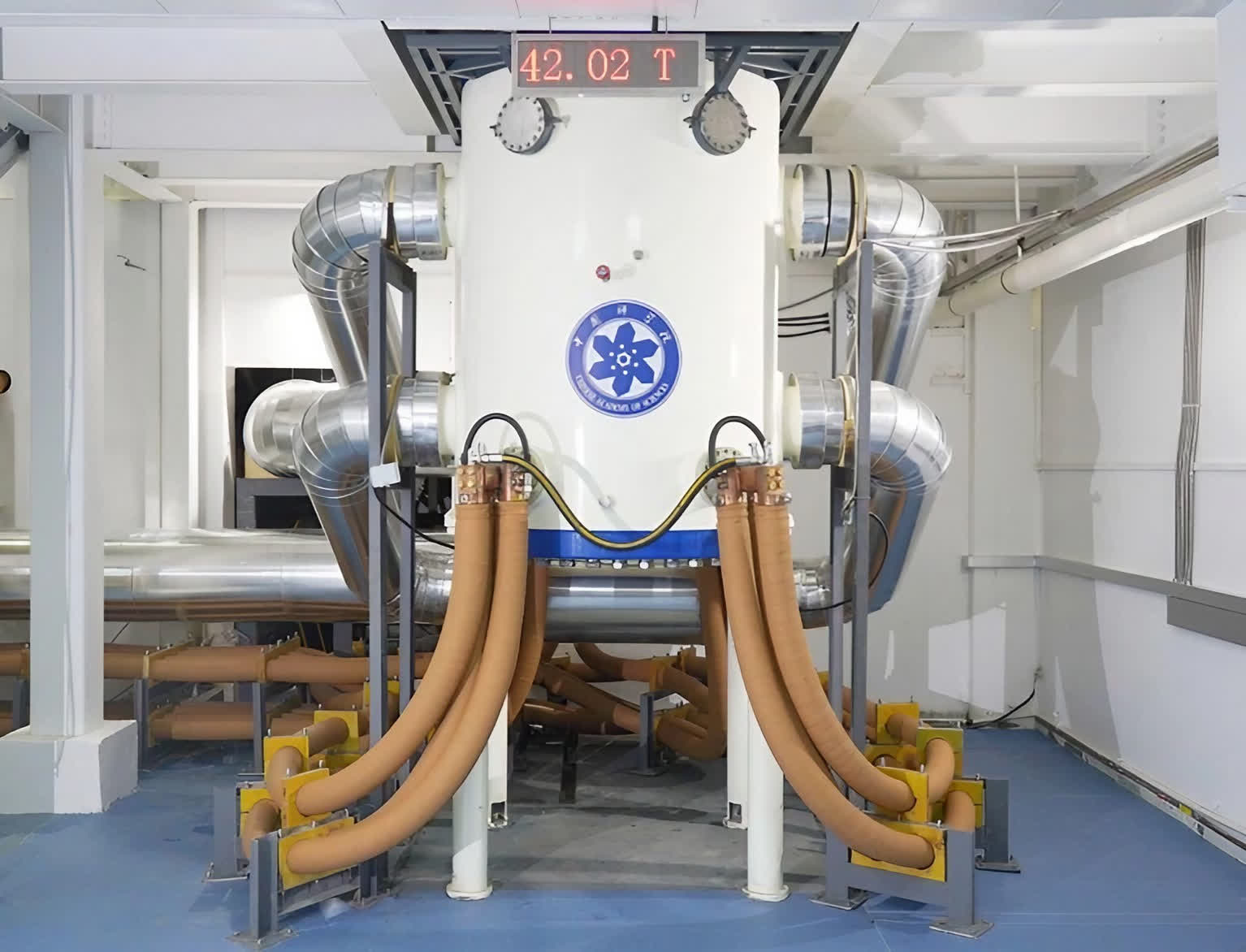
The SHMFF's new champion is available for international researchers to test on advanced materials like superconductors.

The only drawback of such resistive magnetic systems is that they are real power hogs. The SHMFF's creation consumed a staggering 32.3 megawatts to achieve that record. However, scientists continue to use them because they can sustain high magnetic fields much longer than their newer superconducting counterparts, which eventually reach their limits. The older magnets can also be ramped up quickly.

Nonetheless, the enormous power requirements are a significant problem. Therefore, teams like those at the SHMFF are also working on hybrid and fully superconducting designs that could achieve extreme strengths while consuming much less energy.

This is not to say that hybrid or superconducting designs are less powerful than resistive magnetic systems. In fact, China debuted a hybrid resistive/superconducting magnet in 2022 that achieved a 45.22 tesla field.

On the other side of the world, the US National Lab's mini superconducting prototype managed a brief 45.5 tesla burst back in 2019. However, making these new low-power systems reliable and affordable – while also keeping them cool – remains a major technical challenge, underscoring the continued need for resistive magnets.

Permalink to story:

 
That number seems like a meaningless representation, compared to earths magnetic field. Cool that they have the biggest lab magnet. It's not going to throw off any compass readings outside of the room it's in.
 
That number seems like a meaningless representation, compared to earths magnetic field. Cool that they have the biggest lab magnet. It's not going to throw off any compass readings outside of the room it's in.
Yeah, earth's magnetic field is really weak, it's just massive in size. Make a magnet 800,000x stronger and as large, then I'll be impressed.
 
To clarify, this is for theoretical physics, like the Large Hadron Collider, has no practical application, only hypothetical, a scientific toy, per se.
 
32.3 megawatts, ignoring that such wasted energy could run a couple of crypto farms or a thousand odd RTX 5090s

I wonder if the local towns get a brown out ( ie voltage drop ) - maybe they use the vaunted Japanese caps, you see on better motherboards

On the note, is it just a marketing slogan now , which motherboard manufacturers are tied into , and most capacitators would be just fine from other countries
 
32.3 megawatts, ignoring that such wasted energy could run a couple of crypto farms or a thousand odd RTX 5090s

I wonder if the local towns get a brown out ( ie voltage drop ) - maybe they use the vaunted Japanese caps, you see on better motherboards

On the note, is it just a marketing slogan now , which motherboard manufacturers are tied into , and most capacitators would be just fine from other countries
So my first job out of college I was actually making magnets for use in MRI machines. The superconducting magnets acted sort of like a capacitor itself. We had a massive bank of caps to test them but the superconducting magnets would hold a charge for awhile so after testing we would create a resistive charge and refill the capacitors with some of the recovered charge.

The thing is, some of our tests only needed a few micro seconds. This is why joules is a better unit of measure. Some of the tests might require 2MW but would realisticly only use about 20-30,000 joules for the fraction of a second the test would last. And if we had them cooled to superconducting levels, we were able to recover about 10-15% of that. When cooled to a few degrees Kelvin, they would hold that charge for a couple hours if we didn't discharge them
 
So seven years later they beat the 2017 model by 1.4%? This "incredible" device is making all those recent disappointing launches look good.

 
A typical rare earth magnet has a strength of 1.2 Tesla. This one is 42 Tesla. So I guess it's 35 times more powerful than the magnet I keep in my draw and probably about as useful.
 
Back