Chinese memory firm CXMT relied on leaked Samsung technology to skip years of R&D, court testimony claims

zohaibahd

Posts: 984   +19
Staff
Cutting corners: Building a memory chip from the absolute ground up takes years and costs a fortune. ChangXin Memory Technologies (CXMT) apparently decided to skip the hard part – and today, the company stands as China's biggest DRAM producer. A South Korean court recently heard some fairly wild details about how the memory maker actually got its start.
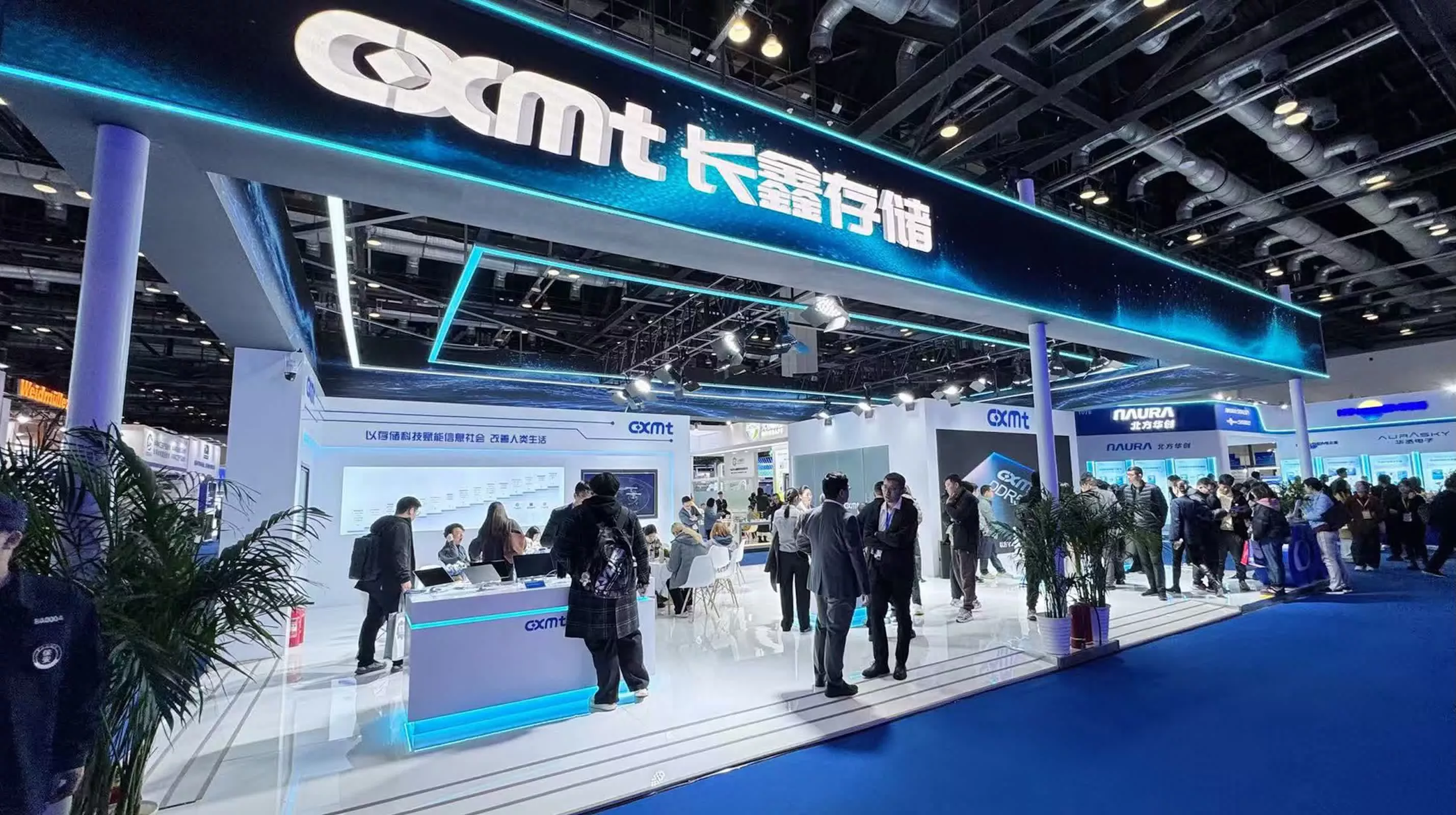
That origin story came directly from a former Samsung Electronics engineer surnamed Jeon, according to Maeil Business. The veteran employee spent almost three decades at Samsung before jumping to the rival firm around 2016. Jeon appeared in a Seoul courtroom this past week to testify under oath about those early days, telling the judge that his new employer lacked basic laboratory facilities and never planned to do its own independent research when it was founded.

Instead, startup executives reportedly wanted to grab a highly confidential blueprint from Samsung right from day one. Engineers in the semiconductor industry call that document a Process Recipe Plan: it lists roughly 600 specific manufacturing steps, telling engineers exactly what temperatures and equipment pressures to use on the factory floor so they don't have to guess.
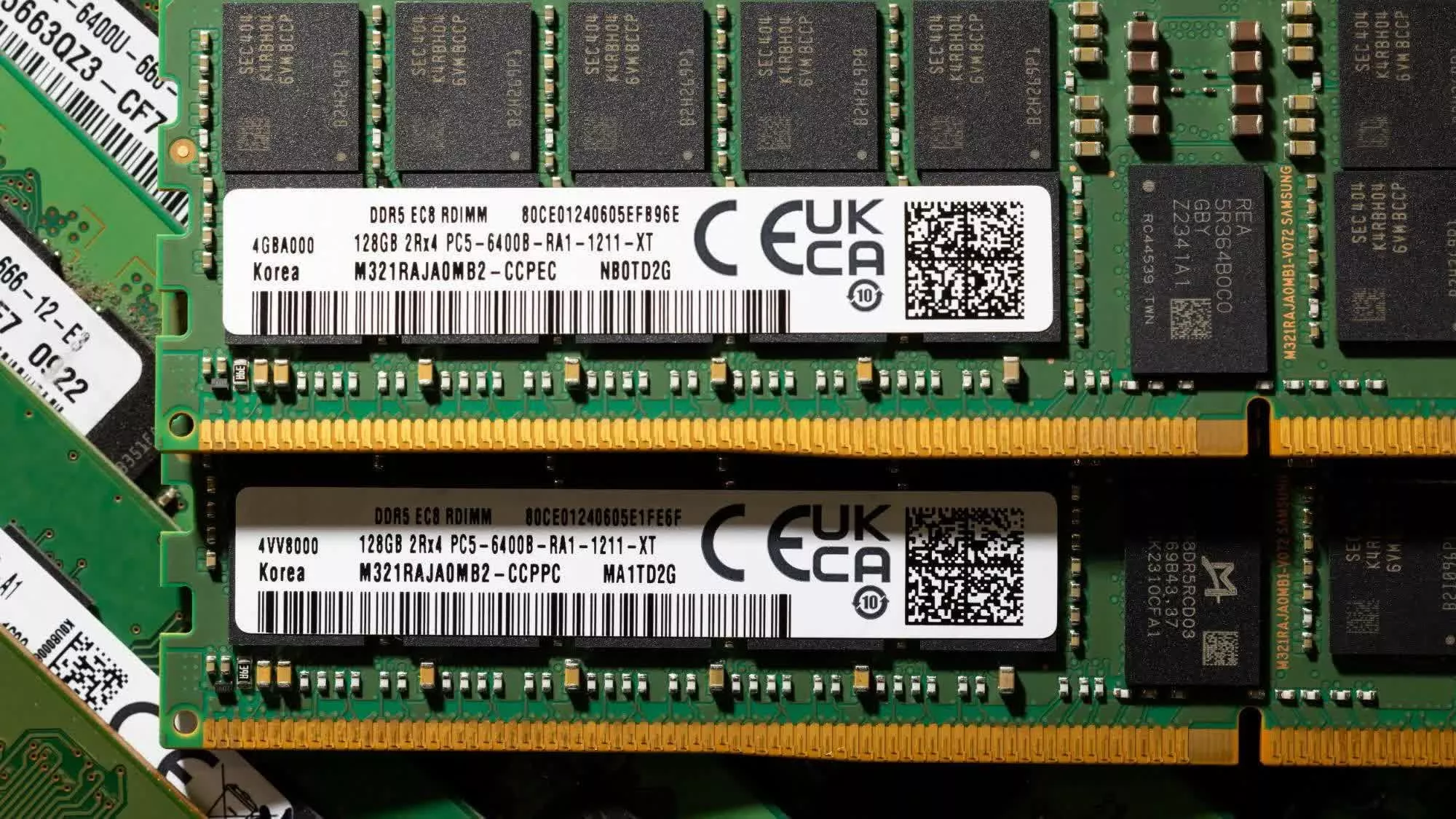
Samsung spent five years and well over a billion dollars dialing in the specifications for its 18-nanometer memory chips. Prosecutors now say the Chinese firm simply recruited a bunch of former Samsung workers to swipe all of it.

By 2023, the company had begun mass-producing advanced memory chips. Today, its output has grown from 40,000 to 720,000 wafers in just a few years, and it's closing in on Micron.

Unsurprisingly, South Korean authorities haven't let this slide. Prosecutors indicted ten people late last year for illegally leaking protected national technologies, and a judge handed Jeon a seven-year prison sentence this past April for his role.

Proving all this in court could give Samsung a powerful weapon moving forward. Legal experts believe the company might take sworn statements straight to the US International Trade Commission, a body with the authority to block foreign products from entering the country entirely.

Permalink to story:

 
Ok, what's anyone going to do about it?

If we've learned anything in the past 10 years its that laws are all well and good until you realize no one is interested in actually enforcing them.
 
Ok, what's anyone going to do about it?

If we've learned anything in the past 10 years its that laws are all well and good until you realize no one is interested in actually enforcing them.
it's going to get banned in the US to protect the big three's memory profits.

These trade secrets might not be so valuable if they didn't try to monopolize the market. Fun thing is, they kept it secret instead of patenting it, but the process is out in the open now and anyone can use it.

On a final note, people can't be bought if you're the highest bidder. China doesn't have an extradition treaty so these guy ls will probably live the high life in China selling secrets because if they return home they'll be thrown in jail.
 
Last edited:
it's going to get banned in the US to protect the big three's memory profits.

These trade secrets might not be so valuable if they didn't try to monopolize the market. Fun thing is, they kept it secret instead of patenting it, but the process is out in the open now and anyone can use it.

On a final note, people can't be bought if you're the highest bidder. China doesn't have an extradition treaty so these guy ls will probably live the high life in China selling secrets because if they return home they'll be thrown in jail.
Oh noooo......wait, China is a larger market for electronics then the US. Whoops.

The cat has LONG escaped that bag, for so long in fact it came back and had kittens. As it is now, China can sell its products throughout the rest of the world and dominate the big 3. At worst, korea and the US would ban them. We all knew it was coming, and the future is now here. By 2030 CXMT will have a majority share of the DRAM market, YTMC the storage market, and the big 3 will be begging for bailouts.
 
I wonder what's the purpose of this article.

China stealing everything is the default state of affairs. When you see anything Chinese, you know it's stolen.
China stealing again for a zillion-th time is not newsworthy.

If you stumble upon something they did without stealing, immediately let us know. Actually, don't do it immediately - triple check it first.
 
Oh noooo......wait, China is a larger market for electronics then the US. Whoops.

The cat has LONG escaped that bag, for so long in fact it came back and had kittens. As it is now, China can sell its products throughout the rest of the world and dominate the big 3. At worst, korea and the US would ban them. We all knew it was coming, and the future is now here. By 2030 CXMT will have a majority share of the DRAM market, YTMC the storage market, and the big 3 will be begging for bailouts.
I don't get what you're trying to say, are you agreeing with me while trying to act like what I said was wrong?
 
These clickbait articles are funny. They make it sound like China is the only bad actor in the entire world. Surely American companies don't steal trade secrets from others or engage in any type of corporate espionage and other shady business practices. *roll eyes*

PS. - Can't wait until the Orange Turd's cronies come up with some asinine reason to ban CXMT from the US market (my money is on national security concerns, which is their go-to BS reason every time now), forcing Americans to keep paying ridiculous prices for memory while leaving more CXMT products for the rest of the world. Good times ahead.
 
I don't get what you're trying to say, are you agreeing with me while trying to act like what I said was wrong?
It's pretty obvious, the US is incapable of stopping CXMT. There are far more market a that will buy Chinese regardless, and the big 3 are going to get wrecked HARD as a result.
 
It's pretty obvious, the US is incapable of stopping CXMT. There are far more market a that will buy Chinese regardless, and the big 3 are going to get wrecked HARD as a result.
Well I hope you're right, but they'll sit on the billions they've already made and make deals with OEMs where they supply chips to them. Much like how lots of the software legislation in the EU bleeds over to the US like right to repair, it's cheaper to make 1 SKU that complies with as many markets as possible in the world than multiple SKUs.

The big three do need their nuts tied in a knot, though. If Chinese manufacturers mean long time stable and competitive pricing, im fine with it. But this whole "ban all our competitors" is getting exhausting and annoying.

And I really want someone to correct me if I'm wrong on this, I want to know how someone can install software on a stick of ram to spy on people and create vulnerabilities. I thought on a fundamental level that how parts like this were designed made it impossible to do that. everything that goes in and out of a memory chip is made by the memory controller. There is no microcode stored in them, they're just an empty tank to store 1s and 0s. And that due to how memory works, you can see all the blocks and what's in them. if there was some block with fishy code in it, it would create memory faults and errors and be functionally unusable.
 
Well I hope you're right, but they'll sit on the billions they've already made and make deals with OEMs where they supply chips to them. Much like how lots of the software legislation in the EU bleeds over to the US like right to repair, it's cheaper to make 1 SKU that complies with as many markets as possible in the world than multiple SKUs.

The big three do need their nuts tied in a knot, though. If Chinese manufacturers mean long time stable and competitive pricing, im fine with it. But this whole "ban all our competitors" is getting exhausting and annoying.

And I really want someone to correct me if I'm wrong on this, I want to know how someone can install software on a stick of ram to spy on people and create vulnerabilities. I thought on a fundamental level that how parts like this were designed made it impossible to do that. everything that goes in and out of a memory chip is made by the memory controller. There is no microcode stored in them, they're just an empty tank to store 1s and 0s. And that due to how memory works, you can see all the blocks and what's in them. if there was some block with fishy code in it, it would create memory faults and errors and be functionally unusable.
Well look at it this way: China is the single largest electronics market. So right off the bat, if the US band CXMT, China can just ban crucial and CXMT will be better off. If the US gets Korea to comply, then China can cut off all big 3 and move memory requirements internally.

Then you have BRICS. Brazil, Russia, China, India, and South Africa. All of them will happily buy CXMT. India is next to China in economic growth.

Then you have the rest of the world. The Middle East won't listen to the US, obviously. SE asia will happily gobble up CXMT as well, except maybe japan. Europe will buy it no issue.

Look at Huawei. The US got the five eyes on board ( australia, Canada, New Zealand, the uk) on board, but much of the rest of Europe still uses Huawei telecommunications equipment. And in all these countries, except the US, you can still buy Huawei consumer goods like phones.

In the event of the us getting CXMT banned, it will most likely only be us and the Koreans involved. But even if they get the five eyes, parts of West Europe, and japan, CXMT will still have well over half the global electronics market available to them, including the growth market sof South America and Asia. The US has lost too much I fluence to effectively stop China, and they were warned of this when the first Chinese trade bans with ASML were announced.
 
They'll use every trick in in the book and every accusation that seems even vaguely plausible against CXMT to ensure the free market remains locked down nice and tight.
 
Look at Huawei. The US got the five eyes on board ( australia, Canada, New Zealand, the uk) on board, but much of the rest of Europe still uses Huawei telecommunications equipment. And in all these countries, except the US, you can still buy Huawei consumer goods like phones.
Europe mostly went along with it for telecommunications equipment.

With the current US-EU relationship however I wouldn't count on the EU/Europe paying whatever the US is saying much heed though. The Greenland thing, the tariffs, etc etc kinda burned through whatever goodwill there was.
Not to mention if it's just memory chips themselves I don't think much of a 'national security' other than trying to prevent China from becoming a big player can be made. Afaik the chips themselves are pretty dumb, if there's any logic for remote disabling or spying or anything like that to be done I'm pretty sure it would have to be at a higher level and that can still be done by non-Chinese companies.

--

South Korea is real mad, and that's not very surprising. SK Hynix and Samsung are two of the big three, and the two bigger ones. They make up for a huge chunk of South Korea's GDP.
 
The irony is that Samaung did this to Japanese semiconductor companies back in the 80s and 90s. With that said, China is notorious for intellectual copyright to the point they dont think its even a crime. "We copied them, that takes skill & effort!" is their mindset.
 
Back