ChromeOS Flex gets a $3 USB installer to revive aging Windows PCs

Alfonso Maruccia

Posts: 2,593   +975
Staff
In context: Microsoft ended support for Windows 10 in October 2025, yet millions of users continue to run the OS as their primary computing platform. ChromeOS Flex offers a potential alternative to Redmond's aging system, and Google has now launched a new partnership aimed at making the cloud-based OS easier to install.
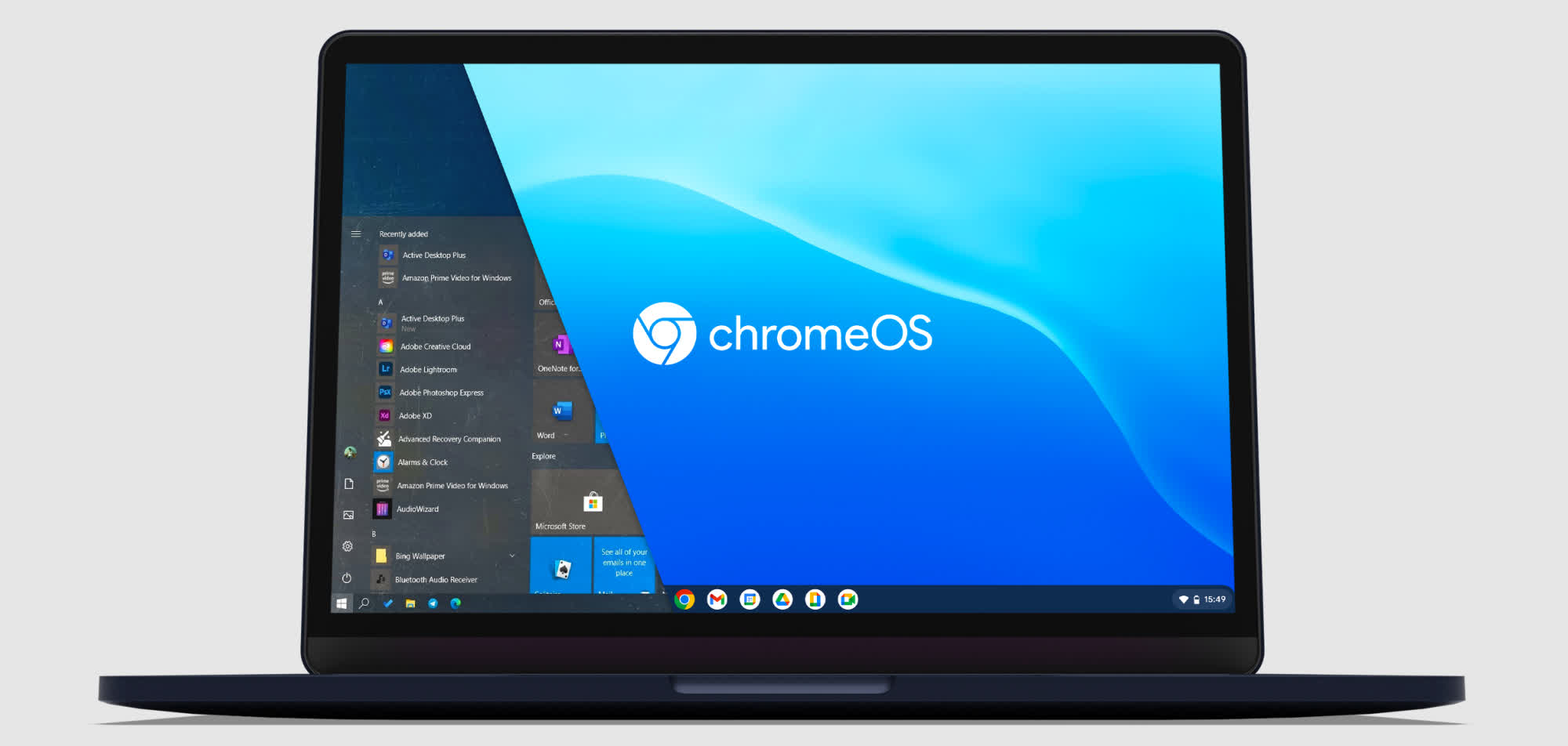
Google has partnered with Back Market, a company specializing in refurbished tech products, to bring ChromeOS Flex to even more users and organizations. The advertising giant continues to promote ChromeOS Flex as a way to turn aging laptops into secure, sustainable, and fully supported machines. Thanks to the new partnership, the ChromeOS Flex fork now comes with its own USB kit – if you can find one to buy.

Google said the ChromeOS Flex USB Kit is a physical USB dongle priced at $3 or €3. Customers can use the flash drive to quickly deploy the web-based operating system on Windows or Mac machines, replacing their "obsolete" operating system with a modern computing experience. The USB dongle, which is already out of stock on Back Market's site, is designed as an easy-to-use tool to combat planned obsolescence.

ChromeOS Flex was introduced a few years ago as a way to bring the web-centric ChromeOS experience to a wider range of devices outside the Chromebook line of OEM systems. Google now maintains a list of certified laptop models expected to work well with ChromeOS Flex, meaning the OS may fail to install on non-certified hardware.

Google acknowledges that maintaining software support can be challenging, and Microsoft is not the only major tech company facing these issues. In the past, Mountain View has extended guaranteed software updates for Chromebooks and Pixel phones to 10 and seven years, respectively. Meanwhile, Microsoft is currently providing an additional year of security updates (through October 2026) for eligible Windows 10 users.

Windows 10 remains a massively popular operating system, and the number of machines that cannot be upgraded to Windows 11 is growing rapidly. Google is now actively promoting ChromeOS Flex as an alternative platform to keep these older machines operational, at least for web browsing and less demanding productivity tasks.

ChromeOS Flex can be installed either via a specialized dongle, such as Back Market's USB drive, or by downloading the OS directly through Google's help center. Mountain View emphasizes that ChromeOS incurs no additional hardware costs and can significantly reduce the carbon footprint associated with expensive device upgrades.

Manufacturing a new laptop accounts for a large portion of a machine's total environmental footprint, Google explained, while ChromeOS Flex is designed to run on pre-existing devices. The company also claims that ChromeOS can reduce energy consumption by up to 19% compared with "comparable" operating systems. However, it remains unclear whether ChromeOS is truly comparable to major platforms such as Windows, Linux, or macOS.

Permalink to story:

 
No Thank You....

Enough with the Nickel and Dime...if they want people to use that OS just let people download it, I'm sure people have plenty of flash drives laying around that they can use.
 
Maybe I'm misreading this. How exactly is the number of machines that cannot be upgraded to Windows 11 "growing rapidly?" Don't all new machines come with TPM now? And with old machines being decommissioned, that number should be shrinking, right?
 
How exactly is the number of machines that cannot be upgraded to Windows 11 "growing rapidly?" Don't all new machines come with TPM now?
I think what the author means is "the list of devices in the process of being decommissioned, because they don't support or implement the TPM 2 security module, is growing faster than the number of device being released into the market that do support it." Because you are correct. There are no more pre-TPM 2 devices being released, so the number is either constant or shrinking, due to e-waste recycling.

My speculation is, just like with the M2 money supply, it's about the speed of deployments: if global shipments of new laptops and/or smart devices with is not increasing faster than current stock without, then ratio will considered skewed towards "devices lacking"...and there are a lot of them. Even if the earliest device that shipped with and made use of a TPM 2 were from 2014 onward, that's only about 12 years. We've had personal computers on the market for at least twice that amount of time and the first "modern smartphones" are from 2006-2007; anything that can use bare minimum an IP4 routing stack, and connect to the Internet, counts.
 
Or you could install any distro of Linux you prefer for free and have a full operating system.
Most people dont need a full operating system, and chromeOS is pretty dumbarse proof.

I immediately think of my stepfather who kept finding creative ways of breaking the taskbar in linux mint, or changing settings and having no idea what exactly he did. There is an unfortunate reason Windows locked that down with 11.
 
Most people dont need a full operating system, and chromeOS is pretty dumbarse proof.
If there was something like "Ungoogled ChromeOS Flex"―with all the sandboxing and app support of ChromeOS and its Android compatibility layer, combined with all benefits of full-blown Linux Mint, such as privacy controls and the atomic app updates and modular system design of something like Fedora Silverblue―that would be the ultimate "doofus-proof OS".
 
There is no need to rush into transition just yet.
It seems to me that everything is still available, for example on the website UUP dump

windows10.0-kb5078885-x64_8013483b567f16e057931c30725c6c8723007a31.msu

Cumulative Update for Windows 10 Version 22H2 (19045.7058) amd64 (2026-03-10 17:01:40 UTC)

Feature update to Windows 10, version 22H2 (19045.7058) amd64 (2026-03-10 17:01:48 UTC)
 
If there was something like "Ungoogled ChromeOS Flex"―with all the sandboxing and app support of ChromeOS and its Android compatibility layer, combined with all benefits of full-blown Linux Mint, such as privacy controls and the atomic app updates and modular system design of something like Fedora Silverblue―that would be the ultimate "doofus-proof OS".
But everything you just listed is a feature powerusers would love, and is by extension, making the OS less doofus proof, because every possible setting and option is one more window they can open, panic, then call me because they're "getting hacked" or "it wont do anything I think I have a virus should I sell it?.

We're talking about the people who have no understanding of the internet or computes, they know if they click the icon they get the Facebook and anything beyond that is black magic. Icon moves? COMPUTERS HAUNTED (yes I've heard that one before).
 
This is the stupidest thing ever.
IF YOU DO THIS YOU CANNOT HAVE CO-PILOT!
Your life will be a smoking ruin and your former friends will despise you to bits.

OK I had fun typing that. I don't mind what people decide on the matter I just wanted to poke fun at Microsoft. Sorry!
 
But everything you just listed is a feature powerusers would love, and is by extension, making the OS less doofus proof, because every possible setting and option is one more window they can open, panic, then call me because they're "getting hacked" or "it wont do anything I think I have a virus should I sell it?.

We're talking about the people who have no understanding of the internet or computes, they know if they click the icon they get the Facebook and anything beyond that is black magic. Icon moves? COMPUTERS HAUNTED (yes I've heard that one before).

Heresy I tell you ☝️ How dare you disrupt the doctrine of flat windows 🙄 shh 🤫 its magical incantations. We must remain living in the dark ages 😶‍🌫️ and continue with our beliefs in this flagrant hypocrisy 🔥
 
Secure? LOL.............In what way exactly? It's from Google, and it's cloud-based. Ad-infested spyware, with all your inputs being harvested to train their Artificial Insemination, is hardly my idea of "secure".

Your opinion may vary.
 
Google manages to not break Chrome on a monthly basis, so they're ahead of Micrososft there.

And Gdrive works way better then Onedrive does.
But when it comes to the selling of your data, Google really is worse than Microslop. What Scoffer said above me is true.
 
Windows 10 remains a massively popular operating system, and the number of machines that cannot be upgraded to Windows 11 is growing rapidly.
That's plain nonsense. The number of machines capable of running Windows 10 that can't but upgraded to Windows 11 is exactly 0 (zero). The support for 10 is still intact, BTW. The End-of-support story was intended to push corporate clients to switch to 11. There's no reason whatsoever to use a quasi-OS like Chrome.
 
Maybe I'm misreading this. How exactly is the number of machines that cannot be upgraded to Windows 11 "growing rapidly?" Don't all new machines come with TPM now? And with old machines being decommissioned, that number should be shrinking, right?
Maybe its the way its it phrasing that gives you trouble, but regardless, the reality remain - surely there are plenty of older hardware(Unsupported Win 11) than the opposite.
 
I immediately think of my stepfather who kept finding creative ways of breaking the taskbar in linux mint, or changing settings and having no idea what exactly he did. There is an unfortunate reason Windows locked that down with 11.

Have it locked by default, but able to unlock. No need to remove the ability to move.
 
There is no need to rush into transition just yet.
It seems to me that everything is still available, for example on the website UUP dump

windows10.0-kb5078885-x64_8013483b567f16e057931c30725c6c8723007a31.msu

Cumulative Update for Windows 10 Version 22H2 (19045.7058) amd64 (2026-03-10 17:01:40 UTC)

Feature update to Windows 10, version 22H2 (19045.7058) amd64 (2026-03-10 17:01:48 UTC)

For those who don't mind, Massgrave has the last Oct. 2025 Windows 10 ISO. From there, enable ESU, et voilà.
 
But everything you just listed is a feature powerusers would love, and is by extension, making the OS less doofus proof, because every possible setting and option is one more window they can open, panic, then call me because they're "getting hacked" or "it wont do anything I think I have a virus should I sell it?.

We're talking about the people who have no understanding of the internet or computes, they know if they click the icon they get the Facebook and anything beyond that is black magic. Icon moves? COMPUTERS HAUNTED (yes I've heard that one before).
Half the population of our lovely planet is blessed with a below average IQ. Which is the real reason we cannot have nice thing or for that matter, sensible RULERS.
Be that as it may for those that cannot/should not tinker with their OS a locked down setup might just work.
I don't trust Google with this - their 'solutions' are effectively advertising platforms (just like Win11) and while the advertising/profiling has NO EFFECT on those who block all forms of advertising anybody else is (un)fair game.
So here we are. A locked down OS without ad&profile-ware is very possible but will never get support from the powers that be, so how are ordinary people going to lay their hands on such a thing? They've been told updated stuff is the greatest thing ever so they clicked the install 11 button or even bought a dam machine that can run that annoying POS.
[/thursday rant mode off]
 
Or install Ubuntu, Zorin OS or Linux Mint and get user friendly OS's that run good on old hardware and not loaded with corporate spyware.
I absolutely love Mint but I've switched to Cachy on the mini PC and am very pleased with how it runs Wine perfectly.
 
Back