Colorado's landmark right-to-repair law faces pushback from tech giants

midian182

Posts: 11,747   +178
Staff member
A hot potato: Colorado has become one of the biggest right-to-repair battlegrounds in the US, passing laws that give consumers and independent shops more freedom to fix everything from wheelchairs to farm equipment and electronics. Now, some major tech companies are backing a bill that critics say could seriously undermine those protections.
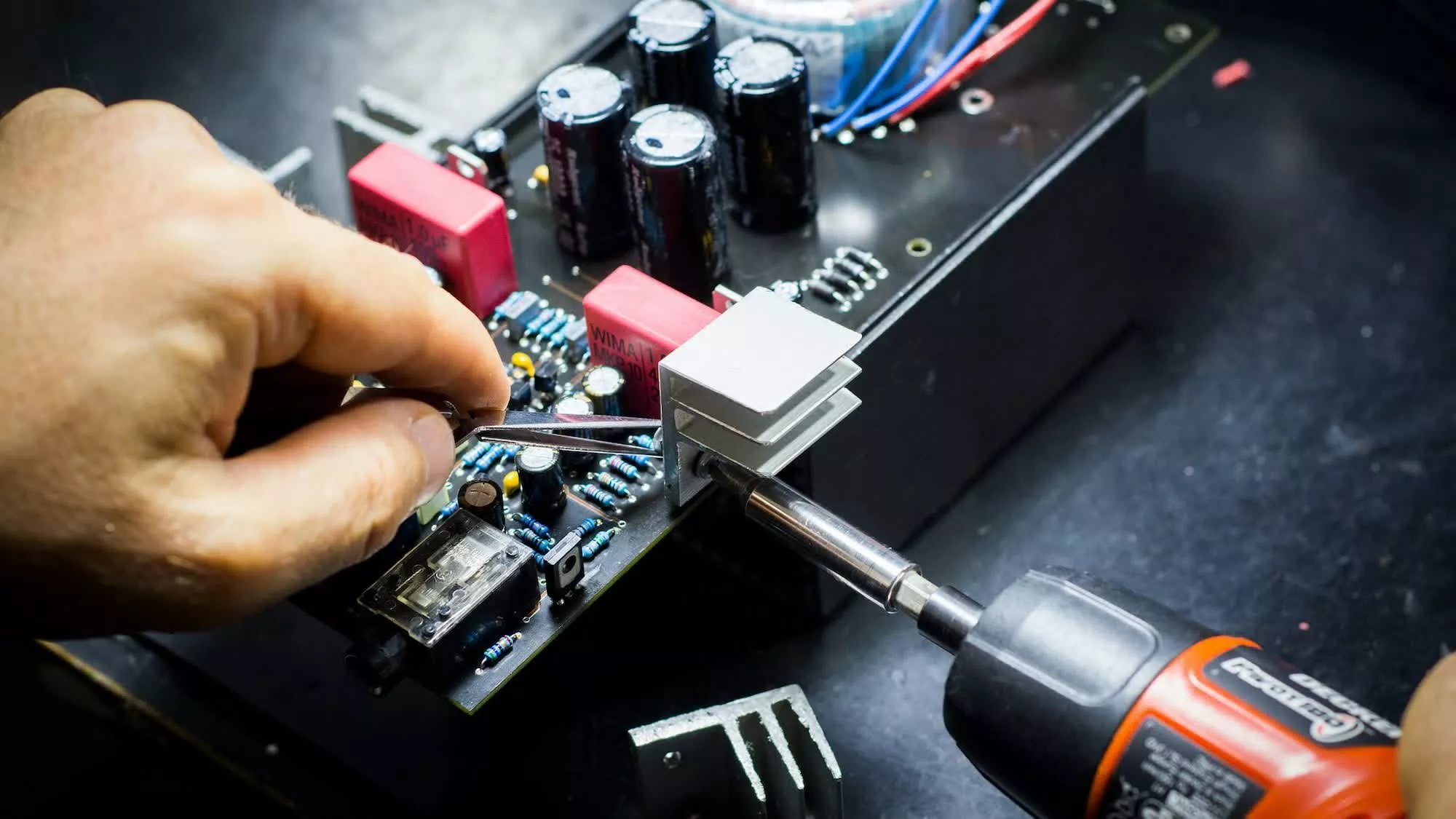
Colorado has earned a reputation as the national leader in right-to-repair legislation. Since 2022, the state has approved measures covering powered wheelchairs, agricultural equipment, and consumer electronics, forcing manufacturers to provide the parts, tools, software, and documentation needed for repairs.

But as first reported by Wired, that progress is under threat from Senate Bill 26-090, a proposal that would exempt certain "information technology equipment" used in "critical infrastructure" from Colorado's consumer right-to-repair law.

Supporters of the bill, including Cisco and IBM, argue that enterprise hardware tied to sensitive infrastructure should be treated differently from consumer devices.

As we've seen many times before in similar arguments from tech firms, the justification being used here is cybersecurity. The companies say that giving broader access to repair tools and systems could create new opportunities for bad actors.

Unsurprisingly, critics of the bill are not buying it. The biggest issue is the language itself. Opponents say terms like "information technology equipment" and "critical infrastructure" are broad enough to cover far more than just a narrow category of sensitive systems.

Depending on how the law is interpreted, the exemption could apply to servers, routers, computers, and other hardware in a wide range of environments. In other words, what sounds like a targeted exception could turn into a massive loophole.

That is why repair advocates see the bill as a direct attempt to claw back rights that consumers and independent repair shops have only just gained. If manufacturers can decide which devices qualify for exemption, they effectively regain control over who can access repair parts, software, and service information.

As Wired notes, groups including PIRG, the Repair Association, iFixit, and repair advocate Louis Rossmann spoke against the measure during the hearing. They argue that restricting repairs does not automatically improve security, and forcing organizations to wait on manufacturers for permission or access can leave critical systems offline for longer when something breaks.

Companies often frame opposition around safety, security, or product integrity, but there is also a clear financial incentive in keeping repair locked inside official channels.

Back in 2023, Colorado became the first US state to pass a right-to-repair law for farmers. At the time, John Deere warned about the "unintended consequences" stemming from the new legislation.

Permalink to story:

 
Personally, I think this could be better solved by making a law that forces electronics makers to warranty their products for longer periods of time. One year from purchase date isn't enough. I think the base warranty should be 3 years.

With Electric vehicles, federal law forces warranty to cover 8-years / 100,000 miles.

I think people would be more likely to squeeze more life out of devices if the warranty was longer.

I don't want to try and repair an iPhone when I know that the waterproof seals (water resistant/ dust resistant) seals will be damaged and the device will be compromised.

My iPhone 6 took a second-long dip in the waters of Seychelles, shorted out and killed my vacation photos and videos. Meanwhile, my iPhone 12 Pro Max survived full immersion in the waters of Maldives with not a single issue. My iPhone 17 Pro Max 2TB can literally be in beach water with me. If I have to give up right to repair for assurances like that: so be it.

But I'm against so much E-waste. Apple wouldn't even touch my Air Pod Max when I didn't have applecare and they wanted $300+ for a replacement while an ifixit did the battery replacement for just $100. That's just insane.
 
Last edited:
Personally, I think this could be better solved by making a law that forces electronics makers to warranty their products for longer periods of time. One year from purchase date isn't enough. I think the base warranty should be 3 years.

With Electric vehicles, federal law forces warranty to cover 8-years / 100,000 miles.

I think people would be more likely to squeeze more life out of devices is the warranty was longer.

I don't want to try and repair an iPhone when I know that the waterproof seals (water resistant/ dust resistant) seals will be damaged and the device will be compromised.

My iPhone 6 took a second-long dip in the waters of Seychelles, shorted out and killed my vacation photos and videos. Meanwhile, my iPhone 12 Pro Max survived full immersion in the waters of Maldives with not a single issue. My iPhone 17 Pro Max 2TB can literally be in beach water with me. If I have to give up right to repair for assurances like that: so be it.

But I'm against so much E-waste. Apple wouldn't even touch my Air Pod Max when I didn't have applecare and they wanted $300+ for a replacement while an ifixit did the battery replacement for just $100. That's just insane.
Becaure they don’t stock the part, Ifixit also don’t stock that part so I’m confused how the they repaired it.
 
Personally, I think this could be better solved by making a law that forces electronics makers to warranty their products for longer periods of time. One year from purchase date isn't enough. I think the base warranty should be 3 years.

With Electric vehicles, federal law forces warranty to cover 8-years / 100,000 miles.

I think people would be more likely to squeeze more life out of devices is the warranty was longer.

I don't want to try and repair an iPhone when I know that the waterproof seals (water resistant/ dust resistant) seals will be damaged and the device will be compromised.

My iPhone 6 took a second-long dip in the waters of Seychelles, shorted out and killed my vacation photos and videos. Meanwhile, my iPhone 12 Pro Max survived full immersion in the waters of Maldives with not a single issue. My iPhone 17 Pro Max 2TB can literally be in beach water with me. If I have to give up right to repair for assurances like that: so be it.

But I'm against so much E-waste. Apple wouldn't even touch my Air Pod Max when I didn't have applecare and they wanted $300+ for a replacement while an ifixit did the battery replacement for just $100. That's just insane.
I get where you are coming from, and agree that designed obsolescence is a problem worth addressing, but there is a lot that warranties do not cover, including regular wear and tear. Additionally, companies set the terms of warranties, so if we are going to go through the trouble of specifying all the things that a warranty must cover to get rid of loopholes, we might as well allow outside parties the right to repair the devices.
 
"Now, some major tech companies are backing a bill that critics say could seriously undermine those protections. " that's the biggest red FLAG of all.

When you remove this option and make it illegal, that's when you actually have a real gov.
 
Tech giants calling it “security” while pushing loopholes just sounds like a way to keep control over repairs. This could seriously weaken one of the strongest right-to-repair laws.
 
How companies operate.
Making things repairable: But omg security!
Releasing firmware/software updates for their products (including security patches): Do we have to? How about maybe 2 years? That's enough right.
 
We already have a Top Secret and other classification system for technology that is truly secret. You can't bring your nuclear missile launcher to Best Buy because the Geek Squad doesn't have clearance for it.

So I don't see any need for a new law here.
 
Everyone has "right-to-repair", this name is a misnomer. If you own whatever gadget, you're totally free to dissect it and try to resuscitate it if it fails.
Nobody can deny you that right, and nobody should be stopped from providing this as a service, as long as their clientele accepts the risk. However, I don't think it's OK to force companies to disclose proprietary information of any kind.

As always, the right approach is to let the market deal with it. If you can repair gadgetA yourself, but repairing gadgetB costs a lot and is slow, maybe people will prefer gadgetA. If they still prefer gadgetB, maybe right-to-repair is not that important for this type of gadget.
 
...this could be better solved by making a law that forces electronics makers to warranty their products for longer periods of time. One year from purchase date isn't enough. I think the base warranty should be 3 years...

I think people would be more likely to squeeze more life out of devices if the warranty was longer.
No one trades in their iPhone because the warranty expired. And the best solution to any problem is always the free market. After purchasing nearly a dozen Mercedes over the course of my life, I recently switched to Genesis. Why? Much better warranty.

At least two cell phone makers already have a standard FIVE year warranty on their phones. Yet almost no one buys these. Why? Because people really don't care about cell phone warranties the way you believe they do.
 
Letting companies operate however they want in a "free market" clearly isn't working, when they operate with excuses of things like making batteries or screens proprietary to a device like a phone or laptop.
There isn't anything that should be proprietary under the guise of "security" for a battery or display. Warranties are meaningless to me as a customer most of the time as well, as a company usually has some loophole to get themselves out of repairing or replacing the device.
 
No one trades in their iPhone because the warranty expired. And the best solution to any problem is always the free market. After purchasing nearly a dozen Mercedes over the course of my life, I recently switched to Genesis. Why? Much better warranty.

At least two cell phone makers already have a standard FIVE year warranty on their phones. Yet almost no one buys these. Why? Because people really don't care about cell phone warranties the way you believe they do.


Can you even name those phone makers that have 5 year warranties?

I can't - and even if I could - I wouldn't buy them because they aren't apple.

The EU forced apple to adopt USBc so if they pass laws that demand warranty coverage for 3 years, something America won't do, I guarantee Apple will FOLD rather than try to fight it.

Especially after they lost the lawsuit over them throttling down the phone when the battery gets old.

EU could force ALL manufacturers to offer 3 year warranty and they have no choice but to submit - or lose the market share.
 
Can you even name those phone makers that have 5 year warranties?

I can't - and even if I could - I wouldn't buy them because they aren't apple.
You've proved my point. You -- and everyone else in the world -- prefer the features and qualities that Apple does offer, to having a 5-yr warranty. If a longer warranty actually mattered significantly to you, you'd buy those other phones.

Now here's the crucial point. If Apple thought that people wanted a longer warranty more than they disliked the cost of that warranty, they'd already be offering it, to gain market share. Instead, they're giving customers what they actually want.

EU could force ALL manufacturers to offer 3 year warranty and they have no choice but to submit
Of course ... because those longer warranties would hurt consumers much more than they would phone makers. But by your logic-- why stop there? Why not require all phones to have 20-year warranties? 50-year warranties on new vehicles! Lifetime warranties on your home, and all the appliances in it!

After all, in your world, there's zero downside to these government mandates, right? So why not take them to the limit?
 
Last edited:
Back