The big picture: The fight over data centers is increasingly centered on what these facilities could mean for nearby residents' power bills, water supplies, and quality of life. New research suggests that opposition is driven less by fears about AI itself than by concerns that communities will be left to absorb the infrastructure costs required to support it.
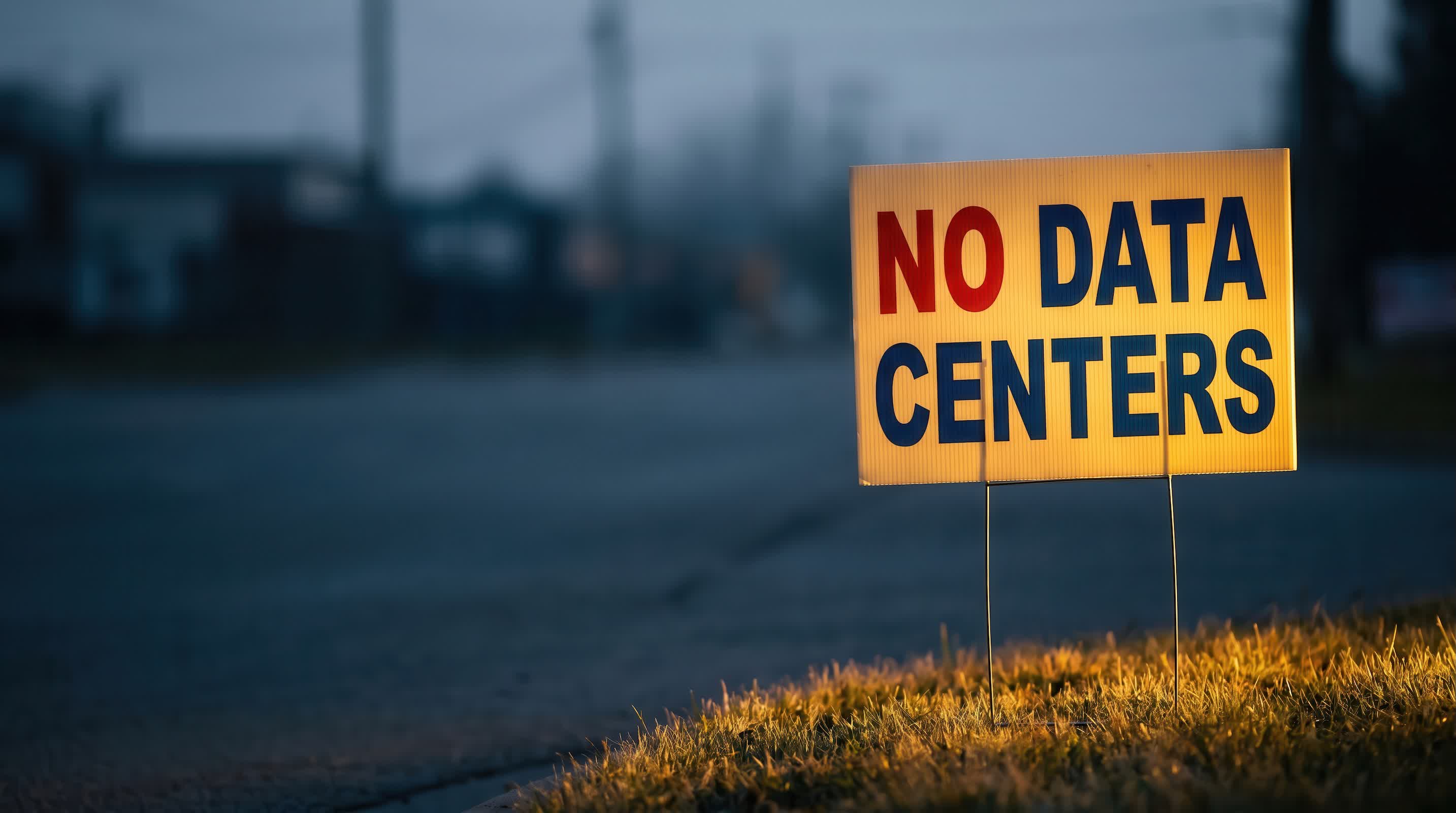
Researcher Andy Masley reviewed polling data on the backlash and concluded that its main drivers are not simply distrust of Big Tech, skepticism about AI, or concerns about China. Instead, he found that people are responding to "object-level local environmental and economic harms" associated with proposed projects.
Power is often the first concern. Large data centers can require significant grid upgrades, including new substations, transmission lines, and other equipment. In the PJM Interconnection region, those costs have often been spread across all customers, even when the upgrades are driven by data center demand. Some customers have seen their utility bills rise by as much as 76%.
The issue has become significant enough to draw attention from the Trump administration. President Trump brought together technology companies, AI hyperscalers, utilities, and governors to sign a "ratepayer protection pledge" intended to ensure that AI companies "pay their own way" for the energy infrastructure they require.
Some states are beginning to address the issue directly. Oregon has adopted a law requiring facilities that use at least 20 megawatts of electricity to cover their share of grid-related costs. Portland General Electric, the state's largest utility, raised rates for data centers by 30% while cutting residential rates by 1.3%.
Water use has also become a flashpoint. In Georgia, reports linked data center operations to low water pressure and, in one case, muddy water coming from household taps. A separate dispute in Wyoming involved a Meta contractor that allegedly contaminated Cheyenne's reclaimed-water system. City officials later suspended certain fill-and-flush and closed-loop discharges associated with the project.
Other communities have raised concerns about noise and emissions. Residents near a Michigan data center said the facility produced a constant sound, comparing it to having "someone set up a vacuum, like in your living room." The company was fined for violating a local industrial noise ordinance and offered to buy homes from nearby residents.
Some projects have also faced criticism over the use of mobile turbine generators or plans to build dedicated gas-fired power plants. A proposed Amazon-related facility in Texas includes a 7.65-gigawatt natural gas plant authorized to emit up to 33 million tons of greenhouse gases annually.
Masley argues that these are concrete concerns, not vague fears. They stem from issues that residents can see, hear, or pay for. However, he also noted that coverage of individual disputes can sometimes leave out important details about proposed projects or fail to compare them with other data center sites. That can lead people to assume that problems reported elsewhere will automatically occur in their own communities.
For developers, this makes transparency more important. Residents want to know how much power a site will use, who will pay for grid upgrades, where the water will come from, and how it will be handled after use. They also want clear information about backup generators, emissions, and noise controls.
Instead, some developers have taken a more confrontational approach. Several have sued local governments that imposed data center bans or moratoriums, arguing that officials exceeded their authority or violated due process and equal protection rules.
In one Pennsylvania town, officials presented a developer with 43 requirements before approving a project. The developer considered the demands too onerous, withdrew from the talks, and later reapplied. The council described the move as an attempt at "approval by tantrum."
The dispute over data centers is unlikely to disappear as demand for AI computing capacity grows. However, the resistance is not only about the technology itself. It is also about whether the costs of building that infrastructure will be borne by the companies using it or by the communities living next to it.
Image credit: Andy Masley
Data center backlash isn't about AI, it's about who pays the bills (and the noise)


