
The takeaway: Developers usually ask interested players to wishlist their games on Steam before launch, believing that high wishlist numbers impact visibility and, eventually, commercial success. However, studies over the past several years indicate that other factors are far more important.

Comparisons between the number of Steam users who wishlist games and the number who purchase them during launch week show little correlation. Although garnering wishlists can be beneficial, user reception within and outside Steam is far more impactful.
GameDiscoverCo, a newsletter by Simon Carless, a former developer and one of the heads of GDC, has been surveying developers since 2020 to understand the connection between wishlist numbers and sales. Valve states that wishlists have little effect on a game's visibility and commercial sales, and the data appears to support this.
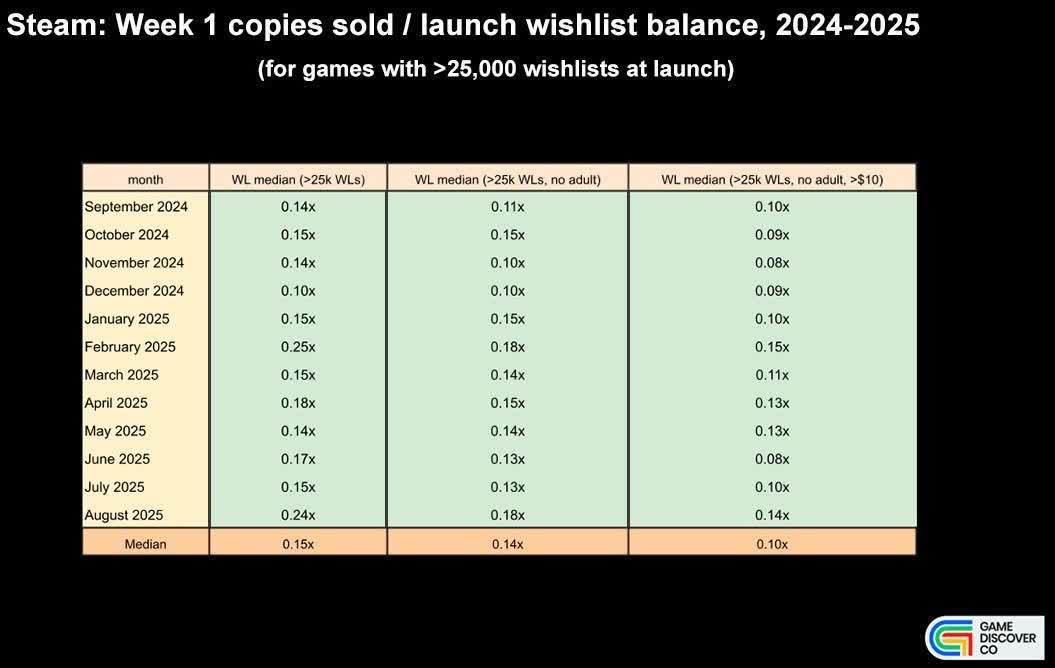
Surveys from 2020, 2021, 2024, and this year indicate that the conversion rate between pre-launch wishlists and first-week sales averages roughly 36%, with a median of about 20%. However, performance between titles can vary by 1,000 to 2,000%. Many games achieve high wishlist numbers that don't translate into sales, while others sell primarily to customers who did not wishlist them.
Separating titles by categories, such as genre and price, revealed that cheaper games and adult titles consistently have slightly higher wishlist conversion rates. Low prices obviously make the decision to purchase a game easier, and adult titles likely sell to dedicated niche audiences.
However, the games with the highest sales compared to wishlists performed well due to other factors, such as pre-launch hype and positive reception following release. AAA games with large advertising campaigns, like Monster Hunter Wilds, tend to see conversion rates slightly below or above 100%. Meanwhile, popular sports titles, such as NBA 2K26 or EA Sports FC 25, exceeded 400%, indicating that most buyers did not wishlist them.
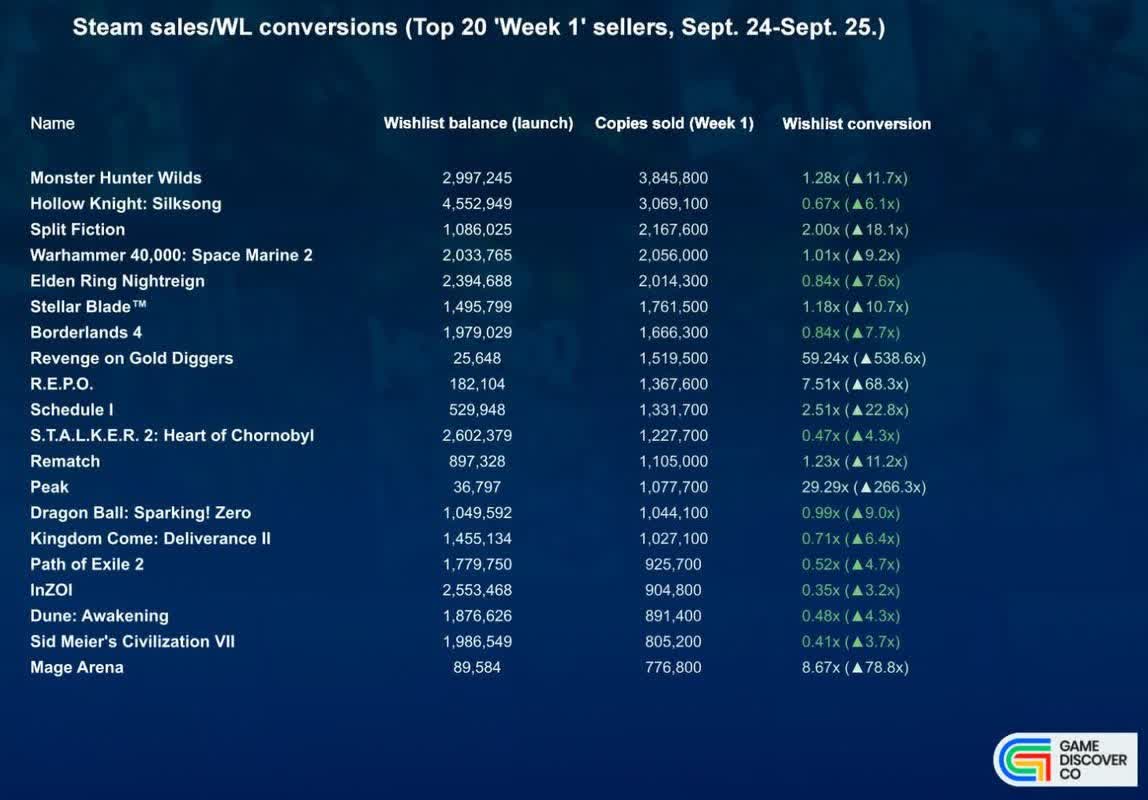
Viral hits sold the most compared to wishlist numbers. For example, Peak sold over 1 million copies in its first week despite being on only 36,797 players' wishlists – a conversion rate of nearly 3,000%. The highest performer from this year's survey was Revenge on Gold Diggers, an FMV dating simulator that drew enough controversy to catch the attention of mainstream news outlets, such as the BBC.
Valve says that wishlists primarily serve to notify interested customers of a game's release and discounts. However, Steam charts the most wishlisted games, and wishlists impact which titles appear in the "popular upcoming" section on the front page, though their precise effect remains unclear.
Data shows Steam wishlists have weak correlation with actual sales


