"The retail SSD market has almost disappeared," Silicon Motion says, as OEMs take what's left

Daniel Sims

Posts: 2,464   +74
Staff
Winners & losers: As demand from data centers drives up prices for components that directly or indirectly depend on NAND and DRAM, pre-built PCs are now often the only way for consumers to find reasonable deals. An executive at an SSD controller manufacturer recently confirmed that this is because PC manufacturers are ordering inventory that previously went to end users.
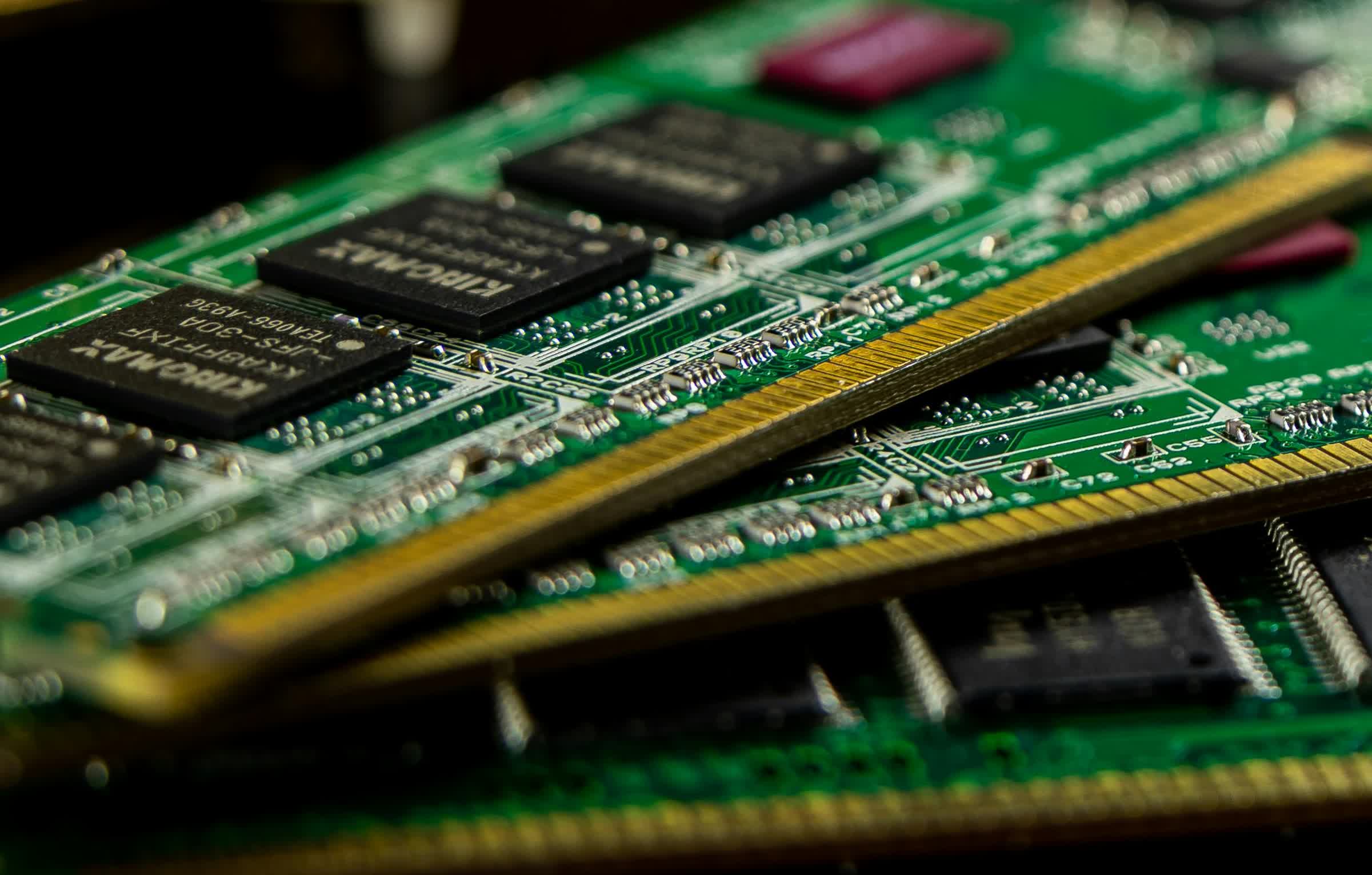
During Computex 2026, Silicon Motion senior VP Nelson Duann told Tom's Hardware that NAND shortages over the past year have nearly eliminated the direct-to-consumer market for SSDs. The company's SSD controllers, which previously ended up in drives sold at retail, now mostly go to companies such as Dell and Asus.

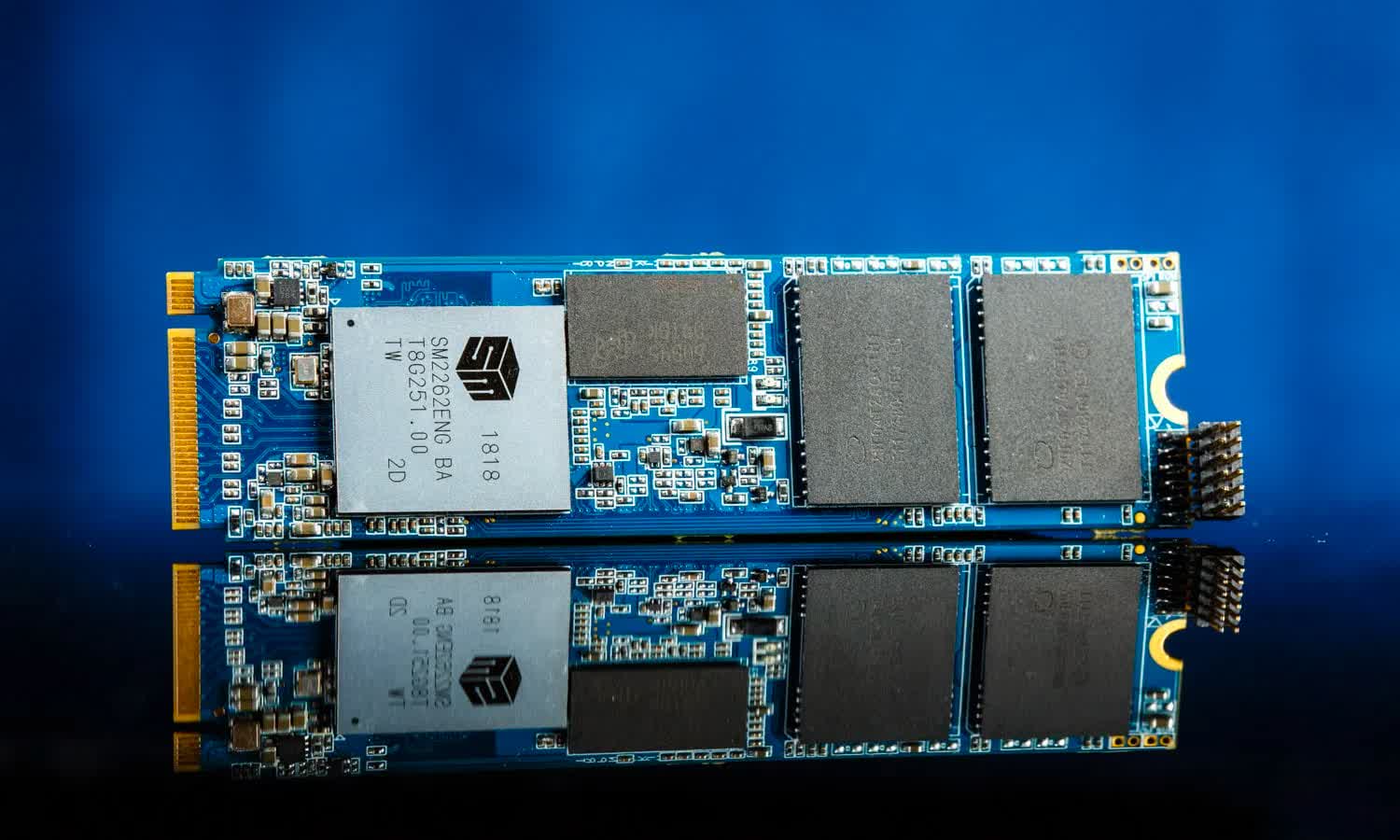
Traditionally, companies like Silicon Motion would sell SSD controllers to module manufacturers such as Samsung and Western Digital, which develop custom firmware and combine the controllers with NAND from suppliers to produce the SSDs that appear on store shelves. However, most DRAM and NAND currently goes toward AI data centers, leaving consumer products starved.
As a result, prices for SSDs, PCs, game consoles, components, and other devices that require memory or storage have steadily risen. Users who would normally build PCs must often settle for pre-built models or at least bundles to avoid exorbitant prices on RAM or storage drives.

Duann explained that one reason retail SSD prices have skyrocketed is that PC manufacturers can no longer obtain sufficient NAND from the usual vendors, so they've turned toward SSD module and controller makers. The dynamic helps stabilize the supply of PCs and smartphones, but it makes retail storage drives even scarcer and more expensive.
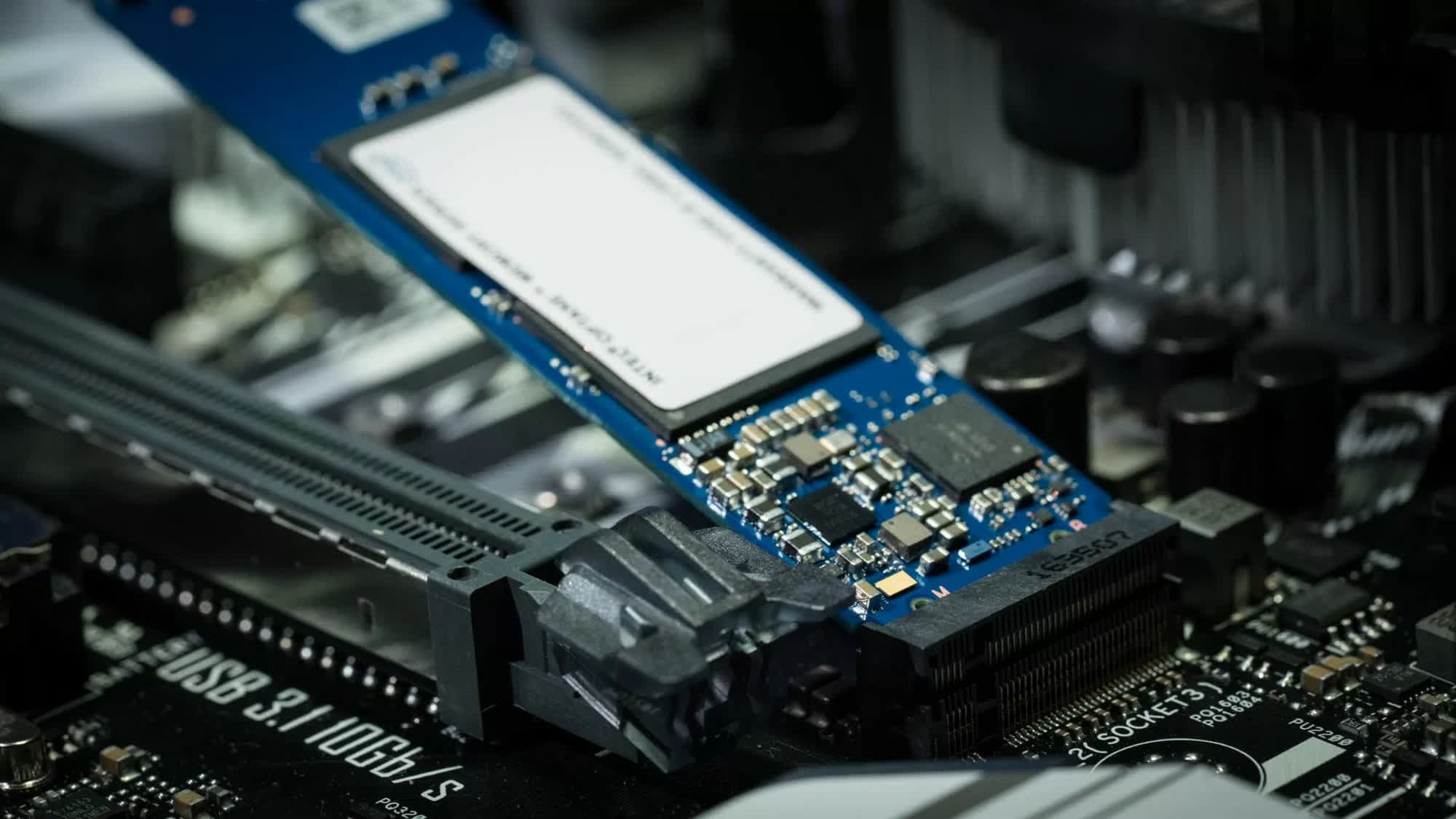
While some PC and laptop makers have raised their prices by as much as 40% amid the crisis, many NVMe SSDs have seen their prices more than double. Earlier this year, Kioxia predicted the extinction of the $50 1TB SSD. Scammers seeking to trick desperate shoppers have also become increasingly skilled at building fake SSDs that can fool benchmark apps, and users have had to find substitutions in unexpected places.

Unfortunately, the situation will likely remain unchanged in the second half of this year, and NAND suppliers told Duann that it will worsen in 2027. NAND supply that doesn't go toward data centers is expected to largely end up in higher-end products to offset lower unit shipments. Experts expect shortages to continue into 2028.

Permalink to story:

 
2028 is when things will brighten up but no AI crash will happen, stop dreaming.

This is also the year you will see RTX 6000 and RDNA 5 - UDNA.

Next year you will see 5000 SUPER refresh and AMD probably will refresh 9000 series too at some point

Would love for AMD to prove me wrong, and release UDNA in 2H 2027 on TSMC 2 or 3 nm and piss off Huang but I highly doubt AMD cares much for the gaming GPU market to do that.
 
2028 is when things will brighten up but no AI crash will happen, stop dreaming.

This is also the year you will see RTX 6000 and RDNA 5 - UDNA.

Next year you will see 5000 SUPER refresh and AMD probably will refresh 9000 series too at some point

Would love for AMD to prove me wrong, and release UDNA in 2H 2027 on TSMC 2 or 3 nm and piss off Huang but I highly doubt AMD cares much for the gaming GPU market to do that.
While I don't have hard proof I've always suspected that the GPU producers NEVER release the best product they can make but do incremental steps instead.
Suspicion number two (yeah trust issues are my forte) : AMD and Nvidia hold hands under the table/sleep in the same bed.
Whatever the truth of the matter may be it doesn't affect me: even considering the purchase of a high-end card makes me feel silly so I never do that.
 
This round robin between the few highest companies smacks of monopoly. The idea that a few companies can corner the entire nand production for their exclusive use while depriving the rest of the ENTIRE NATION really stinks for consumers. The switch to returning to 4x4 SSD's and components is a slap in the face to every citizen.
 
To me it seems like consumers don't have SSDs simply because they were deemed to be less important. My theory is based on the fact that memory is made by profit driven corporations, led by executives who make decisions. It never stopped raining, the river was diverted.
 
Funny, because newegg still has plenty of stock.

Sure, the 4TB WD Black SN850X is twice what I paid for it in the Fall, but it’s there. And really 2X isn’t even that bad considering RAM prices these days.

Part of the reason retail sales are down is the long telegraphed price increases got many people to upgrade their rigs before it got crazy. And we’re mid product cycle so no reason to upgrade now.
 
This round robin between the few highest companies smacks of monopoly.
The word you're searching for is oligopoly, not monopoly.

The idea that a few companies can corner the entire nand production for their exclusive use while depriving the rest of the ENTIRE NATION really stinks for consumers.
But no one has taken the market for their "exclusive use". You can still buy as much RAM as you desire ... albeit at a higher price point.

Funny, because newegg still has plenty of stock.
Absolutely correct. And what people refuse to acknowledge is that stock exists only because prices escalated to suppress demand to the point it matched supply. Any government (or private) intervention to rein in prices would have simply resulted in bare shelves.
 
Last edited:
Black Friday 2025, I got my entire computer for just $4799.

5090/285k/64GB DDR5 RAM/ 4TB SSD and 1500W PSU (AAT2250)

I simultaneously picked up a 4TB SSD to add in to my system.

I had no idea - and couldn't possibly have known that just a week later, prices would have exploded.

1TB now is like $200
2TB is around $300 (and for most, that's the sweet spot for an OS and gaming machine to start).
4TB - anything else - is just completely unaffordable.
 
Black Friday 2025, I got my entire computer for just $4799.

5090/285k/64GB DDR5 RAM/ 4TB SSD and 1500W PSU (AAT2250)

I simultaneously picked up a 4TB SSD to add in to my system.

I had no idea - and couldn't possibly have known that just a week later, prices would have exploded.

1TB now is like $200
2TB is around $300 (and for most, that's the sweet spot for an OS and gaming machine to start).
4TB - anything else - is just completely unaffordable.
SSD prices definitely show a gradual trend with most price increases beginning in October and stabilizing/peaking in March-May, so you got your build at the right time: https://pcpartpicker.com/trends/price/internal-hard-drive/

Tbh it shows that hard disk drives have also increased in price substantially over time too, about a 60% increase. These increases happened later as demand shifted away from SSD's, mostly starting in January.
 
I upgraded SSDs during sales and got bigger than needed replacments. The old SSDs still worked, so they went into a static bag and stored. They take up virtually no space. Last computer upgrade, the SSDs migrated and I didn't buy any new storage. If one breaks, an older one will be swapped in. Going 'dumpster diving' is also an option as plenty of businesses replace work stations at regular intervals and dump old but working hardware.

The market will return when the price is right. But people who build computers are also very capable of using old parts in newer equipment and are motivated to do so at these prices.
 
The word you're searching for is oligopoly, not monopoly.


But no one has taken the market for their "exclusive use". You can still buy as much RAM as you desire ... albeit at a higher price point.


Absolutely correct. And what people refuse to acknowledge is that stock exists only because prices escalated to suppress demand to the point it matched supply. Any government (or private) intervention to rein in prices would have simply resulted in bare shelves.

Thank-you for correcting ALL my mistakes. Your right I should be grateful that these companies have out priced building a computer these days. I should assume everyone has 4-5 thousand dollars to build a new computer.
 
Part of the reason retail sales are down is the long telegraphed price increases got many people to upgrade their rigs before it got crazy. And we’re mid product cycle so no reason to upgrade now.
In my experience:
* The amount of people paying attention to that is miniscule, if you don't follow tech news you either wouldn't know or just read a tiny article somewhere as one of many things and don't really act on it.
* Even when I tell people to stop dillydallying and pull the trigger on whatever they've been eyeing that is going to rise in price soon - they very rarely do.

However when people see Steam complaining about not enough space to install a game and then check SSD prices they go back to Steam and start deleting games. Storage space often (not always) is simply 'needed' because we're being lazy (more duplicate backups then needed, games/software installed that we keep around 'just in case' to avoid a download). Push the prices like this and people stop being lazy.

I've most of my coding projects on external servers and only keep a couple of games installed. Only have 1TB but that's good enough for me for years to come if needed.
 
Upgraded my 3 node proxmox cluster with new mobos, CPUs, and ram early last year. Already had over the previous years upgraded each node to 4 x 2TB Samsung evo ssds.

If something breaks I'll have to pay the higher prices but otherwise I can easily go 3-5 years before I consider doing upgrades again. I can likely get some good deals when the inevitable oversupply hits.
 
Thank-you for correcting ALL my mistakes. Your [sic] right I should be grateful that these companies have out priced building a computer these days. I should assume everyone has 4-5 thousand dollars to build a new computer.
It doesn't require anywhere near $4-5K to build a new PC now, unless you're a videogame addict who needs to scratch their habit at 100+ fps.

And while you may not be grateful today, in 18-24 months, you'll be chortling with glee over the oversupply price crash and the new, more advanced CPUs, GPUs, and RAM enabled by the massive R&D flowing into the industry from the higher demand behind today's prices. Were it not for AI and datacenter revenues, NVidia and AMD both would be 2-3 generations behind where they are today.
 
Funny, because newegg still has plenty of stock.

Sure, the 4TB WD Black SN850X is twice what I paid for it in the Fall, but it’s there. And really 2X isn’t even that bad considering RAM prices these days.

Part of the reason retail sales are down is the long telegraphed price increases got many people to upgrade their rigs before it got crazy. And we’re mid product cycle so no reason to upgrade now.

The market disappearing is not just a supply side crunch. There is no market if the demand shrivels up as well. Relatively low retail stock plus practically exclusionary pricing can depress demand to the point of stagnation or even regression.

Since you offered an anecdotal experience, my local Microcenter has a display cabinet full of WD and Samsung NVME drives. 1TB and 2TB drives are a little thin but no danger of running out. Literal stacks of 4TB and 8TB drives as well, but I imagine that is because they are priced to be as much or more (and in a couple instances much, much more) than graphics cards right now. I asked some of the employees manning the DIY PC help area when the last time they sold one of the 8TB drives and it's been nearly a month by their recollection, they have not ordered any new inventory for them for even longer than that, and the price has only gone up since then. Sure a single 8TB drive is excessive for the average user but they still used to sell at some volume.

With or without context or comparison a 200% or more increase in the price of anything that is normally fairly stable in such a short period of time is terrible for end user/consumer as a whole. In several cases the disparity in MSRP between now and 6-8 months ago is 3x or at the extreme end (Looking at you Samsung) even 4x. "Sale prices" are at best the elevated retail prices from 90-120 days ago, rather than any true savings when compared to price data from not even a year ago. There is nothing "[not] even that bad" about the current circumstances.

Could it be worse? Sure, but that is no consolation for those spending on these parts. I myself was lucky to cobble together something that did not cost an arm and a leg back in November (all the while reusing several parts), but it certainly is less than ideal and not my intended upgrade path. I can at least wait out the market for the foreseeable future.
 
I also think retail sales are down because SSD's last a LONG time and even older ones are plenty fast for the majority of people. This isn't the age of mechanical spinning drives as primaries, SSD's last much longer.
 
The market disappearing is not just a supply side crunch. There is no market if the demand shrivels up as well.
Eh? If demand for SSDs had "shriveled", prices would be down, not up.

Relatively low retail stock plus practically exclusionary pricing can depress demand to the point of stagnation or even regression.
Demand isn't stagnant: it's consuming SSDs literally as fast as manufacturers can mint them. Do you believe consumers are going to permanently stop purchasing SSDs because prices are temporarily high?
 
President Trump threatening 100% tariffs on imported chips and components, while he peddles his China made "American-proud design" phone. Absolutely disgusting!!! This whole situation with chips and components reserved for yet unbuilt data centers is anti competitive and should be declared illegal!!!

If the Government and Corporations stopped their data hoarding, there would be plenty of space in data centers for AI. Make them compete for chips and components supply and cost, releasing the economy and consumers from being hostages to their greed!
 
Have to admit, it's quite interesting YT outlets like GN and HC - not to mention a whole host of other small-time reviewer - squirming in this new reality.

The end of an era!
 
It doesn't require anywhere near $4-5K to build a new PC now, unless you're a videogame addict who needs to scratch their habit at 100+ fps.

And while you may not be grateful today, in 18-24 months, you'll be chortling with glee over the oversupply price crash and the new, more advanced CPUs, GPUs, and RAM enabled by the massive R&D flowing into the industry from the higher demand behind today's prices. Were it not for AI and datacenter revenues, NVidia and AMD both would be 2-3 generations behind where they are today.

I'd wager it's going to be 2029 or later...
 
President Trump threatening 100% tariffs on imported chips and components, while he peddles his China made "American-proud design" phone. Absolutely disgusting!!!
How so exactly? Those tariffs would hit that phone equally along with everything else. And had the Left not fought those tariffs so hard -- or better yet, taken action years ago -- we'd still be able to build phones still in the US.

This whole situation with chips and components reserved for yet unbuilt data centers is anti competitive and should be declared illegal!!! .... Make them compete for chips and components supply
You don't seem to know what these terms mean. Consumers compete for products by paying the price demanded .... when the price goes up (as it has now) those willing to pay the higher price win. Nor is it "anticompetitive" to purchase products in advance of actually needing them.

I'd wager it's going to be 2029 or later...
Possibly. But those doom-and-gloom predictions are based on simple extrapolation of current demand trends ... and that's rarely accurate.
 
2028 is when things will brighten up but no AI crash will happen, stop dreaming.

This is also the year you will see RTX 6000 and RDNA 5 - UDNA.

Next year you will see 5000 SUPER refresh and AMD probably will refresh 9000 series too at some point

Would love for AMD to prove me wrong, and release UDNA in 2H 2027 on TSMC 2 or 3 nm and piss off Huang but I highly doubt AMD cares much for the gaming GPU market to do that.
All with astronomical pricing , no doubt.
 
Back