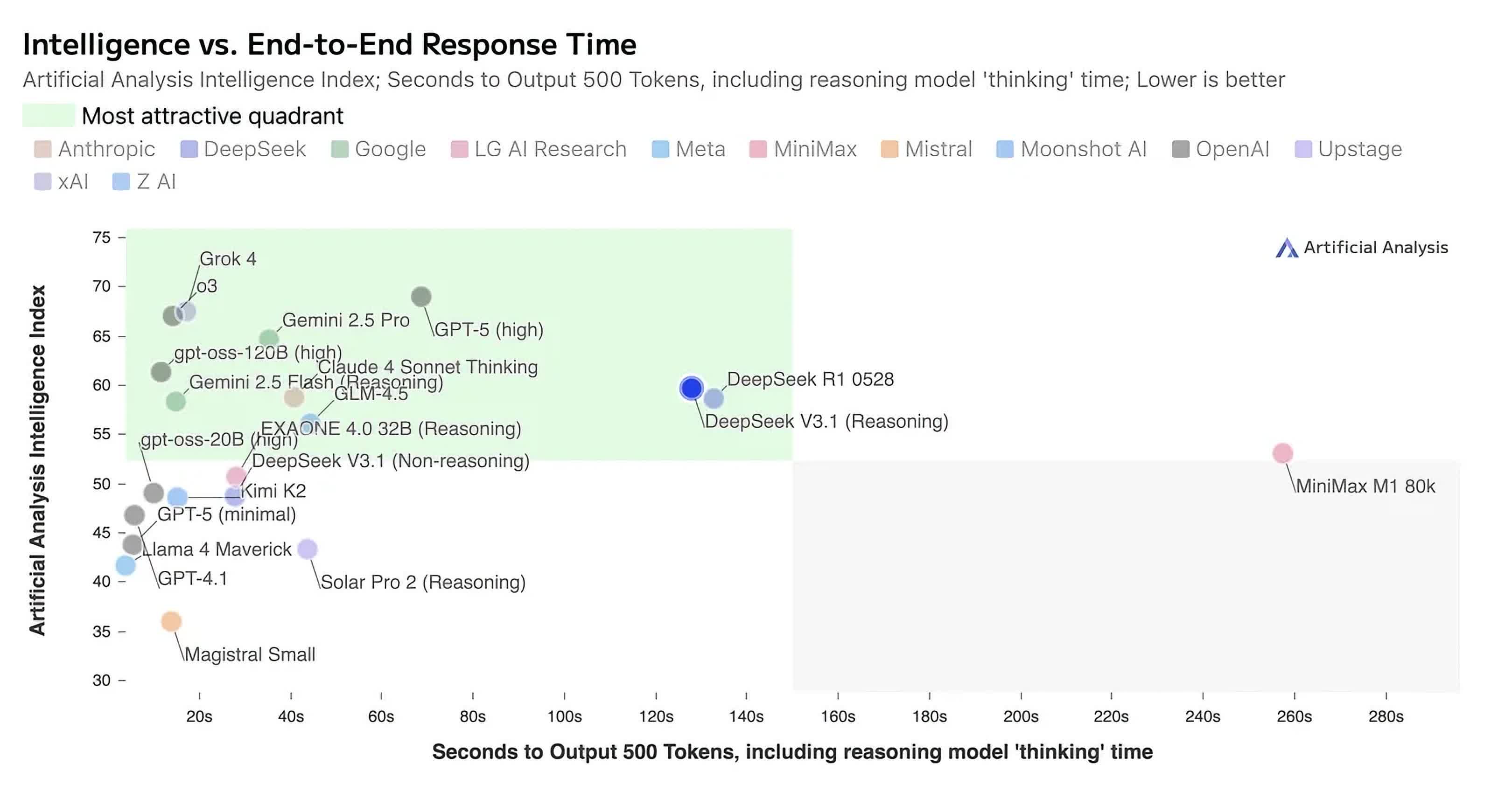
Highly anticipated: In the fast-evolving world of AI, Chinese startup DeepSeek is drawing attention once again with the quiet launch of its v3.1 model, now seen as a serious contender against the latest advancements from the United States. Released two weeks after OpenAI debuted GPT-5, DeepSeek's v3.1 has captured the interest of AI experts due to its performance on key benchmarks, strategic pricing, and design, which has been optimized to operate independently of American technology.
DeepSeek announced the v3.1 model through a message on WeChat, China's widely used social platform, and on the Hugging Face community website. The new model boasts 685 billion parameters, placing it among the ranks of the world's largest AI systems.
Unlike many competitors, DeepSeek uses a "mixture-of-experts" design, activating only necessary parts of the model for each query. This translates to reduced computational costs, an attractive feature for developers who are seeking both power and efficiency in deploying AI.
Furthermore, v3.1 merges rapid response capabilities with advanced reasoning, a technical step forward that makes it more versatile than many open-weight alternatives. Ben Dickson, tech analyst and founder of TechTalks, told Fortune that the hybrid architecture is "the biggest feature by far," setting it apart from earlier iterations and other open-source models.
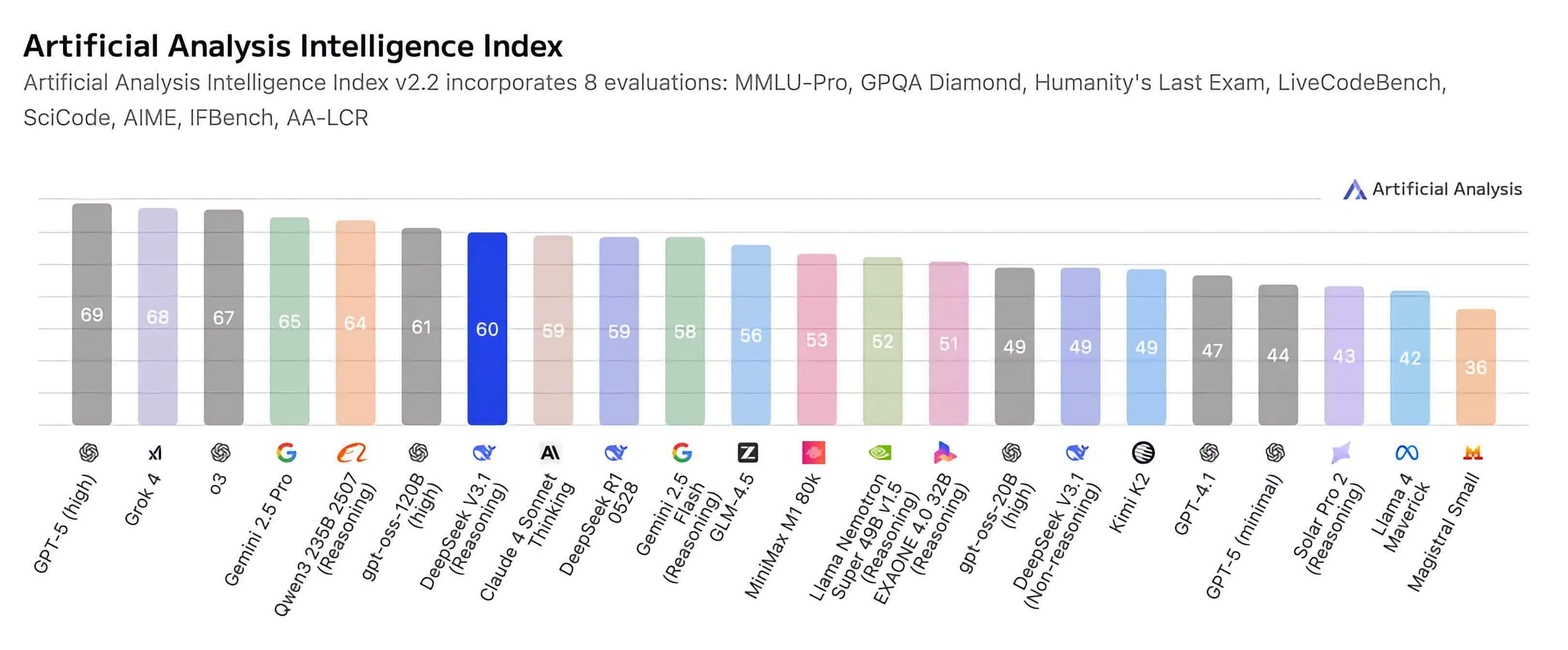
Source: Artificial Analysis
DeepSeek's momentum has not gone unnoticed in Washington. Last week, the US government granted Nvidia and AMD restricted licenses to export modified AI chips to China but imposed a levy requiring 15 percent of revenue from such sales to be paid to the US Treasury. Beijing responded by limiting purchases of Nvidia chips.
Although DeepSeek's models have yet to achieve widespread adoption among American companies, they have gained significant traction within China and are increasingly being adopted globally. Some US developers have begun building applications on DeepSeek's earlier R1 model, despite concerns that Chinese-made AI may echo messages approved by the government.
Industry experts note that while DeepSeek's latest release may not represent the same leap forward as its R1 model earlier this year, it nonetheless delivers meaningful advances.
William Falcon, founder and CEO of AI developer platform Lightning AI, described DeepSeek's steady progress as "pretty impressive," pointing to the potential challenge it poses for OpenAI if its own open-source offerings fail to keep pace.
DeepSeek is not alone in China's AI race contention. Other major players include Alibaba with its Qwen model, Moonshot AI's Kimi, and Baidu's Ernie. The timing of the v3.1 release, so close to the unveiling of GPT-5, which many industry observers say fell short of expectations – underscores Beijing's determination to maintain and potentially surpass parity with US innovation.
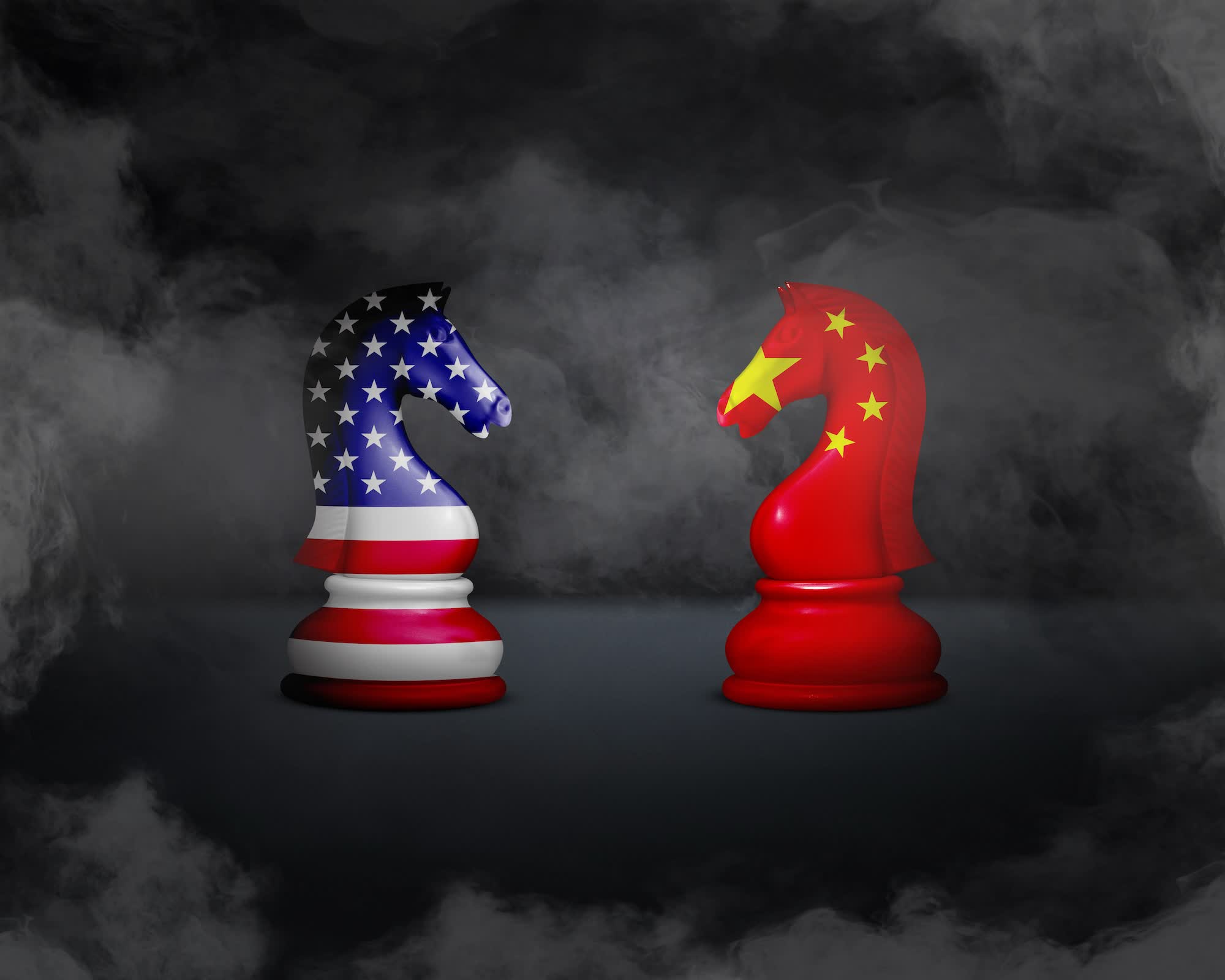
DeepSeek's bold claims underscore both the promise and the uncertainty of today's AI race. While the model's efficiency and cost-effectiveness may pressure US rivals to move faster, the broader picture is more complicated.
Analysts warn that soaring expectations around generative AI could be fueling a bubble, with many companies yet to see tangible returns. An MIT study recently found that 95% of AI implementations fail to increase profits, highlighting a mismatch between hype and impact. Notably, the research suggests that the greatest value lies not in flashy front-end tools, but in back-end automation that streamlines operations and reduces costs.
With big tech and AI investments playing an outsized role in today's stock market, many are starting to question where the returns are. For all the headlines about cutting-edge models, the future of AI leadership may hinge less on eye-catching launches and more on delivering real, measurable business outcomes.
DeepSeek launches v3.1 model, raising the stakes in the US-China AI race


