DJI takes a risky bet, removes no-fly zones as US ban looms

Skye Jacobs

Posts: 2,012   +59
Staff
TL;DR: DJI is at a critical juncture as it faces a potential automatic ban on its products in the US. With less than a year to persuade the Trump administration and US lawmakers to reconsider, the company has made a bold move by announcing the removal of its self-imposed no-fly zones – a decision that has raised eyebrows and sparked concerns across the drone industry.

The timing of the announcement has been particularly controversial, coming less than a month after a small DJI drone collided with a plane battling the Los Angeles wildfires. Despite the incident, DJI is moving forward with its plan to eliminate restrictions that previously prevented its drones from flying over sensitive areas such as airports, power plants, and even the White House.

Meanwhile, a critical deadline looms for the China-based company. Concerned that DJI drones could be used to collect sensitive information and transmit it to China, lawmakers earlier this year proposed the Countering CCP Drones Act, which aimed to add DJI to the FCC's blacklist. While the act was ultimately excluded from the final version of the National Defense Authorization Act this month, the NDAA still includes language with similar provisions.

In an extensive interview with The Verge, Adam Welsh, DJI's head of global policy, acknowledged that the company faces an uphill battle in convincing the public that eliminating no-fly zone restrictions is the right move. "Geofencing has been in place for more than 10 years, and we recognize any change to something that's been in place for 10 years can come as a bit of a shock to people," he said.

Welsh argued that while geofencing was initially implemented to fill regulatory gaps when consumer drones first entered the market, it was never a foolproof solution.
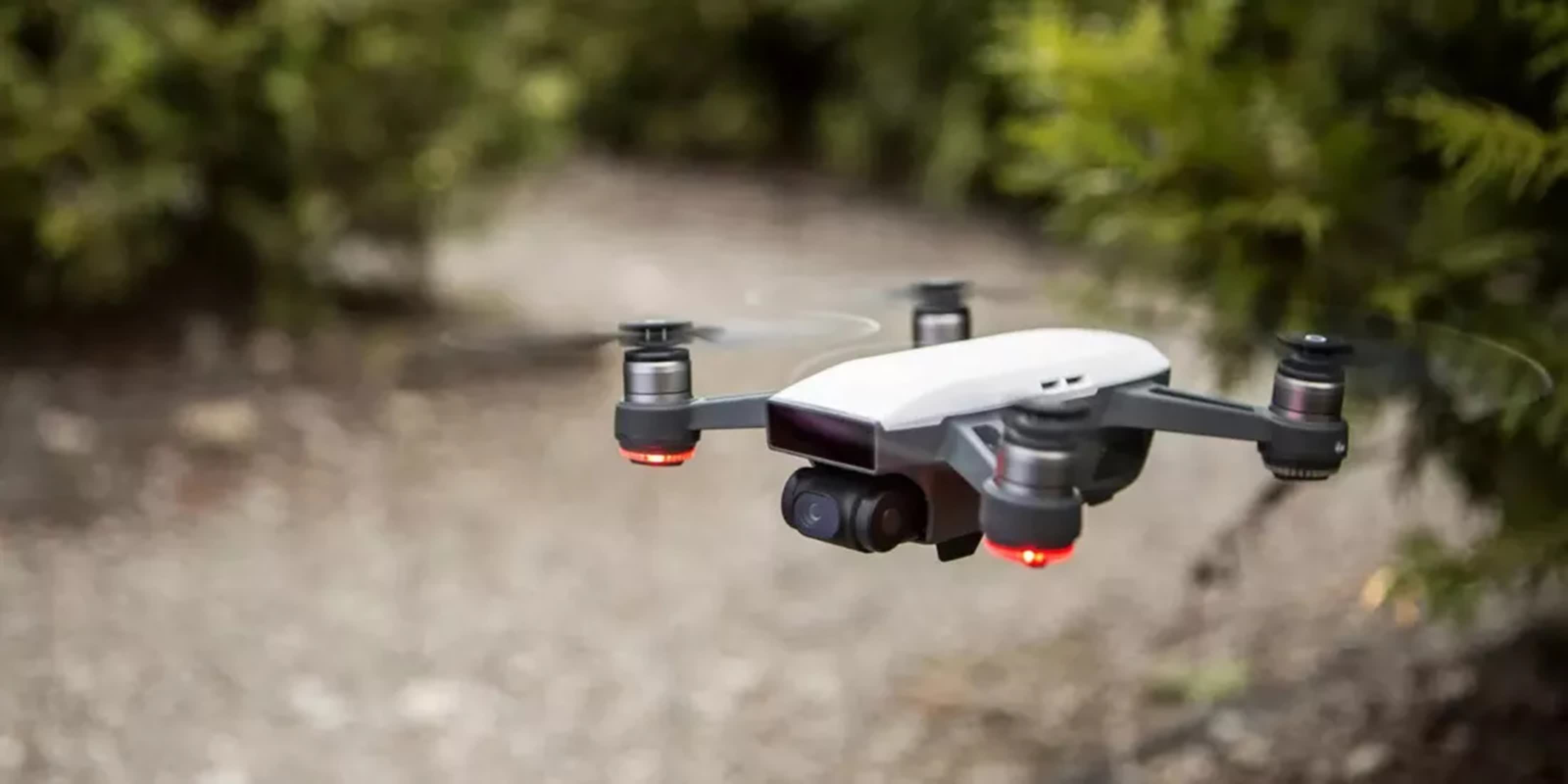
Welsh points out that regulatory agencies have taken alternative approaches to drone safety, prioritizing operator training, airspace permissions, and remote ID technology rather than mandating geofencing. "They have stuck to the basic principle that the operator should be in control of the drone, the airplane, or any other kind of aviation object at all times," Welsh said.

Critics argue that removing these restrictions could heighten safety risks. However, DJI contends that geofencing itself comes with significant drawbacks.

Wayne Baker, DJI's public safety integration director, highlighted the challenges faced by first responders as an example. "An autistic child that's missing in inclement weather – we didn't have the time to go through 'here's our permissions' and all that."

The company also cites the growing burden of processing unlock requests as a key factor in its decision. While DJI insists that cost savings were not the primary motivation, Welsh acknowledged that "the burden on our internal resources had been growing exponentially." The company had invested in round-the-clock staffing to handle these requests, aiming to process them within an hour.

DJI's decision raises broader questions about balancing operator freedom with public safety. Welsh likened geofencing to a car that prevents its owner from driving to certain places even after receiving permission or that restricts speed in designated areas. "I don't think people would accept it," he argued. Like traditional aircraft pilots, he believes drone operators should be responsible for understanding and adhering to flight restrictions.

As the debate unfolds, DJI faces the challenge of persuading regulators and the public that this move enhances rather than compromises safety. The company is banking on improved operator education and existing regulatory frameworks to maintain safe drone operations. With the specter of a US ban looming, DJI's strategy amounts to a high-stakes bet on operator responsibility and regulatory alignment.

Permalink to story:

 
Sorry DJI, if ya wanna keep selling your little spy drones you're gonna have to grease some brand new palms.
I mean, going by the current US govt.'s stance, purely being a successful Chinese company nets it the "spy" remark, not to say that it isn't involved in farming data of any sort for China / the CCP, but it would be very hypocritical to ignore the fact that the US govt. very likely is farming data from US drone manufacturers when it wants to no questions asked, in the US or not, and no one is supposed to bat an eyelid, rather than just having none of them collect and lass on any more data that is required for them to fly safely?
 
I mean, going by the current US govt.'s stance, purely being a successful Chinese company nets it the "spy" remark, not to say that it isn't involved in farming data of any sort for China / the CCP, but it would be very hypocritical to ignore the fact that the US govt. very likely is farming data from US drone manufacturers when it wants to no questions asked, in the US or not, and no one is supposed to bat an eyelid, rather than just having none of them collect and lass on any more data that is required for them to fly safely?

Just to be clear, I do not support any type of domestic intelligence gathering apparatus which infringes upon privacy.
 
Given the high volumes needed to Rage ( wage ) a war easily over a million a year. Bet Russia and Ukraine wish they could burn through 2 million each

I wouldn't be surprised if USA dept has big contracts - maybe the rip out some chips for safety, but will definitely ask for source code

Some specialised drones are very expensive - but you mostly need untold disposable ones - This is where AI gets more scary as experienced operators will be targeted. You think they would have "mobile" bunkers
 
I've been flying DJI drones for years. I've never run up against the geo fence. Before I fly anywhere, I check the Air Aware (it use to be called B4U Fly) app to see if I'm near any no fly zones. And, if I am in a restricted area, I just request an LAANC unlock code to allow flying, but restricted altitude and time.
As with anything, automobiles, fixed wing & roto-wing helicopters, it is the responsibility of the operator, to abide by the rules, ie: not being impaired, speed limits and on and on.
If ignorant people would just stay away from UAV's, people like me who fly responsible, would not be looked at every time I get ready to launch to photograph things from the air.
It's another reason when I do fly, I try to find an isolated place to launch from to avoid the "Karen's".
 
A solution for future drones: each drone has a built-in chip that would simply prevent it to fly into no-fly zones. The drone would occasionally check the server with updated zones.
If it is the drone operator's responsibility that protects from possible disasters, then it is a very weak protection. This protection lacks anti-***** option.
The ongoing war between USA and China is another matter.
 
You, knuckleheads, are worried about where these things can fly, and I'm worried about how long they can fly. I'll purchase a drone when it will stay up for eight hours, on a single charge. And, costs around $200.
 
Last edited:
A solution for future drones: each drone has a built-in chip that would simply prevent it to fly into no-fly zones. The drone would occasionally check the server with updated zones.
If it is the drone operator's responsibility that protects from possible disasters, then it is a very weak protection. This protection lacks anti-***** option.
The ongoing war between USA and China is another matter.

I believe that is what geofencing is. The drone software is programmed to abide by no-fly zones set up using GPS so that if you fly into these areas the drone software will execute the commands programmed for when this occurs. Probably a series of commands like slowing down, lowering altitude, a/o slowly flying out of the zone in the opposite direction until it leaves the geofenced no-fly zone.
 
Back