Elon Musk says every future Tesla will have Starlink, starting with the Cybercab

Skye Jacobs

Posts: 2,089   +62
Staff
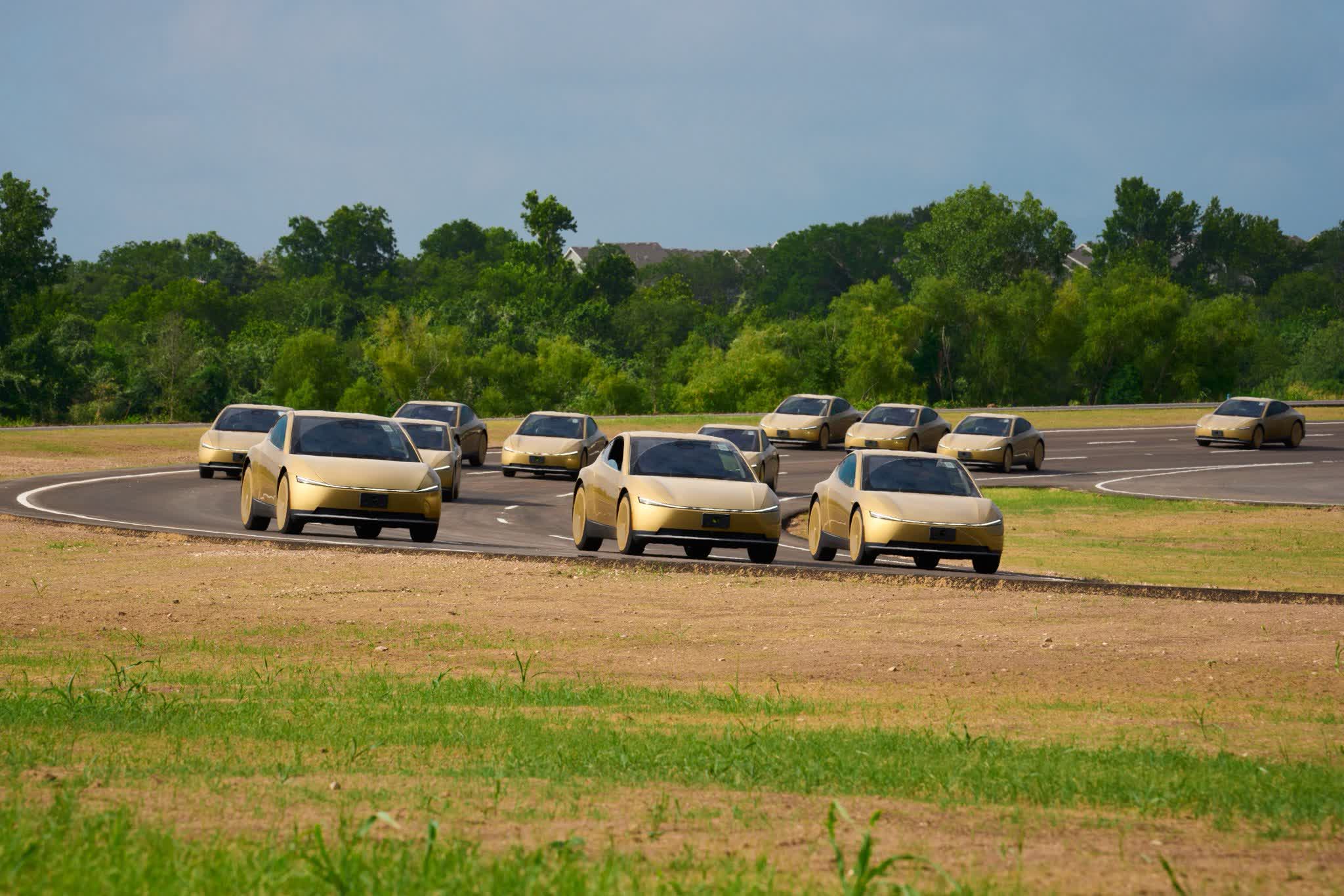
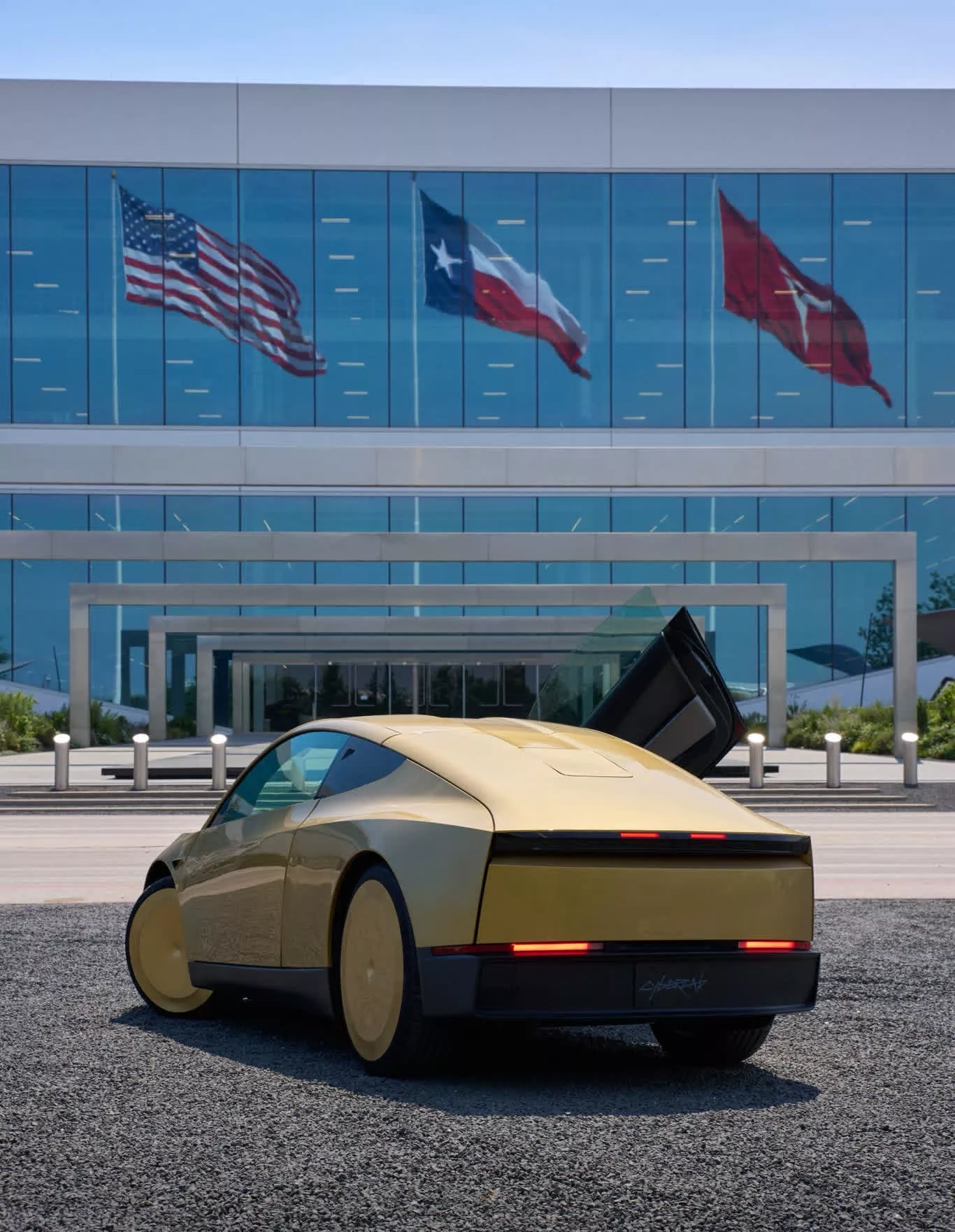
First look: Tesla has installed Starlink hardware in a Cybercab, adding satellite internet to the vehicle it plans to use for its robotaxi service. The company's official Tesla Robotaxi account posted photos this week of what it called the "First Cybercab with Starlink integration." The images show a Starlink antenna built into the rear of the roof, above the taillights, with a rectangular panel covering the dish rather than leaving it exposed on the outside.
The reveal follows an earlier preview at Tesla's showroom in San Jose, where the company displayed the planned Starlink capability. Tesla had already said the Cybercab would use Starlink's V5 dish, a newly launched model rated for download speeds of up to 375 Mbps.

For Tesla, the main use case is reliable connectivity for a vehicle designed to operate without a driver. The Cybercab has no steering wheel or pedals, and passengers are expected to simply get in and let Tesla's onboard software handle the trip.
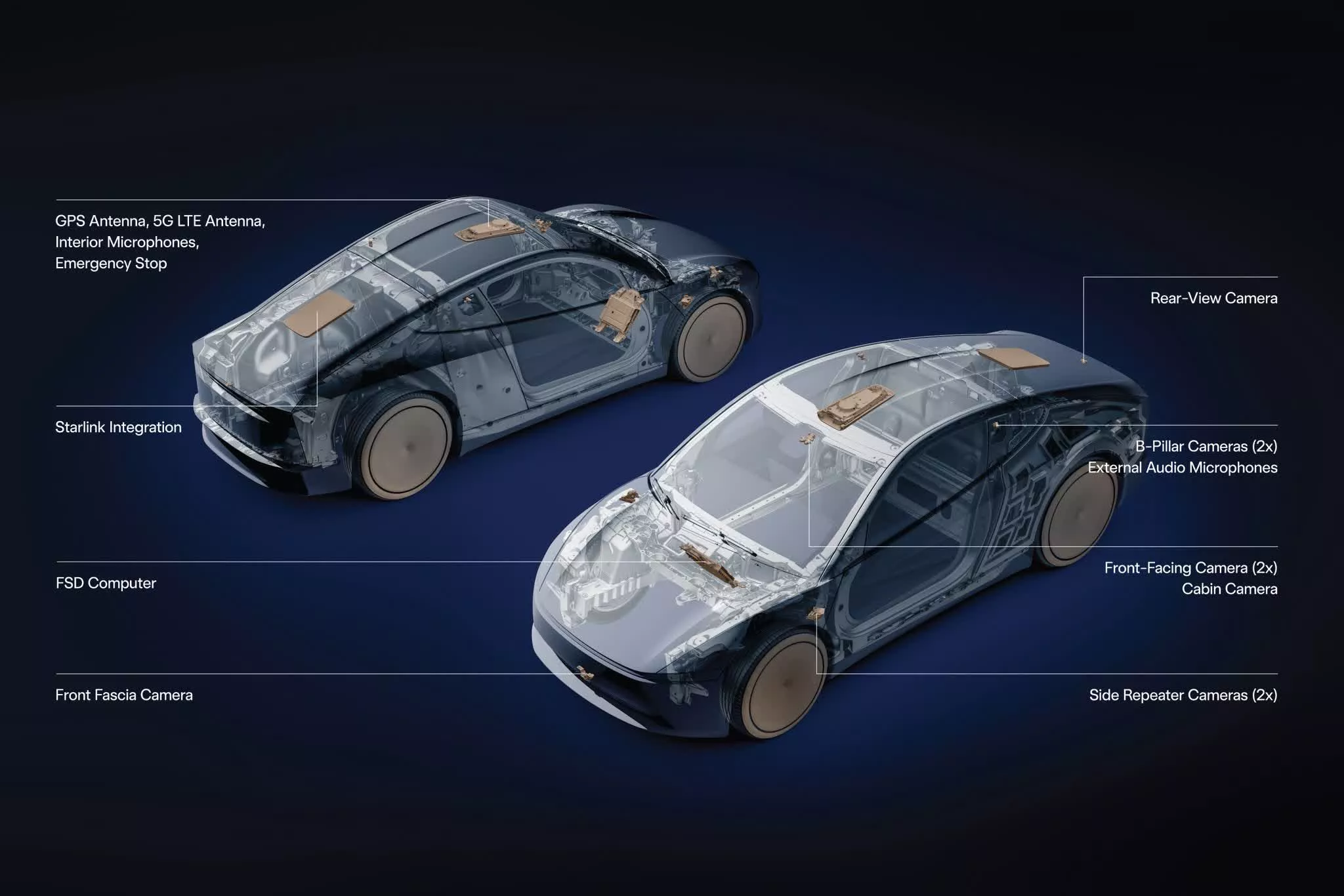
Satellite service could give the vehicle a connection in places where cellular coverage is weak or unavailable, which could help with navigation, support functions, and managing a larger robotaxi fleet.

Tesla's vice president of AI software, Ashok Elluswamy, said Starlink isn't essential to the vehicle's safe operation. "Connectivity is primarily meant for navigation, customer service and, in general, fleet management," he said.

Elon Musk has focused on a different use for the connection: entertainment. "Watch 4K streaming video while Cybercab takes you anywhere you want," he wrote last month.
On Tesla's earnings call last month, Musk said a robotaxi service needs connectivity that doesn't depend solely on local wireless networks. "Starlink will be integrated into all our car vehicles, at least for markets that Starlink is active. Because for a Robotaxi situation, you need to have coverage everywhere. There are many places, even in Silicon Valley, where the cellular coverage is terrible or sometimes non-existent," he said.

His comments suggest Tesla sees Starlink as more than an add-on for the Cybercab. In a separate post Sunday, Musk wrote: "All cars will have Starlink in the future. It's the only way to get super high bandwidth to billions of vehicles."

That statement could just as easily refer to Starlink's planned mobile service rather than the dish-based broadband system shown on the Cybercab.

Starlink Mobile is designed to work through smartphones and doesn't require a satellite dish. SpaceX has said its next-generation mobile offering will use both satellites and a ground network, and it could eventually compete with AT&T, T-Mobile, and Verizon.

The Cybercab setup is different. It uses a physical Starlink dish built into the vehicle itself, allowing it to connect directly to the satellite network. Tesla has not said when the feature will be available in production vehicles or whether the same type of hardware will be installed in other Tesla models.

Permalink to story:

 
In a separate post Sunday, Musk wrote: "All cars will have Starlink in the future. It's the only way to get super high bandwidth to billions of vehicles."

Seems ambitious and illegal but I guess we're just saying stuff now when people ask for information.
 
Smart. If they can figure out to make it cost them something like 30 bucks per car.
And it is another way to generate money. I think people who go to remote places often will love it.
 
Every single vehicle having Starlink would obviously be a complete monopoly on vehicle communications in a world where companies are taken to court (and lose) for having a single app store.
Monopolies are illegal when they’re anticompetitive. Musk is saying that Starlink will be offering the most compelling service at a far better price. This is not necessarily a sign that SpaceX is anticompetitive.

SpaceX’s competitive advantage primarily applies to mobile networks which are all currently terrestrial. Thus, the advantage is simply because SpaceX chose a different technology. The most obvious reason is the costliness of deploying a wide spanning cellular network. Considering there are around 150k cell towers in the US and only 10,000 Starlink satellites globally, it shows how limited coverage is for each additional cell tower compared to each satellite.

Competitors are able to launch similar satellite offerings on SpaceX’s rockets, but they’re probably about 5 years behind at this point. Amazon Leo seems to be the closest, and they have launched hundreds of satellites in a few short years (including several dozen via the Falcon 9). They’ve launched most through other providers, although those are inevitably more expensive given the lack of a reusable rocket by a SpaceX competitor. I suspect the primary reason is to not pay their biggest competitor.
 
Monopolies are illegal when they’re anticompetitive. Musk is saying that Starlink will be offering the most compelling service at a far better price. This is not necessarily a sign that SpaceX is anticompetitive.

SpaceX’s competitive advantage primarily applies to mobile networks which are all currently terrestrial. Thus, the advantage is simply because SpaceX chose a different technology. The most obvious reason is the costliness of deploying a wide spanning cellular network. Considering there are around 150k cell towers in the US and only 10,000 Starlink satellites globally, it shows how limited coverage is for each additional cell tower compared to each satellite.

Competitors are able to launch similar satellite offerings on SpaceX’s rockets, but they’re probably about 5 years behind at this point. Amazon Leo seems to be the closest, and they have launched hundreds of satellites in a few short years (including several dozen via the Falcon 9). They’ve launched most through other providers, although those are inevitably more expensive given the lack of a reusable rocket by a SpaceX competitor. I suspect the primary reason is to not pay their biggest competitor.

Thanks for unpacking that for me. I expected to take his statements at face value as written text like an adult would be accountable for, but clearly I'm missing the bigger picture and every car will have Starlink and it's all going to be legal and okay.
 
Back