Something to look forward to: The coming months will serve as a crucial test of how durable EV sales gains truly are in the US market, and whether the sector is ready to stand on its own without federal support. The outcome of this transition will likely shape investment and strategy decisions not just for 2026, but for years to come.
As the federal electric vehicle tax credit expired on the final day of September, the US auto industry entered a defining moment that is expected to shape the trajectory of EV adoption well into 2026. The market is now in a period of pronounced uncertainty, with analysts, automakers, and consumers alike bracing for significant shifts in the absence of a financial incentive long seen as pivotal to early growth.
For more than 15 years, the federal tax credit served as a cornerstone for the EV sector, offering up to $7,500 per vehicle and playing a formative role in driving both consumer adoption and manufacturing investment. Its sunset marks a transition in the market, removing what many viewed as a set of "training wheels" for the still-maturing segment.
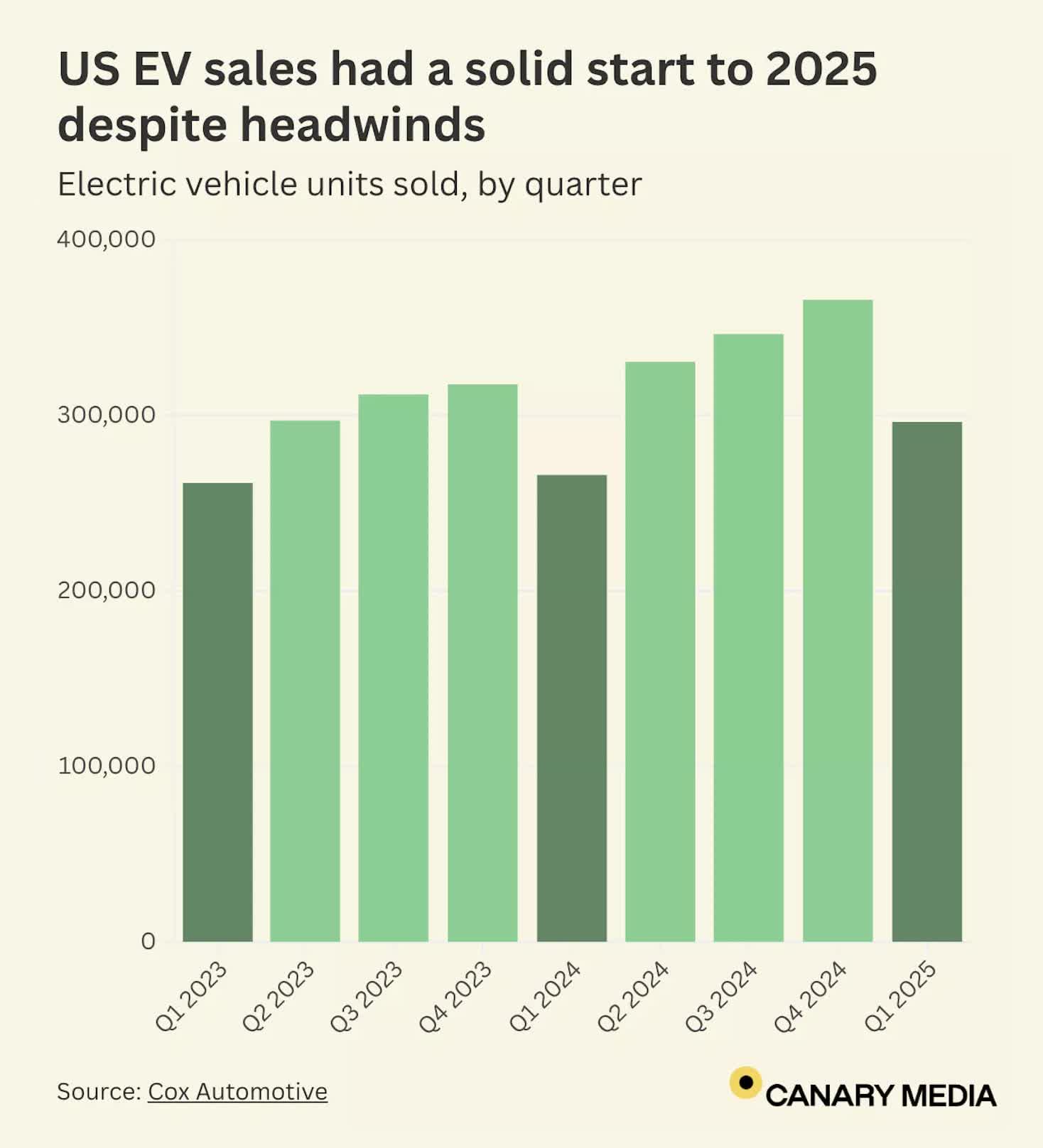
Industry forecasts indicate that the looming deadline was a powerful motivator for consumers in the third quarter, driving what is expected to be the highest-ever quarterly EV sales volume in the US.
According to Cox Automotive, EV sales in Q3 surged to an estimated 410,000 units, a 21 percent increase from the same period last year, securing a 10 percent market share – a new national record.
Industry experts attribute this late surge to consumers' desire to lock in substantial savings ahead of the deadline, with many advancing purchase plans to take advantage of federal incentives that will no longer be available in the months ahead. Stephanie Valdez Streaty, director of industry insights at Cox Automotive, described the tax credit's expiration as a "pivotal moment," suggesting it will soon become clear whether EV demand can hold up without direct government support.
Source: EVWire
The close of Q3 coincides with rising uncertainty for automakers. With most EV purchases for 2025 already accounted for, the upcoming fourth quarter is expected to serve as a litmus test for true consumer demand absent incentives. This is especially relevant for manufacturers whose sales had been buoyed by the credit.
David Oakley, manager of Americas vehicle sales forecasts at GlobalData, told Automotive News that Q4 will provide the clearest view of the new market reality. A slowdown in sales is anticipated, likely coinciding with the rollout of additional 2026 models, whose prices could reflect higher tariff costs. Still, Oakley projects that overall industry volumes will exceed the 16 million new vehicles sold in 2024.
Jonathan Smoke, chief economist at Cox Automotive, noted the broader challenges facing automakers: "Choices made on how to absorb or pass along costs from tariffs, or adjust production or sourcing of parts to avoid them, will lead to shifting share dynamics." He cautioned that while the industry is likely to weather the transition, persistent affordability issues may impede a return to peak new-vehicle sales volumes in the near term.
Automakers have already begun adjusting strategies in anticipation of weaker demand. Some are accelerating efforts to clear inventory and slowing the pace of battery-electric vehicle production as incentives disappear and standard pricing returns. Brands that relied heavily on the federal tax credit to meet sales goals may be most vulnerable to sharper declines if the market contracts more steeply than expected.
Yet there are signs of long-term optimism. Analysts and manufacturers highlight a continuing trend of declining EV prices, widely seen as essential for mainstream adoption. Volvo, for example, has projected that its all-electric models will reach price parity with traditional internal combustion vehicles within the next year.
The end of government-backed credits places renewed focus on the auto industry's ability to produce cost-competitive EVs. As automakers pursue economies of scale and streamline production, cheaper EV options may become a lasting feature of the market. Combined with expanding charging infrastructure, that shift could mark a more organic tipping point for broader electrification in the years ahead.
EV market faces uncharted territory as federal tax credit ends


