EVs aren't more dangerous to pedestrians, but SUVs are, study finds

midian182

Posts: 11,624   +175
Staff member
The takeaway: As electric cars are much quieter and usually a lot heavier than their gas-powered counterparts, there have long been concerns about the danger they pose to pedestrians. According to a new study, however, EVs are no more dangerous to those on foot than conventional vehicles. SUVs, on the other hand, present a big risk.
A study by the University of Leeds in the UK looked at British government road safety data from 2014 to 2023. Zia Wadud, Professor of Mobility and Energy Futures, and colleagues wanted to examine if EVs collided with pedestrians more often because of their quietness, and whether their extra weight resulted in more severe injuries.

The study compared casualty rate ratios for EVs, HEVs and ICEVs during 2019-2023. 2019 was when EV sales started to grow rapidly and the year the Acoustic Vehicle Alerting System, which warns other road users during low-speed driving, was introduced.

The conclusion showed that the fears were unfounded: pedestrians are no more likely to be hit or severely injured by an EV than an internal combustion engine vehicle.
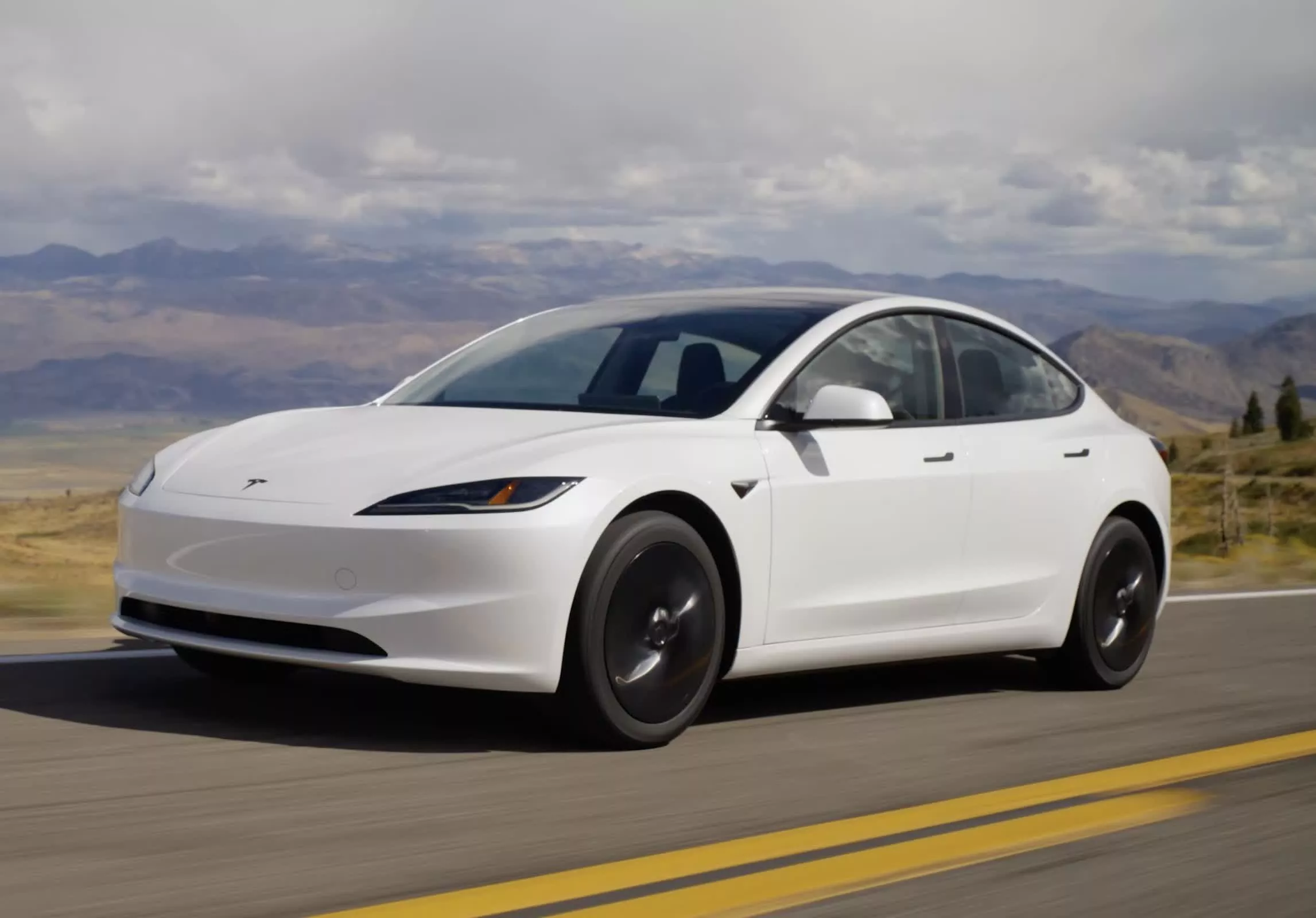
Accident rates between electric (57.82) and petrol vehicles (58.88) were virtually identical. And while EVs are heavier, they were no more likely to cause severe injuries in cases of collisions. This is likely due to their advanced safety features that help avoid crashes or negate the damage they cause.

Interestingly, hybrid vehicles were found to have a higher pedestrian casualty rate – possibly related to their typical driving pattern – but the associated pedestrian injuries are less severe than those caused by internal-combustion-engine vehicles.

While the report highlights the safety aspects of EVs, there is one type of vehicle it points out is far from safe for pedestrians: SUVs. It notes that collisions with SUVs increase the likelihood of a serious or fatal pedestrian injury.

There is an abundance of evidence on SUVs and large vehicles' adverse impact on road safety because of their heavier weight and (for SUVs) their body shape, states the report. This is especially true for older SUVs that have lower safety standards.

"We should worry less about the potential dangers of electrified vehicles and more about the growing prevalence of SUVs," said Professor Wadud.

Other findings include female drivers being less likely to cause severe pedestrian injuries, but younger drivers tending to have the opposite effect.

The Leeds study's findings contrast with a similar study last year from the London School of Hygiene & Tropical Medicine. It concluded that pedestrians are twice as likely to be injured by an electric or hybrid car than by one with an internal combustion engine due to them being less audible.

Permalink to story:

 
That SUVs are a massive hazard to everyone else has been known for a while. The most disturbing fact is that they caused a sharp increase in accidents in the driveway. Turns out it's hard to see your own children and pets in an oversized vehicle.

Why are SUVs so affordable? Because the car industry lobbied to have trucks exempt from emission regulations. Trucks are vital for the economy, can't have those getting more expensive to meet silly environmental standards can we?
Guess what SUVs identify as? Yep, trucks. So the car industry successfully lobbied SUVs into being legally environmentally unfriendly and by not having to bother to meet those standards they can be produced at lower cost. Now Joe Average has to pick between a luxury big SUV and a smaller car that costs the same - guess what Joe Average picks? The SUV.

I've posted this graph before on here, but guess which is about the only country in the world where traffic related deaths are on the rise? Oh and that timeline seems to be rather closely linked to that of SUVs becoming popular?
1024px-1994-_Motor_vehicle_traffic_deaths_in_road_accidents%2C_by_country.svg.png


Of course the car industry has an answer to this as well. SUV owners are extremely safe! When driving a tank it's unlikely you'd get hurt by hitting something else (just conveniently ignore the safety of everyone outside the SUV).

---

Easy fix options:
#1: Get rid of the regulations, who cares about the environment anyway. Let cars spew out the same amount of harmful stuff as trucks. Cheaper vehicles for everyone! (the current administration option I'd imagine)
#2: Apply the same measuring stick to everything equally. If cars need to meet emission standards then so should trucks (and cars pretending to be trucks). Good for the environment, bad for your wallet (the usual).
#3: Reclassify SUVs as cars - they aren't trucks. But then you'd likely have everyone driving around in pickup trucks next as a lot of people 'need' those for their job.
 
That SUVs are a massive hazard to everyone else has been known for a while. The most disturbing fact is that they caused a sharp increase in accidents in the driveway. Turns out it's hard to see your own children and pets in an oversized vehicle.
1. You haven't proven that they've caused a sharp increase in accidents.
2. That chart is old (only up until 2021). The sharp increase in deaths is due to changes in behavior during Covid alone. That's why all countries deaths increased from 2020-2021:
NHTSA said:
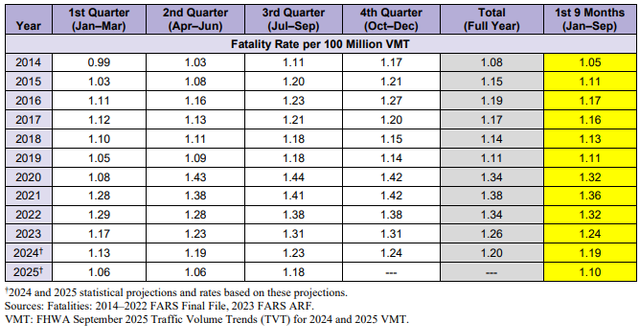
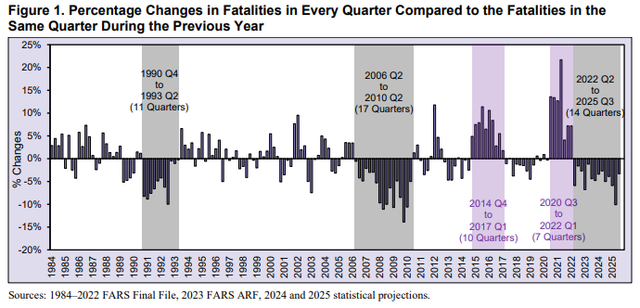
During the COVID-19 pandemic there were marked increases in fatalities and the fatality rates per 100 million VMT in 2020. The increased trend of fatalities in 2020 continued into 2021 and the first quarter of 2022. However, the second, third, and fourth quarters of 2022, all four quarters of 2023 and 2024, plus the first three quarters of 2025, represent the 14 consecutive quarterly declines in fatalities after 7 consecutive quarters of yearto-year increases in fatalities, since the third quarter of 2020. The increased trend of the fatality rates per 100 million VMT in 2020 continued into the first quarter of 2021, decreased in the second and the third quarters of 2021, and increased again in the first quarter of 2022. The second, third, and fourth quarters of 2022, all four quarters of 2023 and 2024, plus the first three quarters of 2025, also represent the 14 consecutive quarterly declines in fatality rates per 100 million VMT. NHTSA is continuing to gather and finalize data on crash fatalities for 2025 using information from police crash reports and other sources. The FARS ARF and Final File for 2024 as well as the ARF for 2025 will be available within the next 2 years and usually result in the minor revision of fatality totals and the ensuing fatality rates and percentage changes.
The US has had 14 consecutive quarters of a decrease in road accident deaths and it is at a 10 year low when factoring in vehicle miles traveled (VMT): https://crashstats.nhtsa.dot.gov/Api/Public/ViewPublication/813778


Regarding the US having a much higher accident rate overall (as opposed to recent changes which you erroneously fixate on), there's a chance that is due to higher SUV usage in the US. However there's a better explanation as well: public transit usage. The US would be among the lowest in that list.
 
1. You haven't proven that they've caused a sharp increase in accidents.
Struggling to find the exact source I know I've seen a while ago, but here's a couple that state it indirectly.
"75% of frontovers involved a larger size vehicle (truck, van, SUV)"

"They found that drivers had 58 percent less forward visibility in some modern SUVs compared with their older counterparts, a decrease that they largely blame on higher hoods and larger side mirrors."

"These incidents are on the rise: Between 2008 and 2018, these numbers almost doubled"
"75 percent of these accidents involve SUVs, trucks, or vans"

It only makes sense. Kids and pets are small, if you got a massive vehicle and can't see what's directly in front of you accidents will happen. A camera or some other sensor would help but those tend to be optional and come at an extra cost. But they're a remedy rather than simply preventing it.

2. That chart is old (only up until 2021). The sharp increase in deaths is due to changes in behavior during Covid alone. That's why all countries deaths increased from 2020-2021:
Doesn't really matter, you can still tell that the line goes down for everyone as a global trend except for the US.

Regarding the US having a much higher accident rate overall (as opposed to recent changes which you erroneously fixate on), there's a chance that is due to higher SUV usage in the US. However there's a better explanation as well: public transit usage. The US would be among the lowest in that list.

It's always been higher, and there's many likely reasons for it, e.g.:
* As you put it, public transit usage being low. Which I'd further split out into:
** US residents are likely to drive more often/longer distances
** You're expected to own a car to get anywhere which means that the bar of entry was made rather low (it's very easy to get a drivers license in the US compared to a lot of other countries)
* There seems to be a weird social acceptance to let people get away with driving under influence (If I know you had more to drink than you should I'm not letting you step behind the wheel of a car, I don't care if you're my friend and I will call the police if needed)
* I only learned about this one recently, cars in most states don't need to pass periodic inspections? That's quite surprising, I expected any western country to have some variation of that. In the UK for example if you car is older than 3 years it has to pass inspection (MOT) every 12 months. If it doesn't it's no longer road legal. The EU sets it at every 24 months for 4yo+ cars (although member countries are free to be more strict and many are).
Usually involves testing of lights/brakes, condition of the tires, general condition of the car, emission standards testing etc.

As for fatality rates in the US I think SUVs are only a part of the problem, there's also:
* Lower safety standards compared to for example Europe (CyberTruck with its sharp angles being allowed on the road being an easy example)
* Infrastructure, in Europe infrastructure tends to be set up so that high speed cars and pedestrians/cyclists don't get near each other. In the US pedestrians and cyclists are an afterthought if they're thought of at all.
 
Doesn't really matter, you can still tell that the line goes down for everyone as a global trend except for the US.
I already posted a trend graph, so you cannot make this point. There is an upward trend from 2014 Q4 to 2017 Q1, then a slight downward trend, then during COVID an upward trend from 2020 Q3 to 2022 Q1, and finally a downward trend ever since (one that appears to be accelerating). During COVID, all countries experienced an increase in deaths which obviously has nothing to do with SUV's. So how do you explain the overall downward trend from 2017-2025? Again, covid had nothing to do with SUVs.

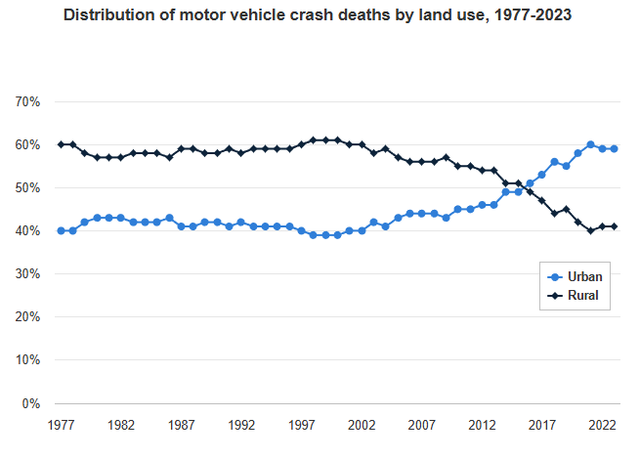
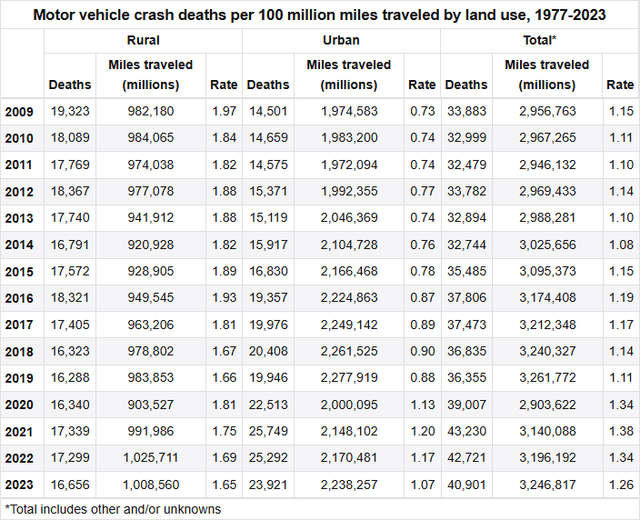
The IIHS explains that urban traffic fatalities are on the rise: https://www.iihs.org/research-areas/fatality-statistics/detail/urban-rural-comparison
A total of 40,901 people died in motor vehicle crashes in 2023. Since 2000, there has been a downward trend in the proportion of crash deaths in rural areas, from 61% in 2000 to 41% in 2023.


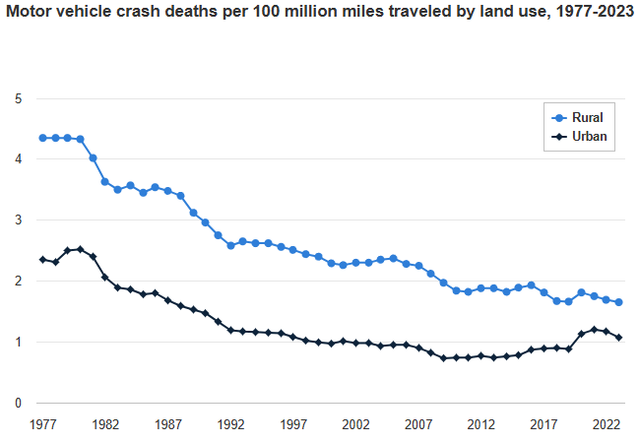
This shows that more than the total increase of all deaths happened in urban areas. Rural deaths steadily decreased while urban deaths increased steadily until they peaked in 2021 (VMT shows this too):


Overall, driving in the US has gotten safer, not more dangerous.
 
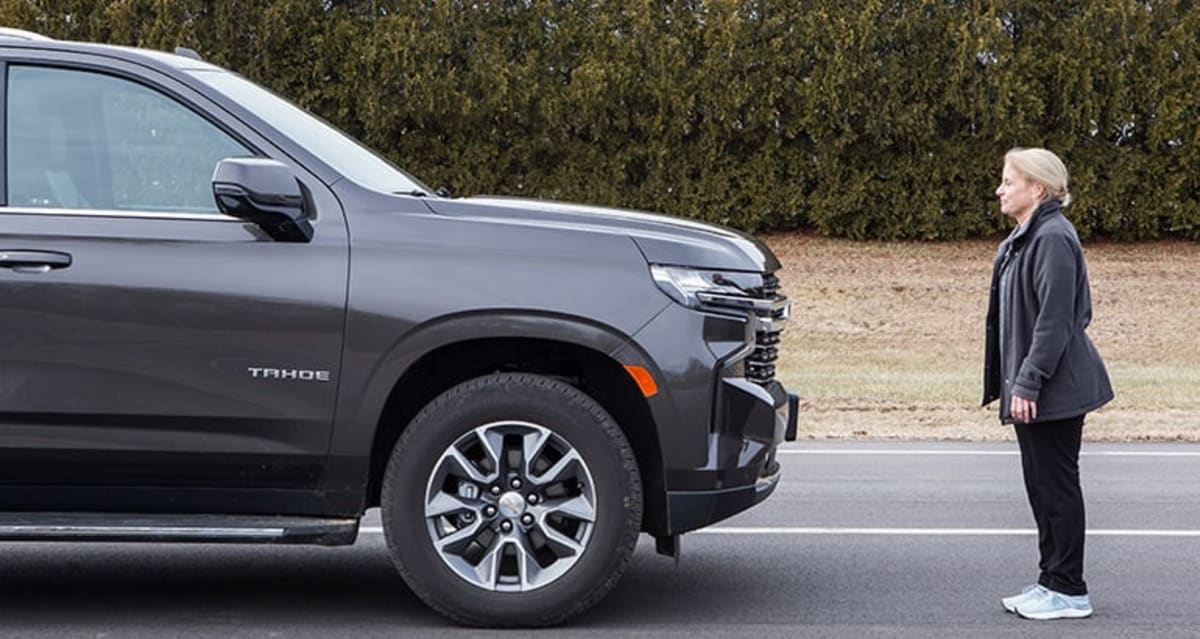
Gee, who would've thought that massive vehicles with front ends that are nearly as tall as an average person would kill more people?
This is a UK study. UK SUV's are no where near as big as their US counterparts. The stats would probably be worse in the US.
 
Back