Study finds EV batteries are surprisingly durable, but DC fast charging is bad news

DragonSlayer101

Posts: 992   +14
Staff
The takeaway: As electric vehicles become more popular, owners are discovering that modern EV batteries are surprisingly durable, lasting far longer than commonly believed. A new study now finds that these batteries continue to perform consistently throughout their operational life, even with frequent use of DC fast charging.
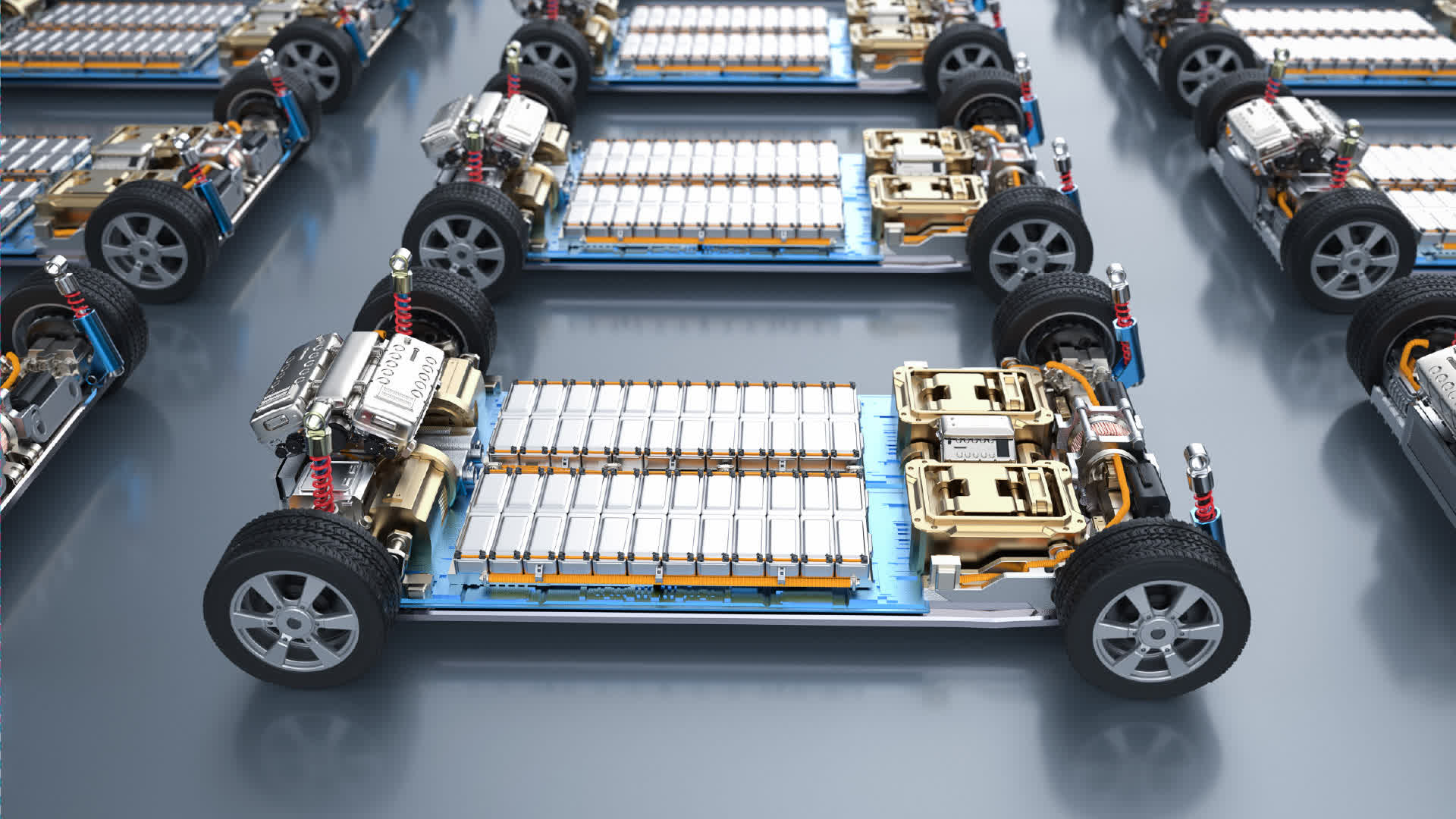
According to data published by GeoTab, the average annual battery degradation rate for EVs is only around 2.3 percent – much lower than most car owners expect. Degradation depends on several factors, with the most important being how frequently the vehicle is charged using high-power DC fast charging above 100 kW.

Mileage also directly affects battery health, as vehicles that undergo more charge cycles experience greater degradation than those that are used less frequently. The study found that EVs charged less than once a week show an average degradation of about 1.5 percent per year, while batteries charged every couple of days degrade around 2.3 percent annually.

Climate can also influence long-term battery health, with very hot weather reportedly accelerating degradation by approximately 0.4 percent. However, charging power and frequency remain the dominant factors affecting battery longevity.
The study also examined the effects of charging to 100 percent and discharging to zero. While most automotive and consumer electronics companies caution against fully charging or fully depleting devices that use lithium-ion or lithium-carbon batteries, the data suggests that, in the case of EVs, these extremes have minimal impact in real-world usage.

However, leaving an EV at either 100 percent or zero percent charge for extended periods can negatively affect battery health. The study found that if an EV spends 80 percent of its time in either of these extreme states of charge, the battery degrades about 0.5 percent faster.

The analysis covered more than 22,700 EVs in 2025, spanning 21 different models across several major brands. While results were largely consistent within vehicle categories, there were notable variations depending on operating conditions, battery chemistry, and vehicle size.

For instance, multi-purpose vehicles, including light vans, averaged a higher degradation rate of 2.7 percent per year, compared with light passenger cars – such as sedans and SUVs – which exhibited an average decline of around 2.0 percent per year. Energy density and battery management configurations also reportedly influence battery longevity.

Permalink to story:

 
We need batteries that age a lot slower if the cars are not driven heavily. I think a lot of attention was put into range and fast charging, but to be truly a replacement for gas, they need to stay working past 10 years, especially if the EV is not driven a lot.
 
I love the idea of EVs. Maybe some day I can afford one. Until then, here is some math for you.

Assume 2.3% Annual Degradation for an EV with 300 mile range.

Years MaxCapacity MaxRange
0 100% 300 miles
5 89% 267 miles
10 79% 238 miles
15 70% 212 miles

For an ICE car, imagine if your gas tank got smaller or you MPG reduced every year you owned the car. It is just a unique quirk of EVs that I hope they fix some day.

---
EDIT: To be clear, I am not saying EV or ICE is better. Just different. I like all types of cars. They all have their place. ICE may have more mechanical things to maintain, but if done right the can last for a really long time (300,000 miles, 30+ years). EVs have a lot less parts to maintain, but the battery deteriorates no matter how well you take car of it. They are just different.
 
Last edited:
I love the idea of EVs. Maybe some day I can afford one. Until then, here is some math for you.

Assume 2.3% Annual Degradation for an EV with 300 mile range.

Years MaxCapacity MaxRange
0 100% 300 miles
5 89% 267 miles
10 79% 238 miles
15 70% 212 miles

For an ICE car, imagine if your gas tank got smaller or you MPG reduced every year you owned the car. It is just a unique quirk of EVs that I hope they fix some day.

Sure. But a 15yo ICE car is going to have a heap of other problems that can be costly to repair. Fuel system, spark plugs, coolants, starters etc which don't exist in an EV. Battery replacement is a thing and if you do that on the EV your car is basically as good as new.

I don't know if all that balances out the total cost of ownership and deprecation after 15 years but the math is complicated with many variables

But then again a well maintained, low mileage 15yo ICE car probably still has much better resale value than an EV.
 
At last! Some real data as opposed to Joe Internet Social Media user who has no clue except what Joe has heard on the conspiracy-net.
funny how often Joe is right, since he can use deductions n and reasoning and doesn't have to wait for " experts" to tell him what to think.
We need batteries that age a lot slower if the cars are not driven heavily. I think a lot of attention was put into range and fast charging, but to be truly a replacement for gas, they need to stay working past 10 years, especially if the EV is not driven a lot.
We already ha e that. It's called lithium iron phosphate. Or you set a custom charge limit of 80 percent.
 
I love the idea of EVs. Maybe some day I can afford one. Until then, here is some math for you.

Assume 2.3% Annual Degradation for an EV with 300 mile range.

Years MaxCapacity MaxRange
0 100% 300 miles
5 89% 267 miles
10 79% 238 miles
15 70% 212 miles

For an ICE car, imagine if your gas tank got smaller or you MPG reduced every year you owned the car. It is just a unique quirk of EVs that I hope they fix some day.
That looks about right. My EV is almost 11 years old and has 78% of its original range with 140k miles on the odometer (and I fast charged a lot over the years).

Anyways ICE vehicles DO lose efficiency as they age. It's much less, but it's not unique to EVs. Look it up for yourself. The difference is that most ICE owners don't care how often they have to fill up their vehicle because it takes much less time than fast charging. You just can't forget that most EV owners also don't have to wait while fast charging at all because they spend less than 10 seconds plugging in their car at home (much faster than a trip to the gas station).
 
We need batteries that age a lot slower if the cars are not driven heavily. I think a lot of attention was put into range and fast charging, but to be truly a replacement for gas, they need to stay working past 10 years, especially if the EV is not driven a lot.
Mine is 11 yo now and down 8.1%. And that's the older battery technonlogy.
 
Petrol or EV, either way it's a smartphone on wheels now made mostly of adhesive sealed plastic, beyond the base metal chassis.

Yep, saw a photo from a car accident, where a 1-2 year old full size SUV rear ended a 60's car. The SUV was pretty much totaled, but it appeared that the STEEL bumper was bent & maybe one of the tail lights was broken.
Vehicles today to not "survive" crashes. And even if they do, the repair costs are VERY high because of all the computers, sensors, airbags and what not.
 
Yep, saw a photo from a car accident, where a 1-2 year old full size SUV rear ended a 60's car. The SUV was pretty much totaled, but it appeared that the STEEL bumper was bent & maybe one of the tail lights was broken.
Vehicles today to not "survive" crashes. And even if they do, the repair costs are VERY high because of all the computers, sensors, airbags and what not.

LOL those old cars survived sure, but the occupants often didn't. This is why cars were then designed to crumple on impact to reduce energy transfer to occupants. It's a simple and much more effective safety strategy. If I'm dead I don't really care my car survived with minor damage.
 
I got an EV 2 years ago. Love it. Zero issues, charging it for free pretty much.
Now the 2nd car needs replacing, I will only be looking at another EV.

Never going back to gasoline. Costs like 8-10 times as much to drive and acceleration is slooow. Also, the possibiles in the App on EVs feels like next gen shite. I can heat it, open windows, watch the cameras, all kinds of stuff. Way more fun for a tech addict.

Most people that hate EVs can't afford one or live in a country with terrible infrastructure.
Western civilization embraced EVs and it's very easy to charge and very cheap to drive them.

EVs are very simple, few parts. Little can go wrong. Maintenance is low.

About batteries... Many tests have been done. They age much better than expected. You have like 1000 charge cycles before you see 15-30% degradation. It will be closer to 30% if you fast charge all the time, and don't try to avoid hitting 100% and leave it. Keep it mostly between 10% and 80-90% and you will be golden. This is very easy to do, with homecharging.

This is nothing new. Just like with phones, computers, everything with a battery. Stay in the 20-80% range mostly and it will age vastly better than people draining the shite to 0% and letting it stay at 100% for hours every night.

1000 charge cycles. That is alot. Especially for a >CAR<, this is not a phone that needs charging daily or close. I charge my car like 2-4 times a month. Lets say 3 on average.

That is 333,33 months, about 28 years, to hit 1000 cycles.
Will it last that long? Probably not but maybe, replacing the batteries tho, will be CHEAP in 5-10 years from now, and it won't just be CHEAP, the new batteries at that point, will provide much longer ranges than today. Old EVs will get a second wind when this happen.

Also, I LOVE not having to visit gas stations and getting RIPPED anymore. During covid I got MILKED several times. I spent the same on a single tank back then, than I can do a full year of charging now. You see? Driving for free is nicer. Insane acceleration is better.

A friend of mine just sold his Tesla 3 from 2022, he drove over 100.000 miles in in. Battery health was at 97.4% and he got pretty much the same range in the end, compared to when it was brand new. People simply overestimate how fast EV batteries are aging.

The early predictions, was worst case. Most EVs have 8 years warranty on battery now and you can replace single cells if needed. You are not forced to replace the entire battery if anything goes wrong after 8 years anyway. There is many 10+ year old EVs at this point still driving, with the original battery and sees fine range. And this was first gen batteries. The batteries improved alot since ~2015 and price got vastly lower and will get even lower going forward.

Now is a turning point. Many western contries are looking at 60-80% registation on new cars being EV - Norway, is at like 97% or so last time I saw numbers. They want nothing but EVs and its even a cold climate (auto heating thru App is nice, all EVs will do it and is a default non-paid option, unlike gasoline). Even the Germans are at 60% or more now.

Once you had an EV, its hard to go back. Most people scared of EVs, never had one.
 
Last edited:
LOL those old cars survived sure, but the occupants often didn't. This is why cars were then designed to crumple on impact to reduce energy transfer to occupants. It's a simple and much more effective safety strategy. If I'm dead I don't really care my car survived with minor damage.
Not every new car is full plastic one-use crap.
There is some little difference between cars:
1900 lbs - Skoda Citigo 2017 3 door
2900 lbs - Suzuki Vitara 4WD Automatic
3240 lbs - Chevrolet Corvette Coupe (C5) 2001
4250 lbs - Tesla Model Y (2025, 62.5 kWh)
4500 lbs - Mercedes-Benz S 350d
5375 lbs - Tesla Model X P90D 90 kWh
6900 lbs - Tesla Cybertruck Tri Motor AWD
7400 lbs - Dodge RAM 2500 Regular cab
8100 lbs - Dodge RAM 2500 Mega Cab II

For the last one/two you will need Truck driving license (over 3500 kg) in EU.
 
We need batteries that age a lot slower if the cars are not driven heavily. I think a lot of attention was put into range and fast charging, but to be truly a replacement for gas, they need to stay working past 10 years, especially if the EV is not driven a lot.
It's around 1% degradation per year when left un-driven, so 10 years of aging is about 90% health remaining. And the degradation likely slows up after that. Seems pretty good to me.
 
It's around 1% degradation per year when left un-driven, so 10 years of aging is about 90% health remaining. And the degradation likely slows up after that. Seems pretty good to me.

It's crazy how some people think 80-90% battery health after 10-15 years means unuseable.

Do people realize that gasoline cars get worse over time as well? They just need way more maintenance and parts replaced over time. Way more things that can break. Oil replacement yearly etc.

With an EV, batteries only get better and cheaper and you can replace single cells or entire battery packs later for cheap en revive an older EV.

Fast charging is generally prefered over a big battery, especially if it is not able to charge fast when needed. Only people who never had an EV thinks range and battery size is the most important.

In reality, most people who don't drive alot will have plenty in a small battery and then charge it weekly at home when its cheap or even free to do.
 
It's crazy how some people think 80-90% battery health after 10-15 years means unuseable.

Do people realize that gasoline cars get worse over time as well? They just need way more maintenance and parts replaced over time. Way more things that can break. Oil replacement yearly etc.

With an EV, batteries only get better and cheaper and you can replace single cells or entire battery packs later for cheap en revive an older EV.

Fast charging is generally prefered over a big battery, especially if it is not able to charge fast when needed. Only people who never had an EV thinks range and battery size is the most important.

In reality, most people who don't drive alot will have plenty in a small battery and then charge it weekly at home when its cheap or even free to do.
80% health after 15 years would be amazing. In fact, if I were shopping for a used EV and I know for sure the battery would be this reliable, I would not hesitate to get one. The problem is, once the battery is dead, it is dead. And the battery dying after 9-10 years means that the owner can put nothing toward a new car.
Due to this technicality, EV value is like an on/off switch. It works; EV is worth something. It does; it is worth almost nothing.
 
Yep, saw a photo from a car accident, where a 1-2 year old full size SUV rear ended a 60's car. The SUV was pretty much totaled, but it appeared that the STEEL bumper was bent & maybe one of the tail lights was broken.
Vehicles today to not "survive" crashes. And even if they do, the repair costs are VERY high because of all the computers, sensors, airbags and what not.

When I was in college (early 2000s), my '97 Camry got rear ended by a Ford Explorer going about 25 MPH. Explorers front end was gone and the car was basically DOA, my Camry just had a slightly damaged rear bumper.

Yeah, thanks to crumple zones, modern cars are basically undrivable after any accident.
 
It's crazy how some people think 80-90% battery health after 10-15 years means unuseable.

People form all sorts of non-real opinions that are easily disproven, but are too stubborn to admit they are wrong.

Case in point: A long term study just concluded that battery powered cars are actually *less* prone to catching on fire then their petrol counterparts. Which obviously is the opposite of what most people would think because of sensationalism around lithium batteries.
 
So the battery anxiety everyone has been carrying around is basically the EV equivalent of early smartphone panic. Turns out the car battery is fine; it’s the charging myths that needed a software update.
 
I love the idea of EVs. Maybe some day I can afford one. Until then, here is some math for you.

Assume 2.3% Annual Degradation for an EV with 300 mile range.

Years MaxCapacity MaxRange
0 100% 300 miles
5 89% 267 miles
10 79% 238 miles
15 70% 212 miles

For an ICE car, imagine if your gas tank got smaller or you MPG reduced every year you owned the car. It is just a unique quirk of EVs that I hope they fix some day.

---
In 10-15 years battery technology might be much better/efficient that you can swap the old battery and start all over again with the range like new. Maybe this is wishful thinking, but who knows. Like swapping an old videocard with a medium priced one from today :) (except for ramageddon)
 
It's crazy how some people think 80-90% battery health after 10-15 years means unuseable.

Do people realize that gasoline cars get worse over time as well? They just need way more maintenance and parts replaced over time. Way more things that can break. Oil replacement yearly etc.

With an EV, batteries only get better and cheaper and you can replace single cells or entire battery packs later for cheap en revive an older EV.

Fast charging is generally prefered over a big battery, especially if it is not able to charge fast when needed. Only people who never had an EV thinks range and battery size is the most important.

In reality, most people who don't drive alot will have plenty in a small battery and then charge it weekly at home when its cheap or even free to do.
Don't have home charging, don't have $$$ for EV, end of story. If someone wants to give me an EV and the charger for my apartment, fine. Otherwise, later dude.
 
Nothing beats arriving at a pumping station and fill it up in a very short amount of time!
This is what I hated mostly when I had a gasoline car with varying prices.
Vastly easier and cheaper just to charge at home when needed, for pretty much no money.

On the long runs, charging in 15-20 minutes while eating or stretching the legs, while driving for free, is highly prefered.

The acceleration alone of an EV, is enough reason to never make me buy another gasoline car.
 
Don't have home charging, don't have $$$ for EV, end of story. If someone wants to give me an EV and the charger for my apartment, fine. Otherwise, later dude.
And we are back to the "people who can't afford an EV, will complain" here.

You will be able to, if you work harder or wait a few years.

Apartment? My best friend is living in an apartment and is able charge his EV with ease in the parking lot. This is why infrastructure matters. Charging at home when you need it = Gold. Cheap and easy.

I am from Norway. We only drive EVs pretty much. Only EVs are selling. Chargers everywhere. It is easier to find a charger than a regular gas station. These are vanishing as we know them actually. "Gas stations" have way more CHARGERS now.

Less oil, better climate. Air in the big cities already improved massively after EVs took over. You can actually breathe now. Cancer risk lowered. Driving a bike or walking around town without inhaling exhaust gas all the time, is kinda nice.
 
Last edited:
80% health after 15 years would be amazing. In fact, if I were shopping for a used EV and I know for sure the battery would be this reliable, I would not hesitate to get one. The problem is, once the battery is dead, it is dead. And the battery dying after 9-10 years means that the owner can put nothing toward a new car.
Due to this technicality, EV value is like an on/off switch. It works; EV is worth something. It does; it is worth almost nothing.

I know 2 people still driving around in old Tesla S with free supercharging and these batteries are 10+ years for sure, still works completely fine, as in range is still just fine.
They will drive these cars till the car or battery stops working, because when you change the battery, supercharging switches from free to paid.

EV batteries don't just die after 9-10 years, not even 1st gen batteries. It might happen, sure, but your engine can break in a 5-10 years in a new gasoline car as well.

Also, you can in most cases repair batteries by changing cells, you don't have to replace entire battery. Again, nothing new.

A 10 year old EV battery, probably still has better health than a 3-4 year old phone battery, unless you drove 200-250k miles in it. Phone batteries age way faster than EV batteries due to way more frequent charging.

Like I said, you have about 1000 charge cycles before battery even drops below 90-80% health. If you supercharge all the time, and don't try and keep it in 20-80% zone then you might be at 70% instead, however, battery will still work just fine.

1000 charge cycles for an EV battery, will take 10-15 years with heavy use. 25-30 years with normal use. Again, this is not a phone, you don't need to charge daily. I charge my car 3 times a month on average. Less than 40 times a year. About 1½ week between.

People just don't understand this fact. This is 2025, not 2010-2015, EVs have plenty of range and charge to last weeks with normal usage.
 
Last edited:
Back