
In brief: The tit-for-tat race to build the world's fastest electronic drone is showing no sign of stopping. Since pushing the limits of FPV drone design to reclaim the Guinness World Record last year, a father-son duo must now compete with professional Hollywood aerospace engineers.
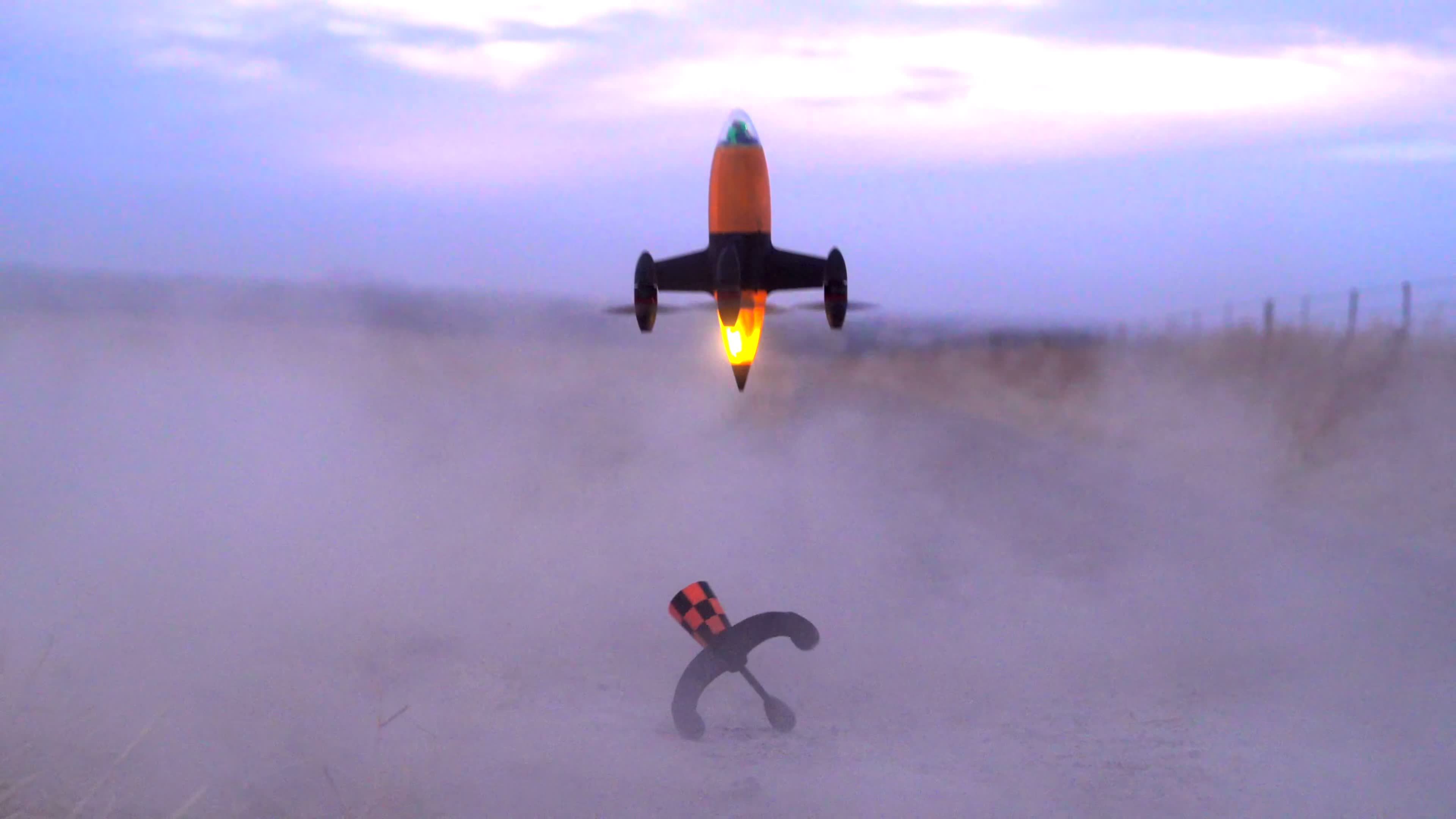
Luke Bell and his father, Mike, are back to set their third Guinness World Record for fastest FPV drone. After their last attempt achieved breakthroughs in power and heat resistance, the competition has become a battle of inches, as slight modifications and innovative tricks combine to push new models beyond the 400-mph mark, outperforming F1 race cars.
The pair set their first record, 298 mph, last June, before Samgo's Fastboy 2 bolted past it at 346mph. The Bells pushed further by making aerodynamic enhancements, engineering more powerful engines, and improving heat management to prevent their drone from catching fire. The last part required liquid cooling and a new heat-resistant 3D printing resin.
However, their tentative new world record of 363 mph was short-lived once a pair of professional drone operators took up the challenge. Near the end of last year, a new record was set by Ben Biggs and Aiden Kelley, who have used drones to shoot scenes in films such as John Wick, Star Wars, 007, Mission: Impossible, and The Fast and the Furious.
Using a model resembling the Bells' design, they averaged 389 mph by making aerodynamic adjustments to the rotors and overcharging their batteries to increase thrust. Although 389 mph is their official record, flying downwind actually allowed Biggs to achieve a top speed of 407 mph.
Not wanting to admit defeat, the Bells made yet more improvements. Compared to their prior design, reworking the drone's shape and sanding down the body increased their speed by 21 mph, while trimming the rotors and switching to 40,000 rpm motors added another 28 mph.
Their final average of 408 mph inched past the previous record holder, with a 409 mph downwind run and an upwind run matching Biggs' downwind 407 mph. Furthermore, the Bells filmed the attempt from the air by attaching a 360-degree camera to a second drone that is nearly as fast.
Links for 3D printing and assembling the various pieces of the Bells' latest drone are available in the description of their video (above). It remains to be seen if Biggs or anyone else will attempt another world record.
Father-son team reclaims world record with 408 mph FPV drone


