
What just happened? SpaceX has secured FCC approval to launch and operate 15,000 satellites for Starlink Mobile, another major step in its effort to connect phones directly from orbit. The approval also makes it easier for the company to offer its own mobile service and compete with established carriers.
The FCC cleared the mobile application on October 6. The regulator also granted a waiver allowing SpaceX to offer satellite wireless services without entering into a spectrum-leasing agreement with a terrestrial mobile operator. That gives SpaceX a route to sell mobile connectivity using its own spectrum, potentially competing directly with AT&T, Verizon, and its current partner, T-Mobile.
The satellites are also cleared to use spectrum acquired from EchoStar, alongside frequencies from T-Mobile.
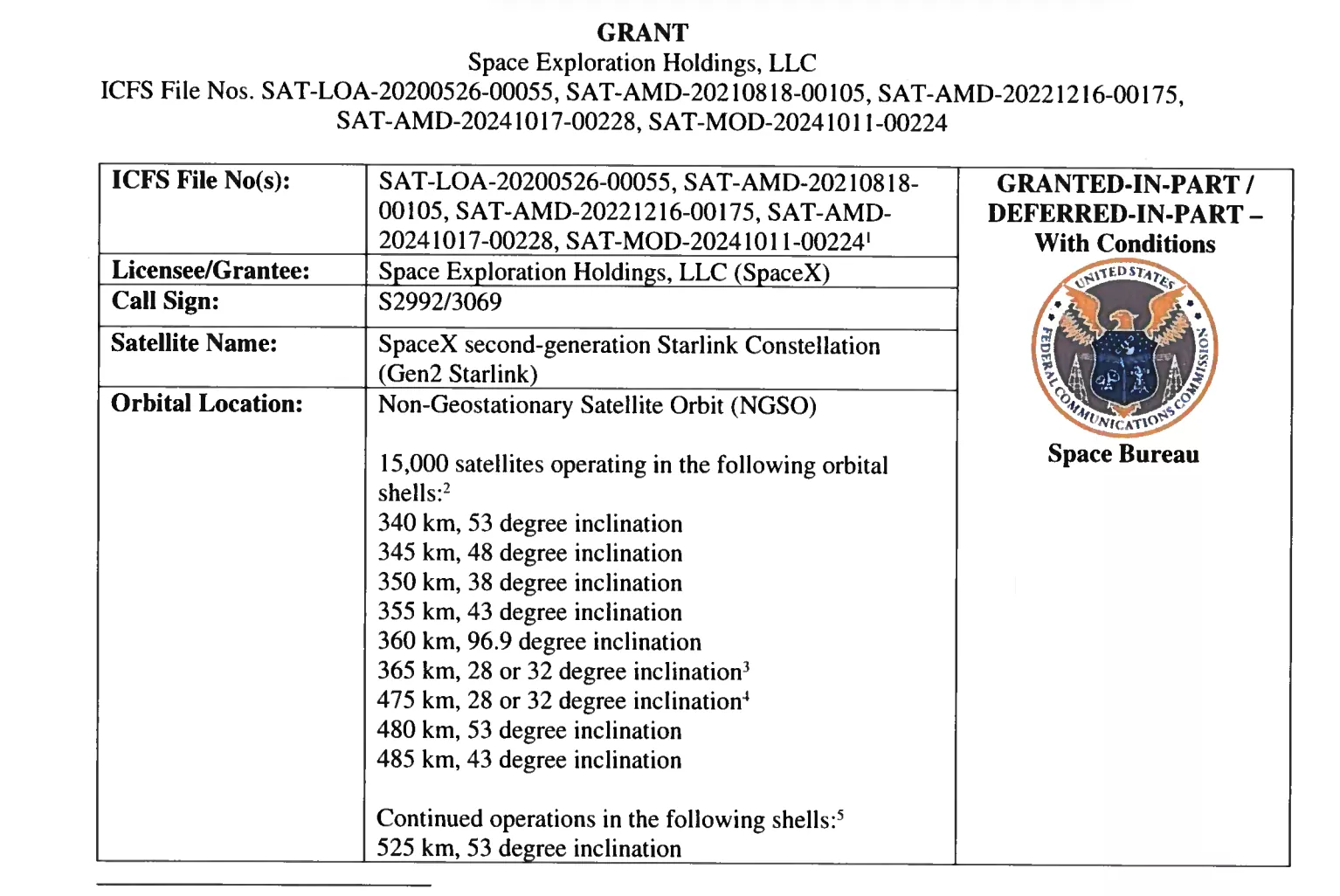
If the 15,000 figure sounds familiar, there's a good reason. In January, the FCC approved another 7,500 Gen2 Starlink satellites, doubling that system's authorized size to 15,000. That decision focused on expanding Starlink's broadband capacity, although it also included direct-to-cell and other mobile capabilities.
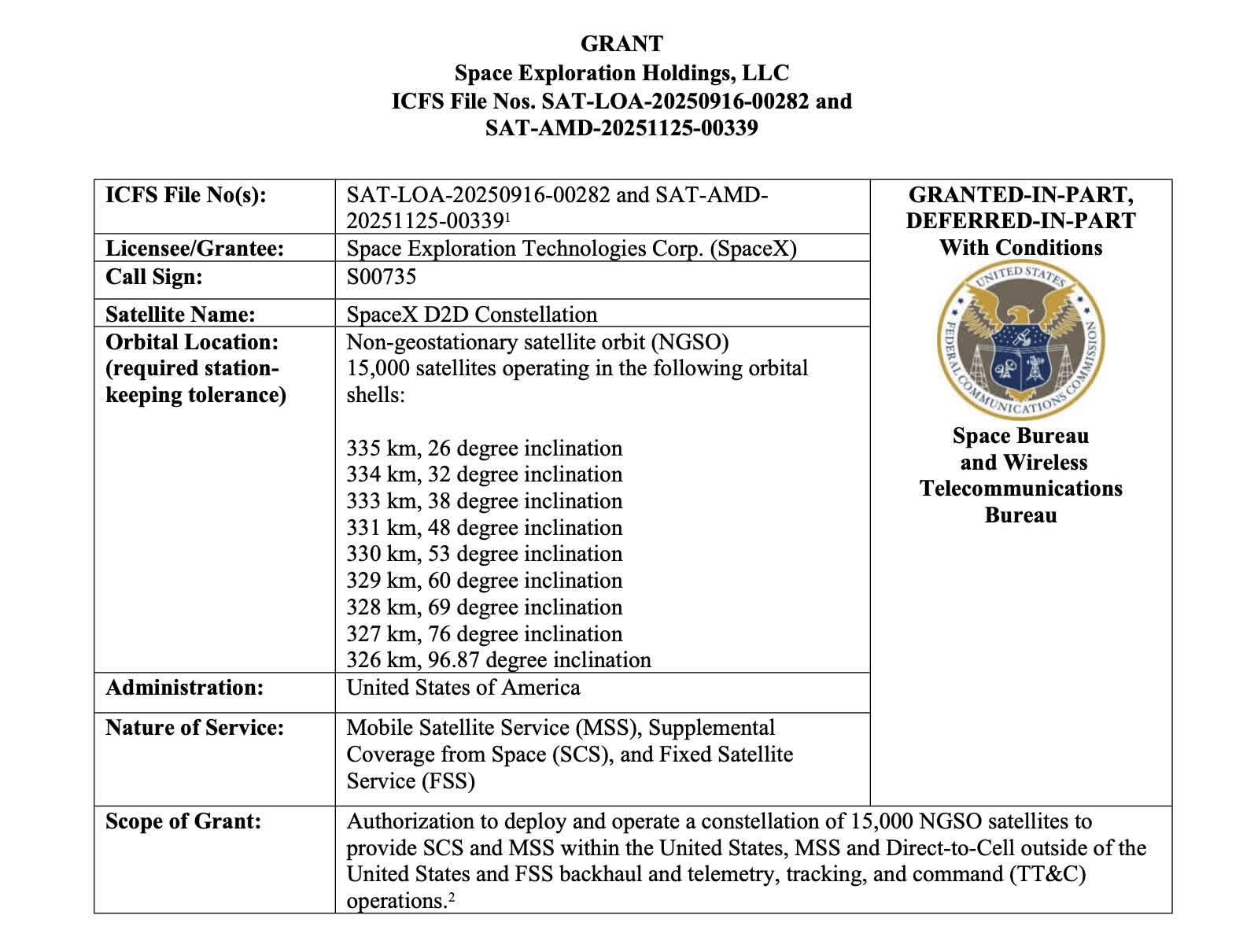
The latest approval concerns a different application, which was submitted in September 2025. The FCC's original filing notice describes a new mobile-satellite system comprising up to 15,000 spacecraft at altitudes between 326 and 335 kilometers (202 to 208 miles).
The two approvals cover 30,000 satellites across the Gen2 and new mobile systems combined. That excludes the separately authorized first-generation constellation. For comparison, SpaceX had launched nearly 13,000 Starlink satellites by early October, with around 11,150 still in orbit, according to Jonathan McDowell's tracking data.
The mobile upgrade is designed to move satellite phone connectivity beyond just basic messaging and light data. Japanese carrier KDDI, which announced a Starlink Mobile V2 agreement in September, says the next-generation service will support native voice calls, streaming, browsing, and more demanding apps. It aims to introduce the service in areas outside terrestrial coverage by the end of 2027.
That partnership also shows that greater independence from terrestrial operators doesn't mean SpaceX is abandoning carrier deals. There's still a market for extending existing networks into remote areas.
As with previous Starlink expansions, the decision has reignited concerns about orbital congestion and the growing number of satellites crowding low Earth orbit. In comments on the mobile application, the American Astronomical Society raised concerns about interference with observations, orbital debris, and the atmospheric effects of satellite reentries.
Receiving regulatory approval marks a major milestone, but SpaceX still has to deploy the constellation and demonstrate the promised service.
FCC approves 15,000 SpaceX Starlink satellites that could compete directly with cellular carriers


