For the first time, AI guides surgeons through a brain tumor operation

Skye Jacobs

Posts: 2,137   +62
Staff
What just happened? Surgeons at a London hospital used artificial intelligence to help remove a brain tumor from a 48-year-old man facing the risk of losing his sight. The system analyzed live video during the operation, flagging nerves and blood vessels for the surgical team as it worked around the tumor.
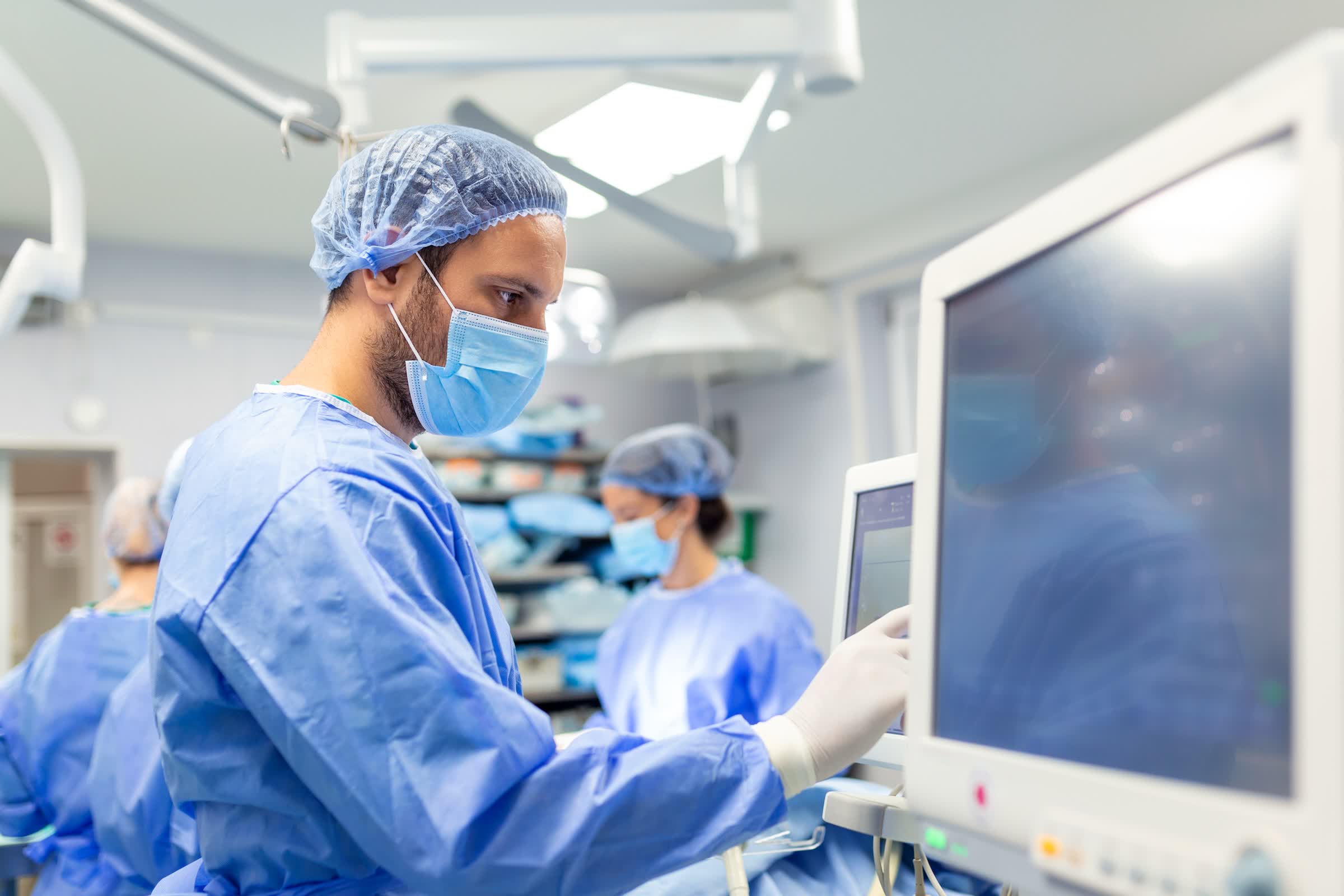
The operation took place in May at the National Hospital for Neurology and Neurosurgery, part of University College London Hospitals NHS Foundation Trust. Health officials said it was the first successful AI-assisted operation to remove a brain tumor. Details were not released until Thursday while the patient, Rhys Hibbert, recovered.

Hibbert had an 11mm tumor on his pituitary gland. The area is close to the nerves that control vision and major blood vessels, leaving little room for error. Health officials said a mistake of even a millimeter can cause blindness, stroke, or death.

The system color-coded parts of the surgical field to help doctors identify anatomy that needed to be protected. It had previously been used at the hospital for research but not during an operation on a patient.

Hibbert, who lives in Bedfordshire, was diagnosed in 2024. Doctors initially managed his condition without surgery, but he later developed a severe hormone imbalance and worsening vision problems. Officials said he could have gone blind without the operation.

"When I came round... I could see everything in the room clearly," Hibbert told The Guardian.
He was able to walk without glasses or a walking stick within a week and has returned to work as a customer service manager. "It feels like I've got a 360-degree panoramic view of everything around me," he said.

Dr. Sophia Bano, an associate professor in robotics and AI at UCL, led the technical development of the system. She said the software had learned from hundreds of surgical videos, giving it exposure to a broad range of cases.

Bano also noted that the system is built to identify important anatomy, surgical instruments, and tissue interactions as an operation unfolds, giving surgeons added support during highly delicate procedures.

The National Institute for Health and Care Research funded the operation as part of a clinical trial. Mike Lewis, the institute's scientific director for innovation, said the procedure showed how advanced AI could support surgeons and improve patient care.

Hibbert noted that the hospital has a long history in neurosurgery. "The NHNN was founded in 1859... and was the world's first dedicated neurosurgical hospital. So to me, it seems very fitting that the same hospital should also be the world's first to carry out an AI-assisted neurosurgery."

Permalink to story:

 
Why would you turn down a surgeon for using a more effective tool?
Because AI has a track record of hallucinating. The idea that this is some "more effective tool" is absurd. It's basically another medical assistant with a 10% chance of tripping balls during the procedure.
 
Headlines love to verb as if AI exists and does things by itself to help humans, but the fact of the matter is the operation was performed by a some guy occasionally looking at a computer screen like most modern workplace tasks. He was just looking at different information this time.

Hi, welcome back to reality.
 
Because AI has a track record of hallucinating. The idea that this is some "more effective tool" is absurd. It's basically another medical assistant with a 10% chance of tripping balls during the procedure.
"Medical assistant" or "more effective tool", there is no difference. What's absurd is your claim that there is a "10% chance of tripping balls during the procedure"
 
It appears this report is a system where AI updates according to changes in the video feed from a microscope or endoscope, otherwise heads up displays have existed for a long time overlaid with pre-op CT/MRI scans.
One would hopefully choose to use AI on a first case where structures could be easily identified in order to confirm the accuracy of the AI. This sort of pituitary surgery should be straightforward in terms of identifying what I presume would be intra-sellar anatomy for a tumor of this size.
Many may not realize that some form of computer assistance has been used for nearly all brain tumor procedures and spinal fusions in most of the US for several years now.
Computer assisted brain tumor surgery of some sort has been around for decades, beginning with biopsy procedures in the 1980s.
There is no disputing that a real time AI that updates identifying what has changed as surgery progresses can be helpful, particularly when operating without a knowledgeable assistant or ultimately to help confirm identification of structures when anatomy is distorted by tumor or blood clot.
Regardless of AI it is the surgeon who makes the decisions based on knowledge and experience and the one who gets the registered letter from a plaintiff's attorney when results are less than ideal.
If a surgeon can't do the operation without the AI he or she should not be doing the operation.
I hope that standard never changes if only because systems can do fail during surgery, Murphy's Law being immutable.
AI can help improve overall procedural safety, I hope its use increases, but there are multiple significant added costs, including but not limited to the added time and money for setting up and using the equipment and inevitably trouble-shooting the system while the patient is under anesthesia.
 
Back