Facepalm: Ever since it started making its way into the workplace, we've been told that AI will skyrocket productivity and cut costs – promises that have also been used to justify layoffs. So, how many organizations are actually exceeding their cost-saving targets through productivity gains? According to Gartner, a massive 3%.

The figure comes from Gartner's HR Symposium in Orlando. In a finding that perfectly sums up the blind faith so many executives have in AI, 77% of board members expect the technology will deliver value in the form of productivity and cost savings. This is despite 97% of organizations being unable to achieve cost savings through productivity alone.
CV Viverito, senior director analyst for Gartner's HR practice, said that organizations will not generate cost savings from AI at this point. "The greater opportunity is to use AI to do things that weren't possible before, such as shifting employee time into new capabilities, outcomes, and sources of growth," Viverito added.
Another entirely unsurprising finding is that almost four in ten companies are now over budget on their AI spending. But when has overspending on something that isn't bringing the promised cost-reduction gains discouraged execs? Despite everything, 85% of companies say they are planning on spending even more next year.
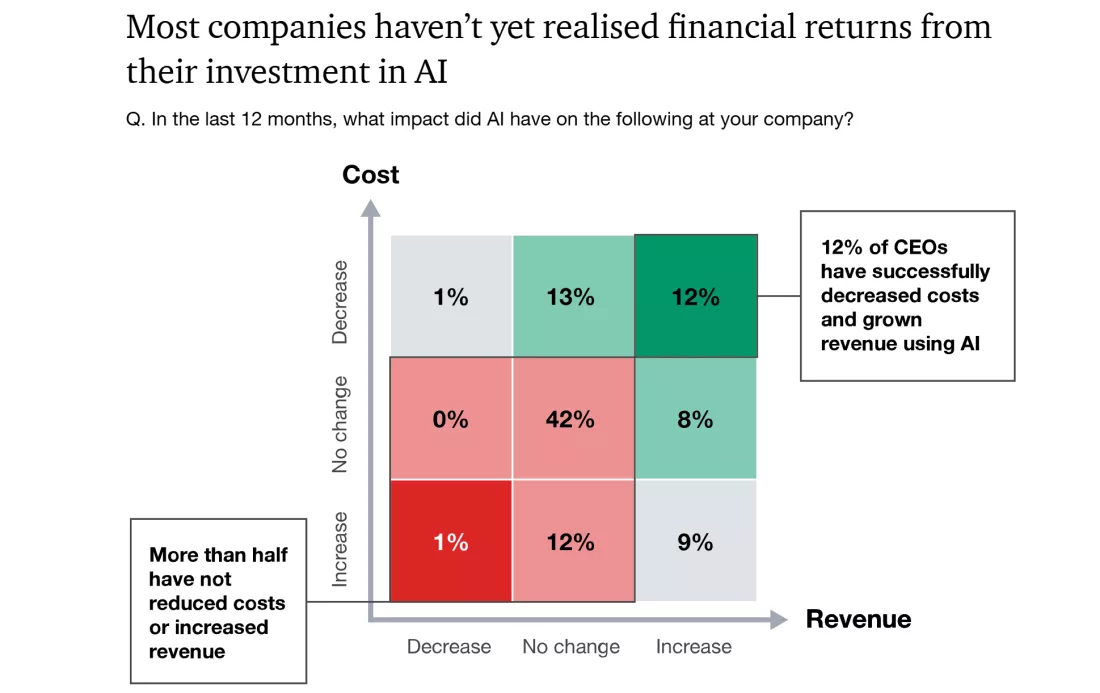
None of this should come as a shock to anyone paying attention to similar surveys. In January, PwC's latest Global CEO survey, completed by 4,454 chief executive officers across 95 countries, revealed that 56% of CEOs had seen no cost or revenue benefits since introducing AI to their businesses.
"Ask ChatGPT why we aren't making more money"

There was also a 2025 MIT report that said 95% of AI implementations don't increase profits, while a 2024 survey found generative AI could actually be harming productivity at work.
So, what does Gartner recommend companies actually do? For starters, agree on what they're trying to achieve. Its survey of 297 chief HR officers found that 78% reported no agreement among leaders on where AI creates value. Apparently, that discussion can wait until after the money has been spent.
Gartner wants businesses to focus investment where AI can make a difference, help managers redesign work, and use their existing AI expertise. It also recommends doing something useful with the time employees save. Just 21% of the time freed up by AI went toward more innovative work. Meta's CTO would probably have a lot to say about that part.