Forward-looking: The competitive landscape in automotive technology is evolving quickly, with manufacturers investing in sensor development, predictive software, and conversational AI integration. GM is betting that a combination of robust sensor technology and AI-driven personalization will attract new customers – and perhaps redefine expectations for what a car can do.
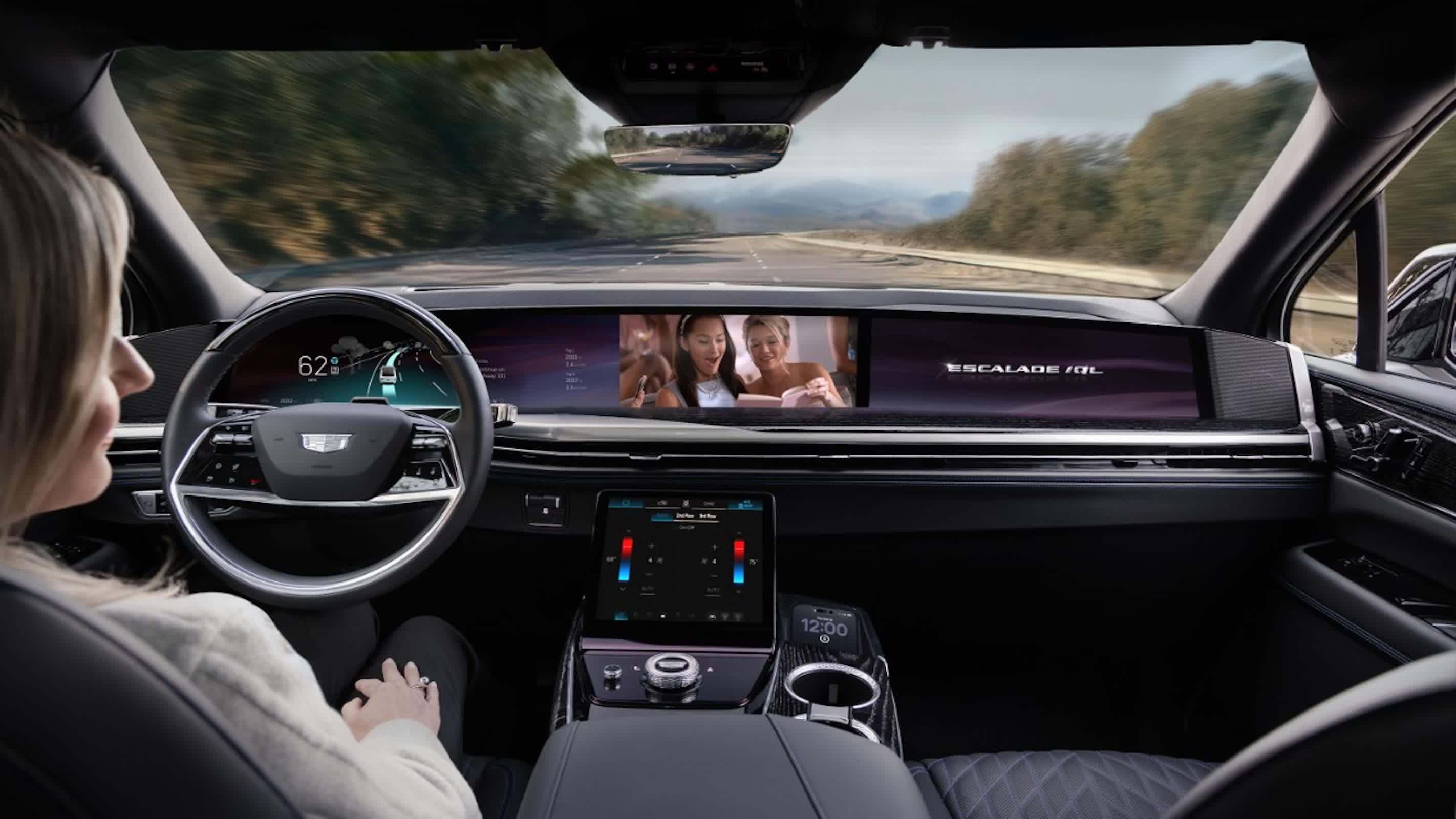
General Motors will debut an "eyes-off" automated driving system on the electric Cadillac Escalade IQ in 2028, expanding its self-driving technology for consumer vehicles. The feature builds on GM's Super Cruise experience and Cruise subsidiary's research.
GM's new system is designed to allow drivers to disengage entirely on select mapped highways, letting them work or relax during transit. The system uses a combination of lidar, radar, and visual sensors to scan the driving environment continuously. In contrast to systems that rely solely on cameras, GM's approach uses sensor fusion to integrate multiple sources of input and maintain situational awareness and navigation accuracy.
The automaker reports that drivers will be notified with haptic, audio, and visual alerts when their attention is required, as the vehicle approaches an exit ramp or encounters situations that require manual control.
If the driver does not respond, the vehicle is programmed to locate a safe place to stop. This approach reflects lessons learned from recent years in automated driving technology, with engineers emphasizing that handover from autonomous operation to driver control must be managed with explicit, multi-modal warnings.
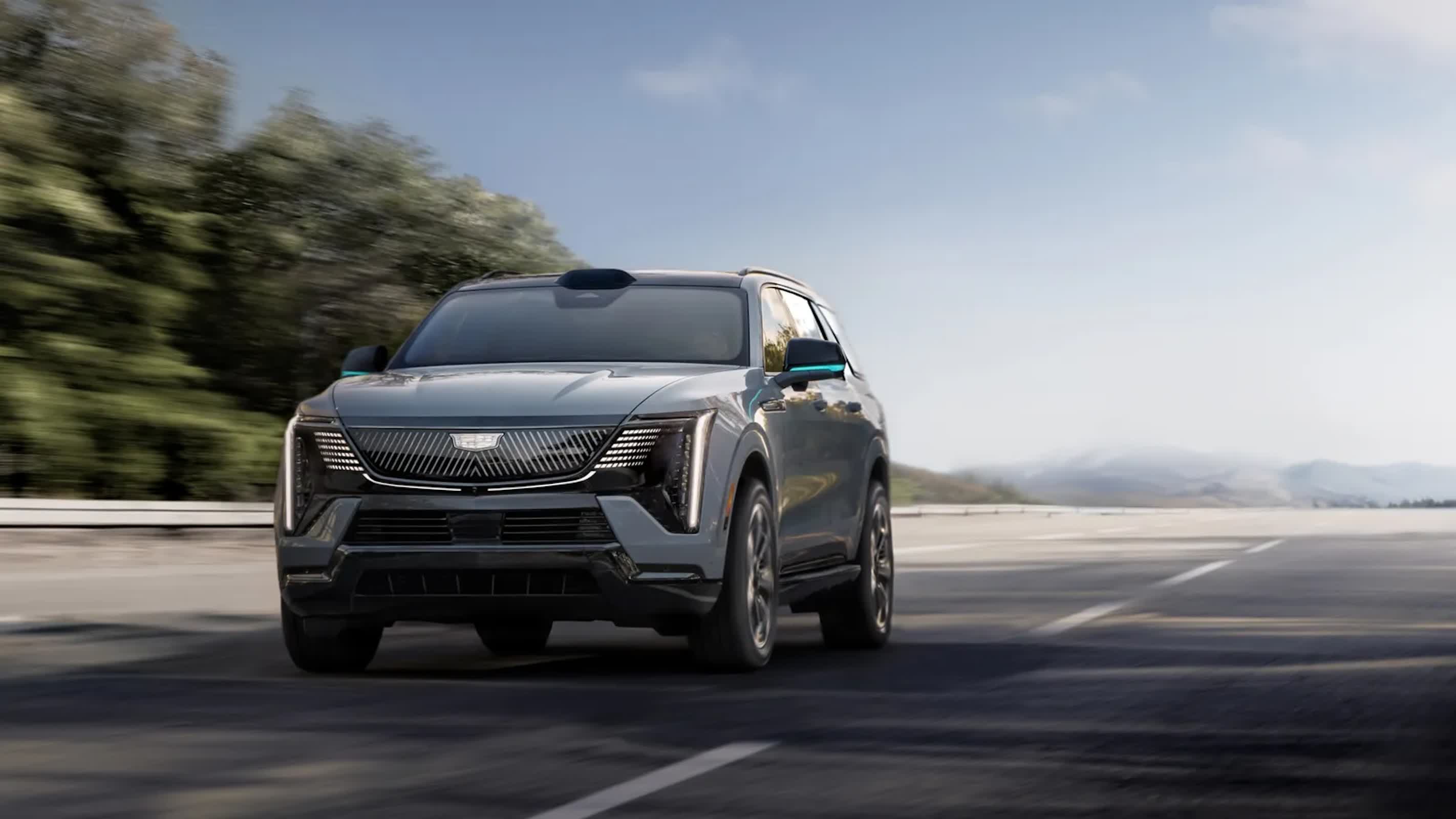
The Escalade's wing mirrors will glow blue to show when the vehicle is in self-driving mode
GM is expanding its AI features across the vehicle lineup. Beginning next year, select models will feature Google Gemini, letting drivers use conversational commands for navigation and other tasks. GM also continues to develop its own AI platform to learn and retain driver preferences, including favorite music, seat settings, and vehicle maintenance alerts.
The upcoming capabilities are supported by a centralized computing platform launching with the 2028 Escalade IQ. Centralized controls enable easier, faster updates and support ongoing improvements without requiring extra steps from the owner.
The 2028 Escalade IQ will introduce a centralized computing platform, enabling GM to push software updates and new features to its vehicles quickly. By centralizing controls, GM hopes to make cars more personalized and responsive without extra effort from owners.
GM's initiative is poised to compete directly with other manufacturers investing in autonomous driving. Unlike Tesla's Full Self-Driving (Supervised), which is rooted in camera-based vision, GM is betting that a multi-sensor approach will offer greater safety and reliability. The technology is being overseen by Sterling Anderson, now GM's executive vice president of global product, whose credits include building Tesla's Autopilot system. Anderson argues that expecting drivers to be ready at a moment's notice has proven ineffective and calls for clearer boundaries between autonomous and manual control.
GM's goal is to resolve problems for drivers that may not yet be apparent, enabling frictionless, intuitive vehicle interactions. Whether features such as "eyes-off" driving or personalized AI platforms will prove decisive for consumers remains to be seen. Still, the automaker is positioning itself to have the technical infrastructure to deploy future advances as they emerge.
General Motors to launch eyes-off self-driving Cadillac Escalade IQ


