What we know so far: Rivian is betting its future on artificial intelligence as the cornerstone of fully autonomous vehicles, even as financial losses and a tougher electric-vehicle market challenge the young automaker. At its "Autonomy and AI Day" event in Silicon Valley, the company unveiled new details of its autonomy roadmap, highlighting plans to expand hands-free driving capabilities and accelerate the development of in-house AI-focused hardware and software.
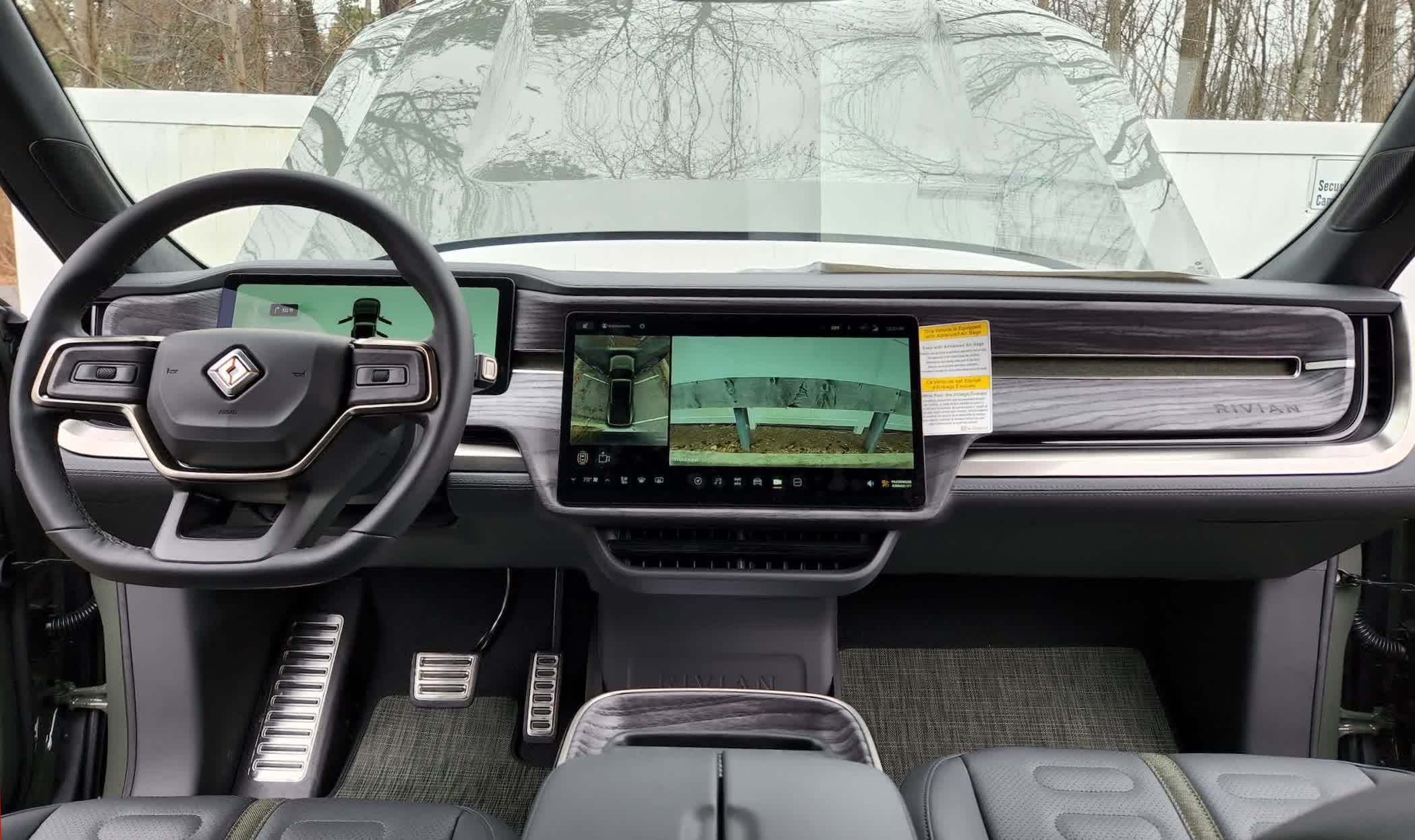
Later this month, Rivian will expand its hands-free driving system to cover 3.5 million miles of roads across North America – more than 20 times its current coverage. The system, available on second-generation R1 trucks and SUVs, will no longer be limited to divided highways. Vehicles equipped with the updated autonomy suite will be able to maintain lane position, manage speed, and navigate most well-marked roads.
The technical backbone of this expansion is Rivian's new proprietary computer chip, designed to process the massive influx of sensor and camera data required for advanced driver assistance and autonomous navigation.
Similar to Tesla's custom silicon, Rivian's chip is central to what CEO RJ Scaringe calls a "data flywheel." As more Rivian vehicles travel public roads, the onboard systems collect real-world driving data, which is then used to train and refine the company's AI models. At the event, Scaringe described this as a self-reinforcing loop: better data produces better driving performance, which attracts more drivers and generates even more data.
Tesla Full Self-Driving capability demo in Austin
– Tesla (@Tesla) October 17, 2023
FSD capability features use vision neural networks to perceive & understand the world, just like humans do.
Via our unique fleet learning approach, we are able to collect anonymized data from our vehicles – meaning the neural... pic.twitter.com/CWAS5h0jGH
This AI-first pivot represents a clear departure from Rivian's earlier strategy. In 2022, the company abandoned its rules-based self-driving program in favor of building its autonomy stack from scratch.
Rivian plans to introduce point-to-point navigation next year, allowing vehicles to operate hands-free for entire trips. Scaringe also outlined a longer-term vision in which Rivian models could handle all aspects of driving – eventually enabling passengers to read, work, or even send the car on errands independently. A timeline for "eyes-off" capability or full autonomy has not been set.
Rivian intends to monetize these features starting in March 2026. The hands-free system will cost $50 per month or a one-time fee of $2,500, undercutting Tesla's current pricing of $99 per month or $8,000 one-time for its comparable driver-assistance product. Scaringe noted that the pricing model could evolve as performance improves.
Rivian joins several automakers pursuing advanced autonomy as a competitive differentiator. General Motors plans to introduce "eyes-off" functionality on its Super Cruise system by 2028, beginning with high-end Cadillac EVs, while Lucid Motors continues to invest heavily in its own autonomous platform.
Rivian expands hands-free driving system, builds proprietary AI chip


