Ripple effect: Just like any other big tech corporation these days, Google is investing massive sums in turning AI into a new money-printing machine. The actual results are still not there, and the company might be willing to test its users' tolerance to make an even more mainstream business out of Gemini.
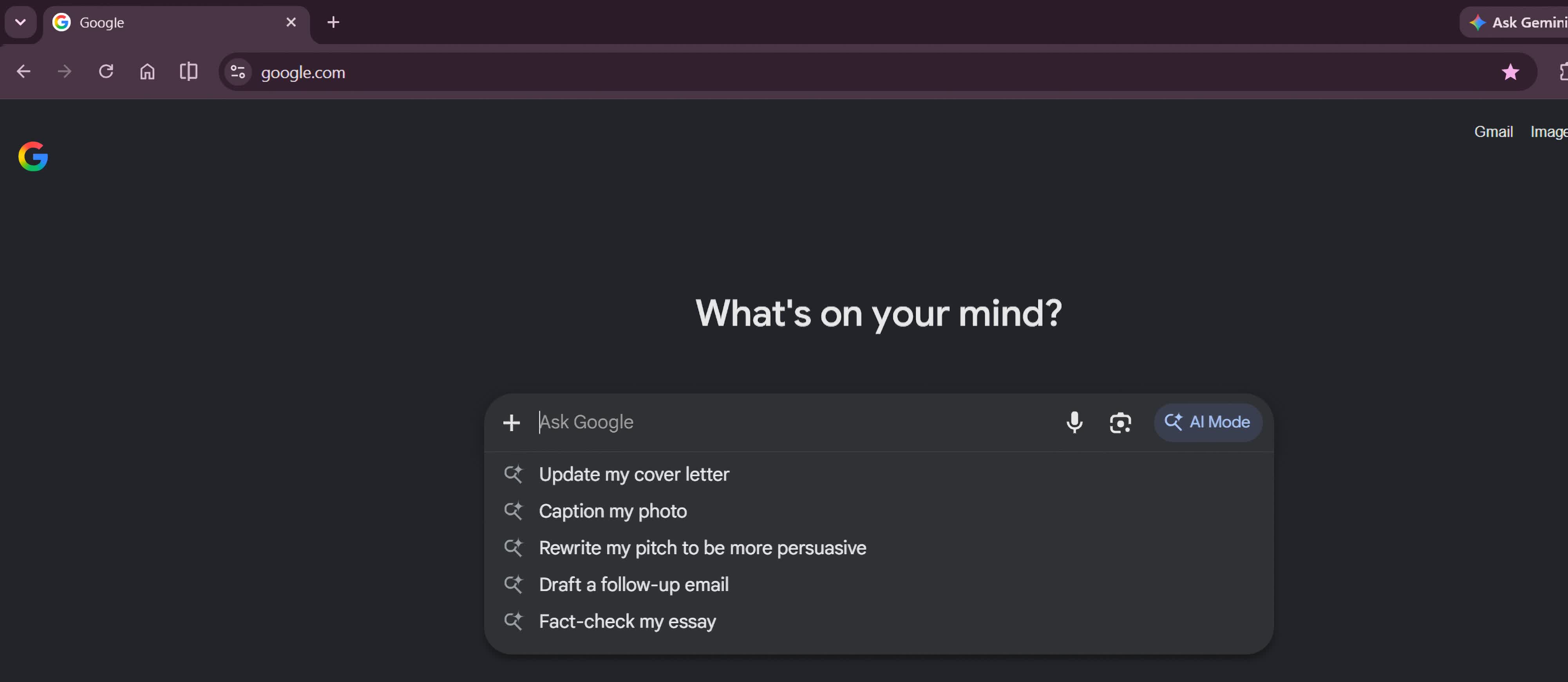
Google first introduced AI Mode in March 2025, explaining that the experimental feature would bring more Gemini-based capabilities to its traditional Search experience. About a year later, Mountain View could be ready to go all-in on AI, chatbots, and AI agents, having already swallowed up traditional web content, the advertising business, and the free web browser market.
As spotted by Search Engine Watch, Google's latest "experiment" is a new Search homepage shown to users who have not signed into their Google Account. The new page encourages netizens to use more Google AI services, pushing traditional web search queries into the background.
The redesigned Search page eliminates the classic search button, adding three new choices in its place: "Create images," "Ask about files," and "Brainstorm."
Meanwhile, the "I'm Feeling Lucky" button is still available at the bottom right of the search box. While "Create images" still requires users to sign in, the other buttons can apparently be used without logging into a Google account.
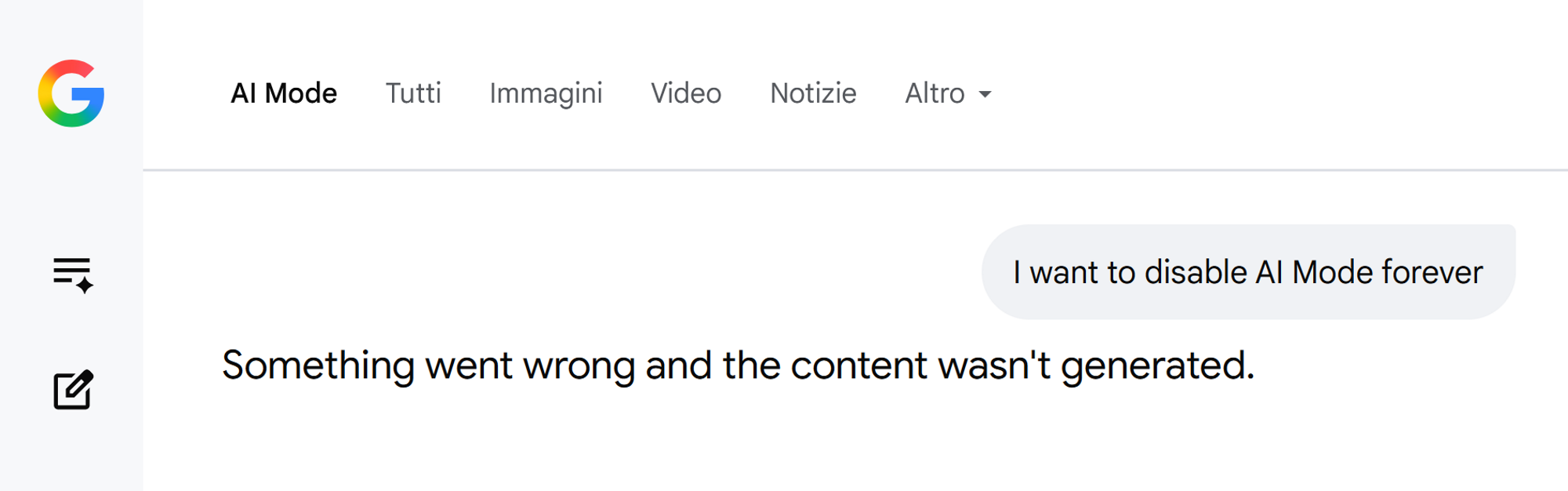
The Ask about files feature lets users upload their own file, providing a chatbot-like experience for asking specific questions about its content. Brainstorm, meanwhile, brings the search experience straight into Gemini's AI Mode.
SEW says the AI-based homepage changed back to the original design after logging in. The search box and the two main interaction buttons at the bottom were still there, while AI Mode remained a heavily advertised, albeit optional, way to interact with Gemini directly from within the main search box.
So far, Google has not offered any word on the new AI-heavy Search experience the company is supposedly working on. Mountain View might eventually describe the feature as yet another volume-limited test the wide public was never supposed to see, but these "errors" are starting to pile up, turning into solid proof that something bigger is coming for the web's most popular search engine.
Judging from early user reactions, few are excited to switch to the brand-new AI search page. That reaction goes along a legal record that already isn't doing Google any favors: a US federal judge ruled in 2024 that the company runs an illegal search monopoly, a decision it's still appealing. Meanwhile, Penske Media, owner of Rolling Stone, Variety, and Billboard, is one of the larger publishing houses capable of suing Google over how its AI Overviews lean on publisher content without sending readers, or revenue, back their way.
Google is being accused of abusing its monopolistic market position to turn the entire web into a Gemini-powered chatbot experience, which is already having extremely detrimental consequences for content creators and independent publications (like TechSpot).
Put in Google's capable hands, the dead internet theory is now a self-fulfilling prophecy.
Google is testing a new homepage that buries the search button for AI

 I haven't used Google for a long, long, long time. This certainly will not get me to come back to it.


