Rumor mill: Alphabet's Google is preparing a significant test of how it displays online search results across Europe, a move aimed at defusing a widening conflict with EU regulators over antitrust concerns. People familiar with the plan told Reuters that the company will soon begin experimenting with formats designed to give rival services greater automatic visibility in categories such as hotels, flights, and restaurants.

The initiative is intended to demonstrate compliance with the European Union's Digital Markets Act, a sweeping set of competition rules that took effect last year. Regulators in Brussels allege that Google's search engine gives undue prominence to its own travel and hospitality services, limiting user exposure to competing vertical search platforms specializing in bookings and price comparisons.
According to a person with direct knowledge of the matter, Google's upcoming trial will, by default, display top-ranked vertical search engines for relevant queries. These rival services will appear alongside Google's own results rather than being buried several links down the page.
For example, when a user searches for hotels in Paris or flights to Berlin, the revised layout will feature competing platforms at or near the top of the results page. Below them – or interspersed in some cases – Google will continue to display dynamic data feeds from businesses such as airlines, restaurants, and transportation providers.
The company plans to roll out the first phase of the tests across Europe, starting with lodging-related searches before expanding to flights, dining, and other categories. Specific timelines and technical details have not been publicly disclosed, and the European Commission declined to comment on the planned trial.

Google's search results have long formed the backbone of its business model, an intricate architecture powered by ranking algorithms and real-time data feeds that underpin the world's dominant internet search engine. Yet, in the view of the European Commission, those same mechanisms also make it one of the most powerful gatekeepers in digital commerce.
The European Commission argues that favoring in-house services such as hotel and flight modules integrated into search results gives Google a structural advantage and may violate the Digital Markets Act's requirement for equal treatment of competing services.
Noncompliance carries significant financial risk. Violations of the law can trigger fines of up to 10 percent of a company's global annual revenue. Google has already paid roughly €9.71 billion (about $11.5 billion) in EU antitrust penalties since 2017 for separate infractions involving advertising and mobile software practices.
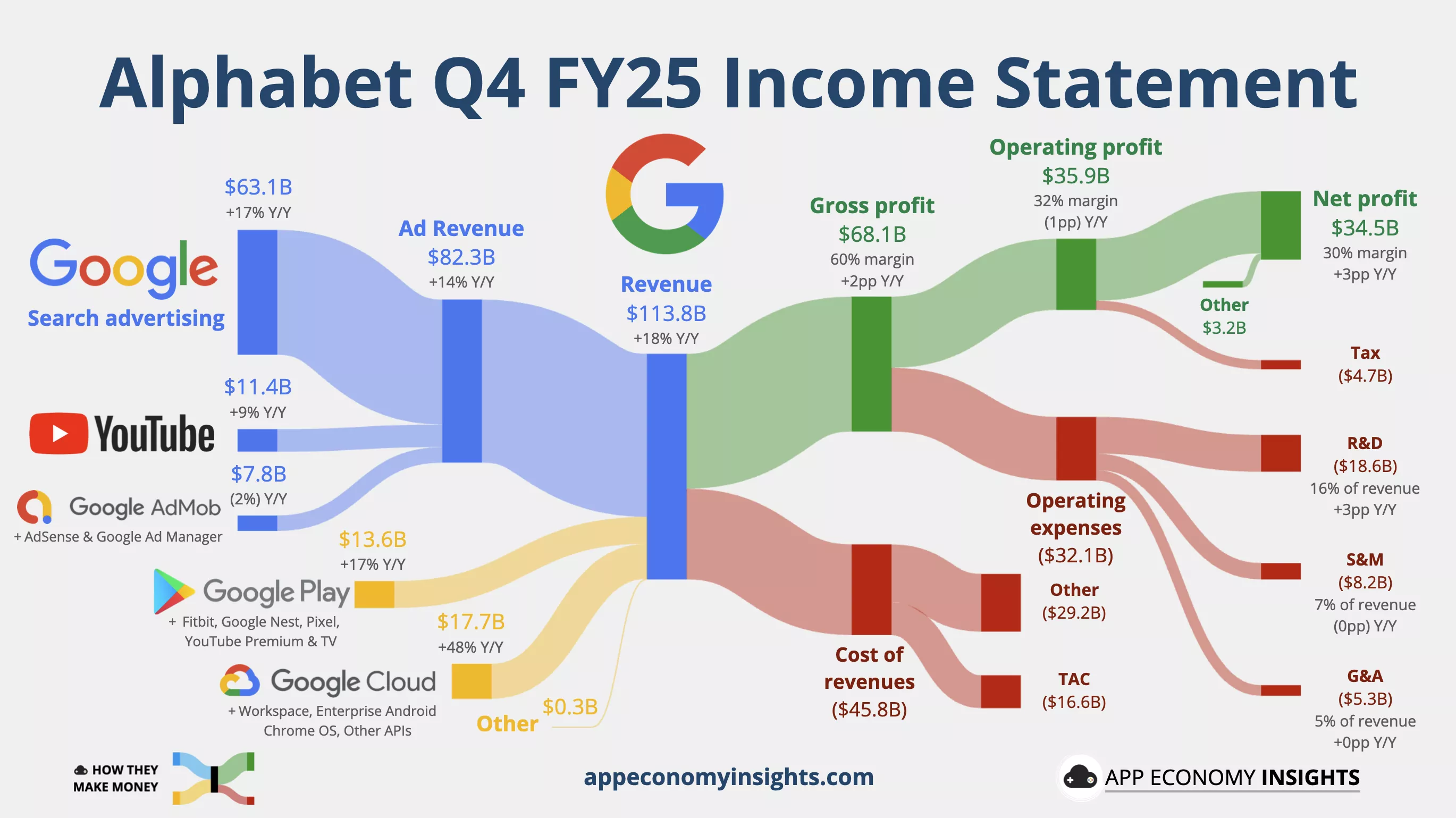
Credit: App Economy Insights
While Alphabet Inc. has proposed several compliance frameworks since being charged last March, it has not yet fully implemented them. Rival companies and industry groups have argued that earlier proposals failed to deliver meaningful structural change. The planned search interface update represents Alphabet's most concrete adjustment so far.
Whether the changes will satisfy the EU's strict competition standards remains uncertain. For now, Google appears willing to modify the core architecture of its flagship product rather than risk another round of multi-billion euro sanctions.
Google prepares search overhaul in Europe, will boost rival services to satisfy EU rules


