What we know so far: Following years of leaks and speculation surrounding Google's rumored ChromeOS replacement, the company this week finally unveiled its Googlebook product line. The search giant has struck deals with several established PC OEMs to design, manufacture, and market Googlebook devices.
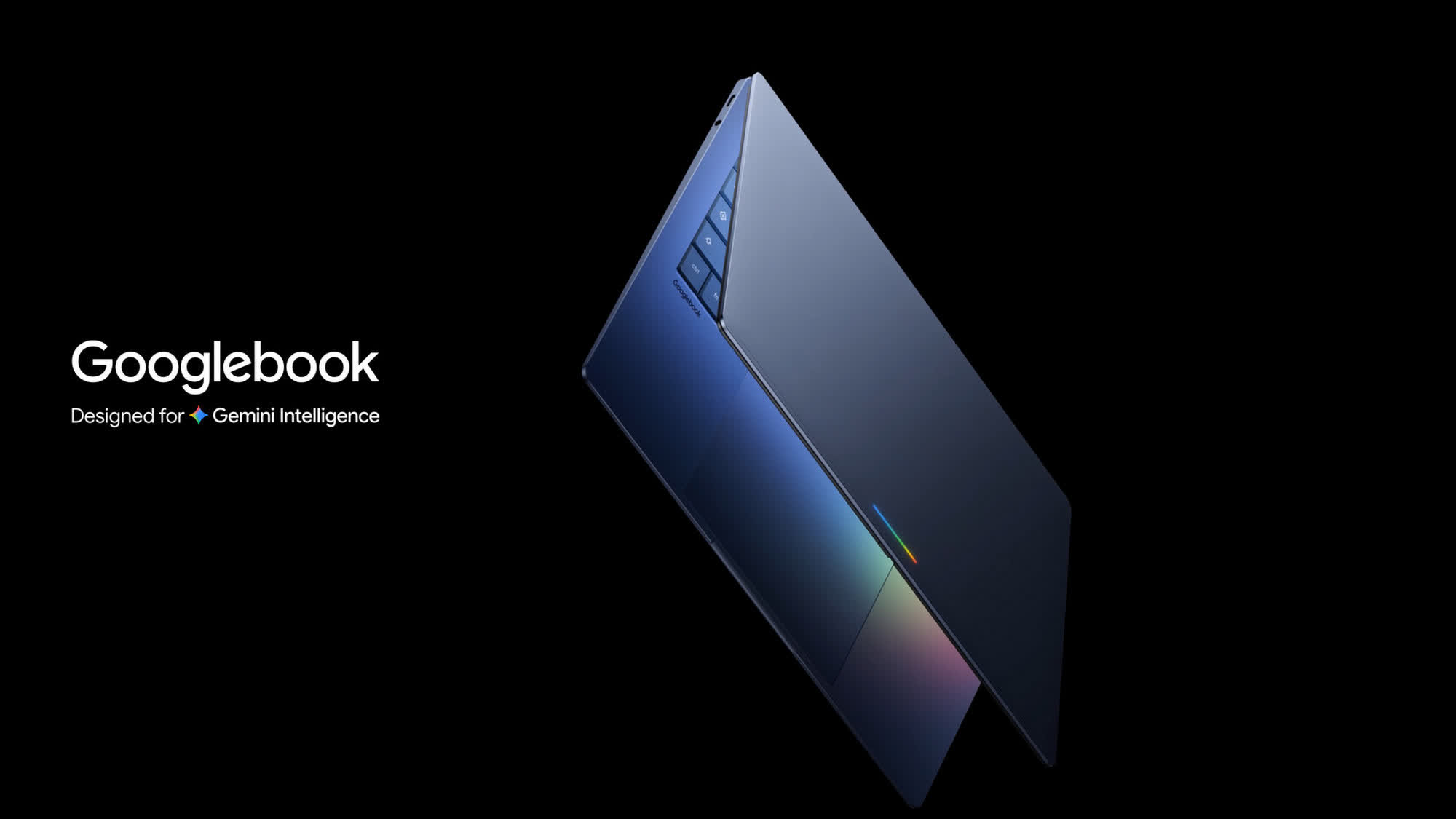
In an interview with Chrome Unboxed, Google VP John Maletis claimed that, unlike Chromebooks, Googlebook will be positioned as a premium brand offering a high-end user experience. He added that although the devices will be manufactured by third-party OEMs, Google will enforce strict hardware guidelines to ensure a consistent experience across all models.
Google has partnered with Lenovo, Acer, Asus, HP, and Dell to manufacture Googlebooks, though Maletis noted that the companies will only be permitted to use components approved by Google.
To that end, the company has tapped Intel, Qualcomm, and MediaTek to supply processors for the first generation of Googlebooks. AMD is apparently absent from the initial lineup, meaning Ryzen-powered Googlebooks are unlikely to arrive anytime soon.
Maletis did not confirm the exact processors, but online rumors suggest that Intel's Core Series 3 "Wildcat Lake" lineup will power at least some Googlebook models.
The Wildcat Lake family reportedly incorporates up to six CPU cores in a 2P + 4LPE configuration, along with Xe3 integrated graphics. The chips are also designed with a low TDP, as Intel aims to strike a balance between performance and power efficiency for ultrabooks and entry-level laptops.
Google is also reportedly enforcing strict memory and storage specifications, while even selecting keyboard layouts in an effort to standardize the Googlebook experience. The company believes this approach will help the platform avoid the fragmentation commonly associated with the Android ecosystem and better compete with devices such as the MacBook Neo.
Googlebooks will also mark the return of the Glow Bar, originally introduced with the 2013 Chromebook Pixel. According to Maletis, the Glow Bar was a "well-received and well-loved" feature that will help Googlebooks stand out from competing devices. He added that the Glow Bar will provide lighting effects designed to mimic real-world workflows on the device.


