In brief: Years of leaks and statements from Google have teased the company's plans for ChromeOS to evolve into a more direct competitor to Windows and macOS. Googlebook represents a first major step in that direction. Centered on Gemini, the new OS brings Android's software stack into a full-blown PC environment.
Google devoted much of its Android Show event to Googlebook, a new operating system and product line designed to replace Chromebooks, with an emphasis on both local and cloud processing.
While turning Android into a laptop and desktop operating system alone represents a significant step for Google, the presentation made it clear that Gemini integration was the headline story.
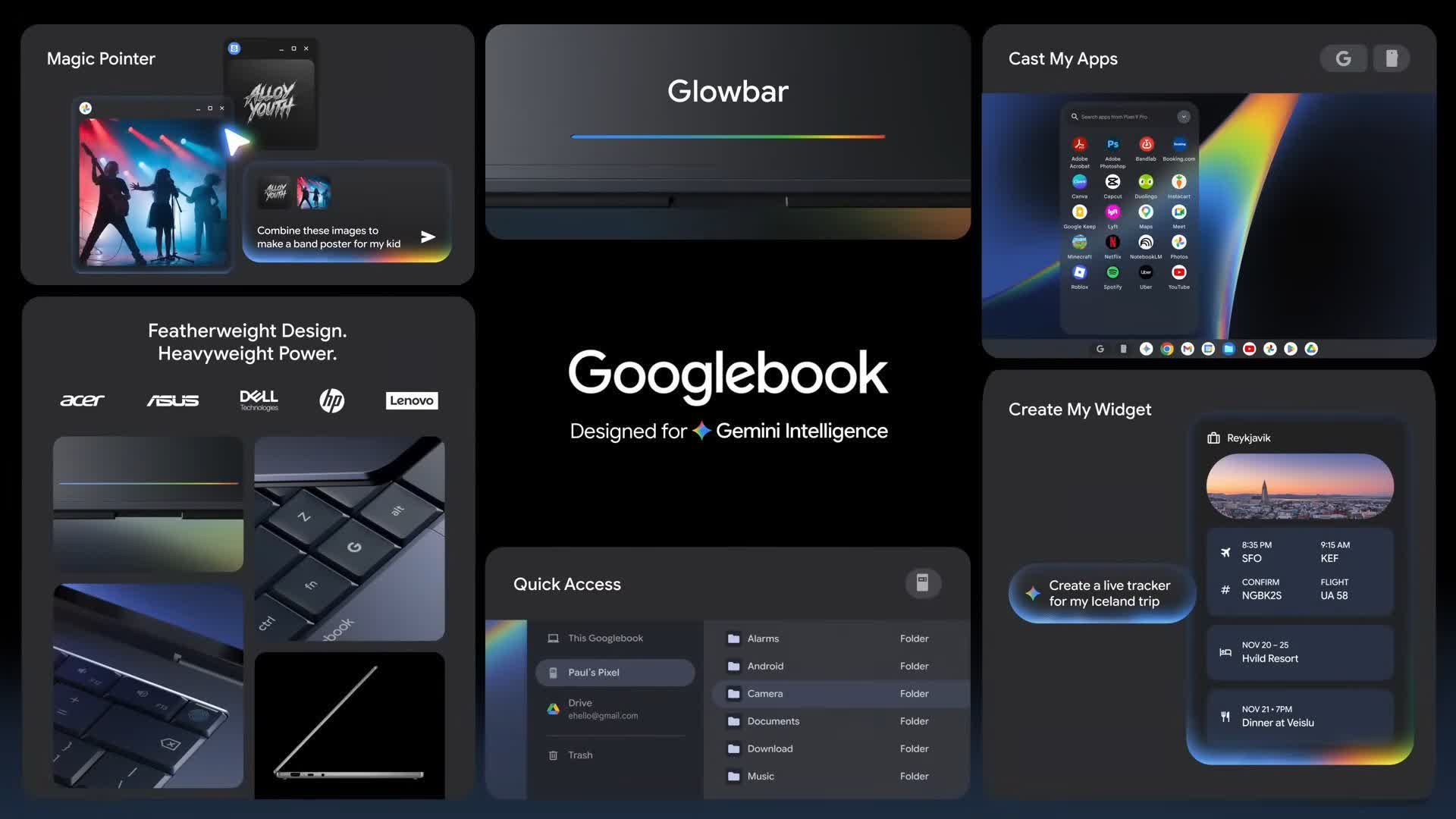
The company describes Googlebook as an evolution from an OS to an "intelligent system," with generative AI woven into many of its core functions. Much of this integration occurs through new cursor functions, which Google describes as the most significant addition to the mouse since the introduction of the right click.
Wiggling the cursor activates an AI mode that automatically consults Gemini whenever users hover over images, text, or user interface elements.
For example, users can quickly ask Gemini about various topics by hovering over text, make plans by clicking on a date and time, or combine multiple images by dragging them together. Users can also create widgets using prompts.
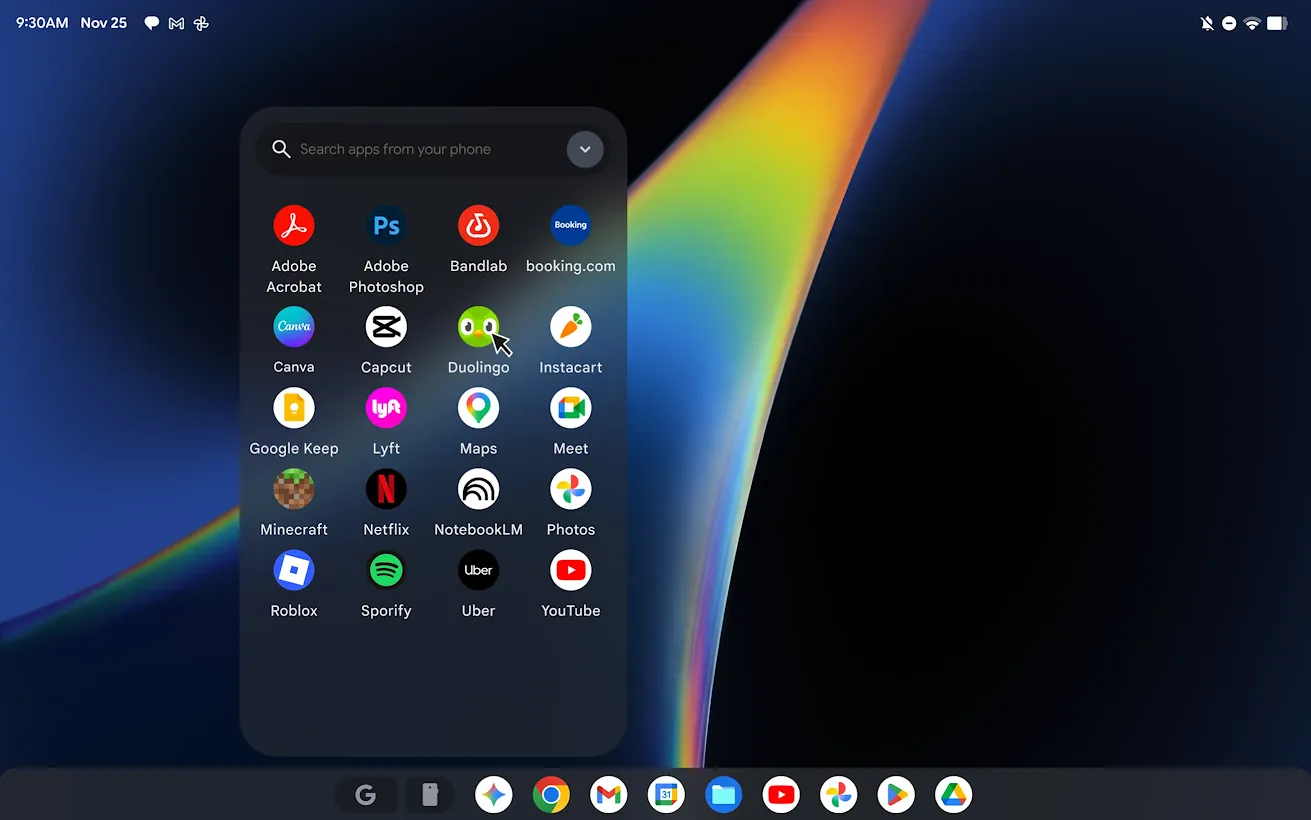
Phone integration was a second major theme of the presentation. Mirroring a feature Apple offers between iPhone and Mac, Googlebook can surface everything on a connected Android phone, including apps and locally stored files, inside a small window with no need to unlock the device.
Hardware partners at launch will include Acer, Asus, Dell, HP, and Lenovo, with devices expected later this year.
Reports about a new Google desktop OS, codenamed Aluminium, initially leaked in 2024. The following year, the company confirmed its plans to combine Android and ChromeOS into an AI-centric OS, and a job listing suggested the new OS would ultimately retire ChromeOS entirely.
Video clips that emerged in January offered an early look at integrations with Google Chrome and the Play Store, alongside a user interface blending elements from both Android and ChromeOS. Those leaks also hinted at broader ambitions: Googlebook is expected to eventually support tablets, cloud-based notebooks, 2-in-1s, and desktops running both Arm and x86 processors.
The Android Show also featured major updates to Android Auto and Gemini on Android phones.