Google's CEO says "vibe coding" is reshaping who gets to write code

Skye Jacobs

Posts: 1,985   +58
Staff
Big quote: Sundar Pichai now talks about vibe coding in the same breath as blogging and YouTube – not as a metaphor for hype but as evidence that software creation is slipping further out of engineers' exclusive control. Google's CEO described a sharp rise in non-traditional coders shipping prototypes, filing first-time changelists, and putting working apps in front of decision-makers, even as he warned that AI-generated code still does not belong anywhere near large, security-critical codebases.
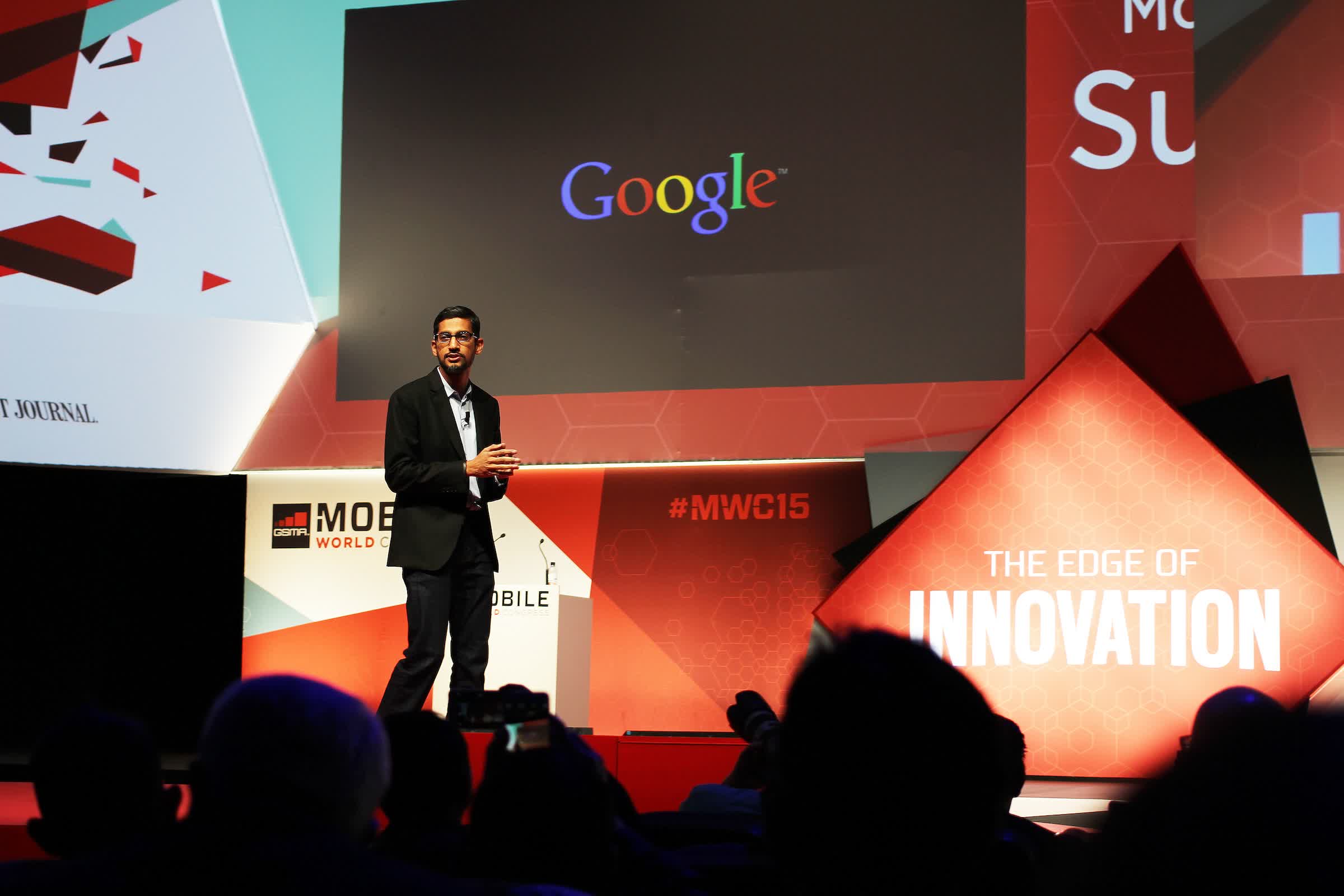
Pichai made the comments on a Google for Developers podcast with Logan Kilpatrick, who runs Google's AI Studio. The CEO said tools built on large language models are making coding "more enjoyable" and "approachable" because people can test ideas for apps and websites without wrestling with syntax or frameworks first. He argued that this shift is already visible inside Google's own repositories, where more employees are now submitting initial code changes.

Outside core engineering roles, office workers such as HR staff, accountants, and others are using tools like ChatGPT, Gemini, Claude, and Replit to assemble simple applications by describing workflows, data flows, and interfaces in natural language. Pichai said that instead of drafting a spec and hoping an engineering team interprets it correctly, these users can now arrive at meetings with a running demo, "vibe coding" their way to something tangible enough for colleagues and leaders to react to.

That pattern is showing up at other large tech firms as well. Meta product managers have been generating prototype apps with AI tools and taking them directly to CEO Mark Zuckerberg. At the same time, Pichai reports a "sharp increase" in first-time changelists within Google as non-engineers lean on AI to help them cross the barrier into actual code contributions, even if those changes remain small and tightly scoped.
Pichai drew a clear line between this kind of experimentation and the software that underpins large, sensitive systems. He stressed that he is not applying vibe coding to extensive codebases "where you really have to get it right." He said teams responsible for security-critical components should have the final say on how far AI-generated code is allowed to go.

For now, many developers, including Pichai, see vibe coding as best suited to low-stakes tools and proofs of concept, even as its spread signals a broader rebalancing of who gets to build and ship software.

Permalink to story:

 
Human population: *makes their vibe coding touch critical systems quite a lot, without prior warning*
 
Using AI to vibe code at work should be considered stealing. It's great for prototyping and coming up with proof of concepts, but I find that any code I want to implement seriously has almost as much time editing it than just writing it from scratch
 
Using AI to vibe code at work should be considered stealing. It's great for prototyping and coming up with proof of concepts, but I find that any code I want to implement seriously has almost as much time editing it than just writing it from scratch
Why should it be considered stealing? Should using Google be considered stealing? What about Notepad?

AI today is just fancy Google. "stealing" is one hell of a bridge to cross.
 
I'm wondering if that means Google is going to release CodeGemma 4. There's been a significant improvement in software quality since the rise of coding AI models.
 
I'm wondering if that means Google is going to release CodeGemma 4. There's been a significant improvement in software quality since the rise of coding AI models.
It's hard to compete with Claude for coding. I'm piggy backing off of someone elses Claude account currently, but I use it enough that I might just pay the $20/m for it. So far it's the only actually useful AI that I've played with.
 
The interesting balance here is that vibe coding expands who can participate, but it doesn’t eliminate the need for deep engineering. It just moves more of the trial-and-error to the edges, so core teams can focus on the parts where correctness actually matters.
 
Name one quality improvement in any piece of software, ever. We'll wait.
For example, llama.cpp was struggling for weeks to support Qwen Next (a very good local model for coding, by the way) until Gemini 3 came out. If you check OpenRouter, you’ll see that trillions of tokens are generated every day for coding tasks. I think today, over 50% of new code is written by AI.
 
Yeah, like I'd believe word one of what Google's CEO has to say. 😏

Remember their "Don't Be Evil" motto from back in the day?

Yeah, well, nowadays it's "Be Greedy and Fck Up Android Once A Day and Twice on Sundays".
 
Like an electrician saying: Sure you can do your own wiring in your shed. Just don't do it anywhere important.

Thing is with coding that you learn how things work as you do them. If you 'vibe code' and just have it spit out hundreds or thousands of lines of code you have no idea what the heck is going on. You run into a problem you might not know where to look as you haven't learned how it works. So yeah, it can be good for a quick prototype but then going from prototype to the actual thing you're working on something you don't know how it works.
Are you saving time? Who knows.

imo 'vibe coding' is great for two kinds of people. Those that really don't know how to code, and those that are EXCELLENT at it.
If you don't know how to code, it'll likely result in something usable and save a lot of time compared to learning how to do it yourself - heck, it might even be better.
If you're a seasoned veteran and know how to debug and are very quick at figuring out existing code bases it can speed things up as well.

If you're in between (which I assume is going to be the majority) you're better off using it to supervise your work, help you out when you get stuck and only generate small pieces at a time.
 
For example, llama.cpp was struggling for weeks to support Qwen Next (a very good local model for coding, by the way) until Gemini 3 came out. If you check OpenRouter, you’ll see that trillions of tokens are generated every day for coding tasks. I think today, over 50% of new code is written by AI.
The most I was ever able to get that was correct was 20 lines. About 50% of the time, even a single line of code won't run as AI writes it.
 
Back