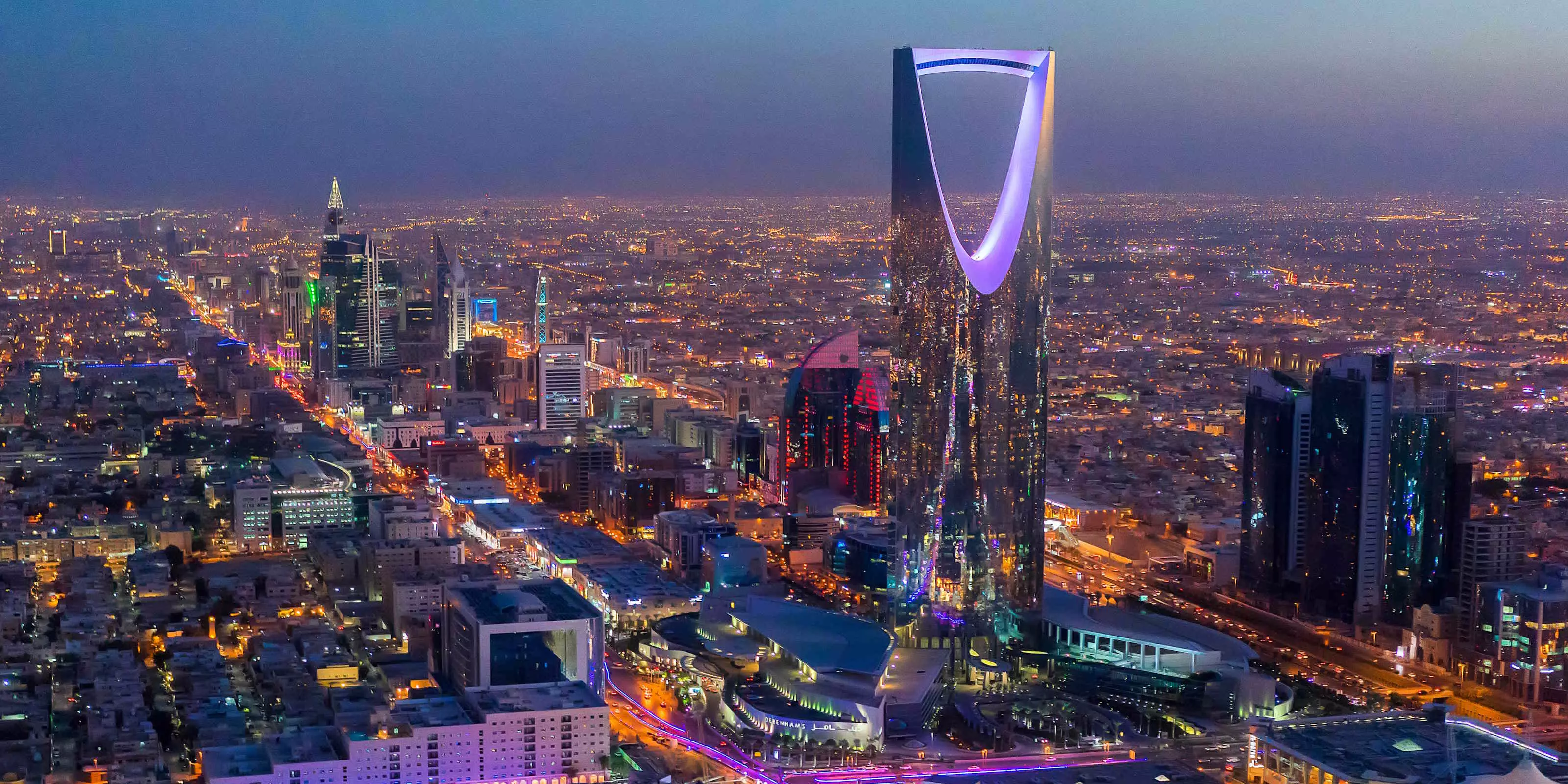
HP has begun producing computers in Saudi Arabia through a large-scale manufacturing partnership, marking one of the country's most significant technology investments under its Vision 2030 economic diversification program. The move makes HP the latest global hardware maker to anchor its supply chain in the kingdom, joining a wave of international firms expanding Saudi manufacturing amid a government push to position the country as a regional tech and logistics hub.
The US-based technology company has partnered with SAMI Advanced Electronics Company, a subsidiary of the Saudi Arabian Military Industries and owned by the Public Investment Fund, to establish a production plant in Riyadh. Operations began this month with the launch of HP's EliteDesk line of desktop PCs, the company's first locally manufactured systems optimized for artificial intelligence applications and enterprise use. Announced earlier this year at the LEAP 2025 technology conference, the site will produce millions of units before the end of the decade and expand into other HP product lines as operations scale.
HP has not disclosed the size of its investment, but executives say the Saudi Arabia production operation will expand rapidly as local demand grows. The Riyadh facility, along with HP's recently opened artificial intelligence research and development center in Dhahran, points to a long-term commitment to the Saudi market.
"Saudi Arabia is developing rapidly and needs partners who can move fast, invest, and create tangible value," said Fadle Saad, HP's managing director for the Middle East and North Africa.
HP's plans coincide with its decision to designate Saudi Arabia as a strategic production and logistics hub for the Middle East and North Africa. The initiative aims to build a more resilient supply network following the pandemic's disruptions to global manufacturing and transport.
Executives said that producing closer to end markets reduces shipping lead times, allows for customization to regional demand, and broadens HP's geographic footprint beyond Asia and Europe. The Riyadh facility, supported by new infrastructure investments across Saudi ports and airports, will also serve export markets across North Africa and the Gulf region.
The plant forms part of the broader "Remal" program – a technology manufacturing initiative launched jointly by SAMI, HP, and Foxconn to localize advanced digital production. The project focuses on transferring production engineering, quality control, and digital integration capabilities to Saudi engineers and technicians. SAMI executives described it as a step toward building a sustainable domestic technology manufacturing base and reducing dependence on imported hardware.
HP's investment aligns with a growing cluster of international technology manufacturing ventures in Saudi Arabia, many of them underwritten by the Public Investment Fund. Among the largest is ALAT, a $100 billion PIF-owned firm created to develop the kingdom's technology industries.
ALAT entered into a $2 billion partnership with Lenovo to produce personal computers and servers in Riyadh, with production expected to begin in 2026. Lenovo's facility, covering more than 200,000 square meters in the Special Integrated Logistics Zone, will employ thousands of workers and serve as the Chinese company's Middle East and Africa headquarters.
For Saudi Arabia, these projects represent a cornerstone of its Vision 2030's industrial strategy to attract global manufacturers and create high-skilled jobs. The government has promoted a "Saudi Made" labeling program now appearing on goods ranging from electric vehicles to consumer electronics.
HP is betting on Saudi manufacturing as the kingdom pitches itself as the Middle East's tech factory


