HP plans EliteBook X laptops with AMD, Intel, and Qualcomm chips in one lineup

Skye Jacobs

Posts: 1,913   +58
Staff
Rumor mill: HP's EliteBook X G2 laptops will feature AMD, Intel, and Qualcomm processors within a single chassis family, offering enterprise buyers access to three major CPU architectures under one business-class line. The multi-silicon strategy is designed to combine thin-and-light hardware and enterprise-grade security with a broader range of platforms than previous EliteBook X generations have provided.
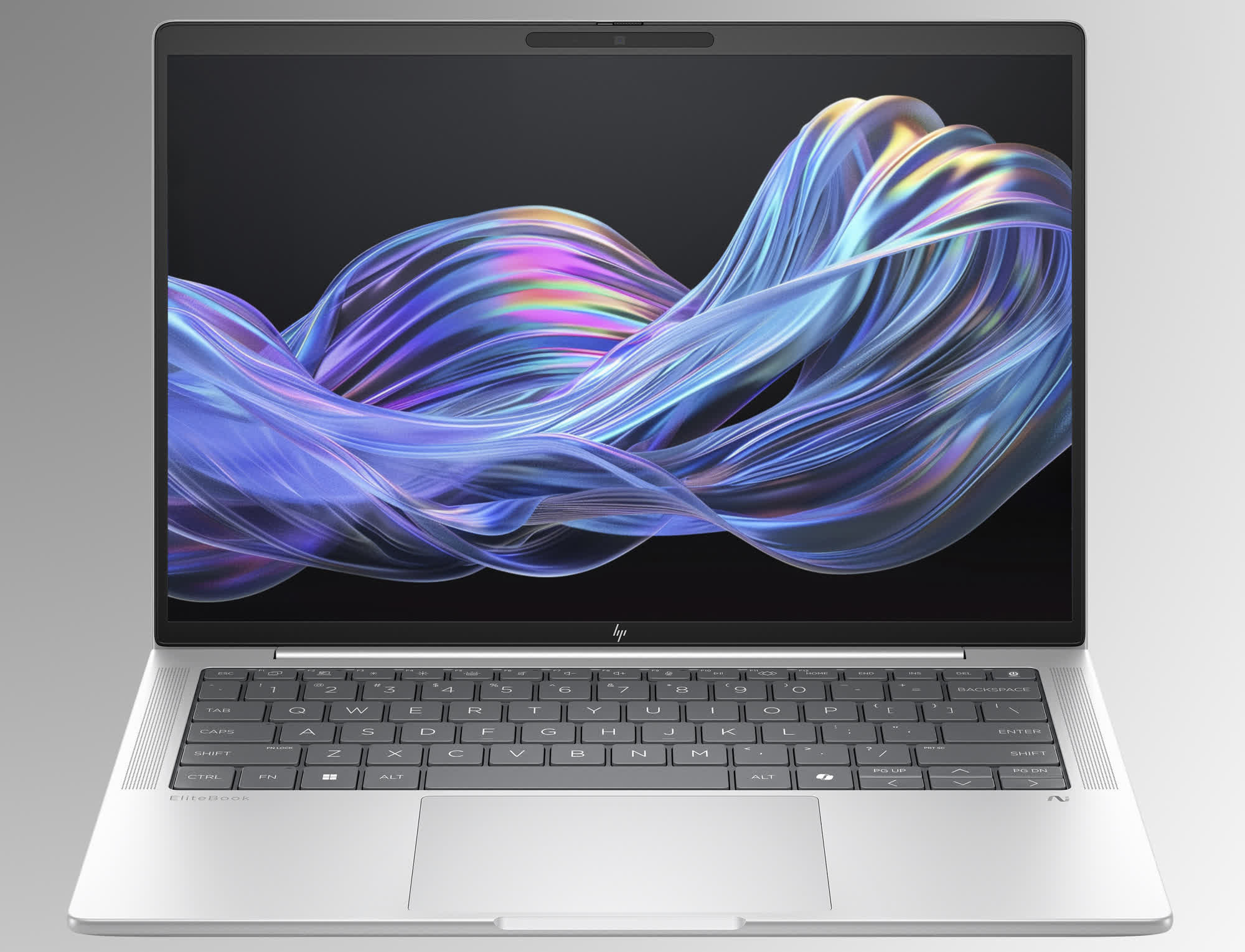
An internal HP roadmap for CES 2026 obtained by Windows Latest describes three near-identical models – EliteBook X G2a, G2i, and G2q – differing primarily in their use of Ryzen AI 400, Panther Lake Core Ultra, and Snapdragon X2-series processors, respectively.

The EliteBook X series represents the top tier of HP's business notebook portfolio, combining a thin-and-light form factor, enterprise-grade security features, and what HP markets as next-generation AI capabilities. The current generation includes the EliteBook X G1a, powered by AMD Ryzen AI processors, and the EliteBook X G1i, powered by Intel Core Ultra chips.

With the G2 generation, HP is expanding its dual-vendor strategy into a three-way architecture lineup. According to the leaked material, the new systems will be visually indistinguishable from one another.

Two of the upcoming models, the EliteBook X G2a and G2i, follow HP's existing naming conventions and are tied to next-generation AMD and Intel platforms. The G2a will adopt AMD's Ryzen AI 400 series, positioned above the current Ryzen AI processors used in the EliteBook X G1a. The G2i, meanwhile, aligns with Intel's Panther Lake Core Ultra platform, marking an update to Intel's latest architecture beyond the Core Ultra chips that power the G1i.

This transition is expected to bring new neural processing units and updated CPU and GPU blocks, optimized for AI-assisted workflows in Windows 11. The leak, however, does not include detailed configuration tables such as core counts, TDP ranges, or specific SKU mappings.
The most notable change in the EliteBook X G2 family is the introduction of the EliteBook X G2q, which brings Qualcomm into the business-class lineup. The "q" suffix in the leaked documents appears to indicate a Qualcomm-based configuration, with the device likely using a Snapdragon X2-series chipset.

Offering a Snapdragon X2 option provides HP with an Arm-based alternative to its x86 models, appealing to customers who prioritize battery life and Windows on Arm workloads.

All three EliteBook X G2 variants are reportedly physically identical, with no external indicators distinguishing the AMD, Intel, or Qualcomm versions. This suggests that HP is treating CPU choice as an internal configuration option, allowing enterprises to deploy a uniform fleet of EliteBook X G2 laptops even when mixing architectures across regions or departments.

For organizations considering how quickly to adopt new NPUs or Arm-based Windows systems, the G2 family's AMD, Intel, and Qualcomm options provide a way to evaluate each platform while keeping the rest of the hardware stack consistent.

Permalink to story:

 
I like the idea of Qualcomm CPUs and incredible long battery life. If they also achieve performance similar to AMD's APU, they could occupy a good portion of laptop market.
 
I like the idea of Qualcomm CPUs and incredible long battery life. If they also achieve performance similar to AMD's APU, they could occupy a good portion of laptop market.
Too bad there is very small difference in battery life between ARM and x86 based solutions. Not many reasons to go with Qualcomm.
 
Some things are mutually exclusive.
So you have to chose one:
1) incredible long battery life
2) performance
Apple would like a word with you. The M series are monstrously powerful AND have great battery life when you are not hammering them with work.

Qualcomm needs to either A) get their act together and fix their drivers, or
B) open source their drivers and firmware and let the FOSS market do it.

Qualcomm's GPU drivers are woefully terrible and the biggest reason performance lags behind. On paper and in synthetic loads Qualcomm is very competitive, but the moment you get to production software you have awful performance, bugs, glitches, and crashes galore. Oh yeah, and unlock the damn bootloader too!

Their CPUs need some tweaking but thereis absolutely something there. Maybe when nVidia gets their ARM chips out on the market and show Qualcomm how its done.
Too bad there is very small difference in battery life between ARM and x86 based solutions. Not many reasons to go with Qualcomm.
The only x86 platform that comes close to a Qualcomm laptop's battery life was the uniquely good Lunar Lake lineup. Arrow lake and AMD's llineup are lucky to get half the runtime on the same battery.
 
The only x86 platform that comes close to a Qualcomm laptop's battery life was the uniquely good Lunar Lake lineup. Arrow lake and AMD's llineup are lucky to get half the runtime on the same battery.
Majority of laptop power consumption usually comes outside CPU if not talking about high performance CPUs. That is, ARM CPU barely is main reason why battery life is better on ARM devices but that ARM laptops are built with that in mind. That is exactly same as "ARM is more efficient than x86" -misconception that comes from ARM focus on power consumption.

It's not that battery life suddenly gets miles better with Just changing CPU from x86 to ARM, extreme cases not included of course.
 
limited* performance. Just enough to play most PC games on medium in 1080p
Replaced big heavy tower with notebook in 2006.
Had to replace it (twice) by more powerful just to get 17~20 fps in 1080p Low in 2020.
Did some check.
It cheaper to have cheep(+) notebook (for portabililty and low demand things) and gaming desktop with 4k monitor (for more demanding gaming) than notebook able to do gaming in 1440p.

(+) Normal notebook instead of those thin, sleek, <1 lb things and without "gaming" in their name.
 
Majority of laptop power consumption usually comes outside CPU if not talking about high performance CPUs. That is, ARM CPU barely is main reason why battery life is better on ARM devices but that ARM laptops are built with that in mind. That is exactly same as "ARM is more efficient than x86" -misconception that comes from ARM focus on power consumption.

It's not that battery life suddenly gets miles better with Just changing CPU from x86 to ARM, extreme cases not included of course.
Lenovo built the same laptop with AMD, Intel, and Qualcomm parts.

The Qualcomm model destroyed the other two in battery life .

Dell produces the same laptop with arrow lake, lunar lake, and AMD parts.

Lunar lake destroys the other two in battery life.

Sure looks like the CPU matters.
 
Apple would like a word with you. The M series are monstrously powerful AND have great battery life when you are not hammering them with work.

Qualcomm needs to either A) get their act together and fix their drivers, or
B) open source their drivers and firmware and let the FOSS market do it.

Qualcomm's GPU drivers are woefully terrible and the biggest reason performance lags behind. On paper and in synthetic loads Qualcomm is very competitive, but the moment you get to production software you have awful performance, bugs, glitches, and crashes galore. Oh yeah, and unlock the damn bootloader too!

Their CPUs need some tweaking but thereis absolutely something there. Maybe when nVidia gets their ARM chips out on the market and show Qualcomm how its done.
The only x86 platform that comes close to a Qualcomm laptop's battery life was the uniquely good Lunar Lake lineup. Arrow lake and AMD's llineup are lucky to get half the runtime on the same battery.

I disagree with you. I have MBP 14 for two years. And I just bought AMD desktop, with Ryzen 7 from 5 series. There is no magic performance difference, Apple M doesn't win agaisnt my Ryzen in performance. Ryzen feels snapier, faster on work, and I can play video games on it. Gaming performance crushes Apple silicon. So it's kinda a marketing myth that Apple Silicon is the king of the performance, which I believied when I bought my MacBook Pro.

Yes, I love my MBP build quality, battery life. But the Magic of the Apple Silicon performance is just the marketing, Apple Silicon is just a good CPU, nothing fancy about it.
 
Last edited:
Lenovo built the same laptop with AMD, Intel, and Qualcomm parts.

The Qualcomm model destroyed the other two in battery life .

Dell produces the same laptop with arrow lake, lunar lake, and AMD parts.

Lunar lake destroys the other two in battery life.

Sure looks like the CPU matters.
Saying same you of course mean "same". First, different CPU require different chipset or at least CPU socket even if it's not swappable socket. Those things alone make laptop "not same" even when excluding CPU.

Also current CPUs allow tons of tweaks and/or optimizations for speed and efficiency. I doubt those were equal either.

What we need is fully tweaked CPU and then see what is CPU power consumption, CPU alone, nothing else. Then we can compare. Comparisons with "same laptop with different CPU" are basically useless.
 
Back