Intel CEO Lip-Bu Tan admits company is no longer a top 10 chipmaker

Skye Jacobs

Posts: 1,920   +58
Staff
Big quote: Intel, once the undisputed titan of the semiconductor world, is confronting a sobering new reality under the leadership of its recently appointed chief executive, Lip-Bu Tan. In a candid address to employees this week, Tan acknowledged that the company has slipped far from its former position at the top of the global chip industry.
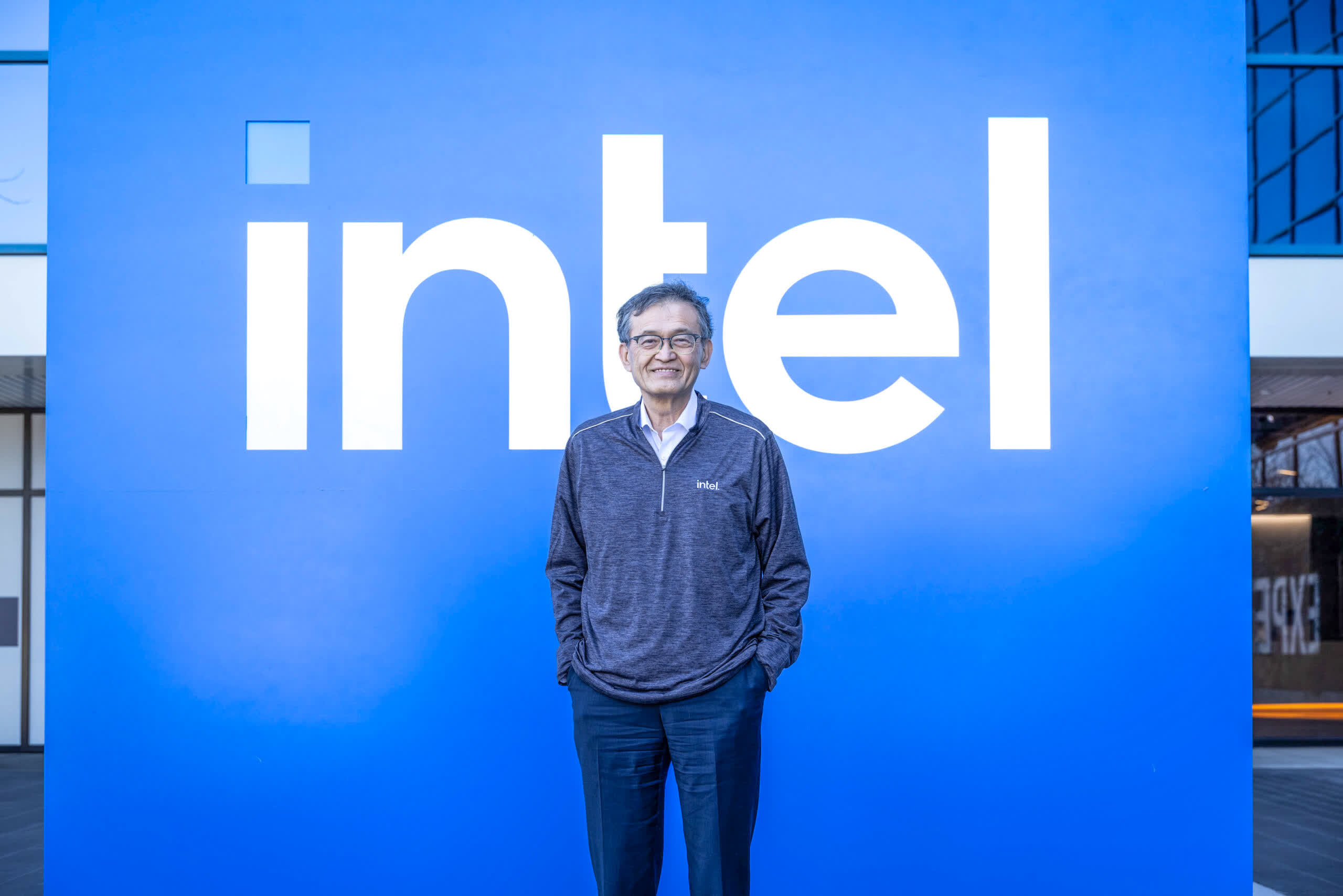
Tan, who took the helm in March following the departure of Pat Gelsinger, did not mince words about the company's diminished standing. Speaking to staff in a company-wide broadcast that was leaked to The Oregonian, he reflected on Intel's past dominance but stated plainly that those days are over.

"Twenty, 30 years ago, we are really the leader," Tan told employees. "Now I think the world has changed. We are not in the top 10 semiconductor companies." Tan has addressed employees and investors only a few times since his appointment and hasn't spoken to the media at all, so his comments offered a rare glimpse into his unvarnished view of Intel's place in a rapidly evolving industry.

Tan made the remarks amid a major restructuring effort at the company, with thousands of employees worldwide facing layoffs. Intel's market value has plummeted to just over $100 billion, less than half of its value at the end of 2023. This sharp decline stands in stark contrast to the meteoric rise of competitors like Nvidia, whose market capitalization recently soared past $4 trillion.
Tan attributed Intel's struggles to both internal shortcomings and the company's inability to keep pace with rivals in key technological arenas, particularly artificial intelligence. He acknowledged that customers have been dissatisfied with Intel's performance and conceded that the company is too far behind to catch up with Nvidia in developing advanced AI training technology. "On training, I think it's too late for us," the CEO said, adding that Nvidia's dominance in the sector is "too strong" to overcome.

Despite the grim assessment, Tan insisted that Intel's turnaround is possible, though he cautioned it would be a "marathon" rather than a sprint. The layoffs, he explained, are part of a broader effort to make Intel more agile and responsive, similar to its competitors, such as Nvidia, Broadcom, and AMD. Tan called on employees to embrace humility and to focus on listening to customers and adapting to their needs.

While Intel has struggled to gain traction in the booming market for AI accelerators, Tan remains optimistic about the company's prospects in emerging areas such as AI-powered personal computers, where Intel's chips remain competitive. Still, industry analysts warn that the loss of key engineering and leadership talent could hamper Intel's ability to innovate and regain its footing in an increasingly competitive landscape.

Permalink to story:

 
Gee it is like all that CHIPS money I called a boondoggle was in fact a boondoggle.

what a waste... oh and goooood job replubikans with the tariffs, you cant MaGa the semiconductor industry when your us based intel company will be bankrupt in the next 2 years and only amd (too small to save the US) and CHINA can produce enough cpus/fpgas to keep cars and banks running ... LOL.. _slow_golf_clap LOL ... Hell you cant even get samsung to open the new TEXASS FAB they built because tarrifs killed off all the customer demand hahaha
 
Ok so reading between the lines here, is the ARC Graphics card lineup toast?

We all knew the day was coming, but when the CEO says Intel ain't catching up to Nvidia in AI... then what's the point of releasing a dozen large under performing ARC cards?

I suspect Celestial will be the last one we see since it's probably too deep in the dev cycle to really be worth cancelling at this point...
 
You've slipped Mr. Tan because,

1. You ain't spending enough money to recruit talent
2. Your not creating that atmosphere for that talent to thrive
3. You can't rely on monopolies to work forever eg resellers pushing Intel chips
4. Your not innovating
5. You tried to copy AMD but done it all wrong. The whole ATI saga, but instead with ARC.
6. Oh wait - Donkey Balls 🐴 - Wrong post!
7. You diverged far too much!
 
Gee it is like all that CHIPS money I called a boondoggle was in fact a boondoggle.

what a waste... oh and goooood job replubikans with the tariffs, you cant MaGa the semiconductor industry when your us based intel company will be bankrupt in the next 2 years and only amd (too small to save the US) and CHINA can produce enough cpus/fpgas to keep cars and banks running ... LOL.. _slow_golf_clap LOL ... Hell you cant even get samsung to open the new TEXASS FAB they built because tarrifs killed off all the customer demand hahaha
The tariffs have a bunch of exceptions for chips.

Intel's fall is not the governments fault. It is purely their own. They pissed off their customers for years and once AMD caught up, a lot of people switched just out of spite. They made poor decisions and got lazy and now they are doing poorly. It's not rocket science.
 
Wow, not even top 10... that's even worse than I thought.

It's worth noting that Intel's problems mostly stem from strategic decisions made years ago that finally caught up with them.

Those problems were then worsened when their giant bureaucracy caused them to fumble a architecture shrink right as AMD was gathering momentum.

The latter is difficult to avoid, but the former is all on the previous executives. (Long since retired on their bonuses for short-term gains).
 
I don't recall in AMD's history that they were catching L after L on a constant losing streak like this. Even when cpu business was down ( Bulldozer)Radeon traded blows with GeForce. They need at least one win to end the losing streak. Hopefully B770 is still coming q4 as rumors have it.
 
Intel may be losing for the same reason AMD is falling behind—it's not about hardware anymore.

Today’s chips are incredibly advanced. They’ve packed in over 10 billion transistors for years now. But without the right software, even a much simpler processor—just 100 million transistors—can compete surprisingly well.

What matters now is the ecosystem. Software is the secret sauce. It’s the oil that keeps things moving, or the perfume that makes hardware irresistible. Nvidia got this right. They didn’t just sell graphics cards—they sold a vision, a platform, a future. That’s why they’re leading, while Intel and AMD are still playing catch-up.

To me a processor is more advanced than a GPU, yet the processor can't be too expensive in comparison to a GPU nowadays.
 
Ok so reading between the lines here, is the ARC Graphics card lineup toast?

We all knew the day was coming, but when the CEO says Intel ain't catching up to Nvidia in AI... then what's the point of releasing a dozen large under performing ARC cards?

I suspect Celestial will be the last one we see since it's probably too deep in the dev cycle to really be worth cancelling at this point...

As long as Intel makes CPUs, they'll need iGPUs; this has probably saved the Arc division so far. Whether discrete GPUs will remain, who can tell? But they've done well, reaching striking distance of AMD and Nvidia, and it would be a shame to throw away the progress. The Arc division needs something like Zen; but here, they're fighting on two fronts, competitors who are neither bogged down by 14nm-like woes nor putting forth their full power.

GN says that Intel's supply and lead times are some of the weaker links in the chain. Board partners have been selling Battlemage well, more than Alchemist, though dwarfed by the competition.

 
Last edited:
Intel rode the chip cash-cow right into the ground. They made tons of short-term profits while their fabs became antiquated and the tech they were developing was inferior.

They probably need to decide if they are going to operate as a foundry or as a developer. Trying to do both at once makes them less competitive. Samsung, Micron and TSMC have focused on making chips while Nvidia, AMD (after shedding Globalfoundries), Broadcom, Apple, and ARM (as well as others) are developing unique products for different markets.
 
Ok so reading between the lines here, is the ARC Graphics card lineup toast?

We all knew the day was coming, but when the CEO says Intel ain't catching up to Nvidia in AI... then what's the point of releasing a dozen large under performing ARC cards?

I suspect Celestial will be the last one we see since it's probably too deep in the dev cycle to really be worth cancelling at this point...

I'm probably dreaming here, but the idea of a newly humble and hungry chip maker, possibly with
fab capacity to spare, and a need to continue to making integrated GPUs, might see a business opportunity in making mainstream graphics cards for gamers.

Even better if their view that they already lost AI frees them from having to focus on AI capabilities first; from having motivation to cripple the consumer cards in for example VRAM so they don't cannibalize more expensive enterprise offerings; and from not even really wanting to sell to gamers at all due to making much more profit in another market.

Nvidia's ascendance and focus on AI has not been great for gamers nor gaming-first GPUs. Maybe that's an opening for Intel.
 
I'm probably dreaming here, but the idea of a newly humble and hungry chip maker, possibly with
fab capacity to spare, and a need to continue to making integrated GPUs, might see a business opportunity in making mainstream graphics cards for gamers.

Even better if their view that they already lost AI frees them from having to focus on AI capabilities first; from having motivation to cripple the consumer cards in for example VRAM so they don't cannibalize more expensive enterprise offerings; and from not even really wanting to sell to gamers at all due to making much more profit in another market.

Nvidia's ascendance and focus on AI has not been great for gamers nor gaming-first GPUs. Maybe that's an opening for Intel.

This seems possible but the question is…how much will NVIDIA do as Intel has done and once market share is threatened, use bottomless amounts of cash to bury the competition? Although the regulatory environment today is far different from the 2000’s I’ll grant you that. It’s ironic to think that Intel would need governmental protection so they can compete.
 
Gee it is like all that CHIPS money I called a boondoggle was in fact a boondoggle.

what a waste... oh and goooood job replubikans with the tariffs, you cant MaGa the semiconductor industry when your us based intel company will be bankrupt in the next 2 years and only amd (too small to save the US) and CHINA can produce enough cpus/fpgas to keep cars and banks running ... LOL.. _slow_golf_clap LOL ... Hell you cant even get samsung to open the new TEXASS FAB they built because tarrifs killed off all the customer demand hahaha

First, the tariffs aren’t even the issue here, you Trump haters are unbelievable, they didn’t kill demand, and they certainly aren’t why Samsung is hesitating on the Texas fab. The real challenge is a global supply chain still recovering from a pandemic, a talent shortage, and years of offshoring.

The CHIPS Act rollout hasn’t been smooth, but calling it a boondoggle while we’re in the middle of rebuilding a strategically vital industry is short sighted. These investments are about long term resilience, not instant wins.

And mocking the effort as if China winning the semiconductor race is something to cheer about? That’s not just misinformed, it’s dangerous thinking. We either rebuild at home, messy as it may be, or we stay dependent. But I digress, you would rather see Intel collapse just so you can blame Trump. News flash, he had nothing to do with it. Do some actual research.

Samsung’s own delay statements point to customer shortage, outdated process nodes, and a wait and see strategy, not tariff impacts and McKinsey and other leading sources confirm that while tariffs can marginally raise costs, they’re not the primary drag on chip fab operations.

If you’re going to call the CHIPS Act a boondoggle, at least anchor it in what’s truly happening. Otherwise, it just sounds like a hot take from a Trump hater with zero research behind it. But go ahead, do some actual research, you might learn something besides how to hate Trump, this gibberish is why your team lost the election.
 
If Intel "dies", I think it will spell the end of x86 chips. They are essentially going through what AMD went through before. I still hold to my opinion that it is not a good idea to cling on to their foundry business when they clearly don't have the means to sustain it. They should have instead given up the expensive foundry business and focus on hardware that has synergy with their core business. Did Apple, Nvidia and AMD suffer because they don't have their own foundry business? Not really. At this point, the foundry business is nice to have but not a must have.
 
First, the tariffs aren’t even the issue here, you Trump haters are unbelievable, they didn’t kill demand, and they certainly aren’t why Samsung is hesitating on the Texas fab. The real challenge is a global supply chain still recovering from a pandemic, a talent shortage, and years of offshoring.

The CHIPS Act rollout hasn’t been smooth, but calling it a boondoggle while we’re in the middle of rebuilding a strategically vital industry is short sighted. These investments are about long term resilience, not instant wins.

And mocking the effort as if China winning the semiconductor race is something to cheer about? That’s not just misinformed, it’s dangerous thinking. We either rebuild at home, messy as it may be, or we stay dependent. But I digress, you would rather see Intel collapse just so you can blame Trump. News flash, he had nothing to do with it. Do some actual research.

Samsung’s own delay statements point to customer shortage, outdated process nodes, and a wait and see strategy, not tariff impacts and McKinsey and other leading sources confirm that while tariffs can marginally raise costs, they’re not the primary drag on chip fab operations.

If you’re going to call the CHIPS Act a boondoggle, at least anchor it in what’s truly happening. Otherwise, it just sounds like a hot take from a Trump hater with zero research behind it. But go ahead, do some actual research, you might learn something besides how to hate Trump, this gibberish is why your team lost the election.
I don’t think the commenter is American chief. Given how the commenter said “your US based company”.
 
If Intel "dies", I think it will spell the end of x86 chips. They are essentially going through what AMD went through before. I still hold to my opinion that it is not a good idea to cling on to their foundry business when they clearly don't have the means to sustain it. They should have instead given up the expensive foundry business and focus on hardware that has synergy with their core business. Did Apple, Nvidia and AMD suffer because they don't have their own foundry business? Not really. At this point, the foundry business is nice to have but not a must have.

Well, I seriously doubt that Intel's position in the market is the lifeblood of x86. What amazes me is that Intel was one of the largest producers of ARM (jX-scale), and their chips were in a good portion of the the handhelds. And when someone bangs the death knell for s86, you usually here how ARM can wipe the floor with any x86. Apple's success is as much more about the OS and software tied and designed together as a whole with their SOC. Software is also more about Nvidia'a success that the hardware.

Bottom line, there is too much x86 dependent software for it to go away, Intel or no Intel. Arm is in no position to change that.

As for Intel, the board of directors had two choices, Pat fixing the fabs and business model by mortgaging the company and spending their way out of it (Much like Ford in2008), or hire someone to tear down the company and reorganize it to be parceled out to vulture capitalists.

The board chose to salvage their stock options and hope for a spectacular axing of costs and expenses to make it viable for acquisition.

Tan is the mortician hired to make the body look good enough to sell. The line about being a marathon presupposes you actually want to finish the race.
 
It's the products your selling. It has always been the products. They are overtaken by competition which offers better value and more performance.

It's predicted AMD will own 40% of enterprise market, very soon. It's absolute bonkers to think AMD only had a few percent and now is overtaking Intel in every aspect with it.

If Intel can't keep up with fabs, spin those off and buy with TSMC.
 
Well, I seriously doubt that Intel's position in the market is the lifeblood of x86. What amazes me is that Intel was one of the largest producers of ARM (jX-scale), and their chips were in a good portion of the the handhelds. And when someone bangs the death knell for s86, you usually here how ARM can wipe the floor with any x86. Apple's success is as much more about the OS and software tied and designed together as a whole with their SOC. Software is also more about Nvidia'a success that the hardware.

Bottom line, there is too much x86 dependent software for it to go away, Intel or no Intel. Arm is in no position to change that.

As for Intel, the board of directors had two choices, Pat fixing the fabs and business model by mortgaging the company and spending their way out of it (Much like Ford in2008), or hire someone to tear down the company and reorganize it to be parceled out to vulture capitalists.

The board chose to salvage their stock options and hope for a spectacular axing of costs and expenses to make it viable for acquisition.

Tan is the mortician hired to make the body look good enough to sell. The line about being a marathon presupposes you actually want to finish the race.
You're overlooking several critical factors here, both in terms of historical context and current trajectory.

First, yes x86 software isn’t disappearing overnight, but that doesn’t mean Intel isn’t in serious trouble. The market doesn’t wait for legacy support to dry up before shifting its momentum. Windows on ARM, cloud native tools, and cross platform development environments are rapidly eroding x86’s "moat." Compatibility layers and emulation are getting better by the quarter, not the decade.

And while Apple’s software ecosystem helped for its success (which is valid), you're dismissing the massive architectural advantage they’ve created by vertically integrating hardware and software, something Intel had the scale, money, and legacy to do long ago, but didn’t.

Let’s also not rewrite history. Intel didn't "bang the death knell" for x86.....they handed ARM the gun by failing to pivot when mobile took off. jXscale and StrongARM were squandered. They walked away from that market when others doubled down.

As for Nvidia.....you're right, software like CUDA is a big reason for their success. But that’s exactly the point, Intel doesn’t have anything like that. No killer platform, no moat. Just inertia and it's fading. And with AMD continuing to gain share and even outperforming in key markets, it’s hard to argue that Intel is still essential to the x86 ecosystem. The software dependency is a drag, not an asset, when innovation is throttled by a bloated incumbent.

And finally, about the Intel board and Pat Gelsinger, if this is the “Ford 2008 moment,” then where’s the Mustang? Pat's strategy has mostly been PR, subsidies, and supply chain nationalism (CHIPS Act), not long-term innovation. Meanwhile, the fab business is burning cash, and TSMC isn't exactly slowing down.

If Tan is the mortician, it’s because the patient was already bleeding out. Dressing up failure as a "marathon" doesn’t mean Intel will reach the finish line, nope, it just means we’ll all get to watch it limp toward acquisition in slow motion.

Intel isn’t going to vanish overnight, they’re too entrenched, too essential to too many systems. x86 software isn’t going to disappear either. But that’s not the point. The real issue is that Intel’s position as the standard bearer for innovation is long gone, and their relevance is increasingly being propped up by inertia, not leadership. The company has the scale and resources to lead again, but it needs to start innovating, not just reorganizing and spinning the narrative.
 
It's the products your selling. It has always been the products. They are overtaken by competition which offers better value and more performance.

It's predicted AMD will own 40% of enterprise market, very soon. It's absolute bonkers to think AMD only had a few percent and now is overtaking Intel in every aspect with it.

If Intel can't keep up with fabs, spin those off and buy with TSMC.
You're not wrong that products drive everything....but that’s exactly why Intel’s situation is so concerning. For years, they coasted on branding and market inertia while AMD, a company with a fraction of the resources, out executed them on product. Better value, better performance, and a roadmap that actually delivered.

The fact that AMD is predicted to hit 40% enterprise share is wild....because it's not just about specs. It’s a referendum on Intel’s stagnation. Zen started as a small win, and Intel laughed it off. Now, AMD is setting the pace in data center, cloud, and workstation markets. That’s not just better marketing.....that’s long-term, strategic execution. Meanwhile, Intel is still chasing its own 7nm ghosts and trying to fix problems it created over the last decade.

And yeah, you’d think spinning off fabs or leaning into TSMC would be obvious by now. But Intel’s identity was its fabs. The whole IDM 2.0 strategy is a bet that they can fix that, and frankly, that’s still up in the air. If they can’t catch up, they’ll have no choice but to go fabless or double down on partnerships.....but that’s also a big cultural shift, and they haven’t shown they're nimble enough to make it fast.

At the end of the day, you’re right, it’s about product. But product isn’t just silicon. It’s execution, timing, ecosystem, and vision. Intel has the resources to compete. What they’ve lacked is bold innovation and leadership that doesn't rely on the past to justify the future.

Let’s hope they figure that out before AMD eats what’s left of their lunch.
 
I'm probably dreaming here, but the idea of a newly humble and hungry chip maker, possibly with
fab capacity to spare, and a need to continue to making integrated GPUs, might see a business opportunity in making mainstream graphics cards for gamers.

Even better if their view that they already lost AI frees them from having to focus on AI capabilities first; from having motivation to cripple the consumer cards in for example VRAM so they don't cannibalize more expensive enterprise offerings; and from not even really wanting to sell to gamers at all due to making much more profit in another market.

Nvidia's ascendance and focus on AI has not been great for gamers nor gaming-first GPUs. Maybe that's an opening for Intel.

-Aint happening chief :-(

Market segment is way too mature, product design is way to complicated, IPs are way too tangled up...

Basically if a company like Intel can't make headway in the GPU space as a third player, I doubt a start-up would have a chance in hell.

Nevermind a company like AMD/ATI who have been making GPUs almost as long as Nvidia cannot seem to beat Nvidia and gain any market share traction is all she wrote.

Keep on dreaming though, keep that hope alive!
 
First, the tariffs aren’t even the issue here, you Trump haters are unbelievable, they didn’t kill demand, and they certainly aren’t why Samsung is hesitating on the Texas fab. The real challenge is a global supply chain still recovering from a pandemic, a talent shortage, and years of offshoring.

The CHIPS Act rollout hasn’t been smooth, but calling it a boondoggle while we’re in the middle of rebuilding a strategically vital industry is short sighted. These investments are about long term resilience, not instant wins.

And mocking the effort as if China winning the semiconductor race is something to cheer about? That’s not just misinformed, it’s dangerous thinking. We either rebuild at home, messy as it may be, or we stay dependent. But I digress, you would rather see Intel collapse just so you can blame Trump. News flash, he had nothing to do with it. Do some actual research.

Samsung’s own delay statements point to customer shortage, outdated process nodes, and a wait and see strategy, not tariff impacts and McKinsey and other leading sources confirm that while tariffs can marginally raise costs, they’re not the primary drag on chip fab operations.

If you’re going to call the CHIPS Act a boondoggle, at least anchor it in what’s truly happening. Otherwise, it just sounds like a hot take from a Trump hater with zero research behind it. But go ahead, do some actual research, you might learn something besides how to hate Trump, this gibberish is why your team lost the election.

-I think the major issue with all American politics is for all the noise made about China there appears to be very little actual coherent long term planning (you know, the way the Chinese do) about how to actually stay ahead of them.

There appears to be a lot of mystical thinking on the part of our leaders that "American Exceptionalism" or "The Free Hand of the Market" will somehow save us while the Chinese make real tangible measurable gains.

This is real life, no one get's an "E" for effort on their report cards, and simply cheering "doing something" doesn't cut it if the "doing something" is incoherent, poorly planned, and undermined every 4 years.
 
-Aint happening chief :-(

Market segment is way too mature, product design is way to complicated, IPs are way too tangled up...

Basically if a company like Intel can't make headway in the GPU space as a third player, I doubt a start-up would have a chance in hell.

Nevermind a company like AMD/ATI who have been making GPUs almost as long as Nvidia cannot seem to beat Nvidia and gain any market share traction is all she wrote.

Keep on dreaming though, keep that hope alive!
Intel is the newly humble and hungry chipmaker in that scenario
 
Back