Intel roadmap leak reveals Nova Lake, Razor Lake, Titan Lake, and Moon Lake through 2028 with Nvidia RTX GPU tile integration

Daniel Sims

Posts: 2,470   +74
Staff
Looking ahead: Prior leaks have provided a fairly clear picture of Intel's next CPU lineup, codenamed Nova Lake. However, a new report outlines successors that are tentatively scheduled to arrive over the next two years. The roadmap includes a previously rumored end to the company's hybrid-core setup, as well as APUs that incorporate Nvidia RTX GPU tiles.
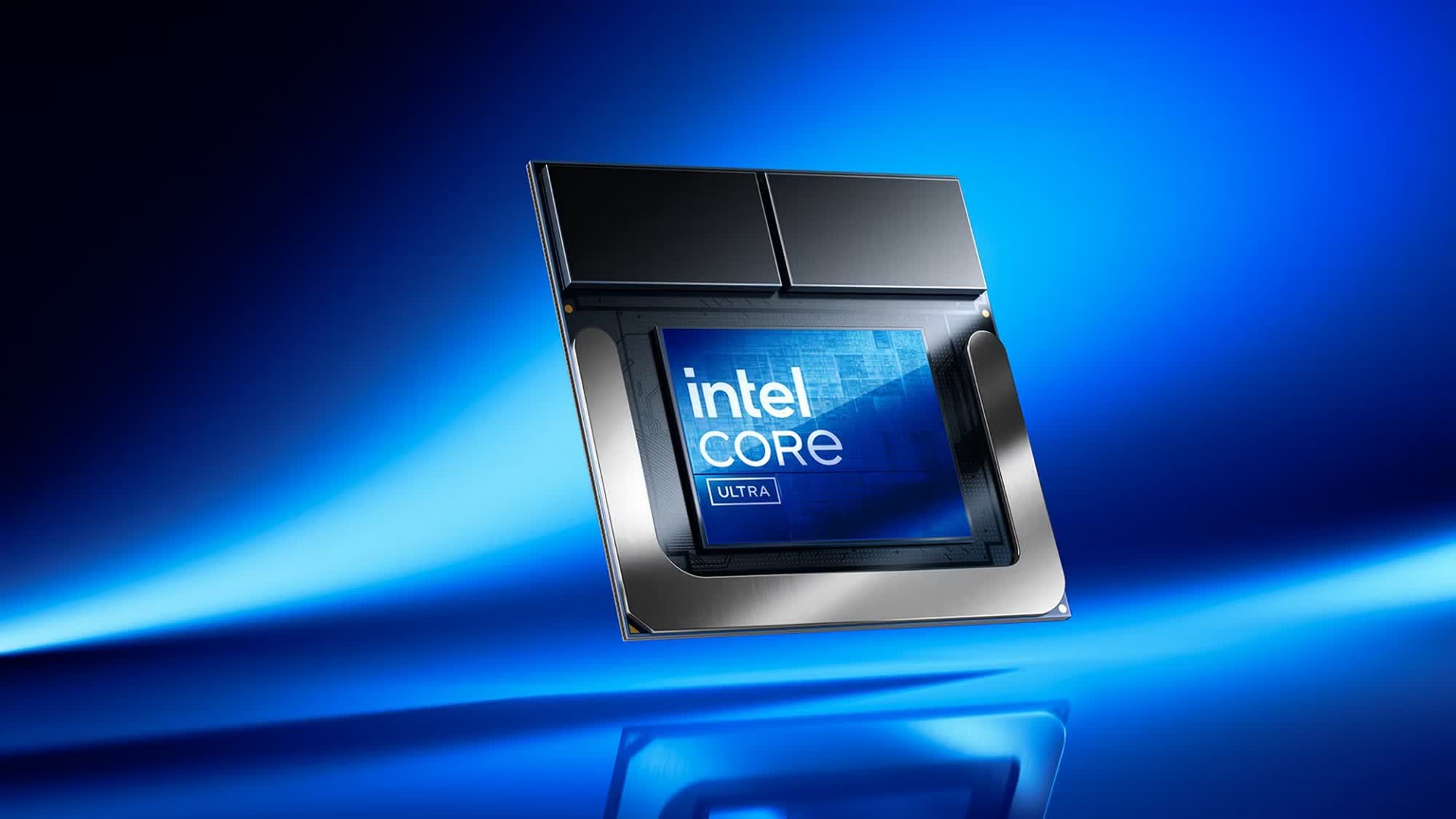
Sources tell DigiTimes that after Intel launches its Nova Lake processors in the second half of this year, Razor Lake will follow in late 2027, with Titan Lake and Moon Lake arriving in 2028. The desktop and mobile lineups are expected to directly address areas where Chipzilla has fallen behind AMD.

Nova Lake socketed desktop CPUs are expected to arrive in late 2026, with Nova Lake-S possibly following in early 2027. Unsurprisingly, more information is available about Nova Lake than about the other lineups.
Presumably called Intel Core Ultra 400, Nova Lake's socketed desktop processors are expected to include up to 52 cores, combining Coyote Cove performance cores and Arctic Wolf efficiency cores. They will also introduce Intel's LGA 1954 socket and 900-series motherboards, comprising the Z990, Z970, W980, Q970, and B960 chipsets.

Based on TSMC's N2 semiconductor node, Nova Lake may also feature up to 288MB of L3 cache, aimed at closing the gaming performance gap with AMD's X3D CPUs. However, the company has also argued that software optimizations are an equally important area to address. Meanwhile, Nova Lake-S laptop chips, which may debut at CES 2027 in January, are expected to feature up to 28 cores.

Although less is known about Razor Lake, Titan Lake, and Moon Lake, the available information offers tantalizing hints about Intel's plans to counter AMD, particularly in gaming. Razor Lake appears to be a direct successor to Nova Lake, supporting the same LGA 1954 socket. Likely scheduled for Q4 2027, Razor Lake aims to deliver significantly higher instructions-per-second performance with its new Griffon Cove performance cores and Golden Eagle efficiency cores.

Looking further ahead to 2028, Intel's notes on Titan Lake desktop processors and mobile APUs appear to confirm prior rumors that the company will cease dividing processors into performance and efficiency cores. The strategy, which began with Alder Lake, has complicated optimization for gaming and certain other workloads. Titan Lake will instead use a single architecture, Copper Shark.

Titan Lake may also introduce Intel's previously announced collaboration with Nvidia. To compete with the impressive integrated GPU designs AMD introduced with Strix Point and Strix Halo, Intel and Nvidia will reportedly combine Copper Shark CPU cores with RTX GPU tiles, likely targeting high-end mobile devices.

Finally, Moon Lake will exclusively target low-power laptops and Chromebooks, using only efficiency cores. Focused on affordability and low power consumption, Intel appears to be positioning the 2028 lineup as a direct follow-up to Twin Lake.

Permalink to story:

 
iGPU is inevitable. Manufacturers aren't going to be interested in playing nVidia's high-dollar game forever. nVidia will need to either deliver on their own APU offering, or play much nicer with Intel/AMD than they have been. They could also just exit the consumer market. It's what, 5, 10% of their current revenue?
 
iGPU is inevitable. Manufacturers aren't going to be interested in playing nVidia's high-dollar game forever. nVidia will need to either deliver on their own APU offering, or play much nicer with Intel/AMD than they have been. They could also just exit the consumer market. It's what, 5, 10% of their current revenue?
No, it is not "inevitable". iGPUs will always be restricted by the same two things: memory bandwidth and TDP. Any advancements made to improve iGPUs will also benefit dGPUs.

You'd figure that after 15 years of making the same claims, people would learn that the all iGPU future just isnt happening.
 
No, it is not "inevitable". iGPUs will always be restricted by the same two things: memory bandwidth and TDP. Any advancements made to improve iGPUs will also benefit dGPUs.

You'd figure that after 15 years of making the same claims, people would learn that the all iGPU future just isnt happening.


When an iGPU can do high quality 1080p @ 60fps+ then for the vast majorrity of people that's all they'll worry about. Unless you are running LLM's on your laptop the days of needing a dGPU are numbered. Already Panther Lake B390 is very decent performer and Halo will be massively better in Medusa.
 
RIP Arc, if the rumors are true Intel will kill off Arc entirely, thanks to Nvidia investing $5 billion into Intel. Nvidia is too close to being a monopoly and because of their push for AI, it's ruining the consumer hardware market.

I think iGPU's and APU's could replace graphics cards except for the higher end and flagship, dedicated graphics cards have become too expensive and power hungry for most people.
 
When an iGPU can do high quality 1080p @ 60fps+ then for the vast majorrity of people that's all they'll worry about. Unless you are running LLM's on your laptop the days of needing a dGPU are numbered. Already Panther Lake B390 is very decent performer and Halo will be massively better in Medusa.
My god, its like I'm back in 2011 when Llano came out and everyone was swearing up and down that in 5 years iGPUs would be good enough for 1080p!

Every advancement that makes iGPUs faster ALSO makes dGPUs faster and software adapts to faster available hardware. Even low end hardware like the RTX 5060 utterly crush iGPUs.
RIP Arc, if the rumors are true Intel will kill off Arc entirely, thanks to Nvidia investing $5 billion into Intel. Nvidia is too close to being a monopoly and because of their push for AI, it's ruining the consumer hardware market.

I think iGPU's and APU's could replace graphics cards except for the higher end and flagship, dedicated graphics cards have become too expensive and power hungry for most people.
Yeah I'm sure that people are going to dump $3k on Strix Halo computers instead of buying a $250 RTX 5050. LMFAO.

Why would anyone buy Strix Halo over, say, the RTX 5060 that is $400 and is ~30-40% faster? Is a 140w GPU just too much for you to handle? Because GPUs at that power level have existed since the mid 2000s........
 
No, it is not "inevitable". iGPUs will always be restricted by the same two things: memory bandwidth and TDP. Any advancements made to improve iGPUs will also benefit dGPUs.

You'd figure that after 15 years of making the same claims, people would learn that the all iGPU future just isnt happening.


Deny it all you want, but it's already happening. Even in desktops, the dGPU stronghold, entry-level cards have been extinct for years. With the advent of Panther Lake, not to mention the nVidia collab discussed in this article as well as nVidia's own APU, how much longer do you expect x60 class dGPUs to last? I'd give it two or three more gens before x70+ (x60Ti+ at best) is all that remains, maybe three or four gens on desktop (by then, those x60 offerings will probably be only targeted at upgraders anyways).

And if you haven't noticed, the desktop has long since been surprassed by the laptop (which itself has been surpassed by the smartphone and probably the tablet) in terms of proliferation and marketshare. This isn't the 2000's or 2010's anymore. dGPU is already very niche compared to the majority of consumer compute.

Above all else, consumer demand and engineering limitations are what dictates what is actually sold to consumers. No matter how much nVidia manages to shrink their dies, at some point they'll have to implement expensive HBM or some other space-saving innovation to keep up with the ever-encumbering spatial limitations for their dGPUs. (Hint: they won't do that since they're already trying to get into APUs and ultimately a unified memory architecture which Apple pioneered and Intel, QC, and AMD are moving towards adopting for themselves.)

It is the nature of technological improvement to not only bring more compute power, but to grant more conveniencs too. Hence the inevitable consolidation.
 
My god, its like I'm back in 2011 when Llano came out and everyone was swearing up and down that in 5 years iGPUs would be good enough for 1080p!

Every advancement that makes iGPUs faster ALSO makes dGPUs faster and software adapts to faster available hardware. Even low end hardware like the RTX 5060 utterly crush iGPUs.
Yeah I'm sure that people are going to dump $3k on Strix Halo computers instead of buying a $250 RTX 5050. LMFAO.

Why would anyone buy Strix Halo over, say, the RTX 5060 that is $400 and is ~30-40% faster? Is a 140w GPU just too much for you to handle? Because GPUs at that power level have existed since the mid 2000s........

Fact: people want thin, light and long lasting battery laptops, like the MacBook Air.

A dGPU takes more space and power and on thin laptops, it won't work. So the solution is to integrate a Tile with the "dGPU" and some 3D cache memory and call it iGPU. Then it'll just use the very fast DDR5/DDR6 and Super sampling/FG.

Any Apple M5 Pro or the future AMD Ryzen 9 with RDNA 4.x will be powerful enough to play games at medium to low settings.

At home I use a eGPU RTX 4070 Ti Super, I don't want to carry it...

 
How can intel shamelessly ask their potential buyers every "gen" for a new motherboard LMAO.

it's just silly how gullible people are.
 
How can intel shamelessly ask their potential buyers every "gen" for a new motherboard LMAO.

it's just silly how gullible people are.
Nobody cares.
With AM4 chipsets you have slower RAM and lots of related shortcomings compared to AM5.
Thats the fanboy excuse to go AMD.
 
Finally Intel should have option for up to 16 p-cores. I thought 18A/14A was the route. Another TSMC generation or two first?

We have been hearing about 18A, then 14A for years, is it ready or not.
 
Last edited:
Oh snap, AMD’s APU division is going to be seeing some rough times ahead. Intel and NVIDIA together is just something that AMD will not be able to compete against. There is always hope but with the current PC landscape, that hope is dwindling.
 
How can intel shamelessly ask their potential buyers every "gen" for a new motherboard LMAO.

it's just silly how gullible people are.
The gullibility lies in the naive belief that anyone but a trivial handful of enthusiasts ever upgrade their CPU, and thus couldn't care less if their motherboard supports multiple generations.
 
Honestly, Intel’s biggest challenge might not be hardware anymore. They can clearly still design ambitious chips. The harder part is rebuilding consumer confidence after years of weird scheduling behavior, motherboard churn, and inconsistent efficiency gains.
 
This is why I only buy AMD. Intel is the worst.
Interesting.
I've been building computers since I owned an 8088 PC.
In all those years I've NEVER upgraded a CPU.
For the simple reason that if I wanted a next-gen CPU I ALSO wanted next-gen RAM, cards, not to mention motherboard features the old boards lacked.
So for me too AM4's upgrade path's been totally unattractive.
I'm not interested in stepping up performance a bit: I want a giant leap.
 
Back