Intel Nova Lake-S is coming after Ryzen APUs with a 16-core iGPU for gamers on a budget

DragonSlayer101

Posts: 989   +14
Staff
Something to look forward to: Integrated graphics have improved significantly over the past decade, with AMD's Ryzen G-series APUs generally considered the gold standard. They offer high-performance Radeon graphics capable of running video games and multimedia applications without a discrete GPU. Intel has traditionally lagged behind its rival in this segment, but the company is now reportedly working on new processors with powerful integrated graphics that could give AMD a run for its money.
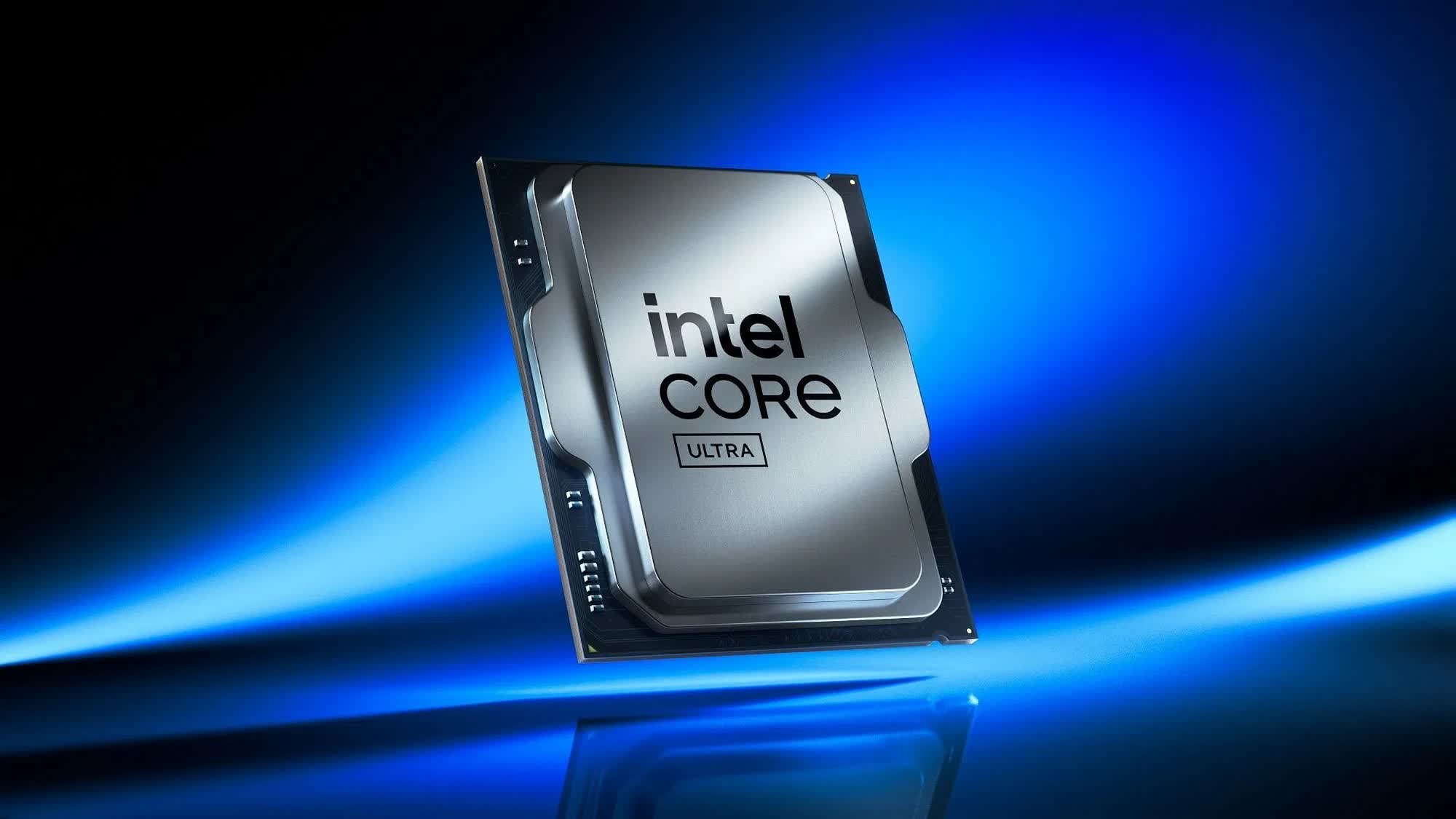
According to well-known tipster Jaykihn, Intel's upcoming Nova Lake-S desktop CPU lineup will include at least one SKU featuring an integrated graphics chip with 12 Xe3P cores. Preliminary information from the tipster suggests the chip will feature 16 CPU cores, including four Coyote Cove performance cores, eight Arctic Wolf efficiency cores, and four additional Arctic Wolf low-power E-cores.

The tipster added that the chip will require two VccGT VRM phases, potentially indicating a gaming-focused SKU with higher power requirements. However, the leaked configuration suggests it will use a single tile without Intel's Big Last Level Cache technology, despite expectations that Nova Lake-S will offer up to 288MB of L3 cache to compete with AMD's X3D lineup.

Earlier rumors suggested that Nova Lake will use a combination of Xe3 and Xe3P graphics, with the former reserved for the iGPU and the latter used for the display engine. On the CPU side, NVL-S is tipped to feature up to 52 cores in dual-tile configurations on the next-generation LGA 1954 socket, which Intel has hinted it will support across multiple CPU generations. This would align with AMD's more consumer-friendly platform policy and mark a departure from Intel's long-criticized "one-and-done" socket cycle.

It is worth noting that this is not the first time rumors have suggested Intel is working on a Ryzen G-series competitor with high-core-count integrated graphics. Nova Lake-AX, which was reportedly scrapped last year, was expected to feature 48 Xe3 graphics cores, 28 CPU cores, and a 256-bit memory bus. It was intended to be Intel's answer to AMD's Strix Halo lineup but ultimately became one of the most notable casualties of Intel's revised client roadmap.

Intel is expected to launch its Nova Lake-S desktop lineup under the Core Ultra Series 4 branding in early 2027. It is said to offer several notable upgrades over Arrow Lake Refresh, including the much-discussed Big Last Level Cache technology, which could improve gaming performance by reducing memory latency and increasing data access speeds. The next-generation chips are also expected to support DDR5-8000 memory and feature a 175W TDP.

Permalink to story:

 
Good, we need some compition in the APU space. AMD has been sucking people dry in the iGPU space for awhile now. To get their top tier iGPU, you have to buy their top end CPU as their best iGPU only comes on their fastest CPU. They're gatekeeping performance and for what a top tier APU system would cost you can just buy a 5090.

AMD has not been competitive in the APU space and I'm happy to see Intel step up
 
I miss the days of being able to buy a midranges GPU .... I bought TWO 8800GT's in 2008 for $230 ea.
Why would you miss those days? You can buy those exact same cards for $20 today ... or for half what you paid then, you can get a card that's literally 10X faster.

If we kept redefining what "midrange" means for houses the same as we do video cards, you'd be upset that 100-room marble palaces cost more than the $100K you paid for a split ranch 20 years ago.
 
Why would you miss those days? You can buy those exact same cards for $20 today ... or for half what you paid then, you can get a card that's literally 10X faster.

If we kept redefining what "midrange" means for houses the same as we do video cards, you'd be upset that 100-room marble palaces cost more than the $100K you paid for a split ranch 20 years ago.
Reading comprehension is a great asset. The OP meant that he misses the days when you could buy the "midrange" cards for around the same price today as he did back then. He obviously didn't mean he wanted to buy the SAME card from 20 years ago for the same price he paid back then. That doesn't even make sense.
 
I miss the days of being able to buy a midranges GPU for $100. I bought an n6600 for $106 in 2006. I bought TWO 8800GT's in 2008 for $230 ea.
Not listed: the reason the 8800gts were so cheap in 2008 was that we were dealing with near double digit unemployment and the worst financial crash since 1929, with millions losing their jobs.
 
Reading comprehension is a great asset. The OP meant that he misses the days when you could buy the "midrange" cards for around the same price today as he did back then.
Yes, reading comprehension would have helped you greatly here. I not only understand what he meant, I noted it by pointing out that his misplaced nostalgia is based on his continual redefining of the term "midrange". Today, you can purchase far more performance for far less money than possible then. Anyone not happy about that level of progress is seriously deluded.
 
Not listed: the reason the 8800gts were so cheap in 2008 was that we were dealing with near double digit unemployment and the worst financial crash since 1929, with millions losing their jobs.
The g92 chip also didnt have all of the dorectX 10.1 features and the g92b was released as the 9000 series. The 8800GT was basically an already in production card that was defective before launch because of Microsoft making updates to the directX instruction set. Considering that the 8000 series didn't have this update, nVidia released the cards under that name but still had the performance improvements of the newer node.
 
Yes, reading comprehension would have helped you greatly here. I not only understand what he meant, I noted it by pointing out that his misplaced nostalgia is based on his continual redefining of the term "midrange". Today, you can purchase far more performance for far less money than possible then. Anyone not happy about that level of progress is seriously deluded.

So let’s imagine for a second, that games being released are targeted at modern hardware, and that OP might want to play those games, meaning that he needs a modern card, rather than an 8800gts. Now imagine that OP has a budget.

Put those two together, and their annoyance at ‘midrange’ cards being twice the price, adjusted for inflation, as 10 years ago.

The ‘but performance is better’ makes a sense in enterprise. Better / faster simulations directly correlates to better projects. Even to new projects that just weren’t feasible before.

It makes very little sense for someone who’d just like to play that new game that got released which looked fun.

Also… I work in construction… we also continually redefine ‘midrange’ for housing, wth are you talking about? We do that for all products. Twenty years ago, we didn’t have heat recovery ventilation, dimmable lighting, three pane windows, floor heating, etc. etc. as standards. Now we do. 50 years ago, many homes didn’t even use insulation to any significant degree, midrange home or not. A small modern flat is significantly more hygienic and comfortable than a medieval castle.

And yet… no one is going around telling people that they can’t be annoyed that house prices are going bananas, when modern flats are nicer than medieval castles. Because that comparison is stupid.
 
Good, we need some compition in the APU space. AMD has been sucking people dry in the iGPU space for awhile now. To get their top tier iGPU, you have to buy their top end CPU as their best iGPU only comes on their fastest CPU. They're gatekeeping performance and for what a top tier APU system would cost you can just buy a 5090.

AMD has not been competitive in the APU space and I'm happy to see Intel step up
AMD’s stronger integrated graphics are tied to specific APU focused chips because those designs balance CPU cores, cache, power limits, and GPU die area differently...it’s an engineering tradeoff, not simple “gatekeeping.”

Their top end desktop CPUs are built for maximum CPU performance first, while their APU lines target mixed CPU/GPU workloads.

Also, saying “for the cost of a top tier APU you can just buy a 5090” is wildly exaggerated. A high-end APU system and an NVIDIA GeForce RTX 5090 are completely different price classes and serve different markets. APUs are aimed at compact, efficient, lower power builds where adding a discrete GPU may not make sense.

If Intel really does deliver a competitive iGPU, that’s great for everyone...but AMD has absolutely been competitive in the APU space. In fact, they’ve largely defined it for years while Intel has been the one playing catchup.
 
I miss the days of being able to buy a midranges GPU for $100. I bought an n6600 for $106 in 2006. I bought TWO 8800GT's in 2008 for $230 ea.

I felt like I was pulling the master sword from the pedestal when I grabbed my 8800GT from the store shelf. What a great GPU that was.
 
Even if they did make this, it will most likely be mobile only.

It literally says Nova Lake S, desktop. This has nothing to do with Nova Lake mobile.

It's a single SKU for those that could build a cheap PC without dGPU and get decent gaming performance. It should operate at least as well as B390.
 
"Nova Lake +40-50% IPC, Jim Keller's final design. A clean-sheet architecture, not based on the Pentium III, like all current designs."
The previous design team proved their blatant incompetence; I hope everything will be fine now.
 
Good, we need some compition in the APU space. AMD has been sucking people dry in the iGPU space for awhile now. To get their top tier iGPU, you have to buy their top end CPU as their best iGPU only comes on their fastest CPU.
Writing about Intels CPUs?
More powerful iGPU put only into more powerful CPU
It was Intels policy for years.

The most powerful (consumer) iGPU of these days is Radeon 8060S. You can find it in
AMD Ryzen™ AI Max+ 395 (16 core Zen5)
AMD Ryzen™ AI Max+ 388 (8 core Zen5)
The second definitely is not the most powerful CPU.
BTW .. the first is, but only in the context of notebooks and mini PCs. Desktop has more powerful things.

They're gatekeeping performance and for what a top tier APU system would cost you can just buy a 5090.
Several rtx 5090.
From technical POV the MI3xx with 24 Zen cores and a lot of CDNA cores is APU.

AMD has not been competitive in the APU space and I'm happy to see Intel step up.
Not correct.
This 12 Xe3 is first one to put Radeon 890M to shadow.
Even the iGPU from Lunar Lake was only comparable but not better than iGPU from Strix Point.
At best days.

TL;DR - Its good to have more choices.
 
So let’s imagine for a second, that games being released are targeted at modern hardware, and that OP might want to play those games, meaning that he needs a modern card ... Put those two together, and their annoyance at ‘midrange’ cards being twice the price, adjusted for inflation, as 10 years ago.
Game studios know this as well as anyone, which is why no new game requires anything near newly-released hardware. Looking at the minimum required specs for 'Crimson Desert', for instance, I see it demanding a GTX 1060 .. a card that was mid-range one full decade ago.

But of course, gamers don't just want to play new games. They want the latest graphics also. Unfortunately, that requires fabs that cost 10X what the fabs from twenty years ago did. We should be grateful GPUs haven't risen as much in price at that.

The ‘but performance is better’ makes a sense in enterprise....It makes very little sense for someone who’d just like to play that new game that got released which looked fun.
You're suggesting that the entire game industry's devotion to better, faster, and more realistic graphics is wrong-headed? I tend to agree, and I thus suggest you play one of the tens of thousands of 30+ year old games you've never experienced. Many of them more than "look" fun. The original text-based Zork requires no graphics card at all, in fact.

Also… I work in construction… we also continually redefine ‘midrange’ for housing, wth are you talking about?
The average home size in 1920 was 1120 sq. feet. Today it's double that. Graphic cards tend to progress a wee bit faster though, right? Which is why I stated: if you applied the he same standard in housing that you do GPUs, you'd be demanding 100-room palaces for everyone.
 
Last edited:
Writing about Intels CPUs?
More powerful iGPU put only into more powerful CPU
It was Intels policy for years.

The most powerful (consumer) iGPU of these days is Radeon 8060S. You can find it in
AMD Ryzen™ AI Max+ 395 (16 core Zen5)
AMD Ryzen™ AI Max+ 388 (8 core Zen5)
The second definitely is not the most powerful CPU.
BTW .. the first is, but only in the context of notebooks and mini PCs. Desktop has more powerful things.


Several rtx 5090.
From technical POV the MI3xx with 24 Zen cores and a lot of CDNA cores is APU.


Not correct.
This 12 Xe3 is first one to put Radeon 890M to shadow.
Even the iGPU from Lunar Lake was only comparable but not better than iGPU from Strix Point.
At best days.

TL;DR - Its good to have more choices.
People need to ignore those parts as they are soldered on, not interchangeable or upgradable. And the 388 might as well not exist. Yes. It's a part that technically exists but they're basically impossible to find.
 
The average home size in 1920 was 1120 sq. feet. Today it's double that. Graphic cards tend to progress a wee bit faster though, right? Which is why I stated: if you applied the he same standard in housing that you do GPUs, you'd be demanding 100-room palaces for everyone.
Home size is not what I’m referring to, it’s (to my mind) a fairly irrelevant metric. Manufacturing quality in homes, while not moving as fast as electronics, has moved quite rapidly for the past 50 years, and continues to do so. There are… exceptions… I’ve not heard much good of UK / US construction, but where I live and work, the quality has moved forward at a fairly steady pace. Energy efficiency, thermal comfort, in-door air quality, appliance integration, daylight provisioning, all have improved by leaps and bounds. Frankly, moving into anything older than 15-20 years is a downer, if there haven’t been substantial renovations, as the quality is just so much worse.

Now I just wish real estate economics reflected actual construction quality… which they… yea don’t at all… seriously one of the biggest issues in the entire industry. Houses are ‘worthless’, land on the other hand is ridiculously valuable…
 
Back