TL;DR: Intel unveiled XeSS 3, its third-gen AI-powered upscaling technology last October at the Tech Tour event. Now, the company is beginning to roll it out through its latest Windows graphics driver, bringing support to Arc Alchemist and Battlemage GPUs, along with Meteor Lake, Lunar Lake, Arrow Lake-S, Arrow Lake-H, and the latest Panther Lake processors.
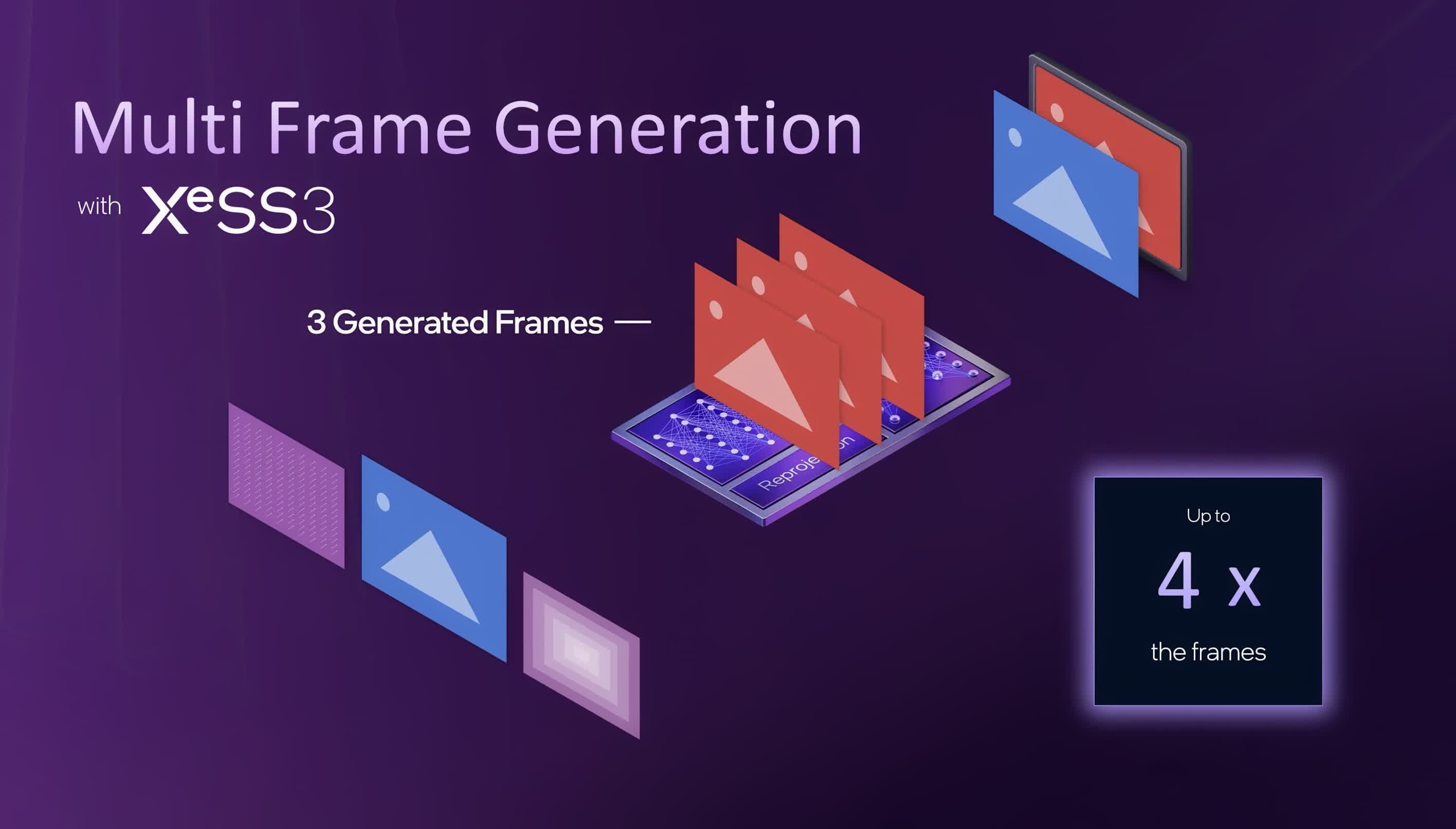
Included in driver package version 32.0.101.8425/32.0.101.8362 WHQL, XeSS 3 is Intel's new multi-frame generation (MFG) approach to upscaling. The idea is not new (nor are we convinced we like it) but it does remain ambitious: insert up to three AI-generated frames after every traditionally rendered frame, smoothing out animation without increasing the game's native rendering workload.
Intel says XeSS 3 relies on an optical flow network built from motion vectors and depth buffers to generate those extra frames. But unlike some competing solutions, it performs only a single optical flow calculation pass for each batch of AI-produced frames – a design choice Intel admits made development significantly more complex and time-consuming.
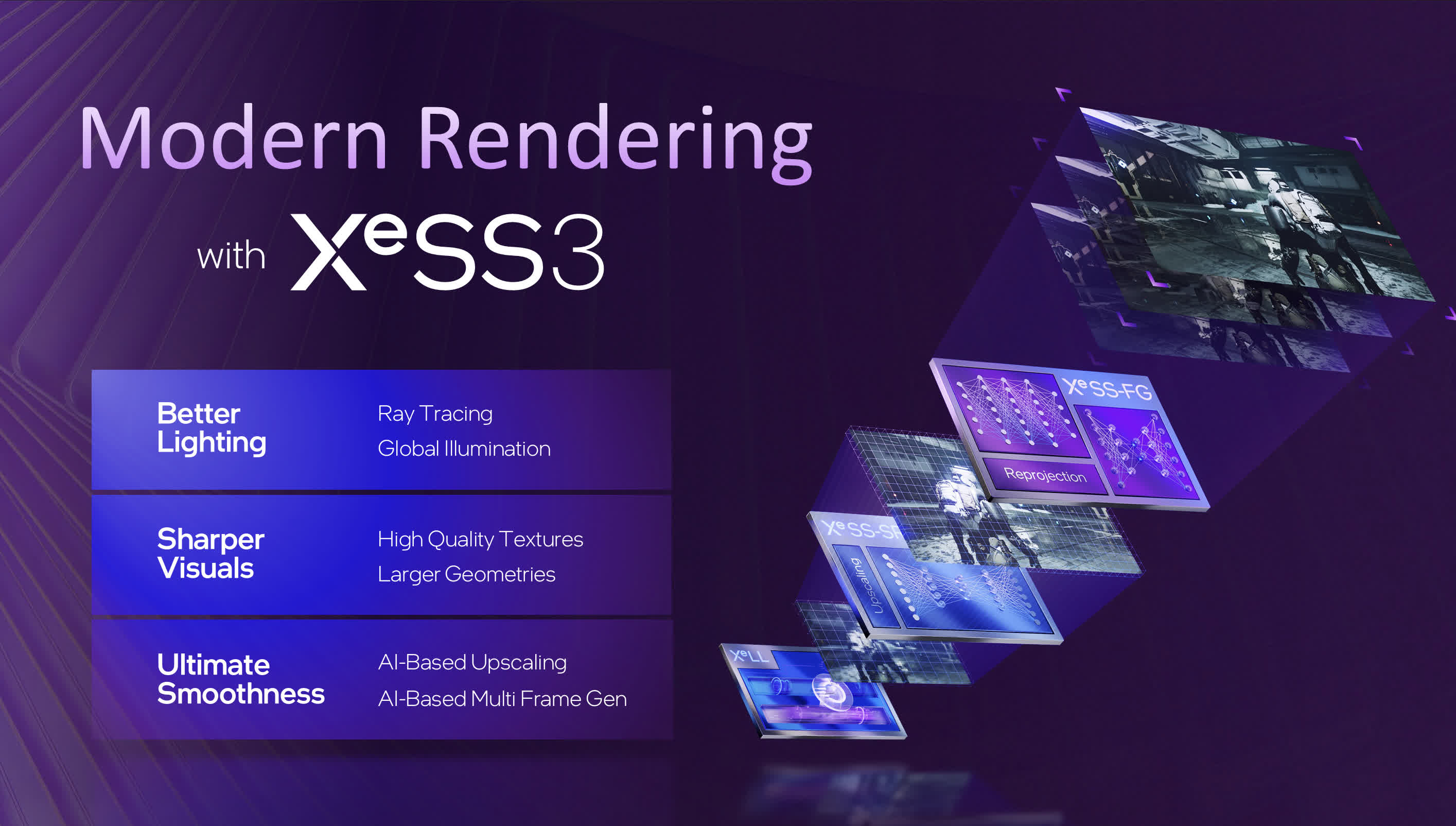
In concept, XeSS 3 sits in the same space as Nvidia's DLSS, which also uses AI techniques to boost frame rates in supported games while preserving image quality. The difference is in the implementation: while DLSS 4.x on RTX 50 series cards taps into hardware Flip Metering, Intel's XeSS 3 remains a fully software-driven solution.
AMD, for its part, has also entered the multi-frame interpolation race with FSR Redstone. But the company has been more cautious about deploying the feature broadly, even holding it back from premium GPUs like the Radeon RX 9070.
According to Ryzen chief VP David McAfee, AMD's hesitation comes down to tradeoffs – multi-frame interpolation can introduce additional latency and reduce responsiveness as the system waits for "fake" frames to be generated.
Intel previously confirmed that multi-frame generation can be managed through the Frame Generation Override option in its Graphics Software application for most games, though support ultimately depends on game developers. Users will be able to choose between 2×, 3×, or 4× modes, or simply leave it set to "Auto" and let the software decide the optimal setting.
Beyond XeSS 3, the driver update also addresses several bugs, including one that caused the Pragmata Sketchbook demo to crash under specific conditions on Arc B-series discrete GPUs and Core Ultra Series 2 CPUs with Arc integrated graphics. Intel also fixed incorrect Variable Refresh Rate reporting in the Display section of its graphics software.
Intel XeSS 3 multi frame generation now rolling out to Arc GPUs


