Intel's 80286 CPU celebrates 44 years of x86 history

Alfonso Maruccia

Posts: 2,598   +978
Staff
Recap: Intel introduced its first x86 processor architecture in 1978 with the 8086 microprocessor. A few years later, the company made history again with the 80286 – a CPU so successful that it continued to power new personal computers for many years, long after its prime.
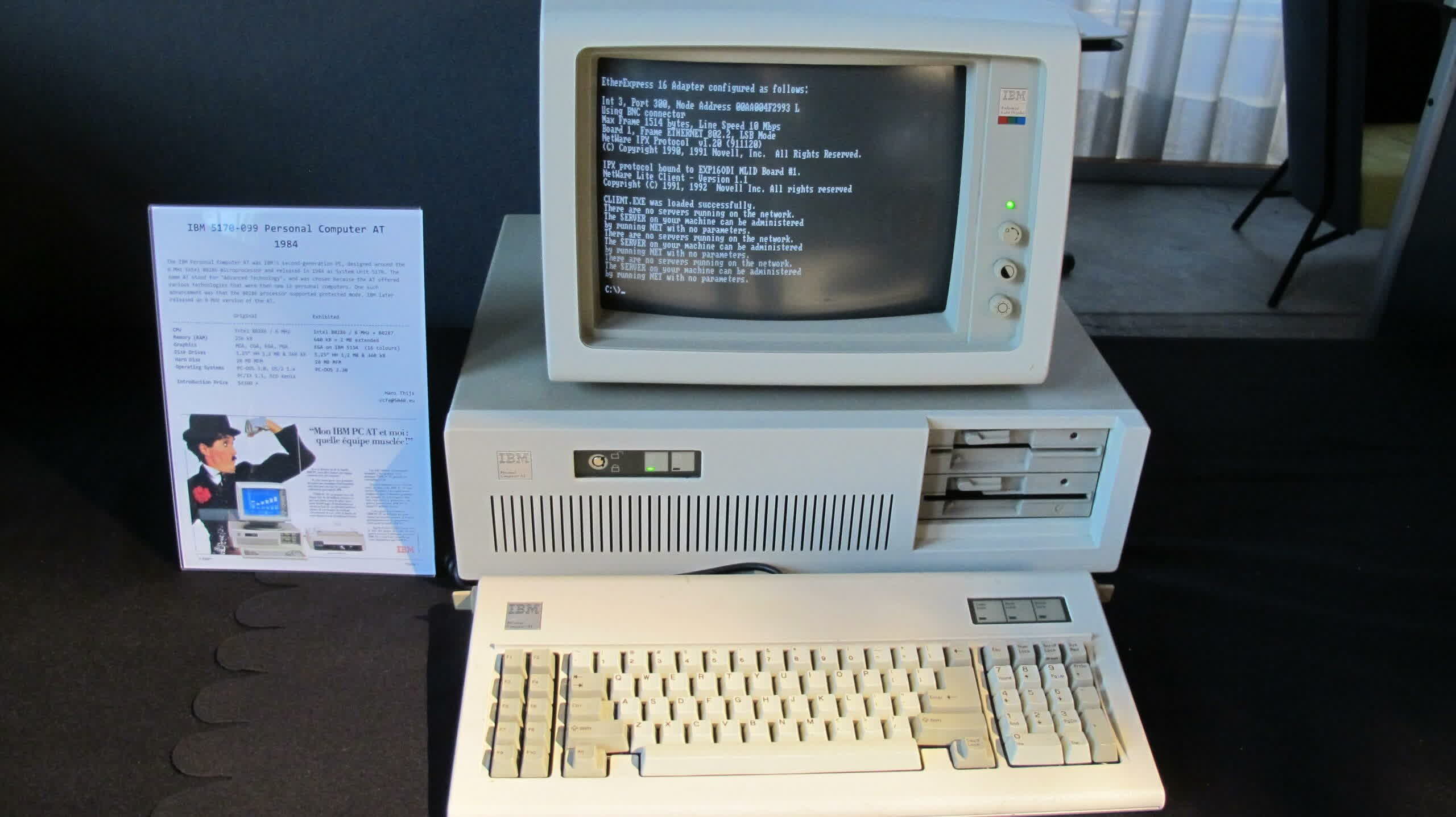
Intel released the 80286 processor on February 1, 1982, making the CPU 44 years old. According to the company, the 16-bit chip represented a significant evolution in the personal computing industry. It introduced several innovative features for advanced computing applications and was considerably faster than the 8086.

Also known as the "Intel 286," the 80286 was built on a 16-bit architecture with a 24-bit internal address width. The CPU could address up to 16 MB of RAM – a huge improvement over the 1 MB supported by the 8086. The Intel 286 contained approximately 134,000 transistors, offering reliable backward compatibility with existing 16-bit x86 software while adding new features for enhanced performance.
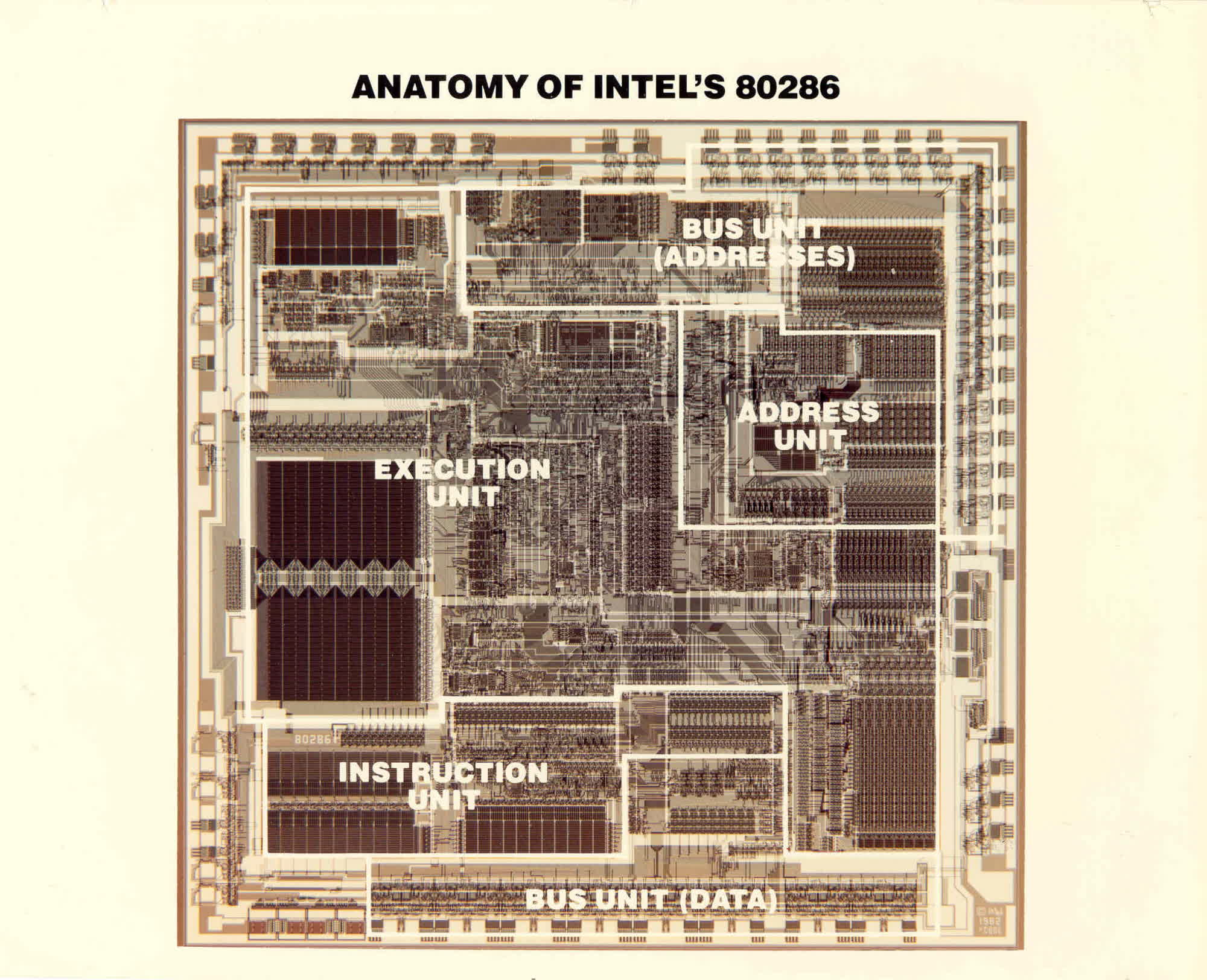
The 286 was the first x86 CPU to introduce support for protected mode, an operating mode that became essential for running advanced operating systems on later 32-bit processors. It was also the first CPU with an integrated memory management unit, significantly expanding support for 16-bit multitasking operating systems beyond DOS.

Intel initially intended the 286 for industrial automation, telecommunications, and other specialized applications rather than personal computers. However, the company now recognizes the CPU as a major milestone in computing history. IBM adopted the processor for its PC/AT format, another pivotal moment in the evolution of the IT industry.

The IBM PC/AT was released in 1984, and numerous other companies soon used the 286 CPU in their IBM-compatible clone systems. By 1988, Intel had shipped its 10-millionth 286 processor. Thanks to its advanced features, the 16-bit CPU remained in use in new PCs well into the 1990s, until the arrival of more powerful 32-bit Intel processors, such as the 386 and 486, once again transformed computing.
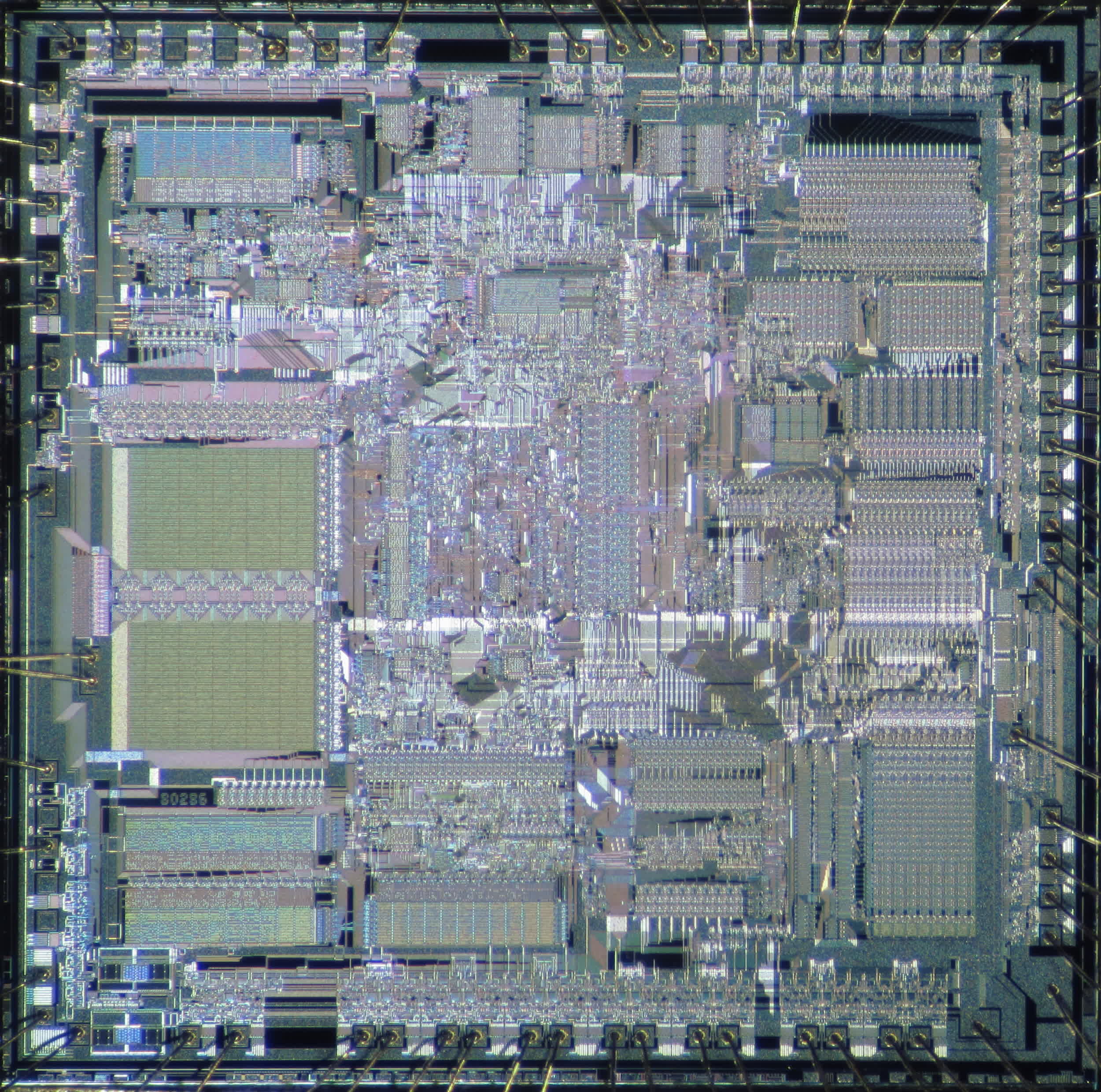
Computers based on 286 chips began to show their age when Microsoft introduced Windows 3.1 in 1992. The new DOS-based operating environment required a 386SX processor to run in "386 enhanced mode," which allowed computers to access a theoretical 4 GB of RAM – though the practical limit was around 256 MB at best.

Related reading: The History of the Microprocessor and the Personal Computer

The original Intel 80286 processor had maximum clock speeds of 5, 6, or 8 MHz, with later releases reaching up to 12.5 MHz. AMD, Harris, and other manufacturers produced faster variants with clock rates of 16 MHz, 20 MHz, and even 25 MHz. Compared to the 8086, performance gains could exceed 100 percent per clock cycle for most 16-bit DOS programs.

I began my computing journey with a 286 AT clone in the early 1990s, spending countless nights gaming, reading technical reference documents, and doing a lot of batch "programming" on a desktop running at 16 MHz with 1 MB of RAM. That PC is now stored somewhere in my garage, and one day I hope to restore – or replace – its acid-ridden motherboard to enjoy a few more nights of retro computing.

Image credit: Vintage Computer Festival, Intel, Pauli Rautakorpi

Permalink to story:

 
I started off a little later: 1999 with a Pentium 166 and 48 MB of RAM. That computer is still next to me: I use it as a table for books and my headphones. I'd like to get it up and running, to have the joy of installing and trying Windows 98 again, but failed recently.
 
The 286, the CPU that Bill Gates referred to as being brain damaged because you couldn't leave protected mode without rebooting the system. There was also the 80186 CPU before it, but it was not compatible with the IBM PC architecture and thus any of the clones so it faded into obscurity. A small number of computers still used it though, probably the most notable being the Tandy 2000.
 
It is so old and already looks so advanced. No surprise it was where Russian ingenuity in copying stuff was short.
 
It’s kind of wild that the 286 was basically Intel accidentally inventing the future. Designed for industrial automation, then IBM was like nah this is gonna define the entire PC ecosystem for decades. Classic tech history moment.
 
I skipped this one, no doubt because MONEY.
So from an 8088 I went sort of straight to a 386 which I was very happy with for a long time.
Then 486 for a while and after that I walked the Pentium road, ending the DOS days.
My first Pentium box was also my last pre-built machine.
Fond memories....
 
The 8088 to 286 performance jump was not just considerable, it was the largest single performance jump in x86 history. It was 3-5x faster, due to increased clock speed, 2.5x increase in IPC and memory bandwidth. I remember envying my mates old second-hand AT when I was slugging away on my old hand-me-down XT in the 90's.
 
My first computer was a Compaq Portable...8080 processor, two 5 1/2" floppy disks, 2400 baud external modem.
First computer I built was a Celeron 300A...overclocked to a whopping 450mhz!
 
First computer I built was a Celeron 300A...overclocked to a whopping 450mhz!
I followed this exact same path when I built my first PC, even did the same overclock.

Prior to moving to the x86 platform, I'd been using an Amiga 500 and a Commodore 64 before that.
 
The 286, the CPU that Bill Gates referred to as being brain damaged because you couldn't leave protected mode without rebooting the system.
80286 was ... Designed for industrial automation ... that means, when it initializes and switch to Protected mode, them it stays in it.
Not like this ... brain damaged ... Windows which could not handle basic things in protected mode and had to switch back and forth.

There was also the 80186 CPU before it, but it was not compatible with the IBM PC architecture and thus any of the clones so it faded into obscurity. A small number of computers still used it though, probably the most notable being the Tandy 2000.
80186 was basically 8086 integrating functionality some chips like 8289 (DMA controler), 8259 (Interupt controler) ... ad some more in one package making board design simplier.


Started my experience in 8-bit era. Motorola 6502 (friends Atari 800), 8080 clone (high school), Z80 (my Sharp MZ-821).
Went trough DOS era. 8088 clones, 286, 386SX (uni).
Bought my first PC (386sx). Skipped 486 and bugged Pentium 60/66 to buy Pentium 75. After that went trough some more upgrades. Pentium MMX, Celereon 300A, Dual Slot Pentium III ...to abandon desktop for 12 years.

Returned to desktop when games turned too demanding ... AM4, 64GB, 3700X --> 5800x3D
 
Back