
Better late than never It's almost 2027, and the US Federal Aviation Administration has just announced it will replace the floppy disks still used by many US air traffic control systems. The upgrade won't be complete until the end of 2028, almost 20 years after most floppy disk manufacturing ended.
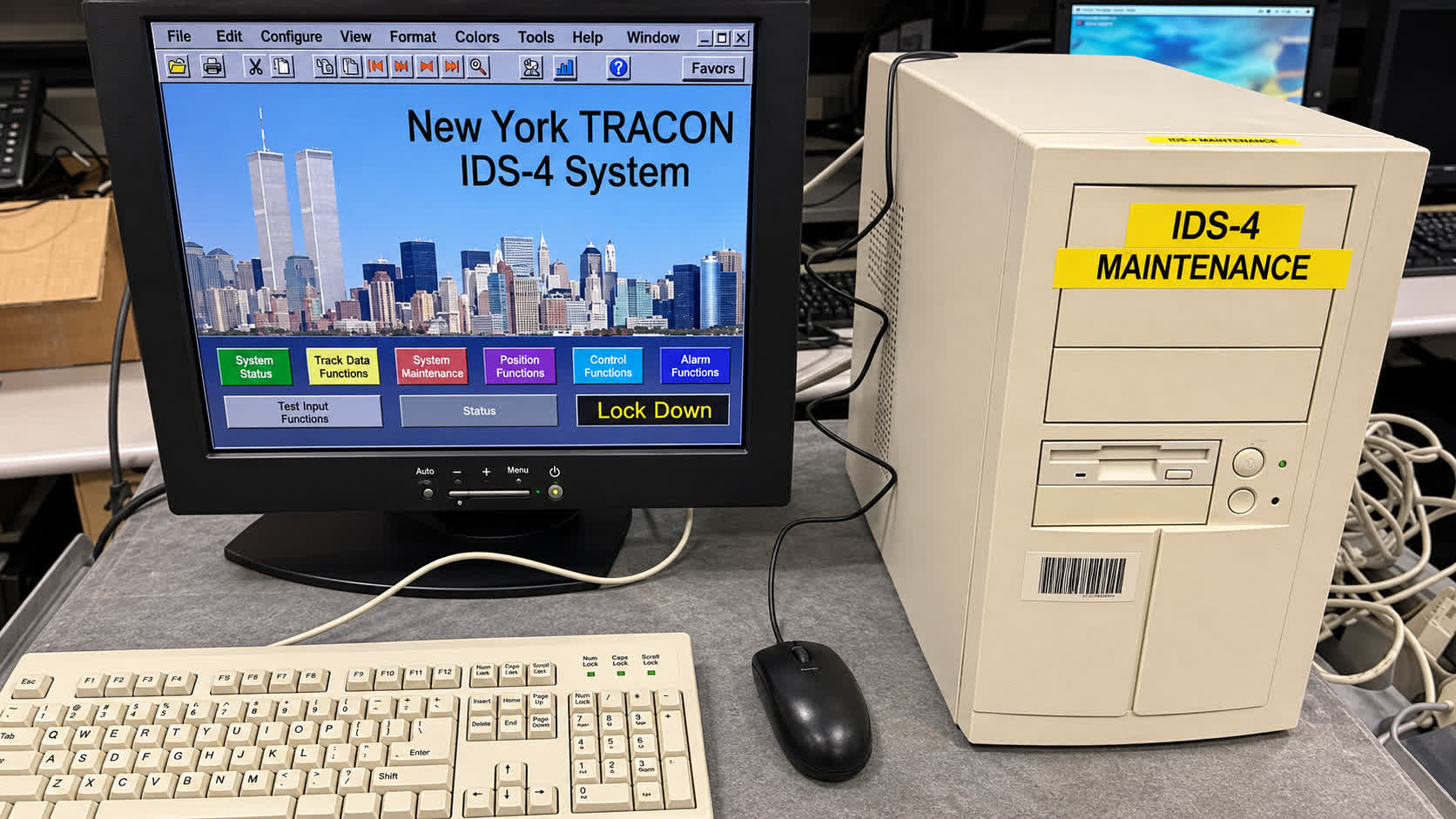
At more than 400 sites, the FAA still uses floppy disks in four systems to upload data to aging information displays that controllers consult for weather conditions, airport status, and Notices to Airmen (NOTAMs).
One of these is the Information Display System 4, or IDS-4, which was deployed in the early 1990s and runs on a Microsoft platform that is no longer supported. These systems provide operational information controllers need to manage traffic.
– Secretary Sean Duffy (@SecDuffy) November 5, 2026
Many US air traffic control facilities still rely on legacy systems tied to infrastructure built in the 1990s. These systems have undergone extensive safety testing and must remain operational around the clock. Replacing that technology is a difficult and expensive undertaking, requiring new systems that meet strict safety and security standards and can be introduced without disrupting operations.
US Transportation Secretary Sean Duffy posted a message on X yesterday confirming the modernization of the facilities. "Floppy disks from the 1980s: OUT 21st century tech: IN," he wrote.
The new Enterprise Information Display System (E-IDS) will replace the four 1980s-era systems. It consolidates operational information into a shared platform, including weather impacts, equipment disruptions, flight alerts, restricted-airspace schedules, and pilot weather reports. The FAA says it will improve information distribution and reduce repairs and workarounds associated with older equipment.
The FAA wants E-IDS installed at 435 facilities by the end of 2028. Five sites have already replaced their floppy disk-based systems: Atlantic City International Airport, Nashville International Airport, Greater Rochester International Airport, and data processing hubs in Atlanta and Salt Lake City.
In 2023, an FAA assessment found that over a third of the nation's air traffic control systems were unsustainable, and some were starting to fail.
It was reported last year that several FAA sites were still running Windows 95. The FAA also uses decades-old Compaq computers that are so out of date that replacement parts have to be bought from eBay. Another legacy technology still in use is paper flight strips, the pieces of cardstock on which key details of a single flight – such as call sign, aircraft type, and altitude – are printed or handwritten.
"We're moving away from outdated, manual processes and replacing technology that once relied on floppy disks with a modern system that allows controllers to instantly share critical flight alerts, restricted airspace schedules and pilot reports," FAA Administrator Bryan Bedford said in a statement.
A lack of funding has long been one of the issues preventing air traffic control modernization. The FAA is now using $12.5 billion in funding provided by President Trump's One Big Beautiful Bill to replace the archaic systems.
It's almost 2027, and the FAA is finally replacing the floppy disks used by US air traffic control


