Japan is launching a mission to bring back the first samples from a Martian moon

Skye Jacobs

Posts: 2,164   +62
Staff
Something to look forward to: Japan plans to send a spacecraft to Phobos in 2026 to collect material from the small Martian moon and return it to Earth. The Japan Aerospace Exploration Agency's mission is scheduled to launch from Tanegashima Space Center on October 20. If the mission succeeds, the spacecraft will bring back at least 10 grams of material from Phobos, making it the first mission to return samples from a moon orbiting Mars.
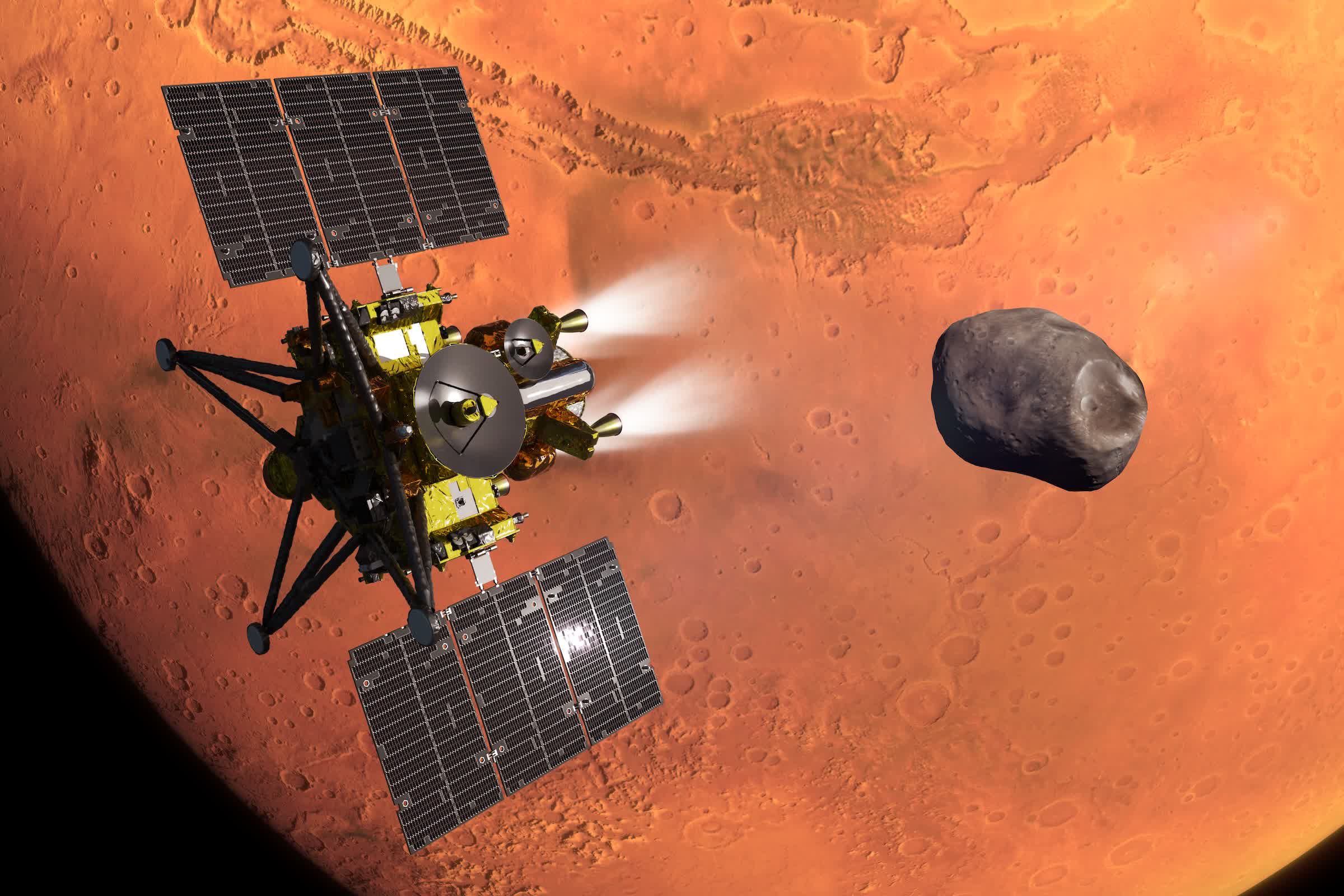
The "Martian Moons eXploration" mission, or MMX, is expected to take about a year to reach Mars. It will then spend three years operating around the planet and its moons before beginning a roughly one-year trip back to Earth. The sample return is expected in 2031.

Landing on Phobos will be one of the mission's biggest challenges. The moon is small, with a radius of about 11 kilometers, but its gravity is still much stronger than that of asteroid Ryugu, where JAXA previously landed a spacecraft. At the same time, Phobos has far less gravity than Earth's moon.
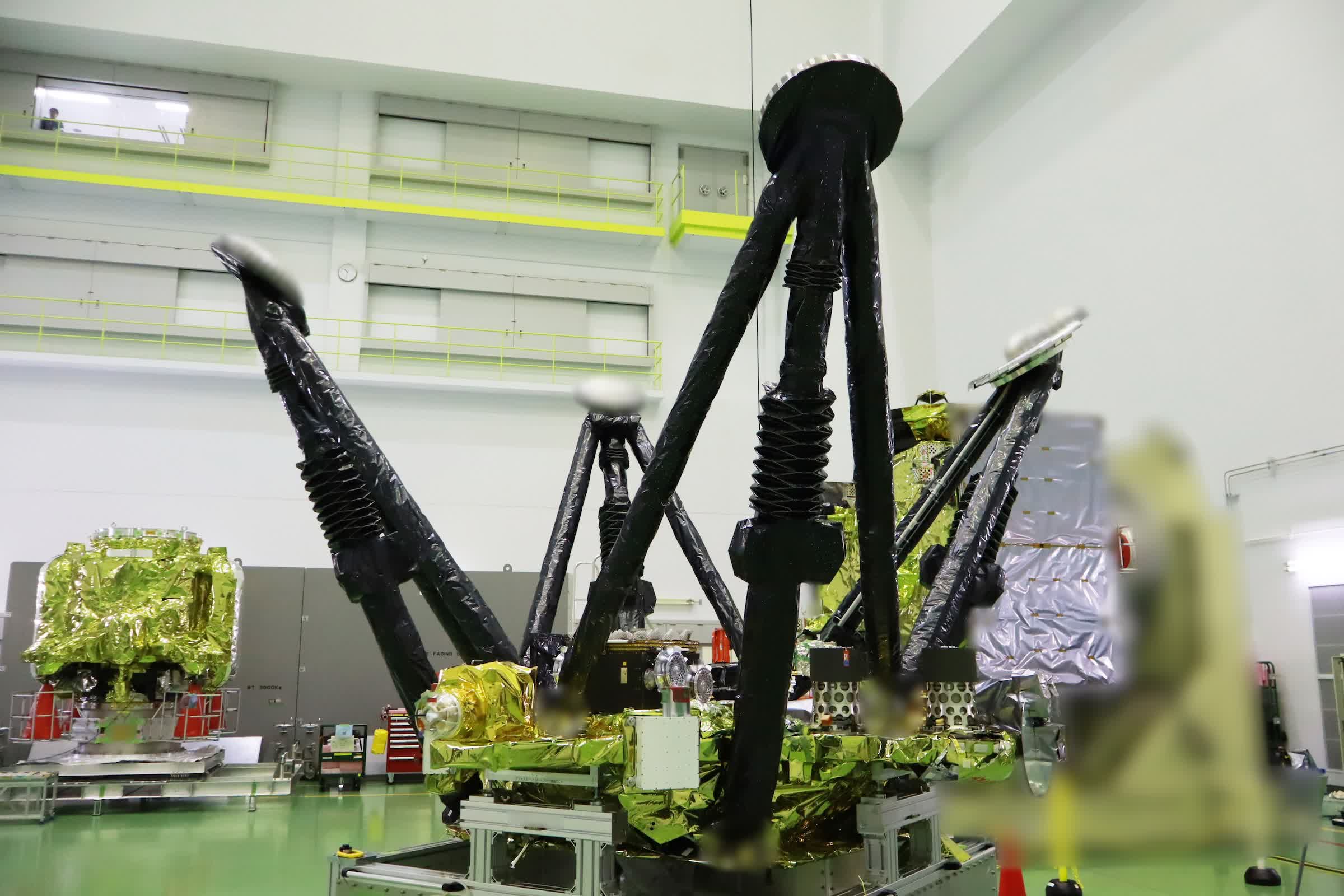
That leaves MMX operating in a difficult middle ground. The spacecraft cannot use a long hover-and-touchdown approach like the one used at Ryugu because it would burn too much fuel. But it also cannot rely on landing techniques designed for the Moon.

Instead, the probe will make key decisions on its own. Communications between Earth and the spacecraft could be delayed by as much as 20 minutes, making real-time control impossible during descent and landing.

As it approaches Phobos, MMX will compare the surface below it with existing crater and terrain maps. The spacecraft will use that information to adjust its position and guide itself toward the landing area. Below 300 meters, it will also look for unexpected elevation changes that could make a site unsafe. If it detects a problem, MMX can shift to another location, abandon the attempt, and climb away.
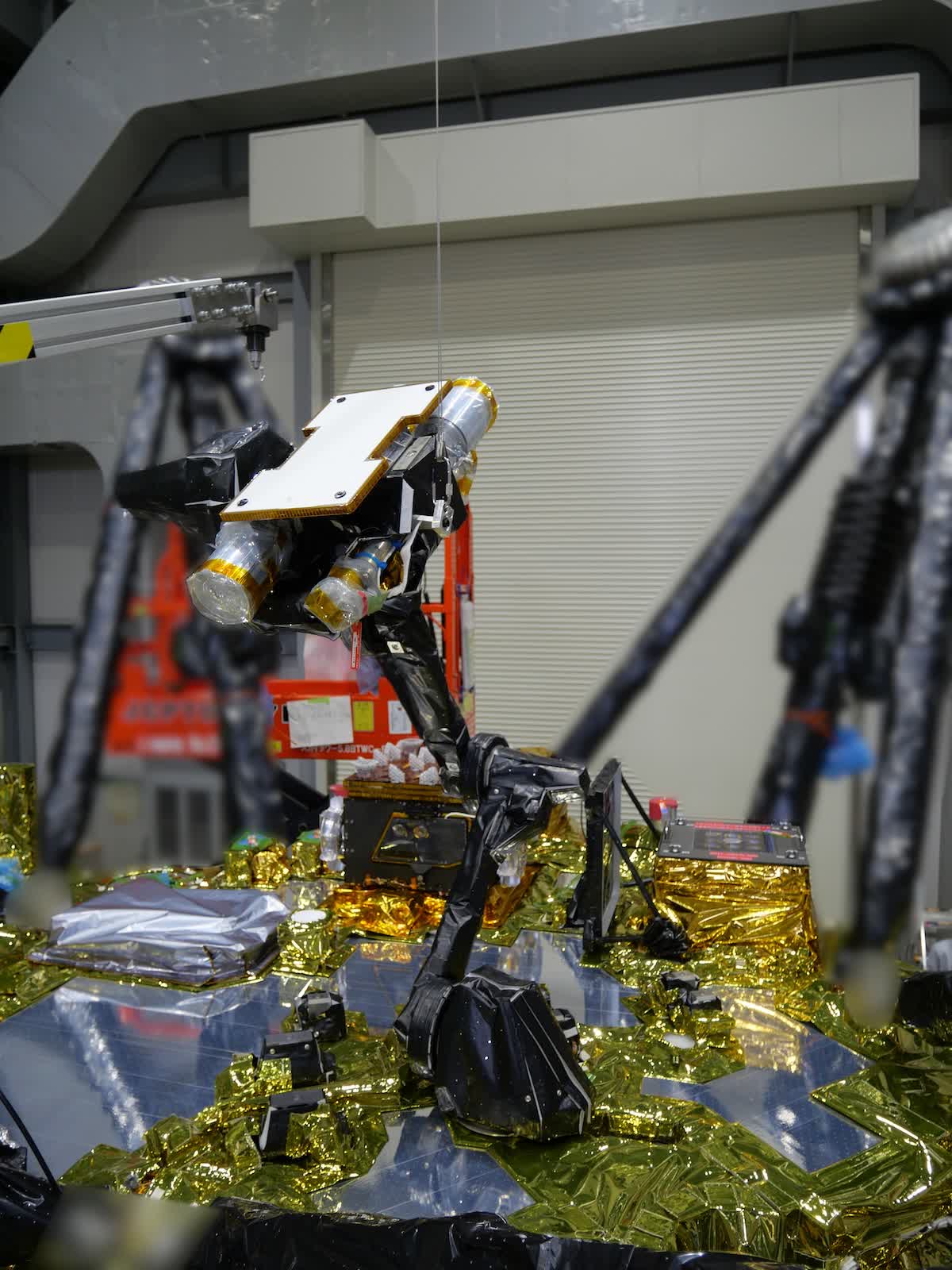
Mitsubishi Electric designed the main spacecraft. It will launch with a mass of 4,480 kilograms (9,877 pounds), with more than half of that weight made up of fuel. The spacecraft carries separate fuel reserves for its trip to Mars, its operations near the planet, and its return to Earth.

After reaching the Mars system, MMX will discard its outbound module after using its propellant. It will later fly by Deimos, Mars' other moon, before jettisoning the exploration module.

A small rover called IDEFIX will be deployed before MMX makes its main landing attempt. The French and German space agencies developed the rover, which is expected to explore Phobos for about 100 days. Its work is intended to help assess surface conditions before the larger spacecraft begins sampling.
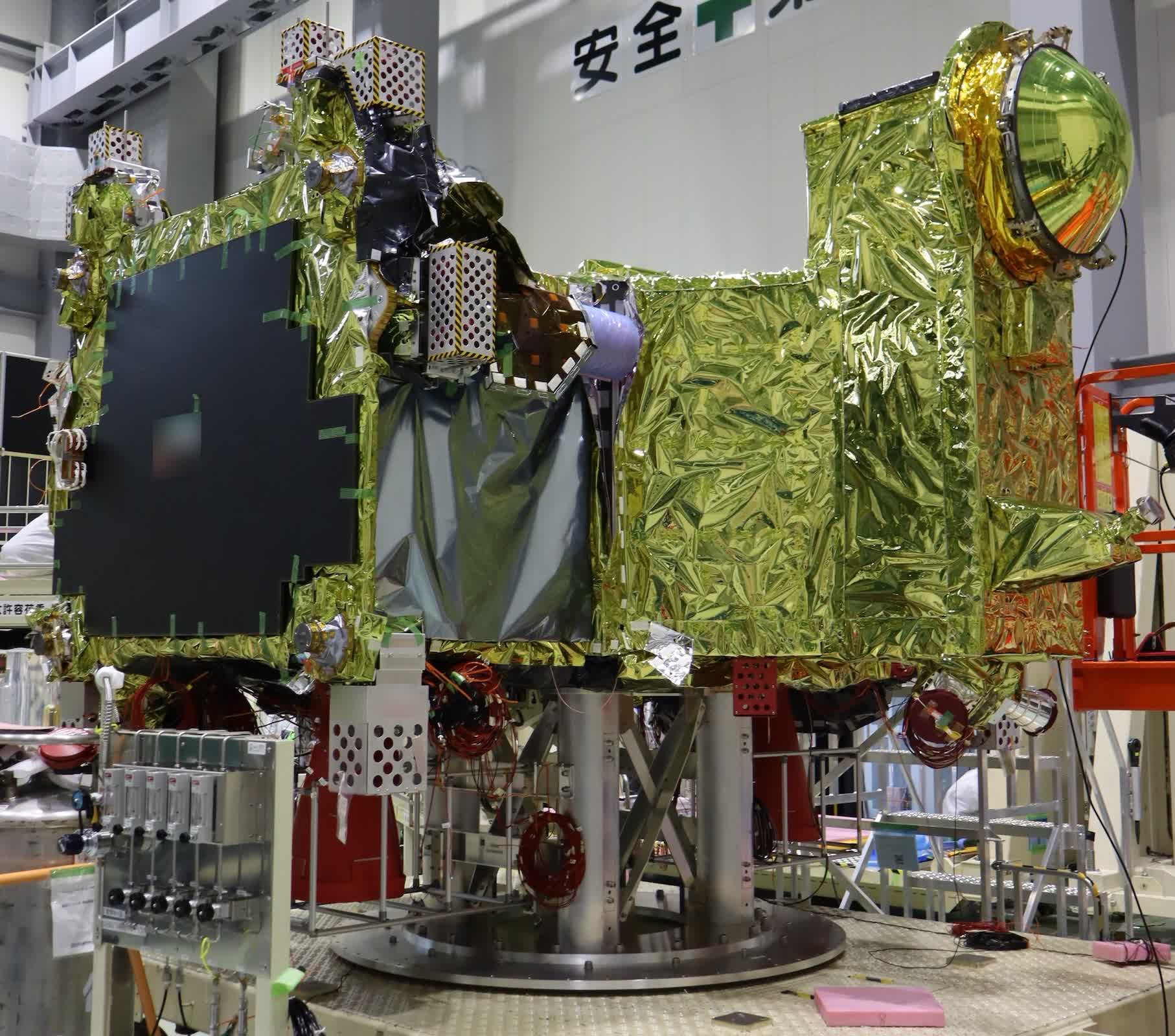
MMX will use a robotic arm to drill into the surface and collect material in cylindrical tubes. It also carries a nitrogen-gas sampling device originally developed by NASA. That system is intended to collect fine dust from the surface.

The samples could help scientists determine how Phobos and Deimos formed. One theory is that the moons formed from debris ejected after a major collision with Mars. Another is that they were asteroids from the outer solar system that Mars captured.

The moons have dark surfaces that resemble water- and carbon-rich asteroids. But their nearly circular orbits, which follow Mars' equatorial plane and move in the same direction as the planet's rotation, are more consistent with the impact-debris theory.
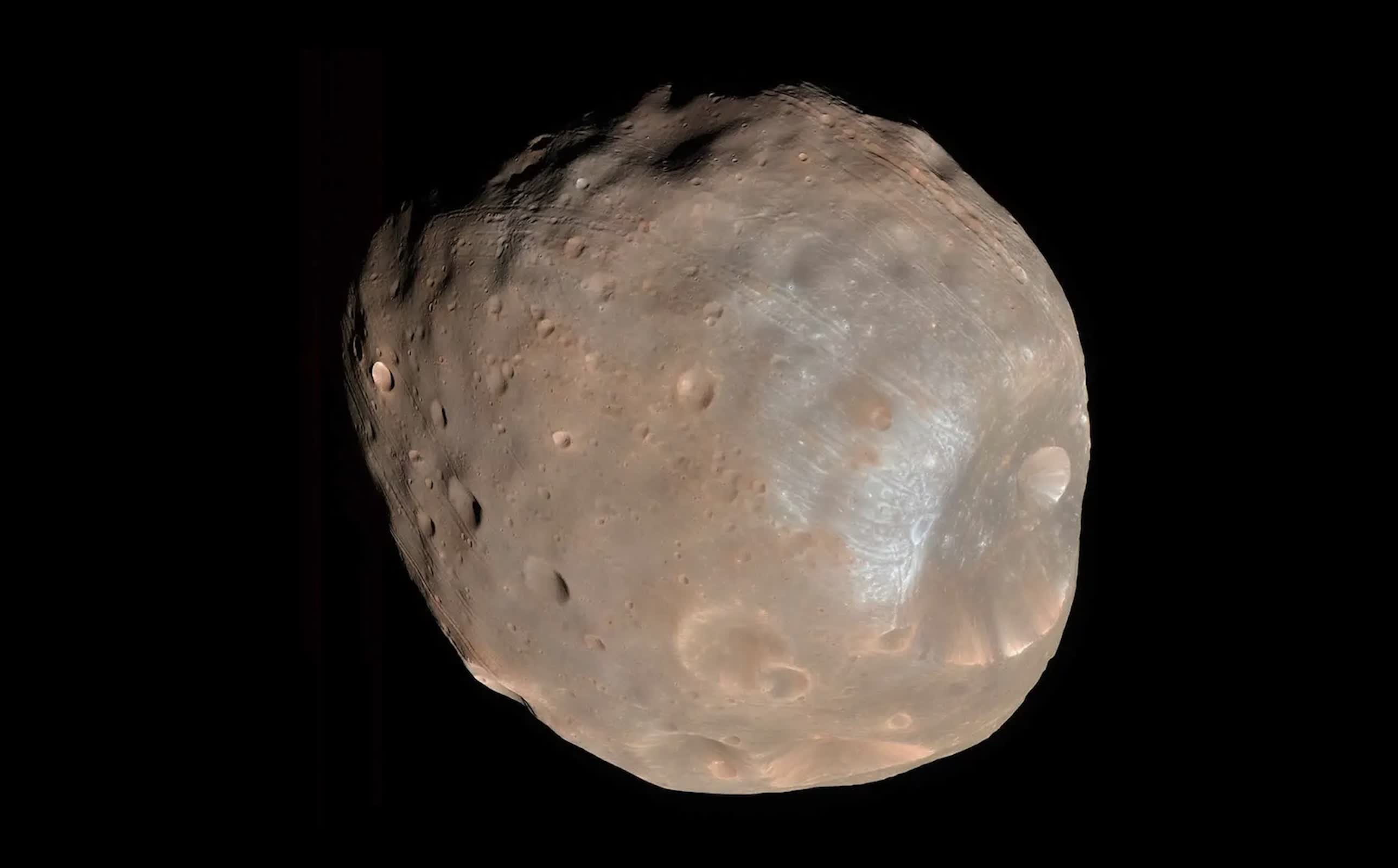
Scientists also expect Phobos to hold traces of Mars. Impacts have blasted Martian material into space over time, and some of that debris is believed to have settled on the moons. Researchers estimate that about 0.1% of the material collected by MMX could have originated on the Red Planet.

The mission is expected to cost about $345 million and will be Japan's first Mars probe launch in 28 years. In addition to the scientific goal, MMX will test autonomous navigation, landing, and sample-return systems that could support later Mars missions.

Permalink to story:

 
Absolutely thrilling project.

On a side note: I believe a human mission to Phobos is a good idea too; both spectacular and much less risky and for that matter expensive than a mission to the surface of Mars.
And while at it, why not build a modest base? It doesn't have to be manned permanently but would make subsequent missions easier and cheaper.
 
Absolutely thrilling project.

On a side note: I believe a human mission to Phobos is a good idea too; both spectacular and much less risky and for that matter expensive than a mission to the surface of Mars.
And while at it, why not build a modest base? It doesn't have to be manned permanently but would make subsequent missions easier and cheaper.


I see no reason to have a manned mission to Mars if you don't intend on landing on the surface.

Unless engine technology improves, anyone who goes to Mars is going on a suicide mission or a mission of no return. Seems to me you might as well land there so you can get as much out of the journey as possible. Trying to get people to stay inside a tin can for 9 months just to return in another 9 months is cruel.

We need an endo-exo atmospheric capable shuttle and a mobile space station for it to attach and detach from.
 
Absolutely thrilling project.

On a side note: I believe a human mission to Phobos is a good idea too; both spectacular and much less risky and for that matter expensive than a mission to the surface of Mars.
And while at it, why not build a modest base? It doesn't have to be manned permanently but would make subsequent missions easier and cheaper.
It could certainly be a stepping stone to Mars.
 
On a side note: I believe a human mission to Phobos is a good idea too; both spectacular and much less risky and for that matter expensive than a mission to the surface of Mars.
And while at it, why not build a modest base? It doesn't have to be manned permanently but would make subsequent missions easier and cheaper.
Ugh, so tired of reading uninformed nonsense like this. We're not sending humans to Mars or to any of its moons. Not now, not in 20 years, not in 50 years, ok? Stop dreaming about this pointless nonsense.

These are extreme environments where humans cannot survive. There's no oxygen, there's no drinking water, low gravity, extreme radiation, extreme temperature swings, etc. So no, we're not going to any of those places.

We haven't even gone to the moon in nearly six decades and are struggling even with that when it's right in our backyard. NASA has been "preparing" for a moon landing for over a decade and I have my doubts if/when we will ever go back. Mars is anywhere from 140 to over 1,000 times the distance from Earth compared to the Moon depending on orbital position. So again, no, we're not going to Mars in 20 year or in 50 years.
 
> The mission is expected to cost about $345 million

Would be a bargain if they actually pulled it off for that amount of money.
 
Ugh, so tired of reading uninformed nonsense like this. We're not sending humans to Mars or to any of its moons. Not now, not in 20 years, not in 50 years, ok? Stop dreaming about this pointless nonsense.

These are extreme environments where humans cannot survive. There's no oxygen, there's no drinking water, low gravity, extreme radiation, extreme temperature swings, etc. So no, we're not going to any of those places.
Literally all of this is true about the Moon, and we sent man there. Thankfully, not everyone is content sitting around waiting for the end times and would rather try to accomplish things.
We haven't even gone to the moon in nearly six decades and are struggling even with that when it's right in our backyard. NASA has been "preparing" for a moon landing for over a decade and I have my doubts if/when we will ever go back. Mars is anywhere from 140 to over 1,000 times the distance from Earth compared to the Moon depending on orbital position. So again, no, we're not going to Mars in 20 year or in 50 years.
There is more to the world then the USA. You may have noticed, had you read the article, that Japan is doing this mission. NASA's political shackles and incompetence are not the be all end all.

I'm sure you would have been saying the same things in the 50s about moon landings.
 
If another group lands on Deimos they could have inter-moon shootouts!
I'll happily pay extra tax for that.
Only if I get to download the vids and commentary of course.
We just have to watch out for Dr. Betruger :- )

Ugh, so tired of reading uninformed nonsense like this. We're not sending humans to Mars or to any of its moons. Not now, not in 20 years, not in 50 years, ok? Stop dreaming about this pointless nonsense.

These are extreme environments where humans cannot survive. There's no oxygen, there's no drinking water, low gravity, extreme radiation, extreme temperature swings, etc. So no, we're not going to any of those places.

We haven't even gone to the moon in nearly six decades and are struggling even with that when it's right in our backyard. NASA has been "preparing" for a moon landing for over a decade and I have my doubts if/when we will ever go back. Mars is anywhere from 140 to over 1,000 times the distance from Earth compared to the Moon depending on orbital position. So again, no, we're not going to Mars in 20 year or in 50 years.
If we try, it is possible. Setting up camp would be challenging, but visiting shouldn't be too hard, apart from the long journeys and return taking-off.

For my part, though, I find Mars to be less interesting than a journey to our nearest stars. The technology is not there yet but there have been intriguing designs in earlier decades. If suspended animation were invented or the Alcubierre drive proved practical, I would volunteer to leave Earth for good (if it weren't for one person and family obligations).
 
Back