Jensen Huang envisions 24/7 AI factories: "Just like we generate electricity, we're now going to be generating AI"

Skye Jacobs

Posts: 2,013   +59
Staff
Through the looking glass: Nvidia CEO Jensen Huang really likes the concept of an AI factory. Earlier this year, he used the imagery in an Nvidia announcement about industry partnerships. More recently, he raised the topic again in an earnings call, elaborating further: "Just like we generate electricity, we're now going to be generating AI. And if the number of customers is large, just as the number of consumers of electricity is large, these generators are going to be running 24/7."
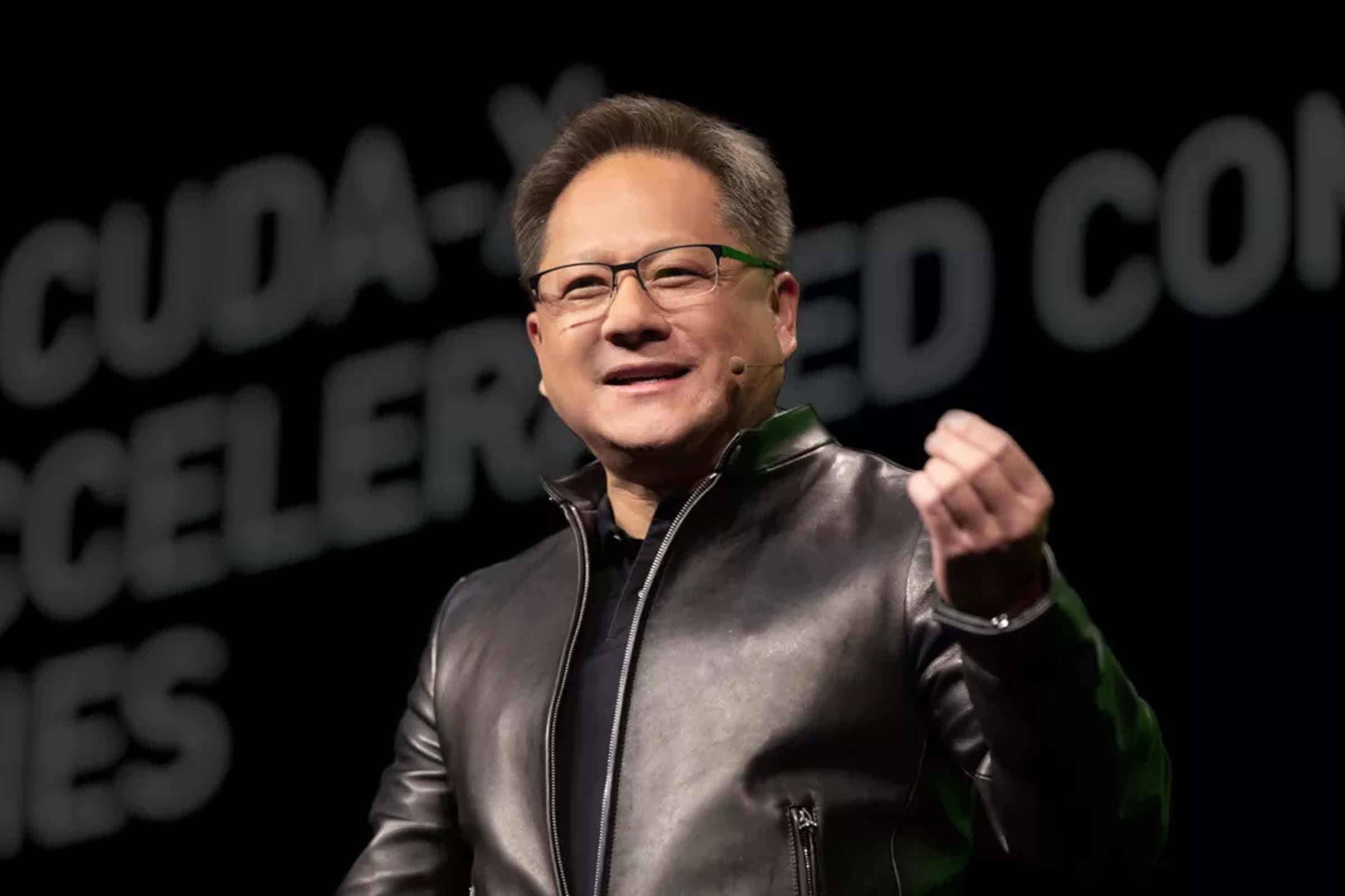
"The next industrial revolution has begun," Huang said during a recent Nvidia announcement. "Companies and countries are partnering with Nvidia to shift the trillion-dollar traditional data centers to accelerated computing and build a new type of data center – AI factories – to produce a new commodity: artificial intelligence."

The comments don't expound on Nvidia's earnings or projected roadmap – topics more usually raised in an earnings call – but they are worth exploring.

Huang's vision of AI factories running 24/7 to produce AI outputs – whether it's language processing, image creation, or complex data analysis – to meet the growing demands of businesses and consumers represents a paradigm shift in how we think about computing, artificial intelligence, and computational resources in general.
"Today, many AI services are running 24/7, just like an AI factory. And so, we're going to see this new type of system come online, and I call it an AI factory because that's really as close to what it is. When we say generative AI, we're essentially saying that these data centers are really AI factories. They're generating something."

Just as electricity generation has scaled to meet the needs of an industrializing world, Huang seems to think that AI production will scale to meet the growing demands of a digitally transforming society, despite the challenges such growth will present. Fueling this growth will be a large customer base for AI services, similar to the widespread electricity consumption.

First, though, a lot must happen.
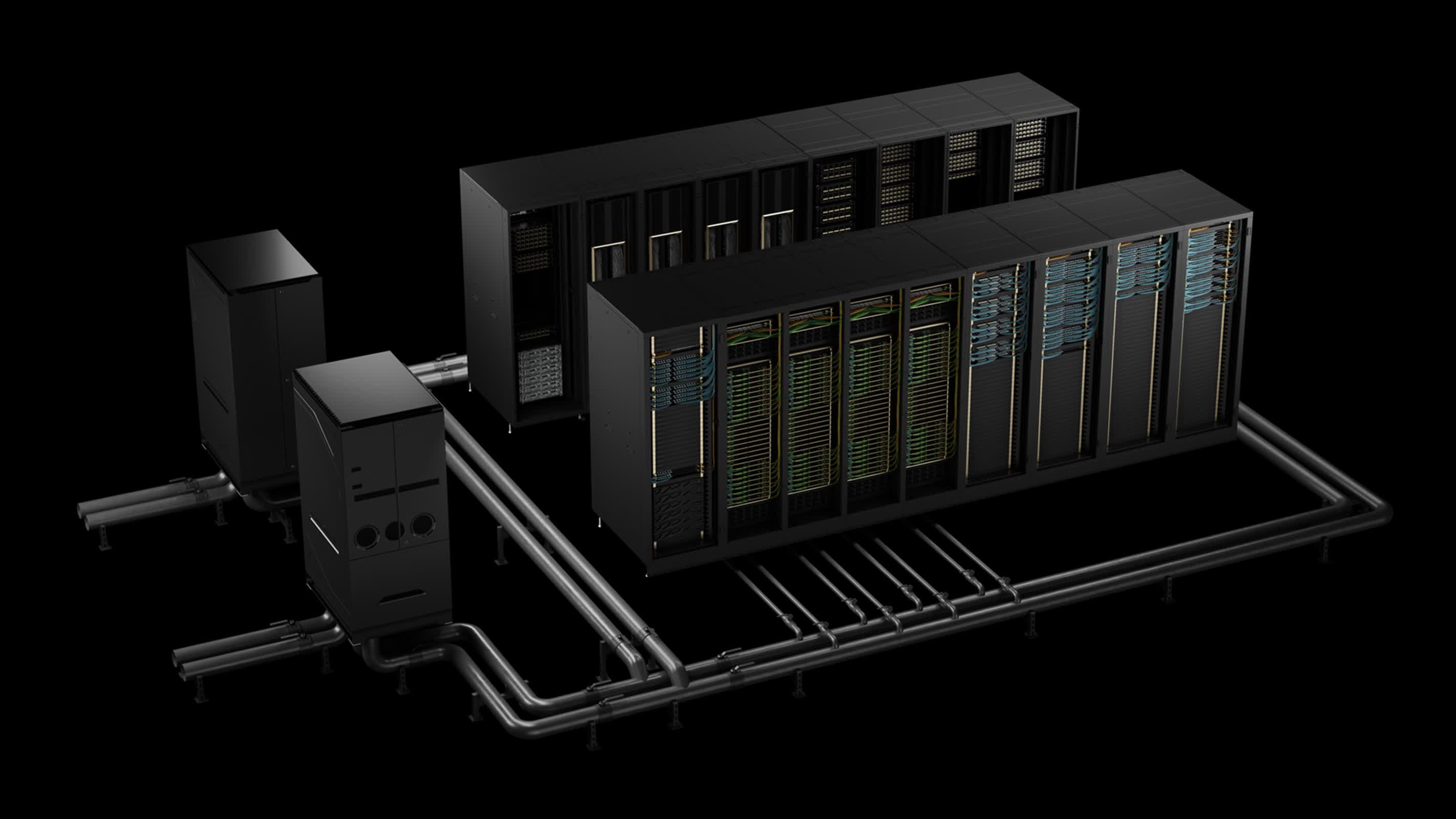
Traditional data centers must be reimagined and redesigned to function as these "AI factories." This transformation will likely involve significant changes in hardware architecture, cooling systems, and power management to support the intensive computational needs of AI production.

The concept of 24/7 AI generation also raises important questions about energy consumption. As these AI factories operate continuously, sustainable and efficient energy solutions will be needed to power them.

Assuming these issues are addressed, the ability to "generate" AI on demand could lead to new business models and services. Companies might offer AI capabilities as a utility, similar to how electricity is provided.

With ubiquitous AI, there will be significant changes in the job markets. Despite companies' protestations that AI will not replace workers, in the world Huang has painted, it will. Yes, AI can create new opportunities in AI management and development, but it will also lead to the automation of certain tasks, displacing many workers.
These AI factories also raise questions that are simply not answerable right now. With AI being produced at such a large scale, how will data security and user privacy be ensured? How will governments and regulatory bodies adapt to this new paradigm of AI as a utility? As AI becomes more ubiquitous, how will we address ethical concerns about AI decision-making and potential biases?

Huang's vision of AI factories represents a bold prediction for the future of computing and artificial intelligence. At its very best, it could lead to a world where AI is as ubiquitous and essential as electricity, transforming industries and creating new opportunities.

It's just too bad Huang didn't elaborate on the questions his vision raises about infrastructure, energy use, economic models, and the role of AI in society.

Permalink to story:

 
How about it's used for something actually useful, rather than for proof of concepts, and trying to make sure your competitor is not one-upping you (.. who is also burning plenty of money to come up with not much either)

I get the potential, but it still has a fair way to go until it has delivered meaningful change to our lives, and the many tiers below your FAANG's..

While an entertaining comparison to the electric age, I can't see quite the need for a Grandmother to use AI to boil her pot of tea in the morning for some time yet.
 
Oh yeah, it will transform the society alright, into a jobless and hungry crowd, bent on taking their despair to people like Jensen Huang, with torches and pitchforks.
Once AI reaches a sufficient level of sophistication, it will be capable of performing all tasks currently undertaken by humans (what they call AGI). This is positive news for the human workforce, as it suggests that there will no longer be a need for monetary compensation. Instead, remuneration could be provided automatically to all simply for existing. This is because machines do not consume products, and thus have no inherent need for them. If humans ceased consuming products, there would be no one else to do so, rendering the products obsolete.
That situation can be considered analogous to drawing water from the sea: there is an inexhaustible supply, and no one will demand payment for it. One can take as much as one desires. With AI, there would be a surplus of products, so no one would require payment.
 
Once AI reaches a sufficient level of sophistication, it will be capable of performing all tasks currently undertaken by humans (what they call AGI). This is positive news for the human workforce, as it suggests that there will no longer be a need for monetary compensation. Instead, remuneration could be provided automatically to all simply for existing. This is because machines do not consume products, and thus have no inherent need for them. If humans ceased consuming products, there would be no one else to do so, rendering the products obsolete.
That situation can be considered analogous to drawing water from the sea: there is an inexhaustible supply, and no one will demand payment for it. One can take as much as one desires. With AI, there would be a surplus of products, so no one would require payment.
This is delusional. All excess will always end up in the hands of the top 1%, and the rest will be left to chew on the old shoe.
 
Once AI reaches a sufficient level of sophistication, it will be capable of performing all tasks currently undertaken by humans (what they call AGI). This is positive news for the human workforce, as it suggests that there will no longer be a need for monetary compensation. Instead, remuneration could be provided automatically to all simply for existing. This is because machines do not consume products, and thus have no inherent need for them. If humans ceased consuming products, there would be no one else to do so, rendering the products obsolete.
That situation can be considered analogous to drawing water from the sea: there is an inexhaustible supply, and no one will demand payment for it. One can take as much as one desires. With AI, there would be a surplus of products, so no one would require payment.
Even if we do get AGI powered robots, and that's a BIG IF, they will still break down and require parts maintenance.
 
AI uses so much power we should shut down all AI until each AI country has at least Nuclear power station which is Green Energy to run the Farms, and 30% of energy made should be pumped back into the grid to drop costs to power to house holds
There is no other way, AI's drawing way too much power and we are paying for their BS
No more wind farms which are damaging the environment for 1000yrs
 
AI being the new electricity is cool and all (Jensen has to promote his cash cow), but can we talk about the energy consumption? If AI factories are the future, they better come with a Tesla-sized commitment to renewable power, or we’re trading one crisis for another.
 
The idea of AI factories running 24/7 feels like the beginning of a sci-fi novel where humanity realizes a bit too late that its "factories" learned how to write their own instructions. Let’s not forget plans to include an off switch.
 
Did anyone notice that Jackit Man has that sh*t-eatin grin on his face when talking about this, mainly cause he knows he is one of the few who will be raking in the gazilions of $$ from it, at least until the AI learns how to replace/delete him, which WILL happen sooner rather than later if we continue on our current paths...
 
Back